


Table of Contents
Navigating the global commercial kitchenware market requires wholesale distributors to make strategic decisions when evaluating an end grain vs side grain cutting board portfolio. Choosing the optimal inventory mix directly impacts profit margins, supply chain stability, and brand reputation across international wholesale channels.
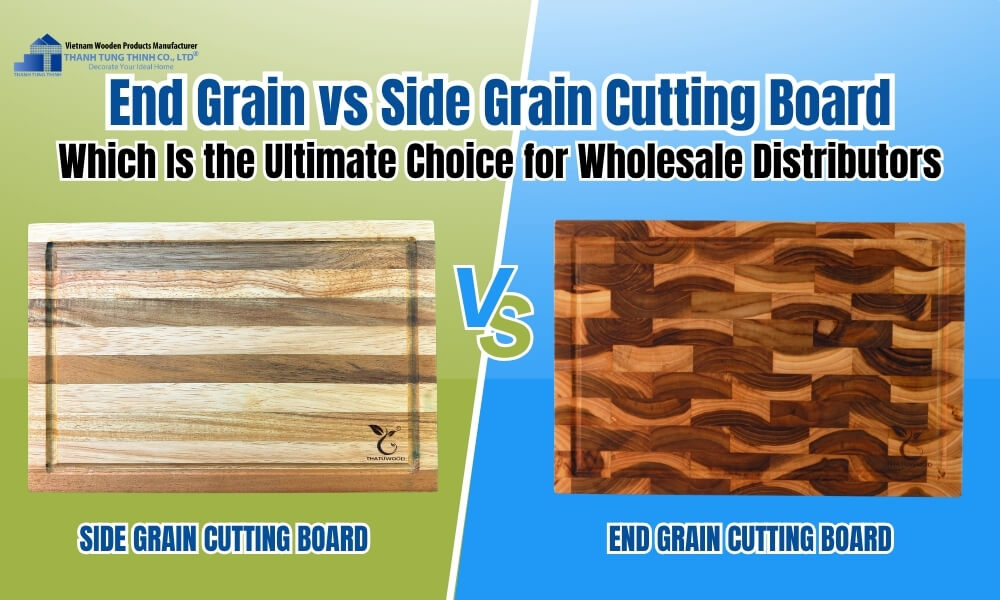
When evaluating an end grain vs side grain cutting board selection, procurement managers must weigh manufacturing costs against long-term durability. At ThanhTungThinh, we help global distributors analyze whether an end grain cutting board vs side grain construction best serves their commercial clients. This comprehensive guide provides a strategic analysis of an end grain vs side grain cutting board comparison to help you optimize your wholesale catalog.
After reading this article, you will understand the following information:
- Clear technical breakdown of structural properties in an end grain vs side grain cutting board.
- Comprehensive side-by-side comparison matrix evaluating performance, cost, and durability.
- In-depth market trends for both product categories in commercial wholesale distribution.
- Expert maintenance guidelines to ensure prolonged product longevity for end users.
- Strategic wholesale purchasing benefits when partnering with ThanhTungThinh.
What Is the Structural Architecture of an End Grain Cutting Board?
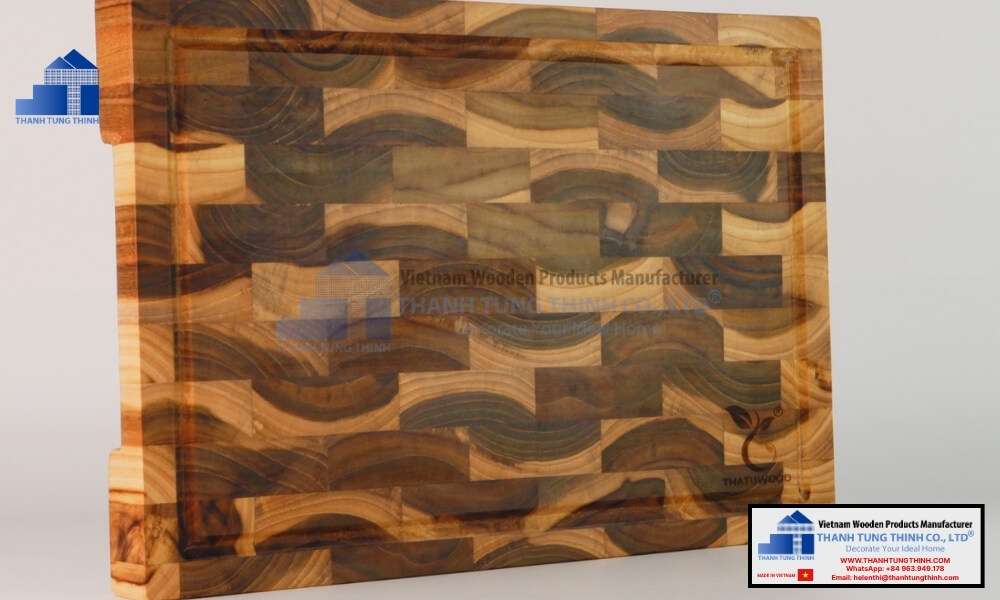
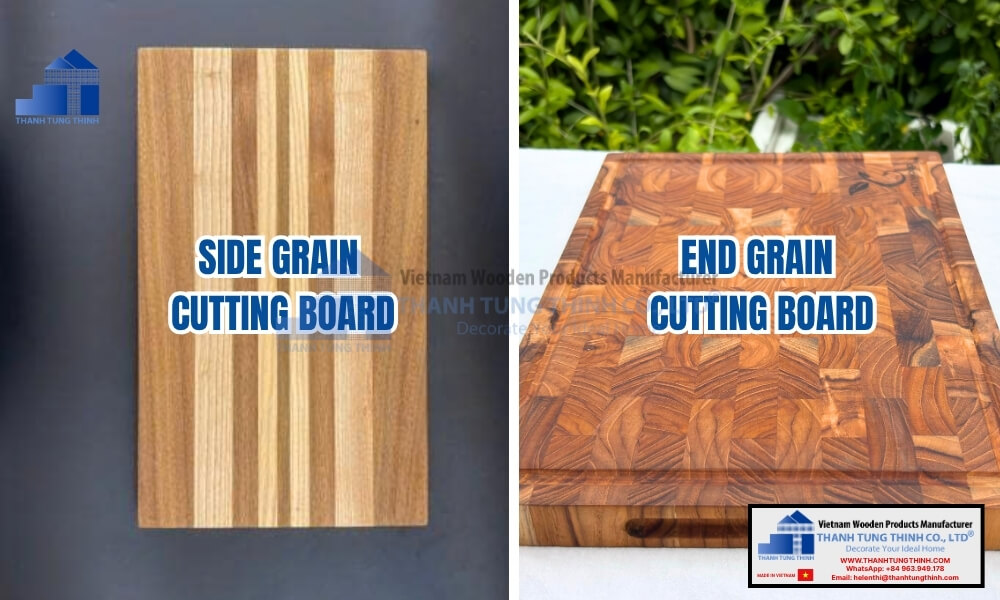
Understanding the cellular mechanics of an end grain vs side grain wooden cutting board begins with examining how timber growth rings are oriented. In an end grain block, small hardwood pieces are arranged vertically with their growth rings facing upward. This configuration functions like a bundle of tiny straws or a stiff brush.
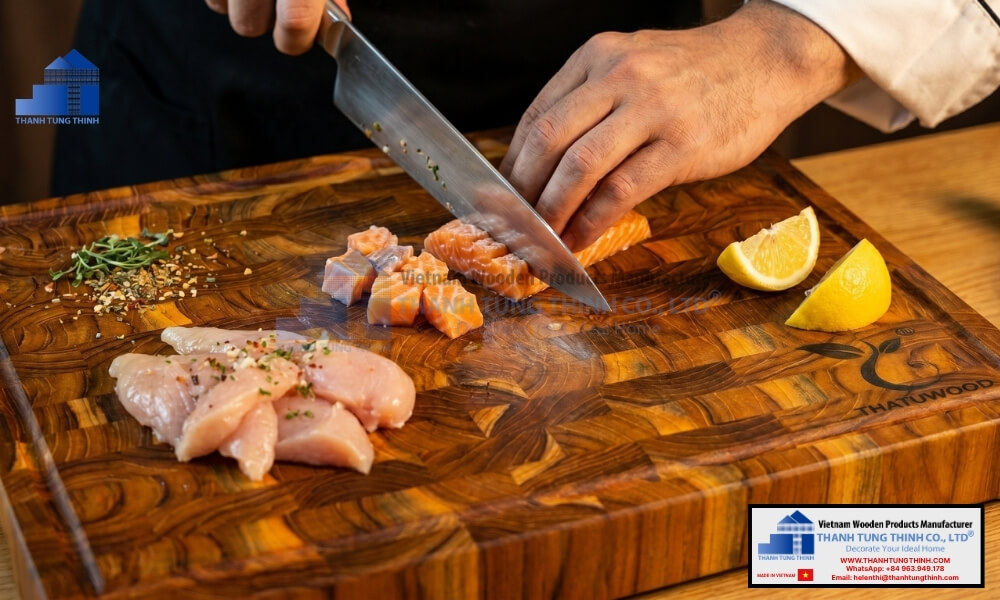
When a culinary knife strikes the surface, the blade slips smoothly between the upright wood fibers rather than severing them. Once the knife is lifted, the natural elastic resilience of the timber allows fibers to relax and close back together, creating a self-healing surface that preserves knife sharpness and resists deep scarring.
What Is the Structural Architecture of a Side Grain Cutting Board?
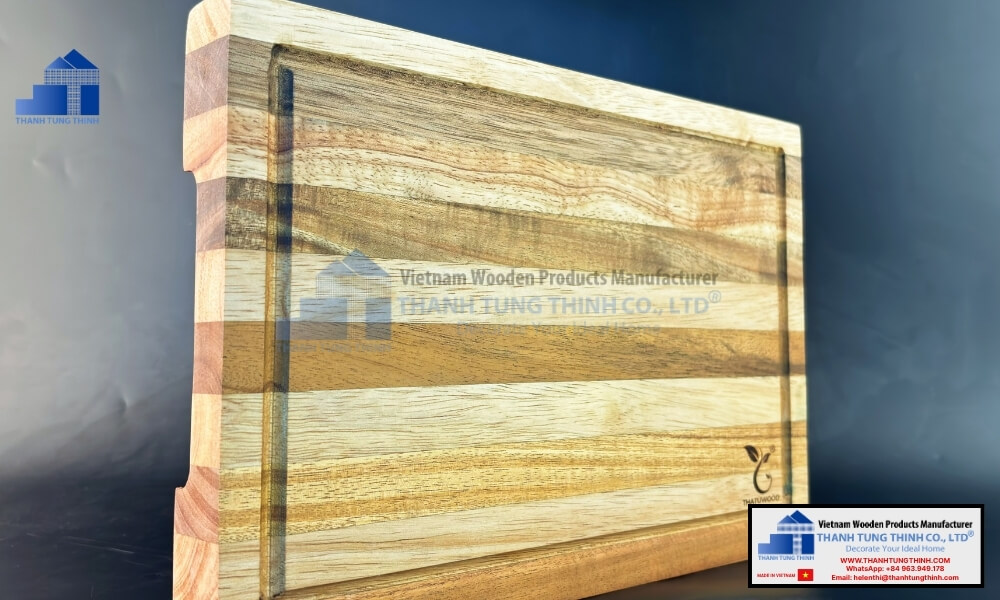
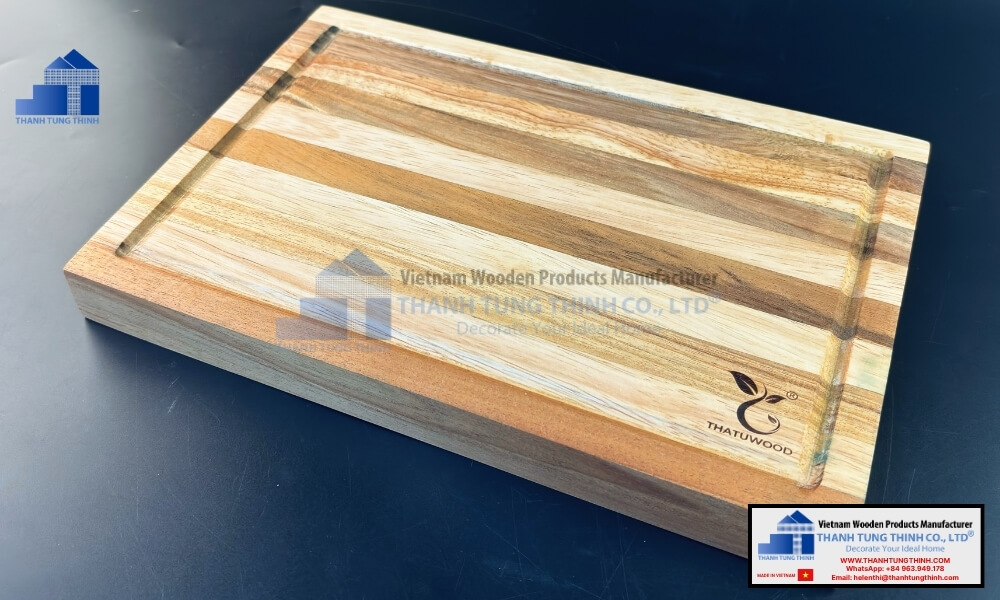
Contrasting an end grain vs side grain wooden cutting board reveals fundamental differences in side grain manufacturing. Side grain boards often evaluated when studying an side vs end grain cutting board catalog are constructed by laying wide timber planks flat side-by-side, exposing the horizontal grain pattern on the surface.
While simpler to manufacture, this orientation forces knife blades to slice directly across wood fibers. Over time, this constant cross-cutting creates visible friction, dulls professional blades more rapidly, and leaves permanent shallow incisions that require regular resurfacing in demanding commercial environments.
What Are the Market Trends and Commercial Demand for Both Cutting Board Types?
What Are the Market Trends for End Grain Collections?
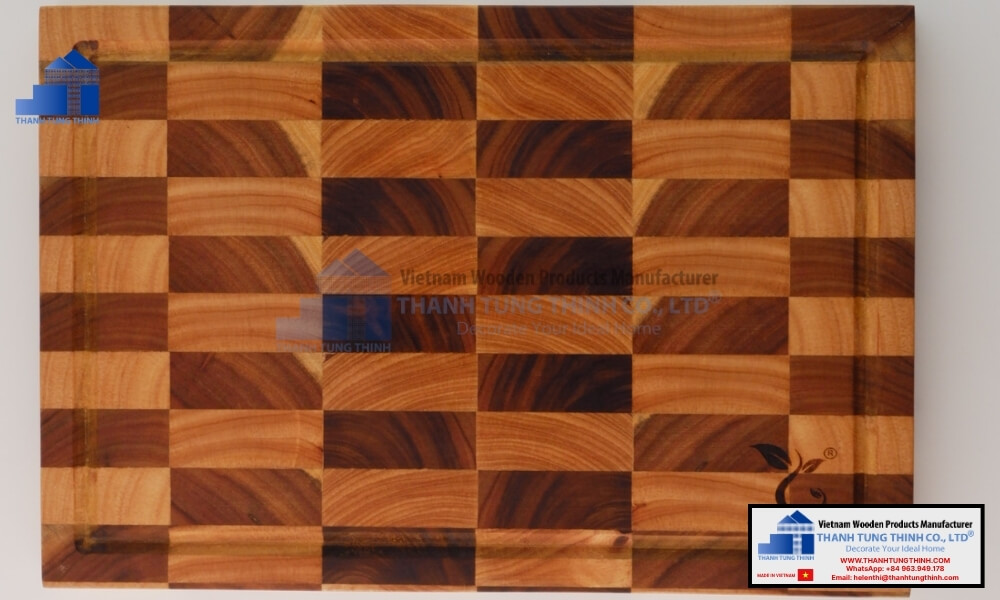
In contemporary global markets, demand for premium end grain vs side grain cutting boards has shifted significantly toward high-end culinary collections. High-end hospitality buyers, luxury restaurant groups, and upscale distributors heavily favor end-grain blocks due to their striking checkerboard aesthetics, self-healing resilience, and superior prestige value.
Sourcing a premium cutting board end grain vs side grain option allows wholesale distributors to target affluent market segments and command higher profit margins.
What are the Market Trends for Side Grain Collections?
Conversely, standard side grain boards maintain steady demand across mid-tier commercial procurement portfolios. Because their manufacturing workflow is less labor-intensive than an end grain vs side cutting board configuration, side grain items offer a lower price point. This makes them an attractive option for high-turnover, budget-conscious institutional buyers who prioritize upfront affordability over long-term self-healing performance.
Detailed Comparison: End Grain vs Side Grain Cutting Boards for Wholesale
Evaluating an end grain vs side grain cutting boards lineup requires assessing direct performance metrics under heavy commercial use. The following table provides a comprehensive head-to-head comparison:
| Performance Metric | End-Grain Cutting Boards | Side-Grain (Side-Grain) Cutting Boards |
| Cellular Orientation | Vertical growth rings facing upward | Horizontal planks facing outward |
| Knife Blade Preservation | Exceptional (Fibers part and self-heal) | Moderate (Blades slice across fibers) |
| Surface Longevity | High (Self-healing hides surface cuts) | Moderate (Permanent surface scars accumulate) |
| Manufacturing Complexity | High (Multi-step mosaic gluing & routing) | Standard (Single-stage plank alignment) |
| Wholesale Profit Margin | Premium high-margin tier | Competitive standard-tier pricing |
Expert Production Tip from ThanhTungThinh: When manufacturing both product lines, maintaining strict wood moisture levels between 8% and 12% is essential to prevent seasonal warping, regardless of whether you are producing end-grain or side-grain inventories.
Which Cutting Board Is the Ultimate Choice for Wholesale Distributors?
Choosing End Grain Cutting Boards for Luxury and High-Margin Culinary Markets
When wholesale distributors supply high-end department stores, luxury restaurant chains, and gourmet gift brands, premium end-grain cutting boards represent the ultimate inventory choice.
Because these buyers prioritize superior knife preservation, striking checkerboard aesthetics, and long-term self-healing durability, end-grain blocks command high price points and deliver exceptional profit margins. Sourcing this category allows your distribution network to capture affluent market segments looking for professional-grade culinary art.
Selecting Side Grain Cutting Boards for High-Volume Institutional Budgets
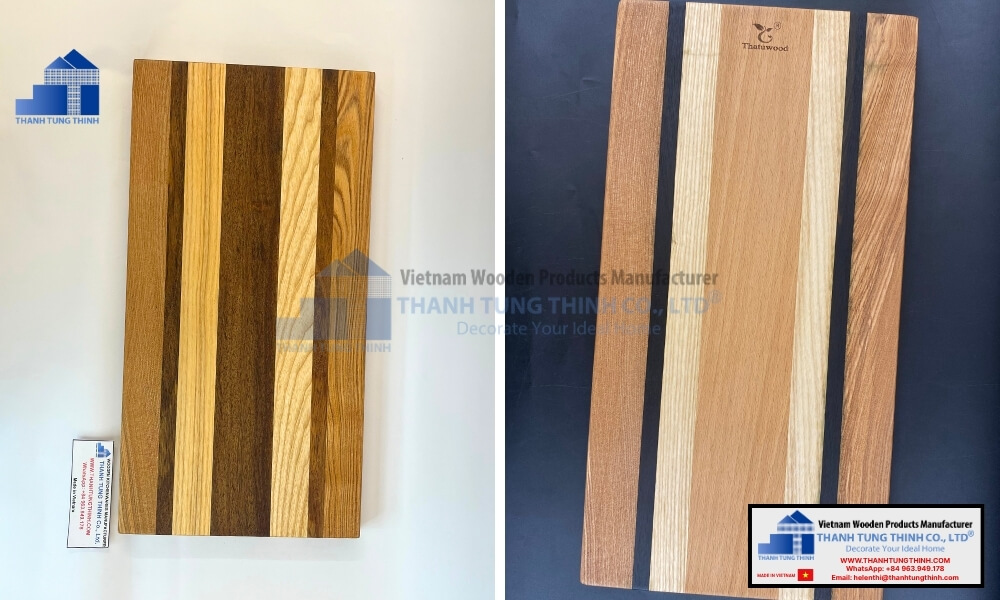
For wholesale partners whose primary client base consists of commercial restaurant suppliers, catering businesses, and institutional kitchens, standard side grain boards serve as the ideal product solution. Side-grain manufacturing involves less labor complexity, allowing distributors to offer competitive, budget-friendly pricing. This makes them a high-turnover, reliable volume seller for everyday heavy-duty food preparation where upfront cost-efficiency outweighs luxury aesthetics.
Balancing Dual-Tier Inventories Based on Regional Market Demands
The optimal choice for sophisticated wholesale distributors often involves maintaining a balanced, dual-tier product portfolio rather than relying on a single material. By analyzing regional market demands pairing high-margin end-grain collections for premium retail accounts with versatile side-grain lines for commercial volume buyers distributors can maximize market reach, hedge against inventory stagnation, and optimize overall revenue across diverse client channels.
Professional Maintenance Guidelines to Keep Wooden Cutting Boards Pristine
To ensure that wholesale clients receive maximum value and longevity from their inventory, proper maintenance protocols must be communicated. Both end-grain and side-grain boards require regular conditioning to prevent moisture infiltration and drying out:
- Clean the cutting board with warm water and a mild detergent after each use.
- Wipe dry with a clean cloth or allow to air-dry in a cool, well-ventilated area.
- You can use baking soda or lemon for natural cleaning, or soak it briefly to eliminate odors.
- Do not soak in water.
- Do not use a dishwasher.
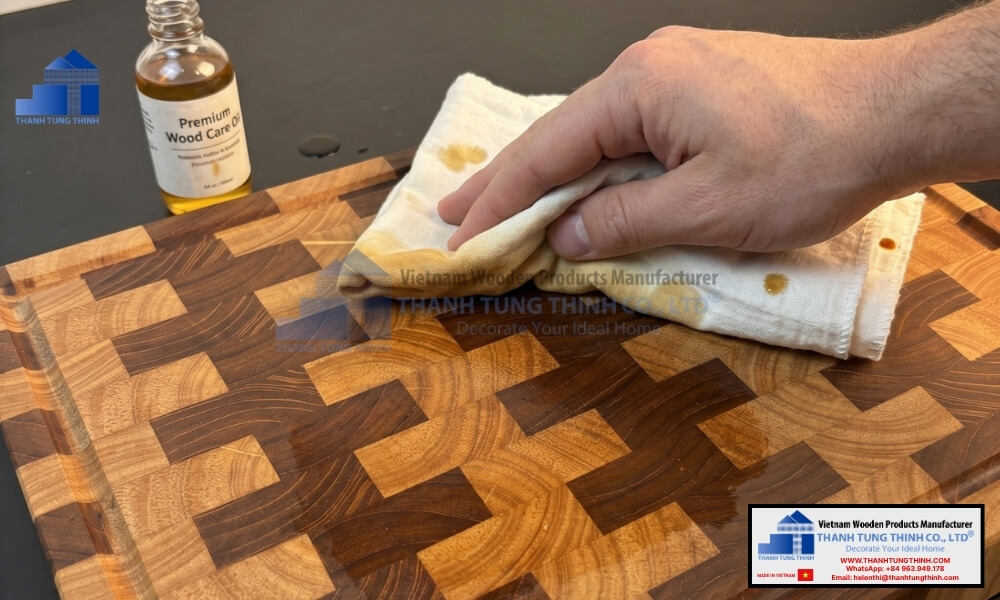
- Periodically apply food-safe cutting board oil to maintain the surface’s appearance and durability (apply a thin layer and let it air-dry for 12–16 hours; reapply every 3–4 days with heavy use, or weekly with moderate use).
Strategic Advantages of Sourcing Bulk Cutting Boards from ThanhTungThinh
Securing a dependable manufacturing partner is vital for maintaining a stable wholesale supply chain. At ThanhTungThinh, we specialize in large-scale production of both end-grain and side-grain culinary surfaces, offering unmatched benefits to global wholesale partners:
- Reliable Production Capacity: We maintain a steady export output of 5 forty-foot containers per month, guaranteeing uninterrupted supply during peak seasons.
- Uncompromising Quality Assurance: Every production batch undergoes a rigorous 3-layer Quality Control inspection—monitoring timber moisture, adhesive pressures, and final dimensions—to maintain an exceptional defect rate below 1%.
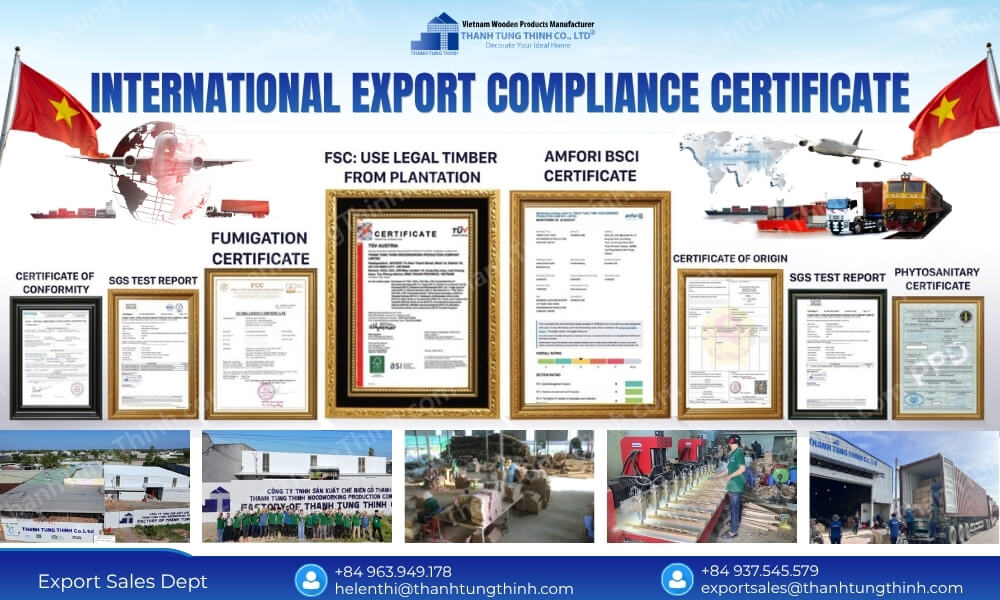
- Global Regulatory Compliance: All manufactured goods comply fully with international standards, holding FSC, BSCI, ISO 9001:2015, FDA, and LFGB certifications for safe global trade.
- Custom OEM/ODM Solutions: We tailor dimensions, wood species combinations (such as Teak and Acacia), laser-etched brand logos, and specialized packaging to fit your precise commercial specifications.
Maximize Profitability with ThanhTungThinh’s Premier Manufacturing Solutions
Optimizing your commercial inventory requires aligning with a manufacturing partner capable of delivering consistent, high-grade craftsmanship at scale. Whether your distribution network focuses on high-margin end-grain collections or versatile side-grain lines, ThanhTungThinh provides the industrial capacity, stringent quality control, and global compliance necessary to secure your market position.
Expand your product offerings today with ThanhTungThinh’s premium collection of custom edge-grain and end-grain cutting boards as teak end grain cutting board, teak and rubberwood checkerboard cutting board, teak and rubberwood square checkerboard cutting board . Contact our commercial sales team now to request our latest catalog, volume wholesale pricing, and dedicated OEM/ODM partnership details.
🌐 Website: https://thanhtungthinh.com/
📌 Pinterest: https://www.pinterest.com/THATUWOOD/
📌 Youtube: https://www.youtube.com/@thanhtungthinhmanufacturer
📌 Facebook: https://www.facebook.com/thanhtungthinh
📌 Linkedin: https://www.linkedin.com/company/thanh-tung-thinh-co-ltd
With more than 15 years of production experience, Thanh Tung Thinh Co., Ltd. is one of the leading reputable Wooden Products manufacturers and exporters specializing in Wooden Products, Wooden boxes products, Wooden Packaging, wooden souvenirs, kitchenware, household utensils, driftwood products, bonsai woods and pet, bird products from coffeewood; other customized products…In particular, all of our wood raw materials are FSC certified, demonstrating our commitment to strictly adhering to sustainable logging and environmental protection standards, providing complete peace of mind for our global customers.
📍 No. 227 To Hien Thanh St, W13, District 10, Ho Chi Minh city, Vietnam
📍 General Warehouse: 451/29/51 To Hien Thanh Street, Dien Hong Ward, Ho Chi Minh city, Vietnam
📍 Factory 1, 2: Lien Huong Town, Tuy Phong District, Binh Thuan Province, Vietnam
📍 Factory 3: Phuoc The Town, Tuy Phong District, Binh Thuan Province, Vietnam
☎ WhatsApp: +84 963.949.178
✉ Email: [email protected]
🌐 Website: www.thanhtungthinh.com
Frequently Asked Questions
What are the core structural differences when comparing an end grain vs side grain cutting board?
An end-grain board features vertical wood fibers that absorb knife impacts and self-heal, whereas a side-grain board utilizes horizontal planks where blades slice across fibers, leading to permanent surface marks.
How does ThanhTungThinh ensure structural durability across large wholesale batches?
We utilize waterproof, FDA-compliant structural adhesives, maintain strict kiln-drying protocols with wood moisture controlled between 8% and 12%, and apply heavy hydraulic pressure during assembly to prevent splitting.
Which product category offers higher profit margins for wholesale distributors?
End-grain cutting boards generally command higher retail price points and deliver superior profit margins due to their complex craftsmanship, aesthetic appeal, and premium positioning in luxury culinary markets.
What international certifications does ThanhTungThinh hold for export markets?
Our manufacturing facilities operate under comprehensive global standards, maintaining FSC, BSCI, ISO 9001:2015, FDA, and LFGB certifications to guarantee 100% legal security and food safety compliance.
What is the standard production capacity for bulk orders at ThanhTungThinh?
We maintain a reliable export output capacity of 5 forty-foot containers per month, allowing us to seamlessly fulfill large-scale international contracts on strict delivery timelines.
Related articles
- How To Make An End Grain Cutting Board That Ensures Consistency In Design And Quality
- Why Are End Grain Cutting Boards Better Than the Common Types Available Today?
- Why Choose An End-Grain Wooden Cutting Board? Top 5 Reasons You Need To Know
- TOP 7 Best Wood For End Grain Cutting Board Every Wholesaler Must Know
- What Is End Grain Wooden Cutting Board? Is It The Perfect Choice For Wholesalers?
- What Is The Difference Between Edge Grain vs End Grain Cutting Board?
- Top 8 Best End-Grain Wooden Cutting Boards of 2026 Favored by Wholesale Customers at ThanhTungThinh
- Bulk Natural Teak Wood Cutting Board Supply — Uninterrupted B2B Chain
- Do Teak Wood Cutting Boards Splinter? The Ultimate Durability Guide
- Certified Teak Wood Cutting Board Manufacturer: Strict Quality Control System
- High-Margin Teak Wood Cutting Board Wholesale Supply for Distributors
- Premium Teak Wood Cutting Board Supplier: Ready-to-Ship Wholesale Inventory

