


Table of Contents
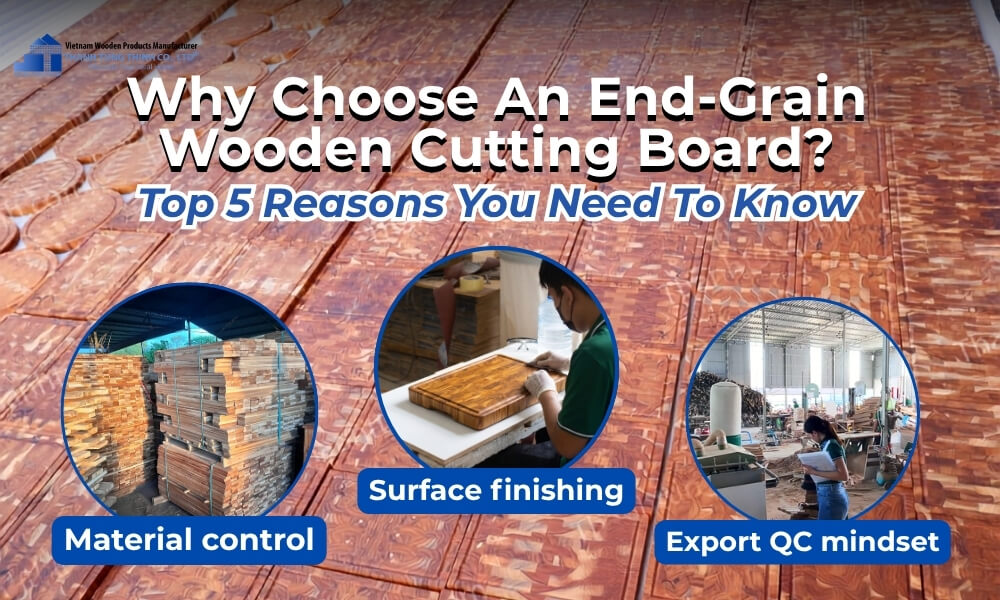
Understanding why choose an end-grain wooden cutting board becomes essential when procurement managers research why is end grain cutting board better for heavy-duty commercial applications. Market analysts frequently examine why are end grain cutting boards better to justify premium pricing, while importers weigh whether is end grain cutting board better than standard plastic or edge-grain alternatives.
At ThanhTungThinh, engineering a superior why choose an end-grain wooden cutting board inventory involves rigorous material science and precise manufacturing protocols. This comprehensive guide explores why these luxury surfaces dominate global markets and how partnering with ThanhTungThinh secures unmatched wholesale profitability.
After reading this article, you will understand the following information:
- Fundamental understanding of end-grain construction and its structural benefits.
- Top 5 strategic reasons why B2B buyers invest in an end-grain wooden cutting board.
- Comprehensive comparison: End-grain wooden cutting Boards vs other cutting board materials
- Proven export compliance metrics, quality control standards, and sustainable sourcing practices from ThanhTungThinh.
What Is an End-Grain Wooden Cutting Board and How Is It Constructed?
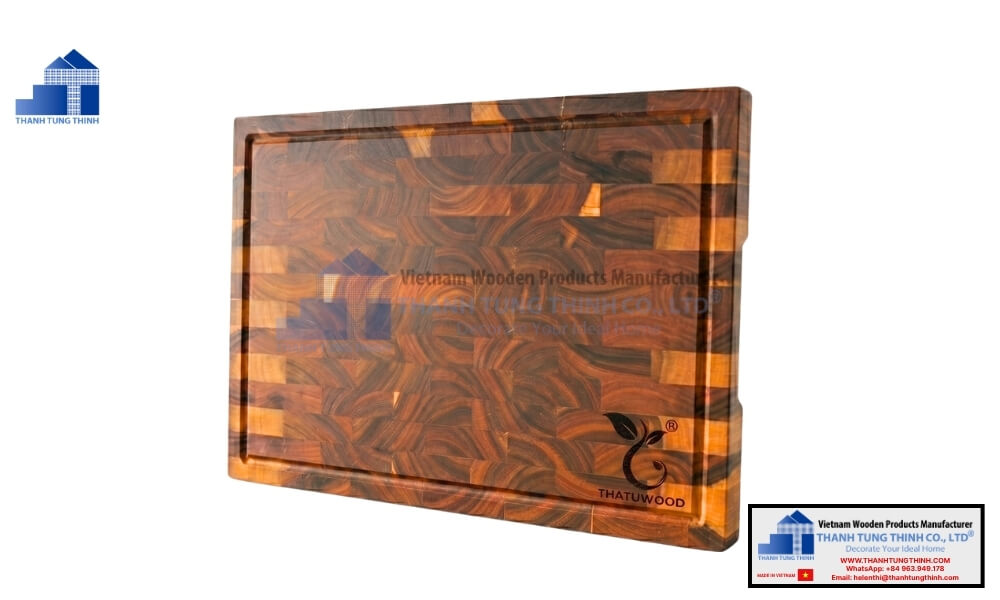
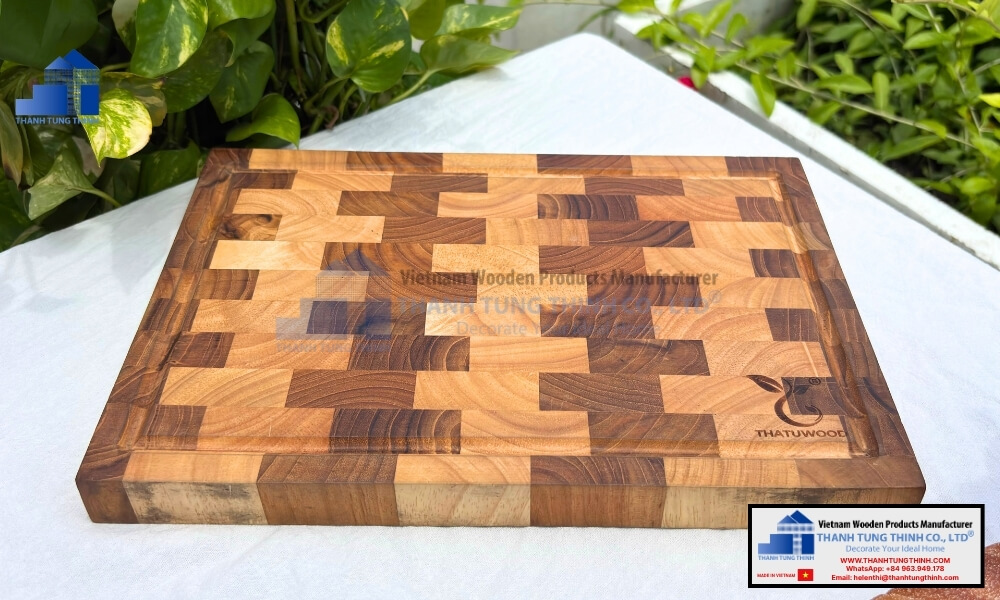
To understand Why choose an end-grain wooden cutting board, B2B buyers must first understand its unique engineering. Unlike traditional edge-grain boards where blades slice across timber fibers, an end-grain block is built by assembling small hardwood blocks with their vertical growth rings facing upward.
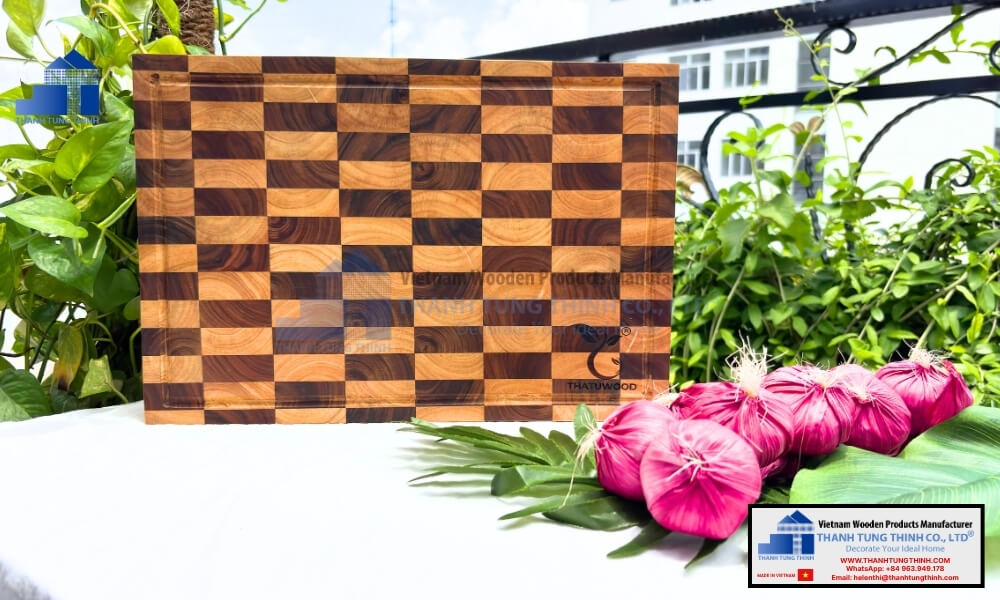
When a chef chops food, the knife blade glides smoothly between these upright wood fibers rather than severing them. This cellular architecture gives the surface a natural “self-healing” capability where knife incisions close back together, creating a stunning checkerboard aesthetic that retains structural excellence for decades of intensive commercial use.
Why Choose an End-Grain Wooden Cutting Board? Top 5 Strategic Reasons for B2B Importers
Procurement directors evaluating market trends consistently ask Why choose an end-grain wooden cutting board for their wholesale portfolios. Below are the 5 core reasons that drive global commercial demand.
Exceptional Knife Edge Preservation and Longevity
The primary advantage of Why choose an end-grain wooden cutting board lies in its impact absorption. Because the wood fibers stand vertically, they act like a brush, yielding to the knife blade rather than resisting it. This prevents culinary knives from dulling prematurely, making these boards indispensable in professional kitchens and high-end culinary wholesale markets.
Natural Self-Healing Surface Architecture
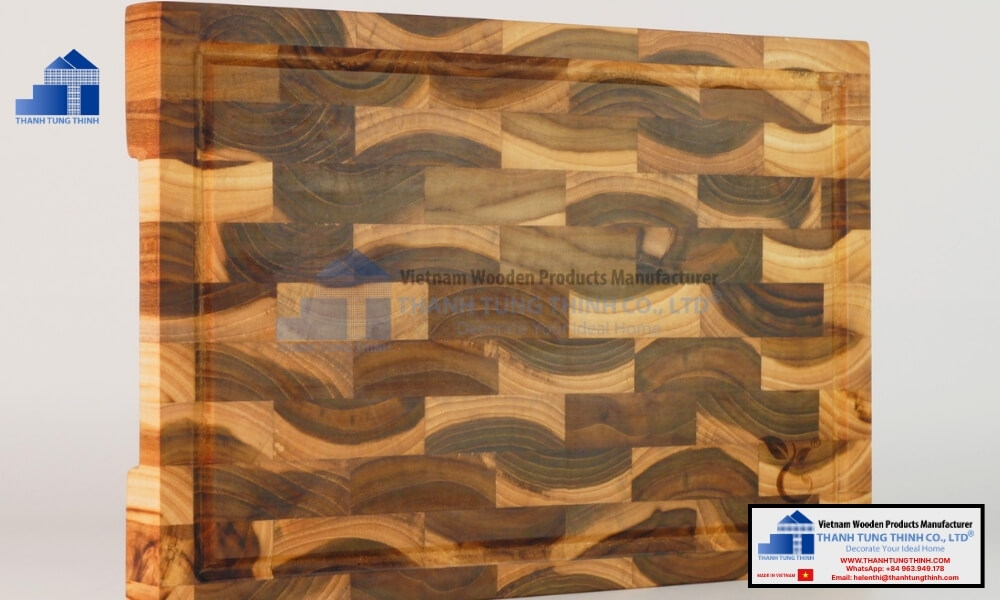
When assessing why is end grain cutting board better for high-traffic environments, surface resilience is critical. The upright cellular structure allows shallow knife marks to naturally relax and close up over time. This unique self-healing property keeps the cutting plane looking smooth, professional, and hygienic long after purchase.
Superior Durability and Heavy-Duty Impact Resistance
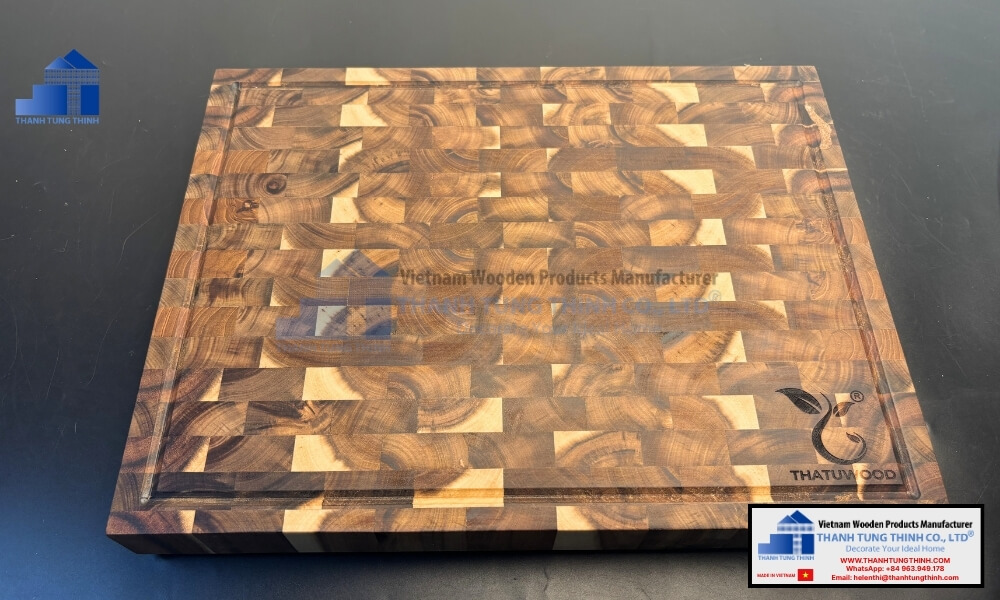
Wholesale buyers investigating why are end grain cutting boards better often look at structural load-bearing capacity. Built from dense hardwoods like Teak and Acacia under heavy hydraulic pressure, these thick master slabs withstand intense chopping impacts without cracking, warping, or buckling under commercial pressure.
Natural Antimicrobial and Hygienic Defense
A common inquiry from food safety officers is is end grain cutting board better for sanitation. Premium hardwoods possess natural antimicrobial oils and tight cellular bonds that inhibit bacterial growth. When properly maintained, these boards offer a cleaner, safer food preparation surface than synthetic plastic alternatives.
Luxurious Aesthetics and High-End Wholesale Value
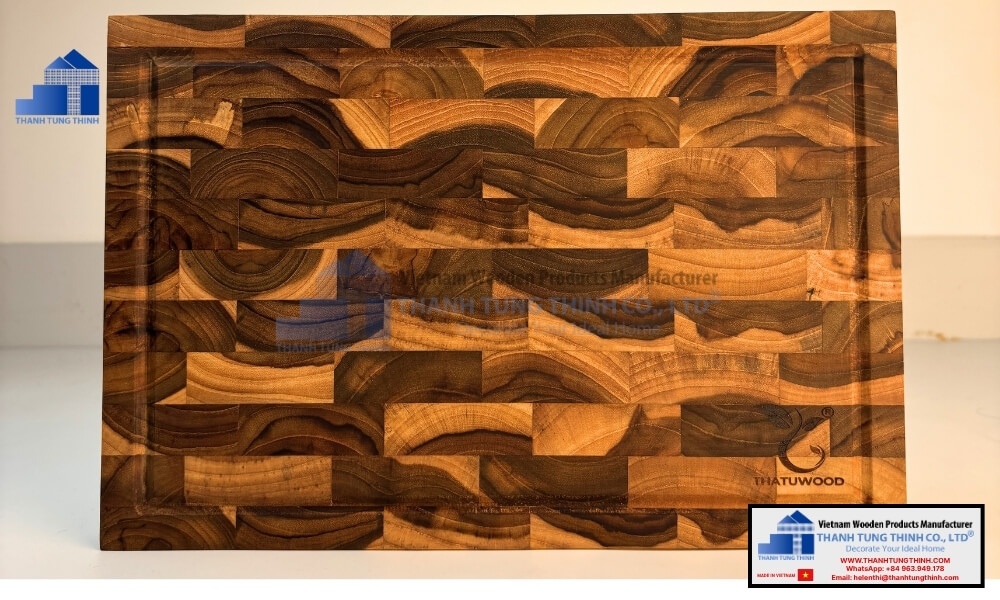
End-grain surfaces feature intricate mosaic and checkerboard patterns with natural grain variations. For wholesale distributors, this visual sophistication commands higher profit margins, serving as a premium centerpiece that elevates any high-end kitchenware catalog.
Comprehensive Comparison: End-Grain Wooden Cutting Boards vs. Other Cutting Board Materials
When international procurement managers and wholesale distributors build high-end kitchenware portfolios, evaluating material performance across different cutting board categories is essential. Understanding how an end-grain wooden cutting board stacks up against standard edge-grain wood, plastic, bamboo, and glass surfaces helps B2B buyers educate clients and secure strong market positioning. Below is a detailed comparative analysis of structural integrity, hygiene, knife maintenance, and commercial value.
End-Grain Wood vs. Standard Edge-Grain Wooden Boards
While both options utilize natural hardwood, their internal cellular construction differs fundamentally.
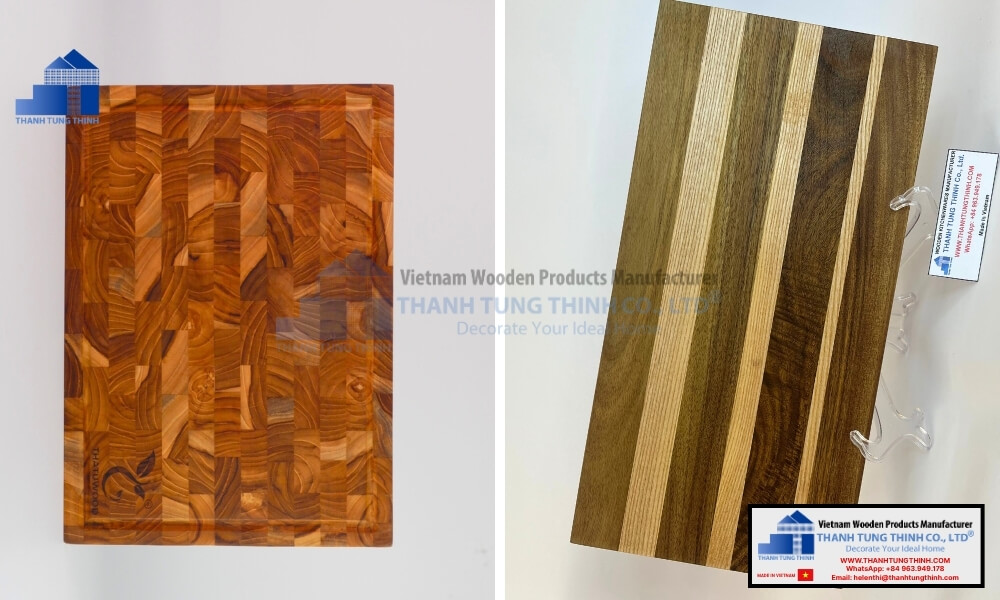
- Structural Architecture: Edge-grain boards are built by laying wooden strips side-by-side with horizontal growth rings facing the surface. In contrast, end-grain boards position the growth rings vertically.
- Knife Preservation: Edge-grain boards slice across wood fibers, creating mild resistance that dulls blades over time. End-grain boards allow knife blades to slip smoothly between upright fibers, offering superior knife edge preservation.
- Self-Healing and Durability: Edge-grain surfaces permanently retain shallow knife incisions. End-grain blocks feature a natural self-healing capability where fibers relax and close back together, extending the product’s functional lifespan in demanding commercial kitchens.
End-Grain Wood vs. Plastic / Polyethylene Boards
Plastic boards are widely used in budget commercial sectors, but they present distinct performance trade-offs compared to luxury timber.
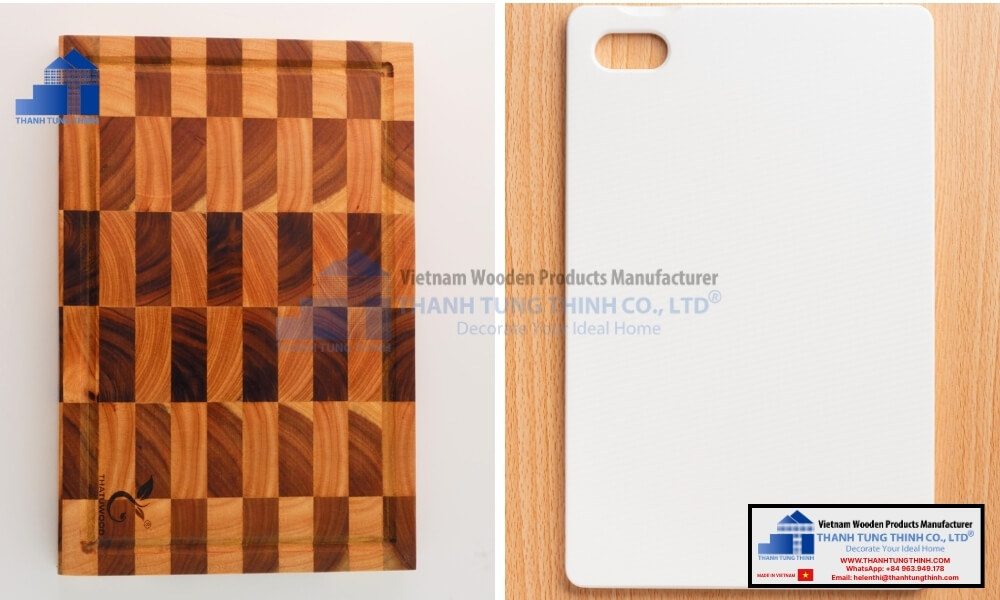
- Hygiene and Micro-Grooves: Plastic boards scratch easily under heavy chopping. These microscopic grooves trap food particles and bacteria that resist standard dishwashing. Premium end-grain wood possesses natural antimicrobial properties and tight cellular seals that inhibit bacterial accumulation.
- Aesthetic and Wholesale Value: Plastic offers low visual appeal, making it unsuitable for high-end wholesale display or luxury gift markets. End-grain boards provide striking mosaic aesthetics that command premium profit margins.
- Environmental Impact: Plastic contributes to synthetic waste and petroleum dependency, whereas responsibly sourced end-grain wooden boards offer an eco-friendly, biodegradable lifecycle.
End-Grain Wood vs. Bamboo Cutting Boards
Bamboo is frequently marketed as an eco-friendly wood alternative, but it exhibits unique physical traits.
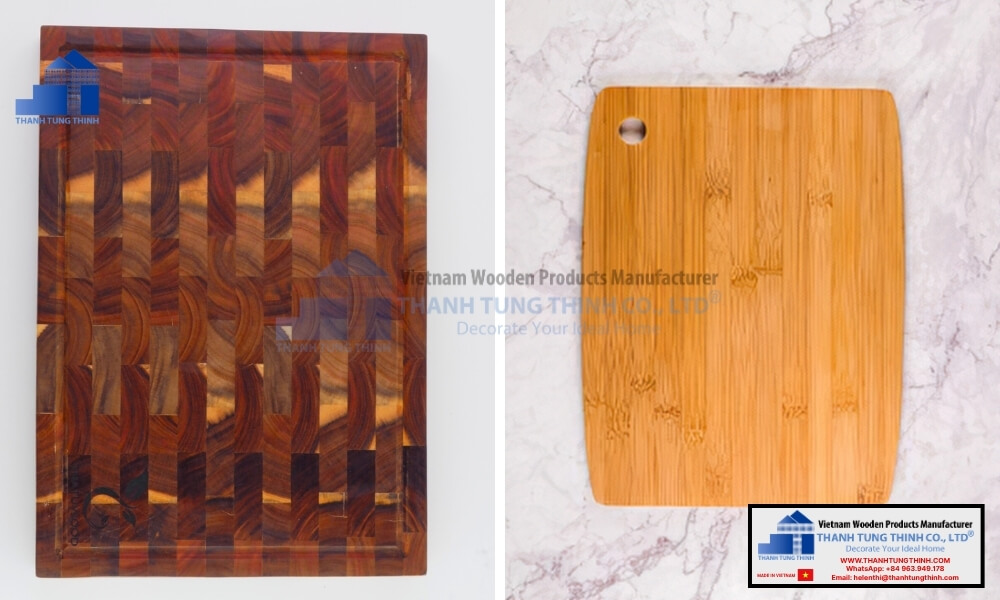
- Hardness and Impact: Bamboo is technically a grass bonded with heavy adhesives. It possesses an extremely high density and rigidity (often higher than Janka ratings for traditional hardwoods), which can rapidly dull professional culinary knives.
- Moisture and Warping: Bamboo absorbs water differently than solid hardwoods. If poorly manufactured, bamboo end-grain boards are prone to splitting along adhesive lines due to climate humidity shifts. Solid hardwood end-grain boards, when kiln-dried and conditioned properly by manufacturers like ThanhTungThinh, offer superior dimensional stability.
Top Critical Mistakes to Avoid When Sourcing and Buying Wooden Cutting Boards
- Selecting extremely soft timbers (like pine or cedar) that easily dent, trap bacteria, and degrade rapidly, or conversely, picking overly rigid materials (like low-grade bamboo or stone-hard exotics) that immediately dull and chip professional culinary knives.
- Purchasing cutting boards manufactured from poorly dried lumber. When wood with high internal moisture is shipped from humid production regions to dry winter climates (such as North America or Europe), it inevitably warps, cracks, and splits along the glue lines.
- Sourcing cheap products fabricated with non-food-safe, formaldehyde-containing industrial glues or toxic surface lacquers that leach chemicals into food upon contact.
- Mistaking standard edge-grain boards for true end-grain blocks, resulting in products that lack self-healing properties and wear out significantly faster under heavy commercial kitchen use.
- Working with unverified brokers who source illegal or uncertified timber, exposing your brand to heavy customs penalties, import bans, and severe reputational risks related to illegal logging.
Why Choose ThanhTungThinh as Your Strategic Manufacturing Partner?
When international brands and B2B buyers investigate Why choose an end-grain wooden cutting board manufacturing partner in Asia, ThanhTungThinh stands out through proven operational excellence:
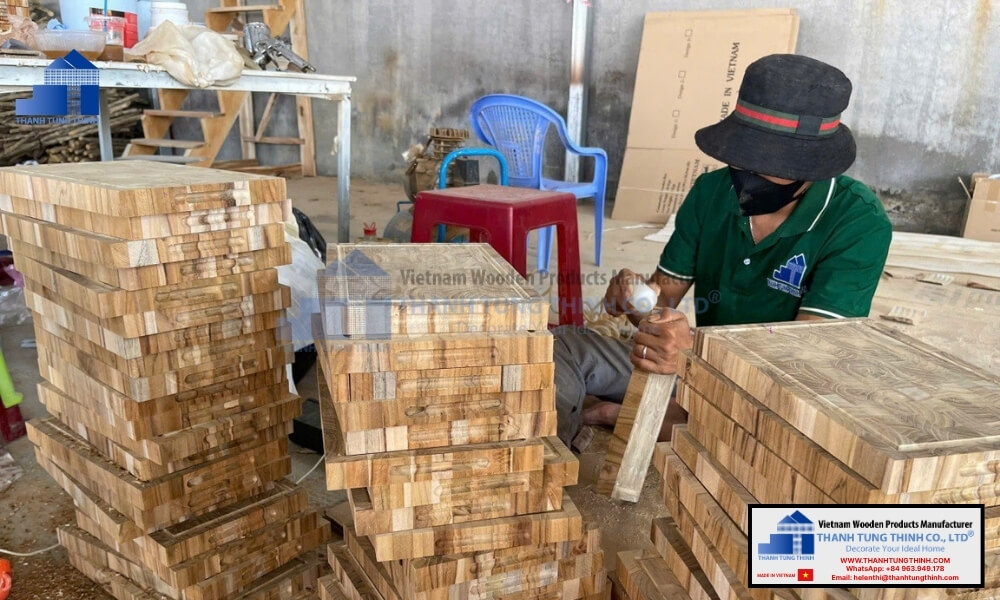
- Uncompromising Product Quality: We maintain strict 3-layer quality control inspections, keeping defect rates below 1% across all production batches.
- Advanced Manufacturing Capacity: Supported by a large-scale factory infrastructure, we maintain a reliable export output of 5 forty-foot containers per month, fulfilling massive global contracts seamlessly.
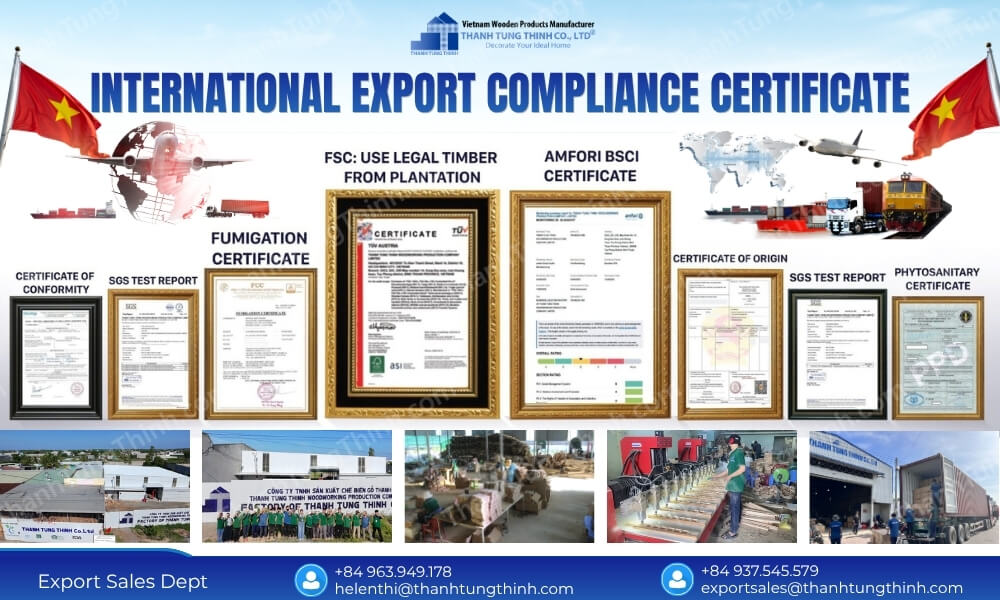
- International Export Compliance: All operations comply fully with global regulatory standards, holding certifications including FSC, BSCI, ISO 9001:2015, FDA, LFGB, and Prop 65CA, eliminating all legal import risks.
- Flexible OEM/ODM Customization: We offer tailored dimensions, custom laser engraving, proprietary packaging, and diverse wood pairings to match your exact brand requirements.
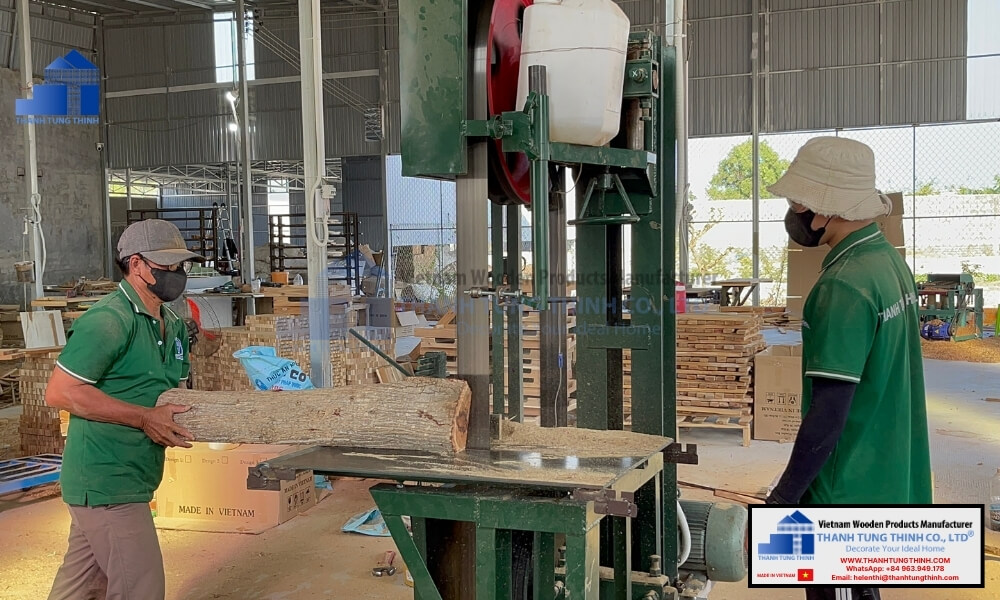
Expert Production Tip from ThanhTungThinh: To prevent transit cracking across varying global climates, our factory utilizes rigorous kiln-drying protocols to lock internal timber moisture strictly between 8% and 12% before final assembly and oil conditioning.
Conclusion and B2B Wholesale Partnership at ThanhTungThinh
Selecting the right manufacturing partner is the definitive factor in building a high-margin, trusted kitchenware brand. By understanding Why choose an end-grain wooden cutting board, wholesale importers can leverage superior product durability, natural self-healing performance, and stunning aesthetics to capture high-end market share. ThanhTungThinh combines master craftsmanship, responsibly sourced Teak and Acacia timber, and strict international compliance to deliver world-class wooden cutting boards globally.
Scale your commercial distribution network today with our premium collection of teak end grain cutting board and acacia wooden cutting boards . Contact our commercial sales team now to request our comprehensive product catalog, flexible volume pricing tiers, and dedicated OEM/ODM partnership consultation.
🌐 Website: https://thanhtungthinh.com/
📌 Pinterest: https://www.pinterest.com/THATUWOOD/
📌 Youtube: https://www.youtube.com/@thanhtungthinhmanufacturer
📌 Facebook: https://www.facebook.com/thanhtungthinh
📌 Linkedin: https://www.linkedin.com/company/thanh-tung-thinh-co-ltd
With more than 15 years of production experience, Thanh Tung Thinh Co., Ltd. is one of the leading reputable Wooden Products manufacturers and exporters specializing in Wooden Products, Wooden boxes products, Wooden Packaging, wooden souvenirs, kitchenware, household utensils, driftwood products, bonsai woods and pet, bird products from coffeewood; other customized products…In particular, all of our wood raw materials are FSC certified, demonstrating our commitment to strictly adhering to sustainable logging and environmental protection standards, providing complete peace of mind for our global customers.
📍 No. 227 To Hien Thanh St, W13, District 10, Ho Chi Minh city, Vietnam
📍 General Warehouse: 451/29/51 To Hien Thanh Street, Dien Hong Ward, Ho Chi Minh city, Vietnam
📍 Factory 1, 2: Lien Huong Town, Tuy Phong District, Binh Thuan Province, Vietnam
📍 Factory 3: Phuoc The Town, Tuy Phong District, Binh Thuan Province, Vietnam
☎ WhatsApp: +84 963.949.178
✉ Email: [email protected]
🌐 Website: www.thanhtungthinh.com
Frequently Asked Questions
What are the core reasons driving global wholesale demand when considering Why choose an end-grain wooden cutting board?
Importers and culinary brands prioritize end-grain boards because their vertical fiber structure protects knife blades, provides natural self-healing durability, resists bacterial growth, and offers a luxurious aesthetic that commands high wholesale profit margins.
How does ThanhTungThinh ensure legal compliance and eliminate illegal logging risks for international buyers?
We source raw timber exclusively from certified sustainable forests and managed plantations. Our supply chain maintains complete documentation verified by global standards including FSC, BSCI, and ISO 9001:2015, guaranteeing 100% legal security for our wholesale partners.
What manufacturing standards are implemented to prevent transit warping or splitting?
ThanhTungThinh enforces advanced kiln-drying protocols to maintain an internal moisture balance between 8% and 12%, combined with multi-stage structural gluing and balancing oil treatments to withstand extreme climate shifts during ocean transit.
Can ThanhTungThinh fulfill large-scale custom OEM and ODM wholesale orders?
Yes. With an export capacity of 5 forty-foot containers per month, we specialize in custom manufacturing, tailored dimensioning, branded laser etching, and specialized packaging for global wholesale chains and distributors.
Why is an end-grain wooden cutting board considered superior to standard edge-grain or plastic options?
End-grain surfaces absorb knife impacts rather than resisting them, preventing blade dulling while offering a natural self-healing architecture and superior antimicrobial defense that outperforms standard plastic or flat-grained wooden alternatives.
Related articles
- TOP 7 Best Wood For End Grain Cutting Board Every Wholesaler Must Know
- What Is End Grain Wooden Cutting Board? Is It The Perfect Choice For Wholesalers?
- What Is The Difference Between Edge Grain vs End Grain Cutting Board?
- Top 8 Best End-Grain Wooden Cutting Boards of 2026 Favored by Wholesale Customers at ThanhTungThinh
- Bulk Natural Teak Wood Cutting Board Supply — Uninterrupted B2B Chain
- Do Teak Wood Cutting Boards Splinter? The Ultimate Durability Guide
- Certified Teak Wood Cutting Board Manufacturer: Strict Quality Control System
- High-Margin Teak Wood Cutting Board Wholesale Supply for Distributors
- Premium Teak Wood Cutting Board Supplier: Ready-to-Ship Wholesale Inventory

