


Table of Contents
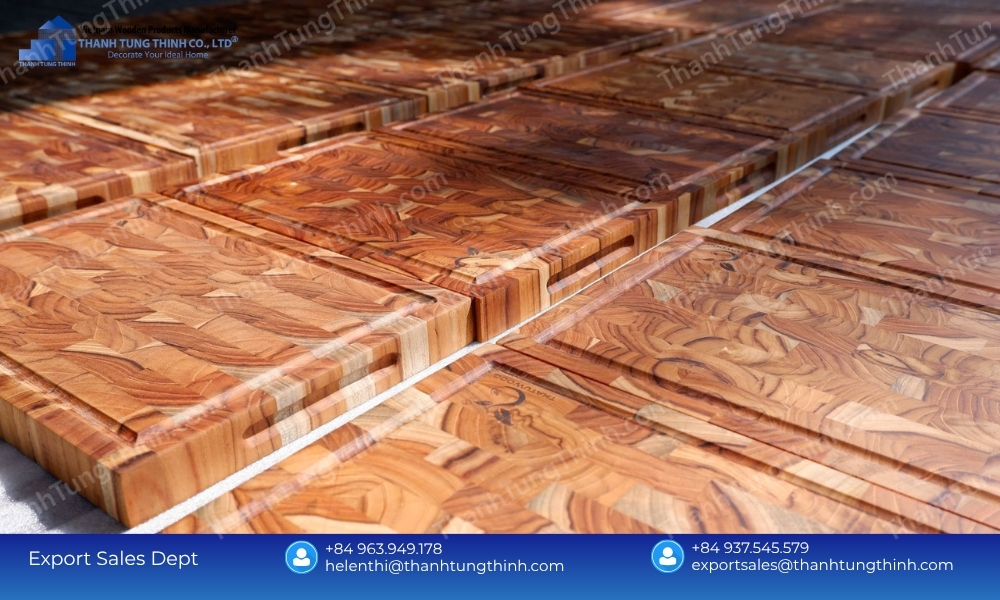
When purchasing kitchenware in bulk, B2B buyers and commercial retailers prioritize product longevity because offering items that crack or shed dangerous slivers can severely damage brand reputation. This raises a critical consumer question: do teak wood cutting boards splinter over time? The short answer for a high-quality product is a resounding no.
Known scientifically as Tectona grandis, teak is globally celebrated for its unmatched structural integrity and natural resistance to surface degradation. For wholesale buyers looking to invest in inventory that minimizes customer returns and maximizes long-term satisfaction, understanding why a teak wood cutting board stands superior against splintering is essential.
This comprehensive guide breaks down the material science, manufacturing standards, and commercial benefits of adding premium, splinter-resistant teak boards to your B2B culinary product lineup.
The Core Question: Do Teak Wood Cutting Boards Splinter?
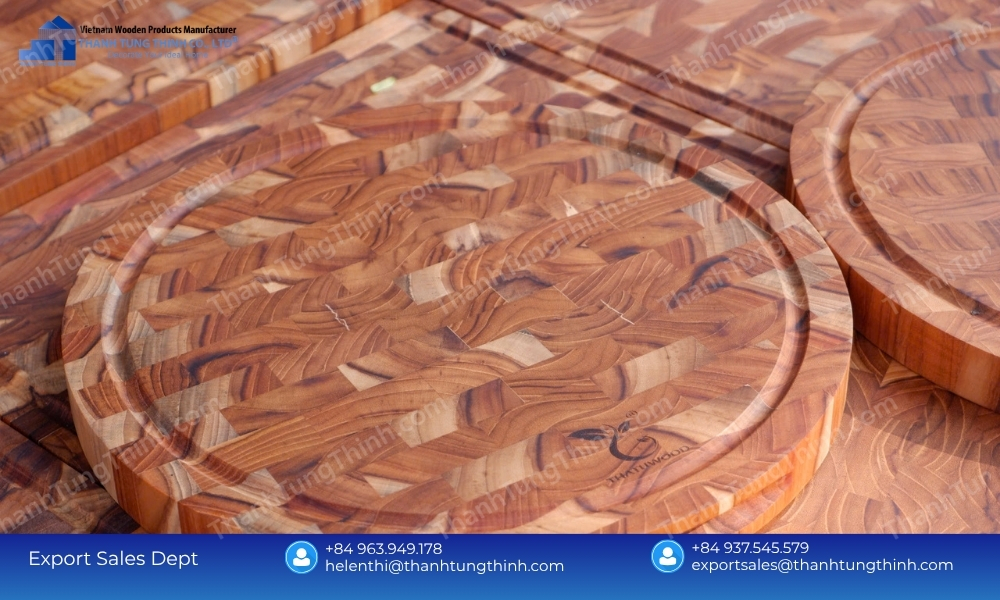
To answer the pressing market concern do teak wood cutting boards splinter under heavy culinary use?we must look directly at the intrinsic properties of the wood itself. Unlike softer hardwoods or poorly processed composites, a professional-grade teak wood cutting board possesses a dense, tight-grained structure that naturally resists fiber separation.
When end-users ask if do teak wood cutting boards splinter, they are often remembering bad experiences with bamboo or lower-tier woods that easily peel and fray under sharp chef knives. Teak operates in an entirely different league. Its high silica content acts as a natural shield, keeping the wood fibers bound tightly together even during repetitive, high-impact chopping. For B2B importers and distributors, this means you can confidently assure your commercial clients that your sourced teak boards will not shed hazardous wooden fragments into food.
Furthermore, the question of whether do teak wood cutting boards splinter is directly tied to how the wood responds to moisture. Standard wooden boards absorb water, swell, dry out, and subsequently crack—a cycle that inevitably leads to splintered edges. Teak, however, is heavily saturated with natural rubber and resinous oils. This unique composition provides an organic waterproof barrier, ensuring that your teak wood cutting board merchandise retains its smooth, pristine surface throughout years of washing and usage.
Why Teak Outperforms Other Hardwoods in Commercial Settings
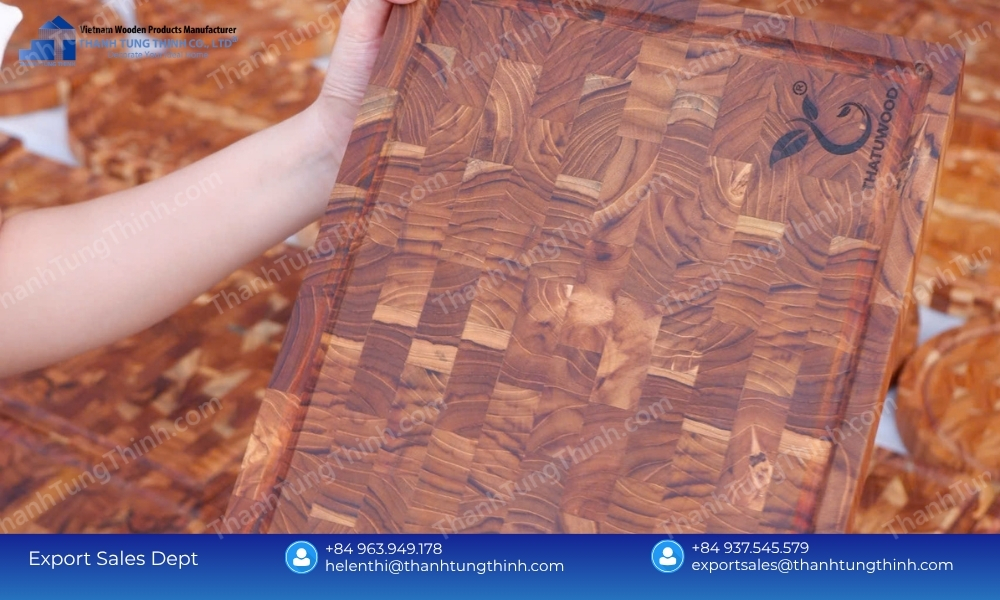
Every procurement manager knows that product performance determines long-term profitability. When evaluating a teak wood cutting board against competitors like maple, walnut, or bamboo, the structural advantages become crystal clear.
Natural Resin and Oil Saturation
The primary reason why do teak wood cutting boards splinter far less than other options is its high concentration of natural oils. In most hardwoods, these oils dry out after production, forcing the user to constantly apply mineral oil to prevent dry rot and surface splitting. Teak retains its internal moisture-resistant oils deep within its heartwood. This ensures that even in high-volume commercial kitchens, a wholesale teak wood cutting board remains supple, smooth, and entirely free from surface fraying.
Exceptional Dimensional Stability
Moisture fluctuations are the ultimate enemy of wooden kitchenware. When exposed to water and heat, wood expands and contracts. This constant movement weakens the grain, causing lesser materials to warp and eventually splinter.
Thanks to its low shrinkage coefficient, a teak wood cutting board boasts incredible dimensional stability. It resists warping, checking, and splitting, making it the most reliable option for B2B buyers who need to ship large container loads across diverse global climates without fearing product deformation.
Comparing Cutting Board Materials: A B2B Perspective
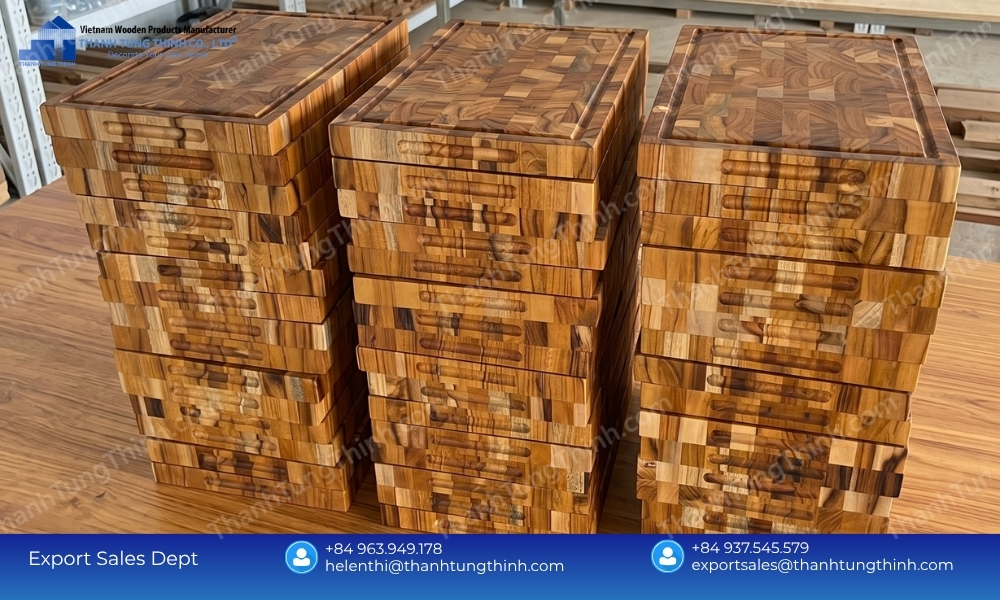
When managing bulk inventory, choosing the right material profile saves thousands of dollars in quality control and customer service costs. The table below illustrates how a teak wood cutting board stands up against other popular materials in key commercial performance metrics, clearly demonstrating why the market rarely worries about whether do teak wood cutting boards splinter.
| Material Type | Resistance to Splintering | Knife Friendliness | Moisture Resistance | Longevity & Durability | Wholesale ROI Potential |
| Premium Teak Wood | Extremely High | Excellent (Gentle) | Outstanding | Decades | Maximum (Premium Tier) |
| Hard Maple | High | Good | Moderate | High | Moderate to High |
| American Walnut | Moderate to High | Excellent | Low to Moderate | Medium to High | High |
| Moso Bamboo | Very Low (Splinters Easily) | Poor (Dulls Knives) | Moderate | Short | Low (Commodity Pricing) |
| Plastic / Composite | High (Gouges Instead) | Poor | High | Short to Medium | Low |
Manufacturing Factors That Prevent Splintering in Bulk Production
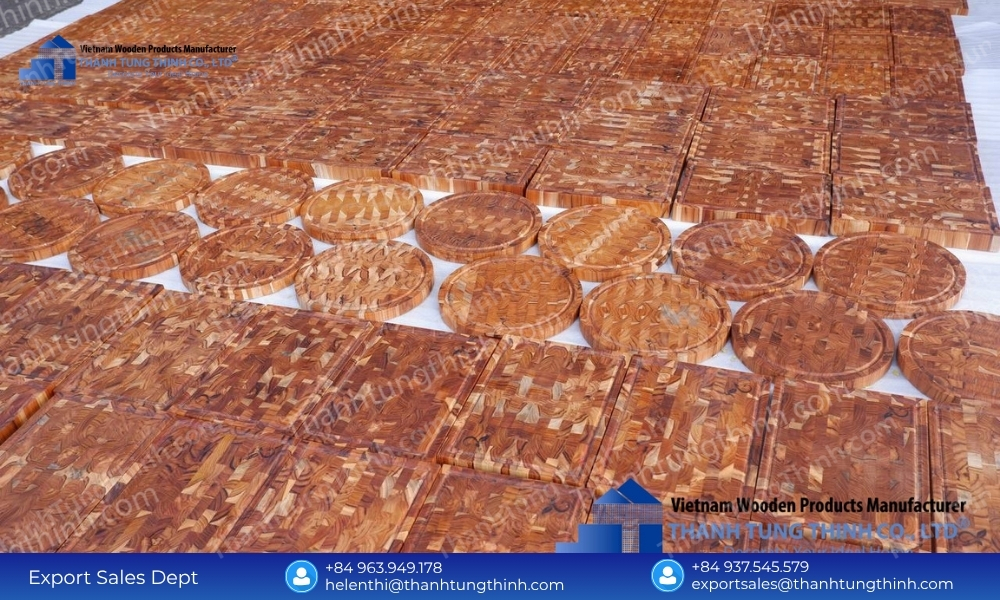
While the raw material is inherently superior, the answer to do teak wood cutting boards splinter also heavily depends on the manufacturing expertise behind the product. If a factory uses substandard drying techniques or poor grain alignment, even the finest wood can fail.
Precision Kiln Drying Processes
Raw timber contains a high percentage of moisture that must be systematically removed before production. At premium manufacturing facilities, such as Thanh Tung Thinh, the wood undergoes a meticulous, computer-controlled kiln-drying process. Bringing the moisture content down to an optimal 8-12% eliminates internal stresses within the wood. This precise stabilization ensures that the final teak wood cutting board will never warp, shake, or develop the micro-cracks that cause boards to splinter.
End-Grain vs. Edge-Grain Construction
The choice of construction style plays a vital role in determining if do teak wood cutting boards splinter under heavy knife pressure.
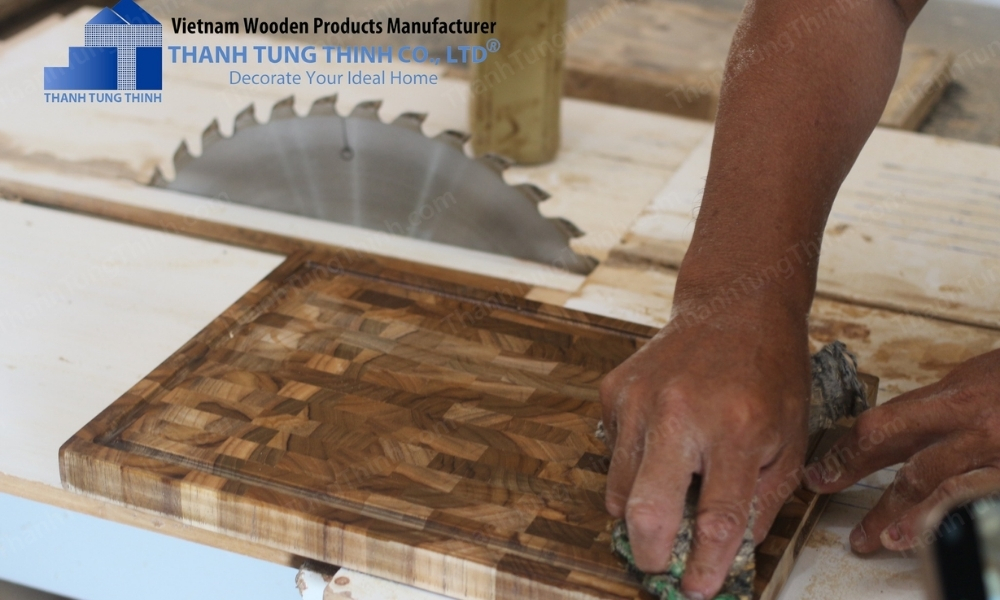
- End-Grain Boards: These boards arrange the wood fibers vertically, resembling a bundle of straws. When a knife strikes, the fibers part naturally and close back up, making it virtually impossible for the surface to splinter.
- Edge-Grain Boards: These feature horizontal wood fibers laid side-by-side. While slightly more prone to superficial knife marks than end-grain, utilizing high-grade teak ensures these boards still resist splintering far better than any edge-grain maple or bamboo competitor.
Maximizing the Lifespan of Wholesale Teak Cutting Boards
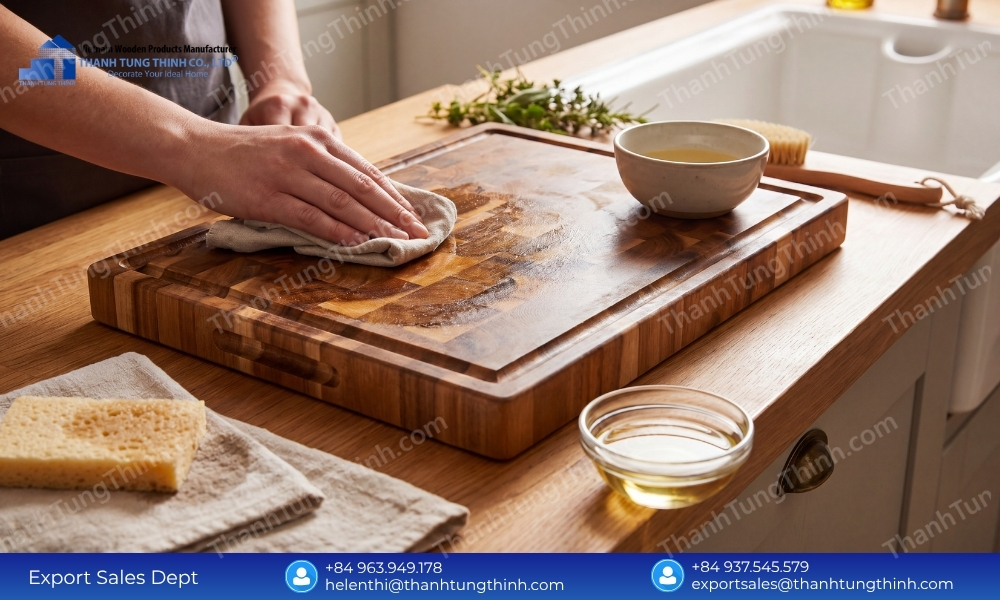
To ensure that end-consumers never have to ask do teak wood cutting boards splinter, brands should educate their buyers on basic commercial care. Even the most resilient teak wood cutting board benefits from proper handling, which preserves its natural beauty and flawless surface for generations.
- Apply Food-Safe Mineral Oil: Although teak is rich in natural resins, a monthly coat of food-grade mineral oil or beeswax enhances its natural color and reinforces its outer defense layer.
- Avoid the Dishwasher at All Costs: High heat, prolonged water exposure, and harsh detergents will strip any natural wood of its protective oils, leading to severe cracking and structural failure.
- Sanitize with Gentle Natural Agents: Instead of harsh chemical bleaches, clean commercial boards with warm water, mild soap, and occasional coarse salt mixed with lemon juice to remove stains.
- Store Vertically for Even Drying: After washing, always air-dry your teak wood cutting board upright so that both sides dry evenly, preventing uneven tension within the wood grain.
Read more:
Partner with Thanh Tung Thinh for High-Quality Wholesale Teak Boards
Sourcing your inventory from a reputable manufacturer is the single most effective way to eliminate quality complaints. For international B2B buyers, distributors, and private label brands seeking premium wooden kitchenware, Thanh Tung Thinh stands out as a world-class manufacturing partner. With years of experience in large-scale wood fabrication and global export, Thanh Tung Thinh specializes in producing top-tier teak wood cutting board collections that meet strict international durability standards.
We source our timber responsibly, ensuring sustainable forestry practices while maintaining strict quality control from raw logs to final retail packaging. Our production lines utilize advanced sanding, gluing, and finishing technologies to guarantee that every board leaving our facility features a perfectly smooth, splinter-free surface.

By choosing Thanh Tung Thinh as your primary wholesale supplier, you gain access to highly competitive factory-direct pricing, flexible OEM/ODM customization options, and reliable lead times. Protect your brand reputation and scale your business with a partner who understands that questions like do teak wood cutting boards splinter should never be a concern for your end customers. Contact our B2B sales team today to request a custom quote and sample catalog tailored to your market needs.
📩 Email: [email protected]
🌐 Website: https://thanhtungthinh.com/
📌 Pinterest: https://www.pinterest.com/THATUWOOD/
📌 Youtube: https://www.youtube.com/@thanhtungthinhmanufacturer
📌 Facebook: https://www.facebook.com/thanhtungthinh
📌 Linkedin: https://www.linkedin.com/company/thanh-tung-thinh-co-ltd
Read more:
- Teakwood Cutting Board: Why Global Consumers Are Choosing Teak for a Safer, More Sustainable Kitchen
Q&A: Common Bulk Buyer Queries Regarding Teak Boards
1. Do teak wood cutting boards splinter after prolonged exposure to commercial kitchen environments?
No. Thanks to the wood’s high natural oil content and superior fiber density, a high-quality teak board maintains its structural integrity and resists splintering, even under heavy daily commercial use.
2. Why is a teak wood cutting board less likely to splinter compared to a bamboo cutting board?
Bamboo is a grass with long, brittle vascular bundles that easily peel and fray under sharp knives. Teak is a dense hardwood filled with natural rubber and silica that holds fibers tightly together.
3. How does Thanh Tung Thinh ensure that mass-produced teak cutting boards do not split or crack during overseas shipping?
Thanh Tung Thinh utilizes rigorous kiln-drying methods to lower moisture content to an ideal 8-12%. This removes internal wood tension and prevents warping or cracking during long-distance transit.
4. Will frequent knife scars on a teak wood cutting board eventually turn into hazardous splinters?
No. Teak is highly resilient and knife-friendly. Instead of fracturing or chipping away into splinters, the wood fibers compress and absorb the impact, preserving a smooth surface.
5. What certifications should B2B buyers look for when sourcing wholesale teak wood products?
Buyers should look for legal timber tracking certifications, such as FSC or local government export licenses, which guarantee the teak is sustainably harvested and processed under strict quality standards.
6. Can a low-quality adhesive used in edge-grain teak boards cause the wood to separate and splinter?
Yes. Substandard glues can fail under moisture. Thanh Tung Thinh uses premium, non-toxic, FDA-approved, waterproof wood adhesives to ensure the laminated joints remain permanently bonded.

