


Table of Contents
Among the finest materials available, tropical hardwoods stand out due to their exceptional durability, stunning golden-brown hues, and natural resilience. However, even the most rugged food preparation surface requires a systematic, professional maintenance routine to retain its pristine structural integrity and aesthetic value over decades of heavy kitchen use.
Knowing exactly how to care for an teak wood cutting board properly is a non-negotiable operational standard for businesses that want to eliminate inventory depreciation, minimize customer returns, and maximize the utility of their culinary assets. Following a specialized preservation blueprint prevents common hardwood defects such as moisture warping, structural splitting, and deep bacterial contamination, guaranteeing lifetime structural endurance.
The Physical Science Behind Tropical Hardwood Preservation
o successfully implement a professional protocol on how to care for an teak wood cutting board, procurement managers must first understand the unique cellular architecture of Tectona grandis. Tropical timber possesses internal characteristics that dictate how it reacts to moisture, heat, and daily mechanical friction.
Teak features high concentrations of natural oily resins and microscopic mineral silica, serving as a permanent water-repellent barrier. However, when establishing corporate standards on how to care for an teak wood cutting board, workers must recognize that commercial dish soaps can gradually degrade these surface resins.
Specialized care preserves this built-in shield, preventing structural cracks. Additionally, teak features a very low volumetric shrinkage rate, granting it high dimensional stability. Proper washing and drying techniques fully optimize this stable cellular matrix, allowing the cutting block to hold its flat shape under high-humidity commercial environments.
Daily Operational Guidelines: Washing and Sanitizing After Every Shift
For commercial catering operations, high-end restaurants, and active home kitchens, daily cleanup routines must be highly efficient, practical, and non-destructive to the wood’s organic fibers. This standard daily workflow outlines how to care for an teak wood cutting board systematically after each food preparation session.
Immediate Surface Debris Extraction
Never allow fresh meat juices, vegetable starches, or sticky food residues to dry and harden on the wood surface. As soon as food prep wraps up, use a flat plastic bench scraper to gently clear away all surface debris. This quick mechanical clearing minimizes the volume of water and friction needed during the washing stage, protecting the outer fibers from excessive wear.
The Low-Moisture Hand Washing Framework
Dampen a soft microfiber cloth or a non-abrasive nylon sponge with warm water and apply a few drops of a mild, pH-balanced dish soap. Gently wash the wood surface, always scrubbing along the natural direction of the grain lines. This targeted friction lifts away microscopic food particles and surface oils without gouging the wood or stripping its deep-core natural resins.
Rapid Rinsing and Instant Towel Dehydration
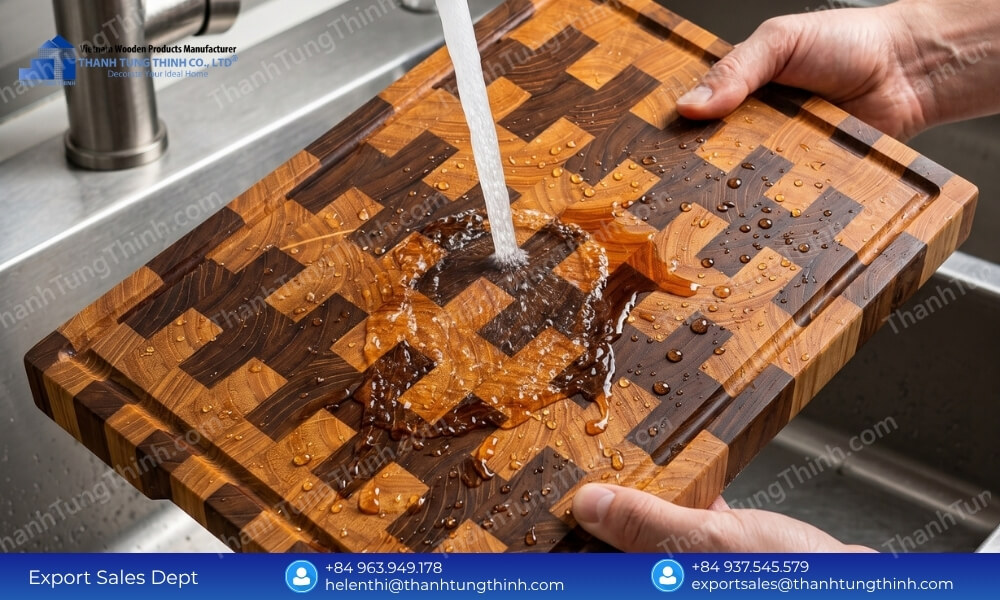
Rinse away the soap residue under a gentle stream of warm running water for only a few seconds. Never submerge a wooden block inside a full sink or allow liquids to pool in its juice grooves. Immediately wipe down the entire surface with a dry towel to draw out all remaining surface moisture before it can penetrate the wood cells.
The Vertical Air Drying Strategy
Once towel dried, stand the board vertically on its narrow edge on a clean, dry dish rack. Drying a wood block flat against a solid countertop traps moisture underneath, forcing the bottom fibers to expand faster than the dry top surface, which quickly leads to warping and mold growth. Allowing air to circulate completely around all sides ensures the board dries evenly and keeps its flat shape.
Professional Deep Cleansing: Odor Neutralization and Stain Remediation
Even with consistent daily hand washing, natural wood cutting blocks used to process pungent ingredients like raw garlic, fresh onions, or wild seafood will eventually absorb stubborn odors and develop surface stains. Knowing how to care for an teak wood cutting board deeply using organic kitchen staples allows businesses and consumers to sanitize the wood fibers safely without using harsh industrial chemicals.
The Baking Soda, Coarse Salt, and Lemon Juice Scrub
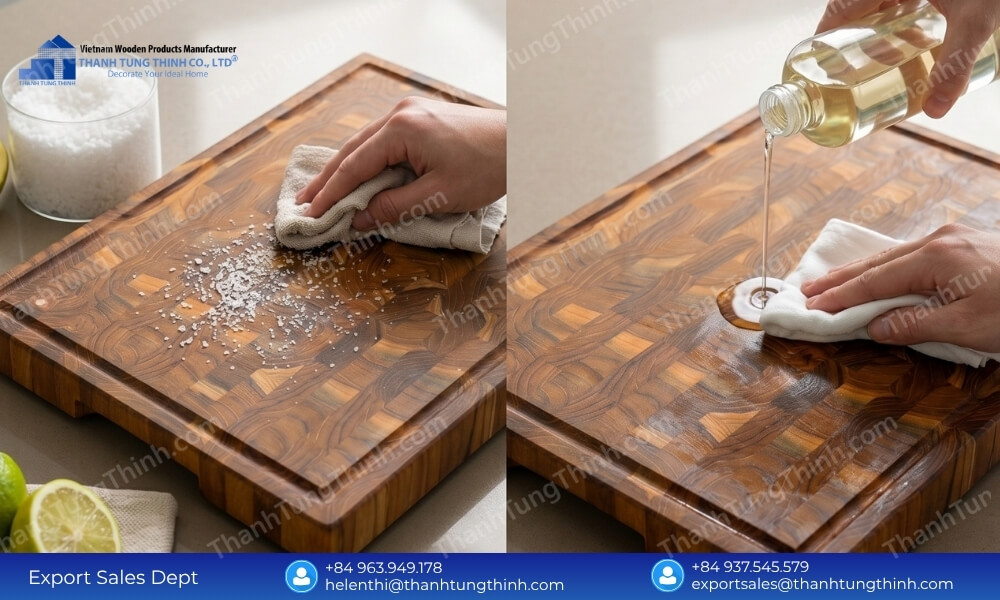
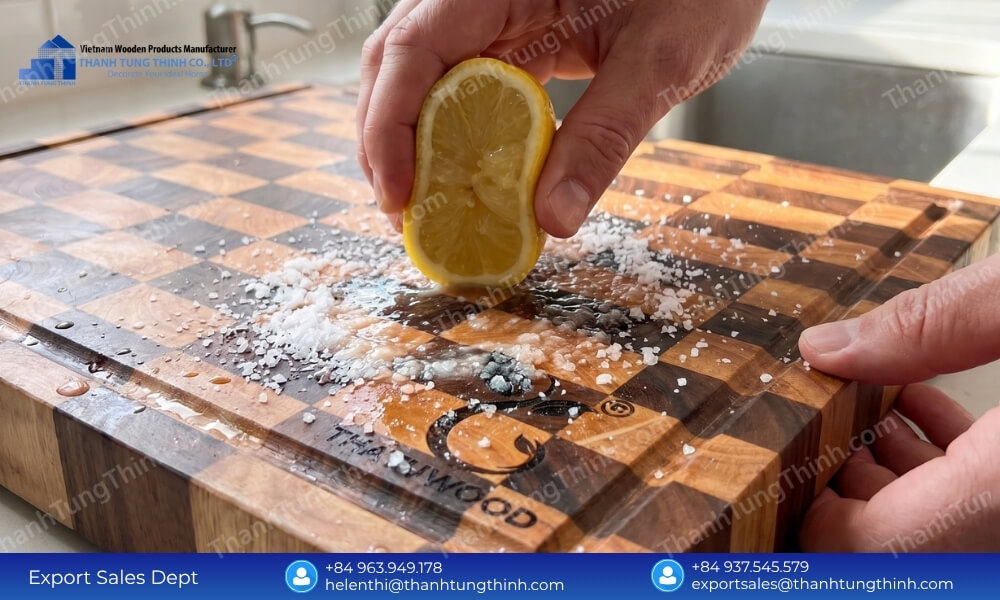
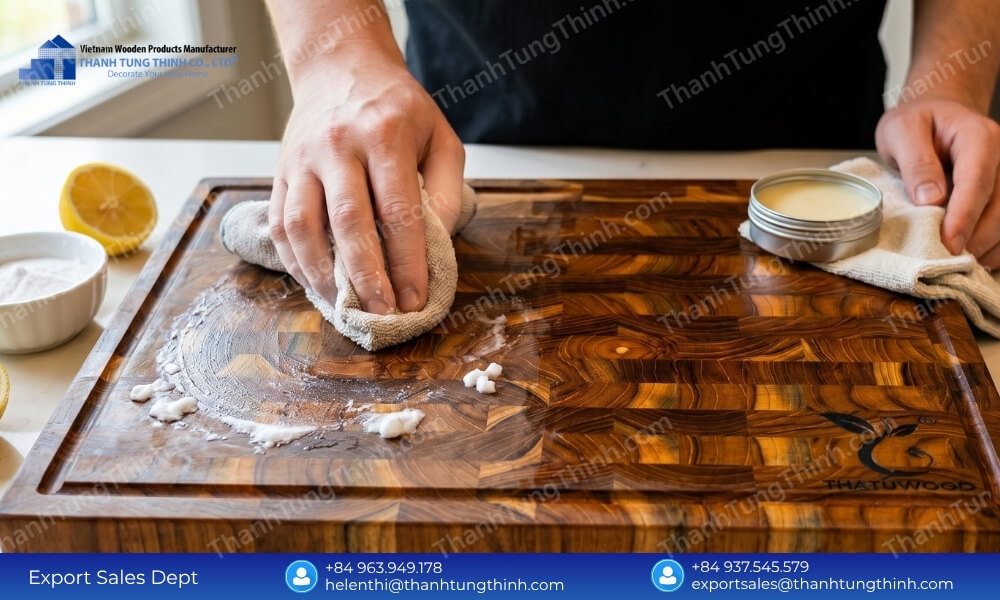
To remove stubborn surface stains and neutralize deep-set food odors safely, sprinkle a generous layer of baking soda or coarse sea salt across the completely dry surface of your teak wood cutting board. Slice a fresh lemon in half and use the cut side to firmly scrub the salt or baking soda into the wood fibers, squeezing gently to release the fresh juice.
The combination of coarse salt friction and natural citric acid dissolves organic stains, lifts deep odors, and freshens the wood surface without damaging its natural structural resins. Wipe away the residue with a damp cloth and towel dry immediately.
Disinfecting Micro-Scratches with Food-Grade Hydrogen Peroxide
In high-volume commercial food preparation areas, eliminating microscopic bacteria from raw poultry or meats is a critical food safety standard. To sanitize your block deeply without relying on harsh bleach solutions, apply a small amount of 3% food-grade hydrogen peroxide across the wood surface using a clean sponge. The liquid will fizz gently as it lifts organic matter out of fine knife marks. Let it sit for two to three minutes, rinse briefly with warm water, and towel dry immediately to maintain a perfectly sanitary food preparation surface.
Long-Term Maintenance: The Essential Oil Conditioning Protocol
Learning how to care for an teak wood cutting board effectively requires a clear understanding of the conditioning process. While daily cleaning removes surface contamination, regular oiling treatments are what restore the wood’s protective moisture barrier, stopping your premium wood blocks from drying out, looking dull, and splitting over time.
Selecting the Correct Food-Safe Conditioning Oils
Never use standard culinary oils like olive oil, canola oil, or vegetable fats to condition a wood cutting surface. These organic fats spoil quickly when exposed to air, turning rancid inside the wood cells, which breeds bacteria and creates foul odors that can contaminate fresh food. Instead, always use food-grade pure mineral oil, liquid paraffin, or specialized organic beeswax board creams. These stable, non-spoiling oils easily sink deep into the dense grain of a teak wood cutting board, sealing the pores and creating a durable water-resistant barrier.
Step-by-Step Conditioning Application Guide
- Verify Absolute Dryness: Ensure your wood block is completely clean and has air-dried vertically for at least 24 hours before applying any treatment. Oiling a damp board traps moisture inside the core cells, which can cause internal rotting.
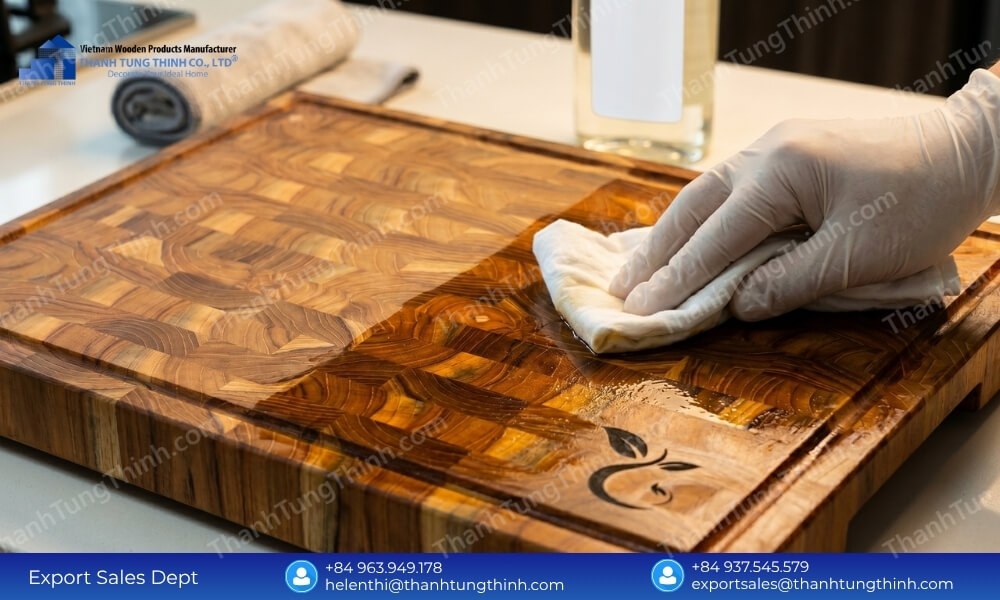
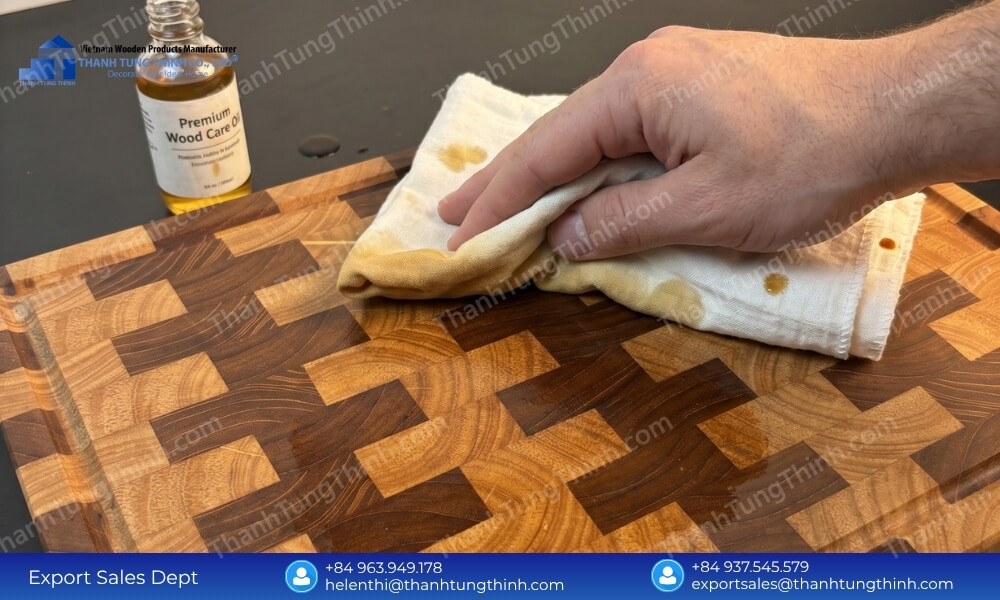
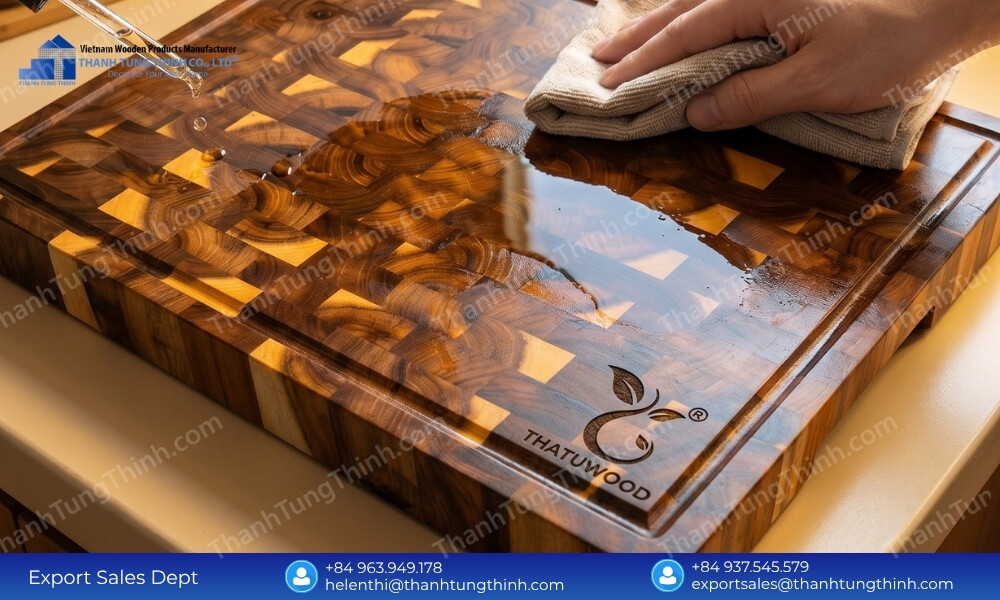
- Generous Oil Application: Pour a generous amount of food-grade mineral oil directly onto the dry wood surface. Use a lint-free cloth or clean paper towel to spread the oil evenly across every face, including the sides, handles, and back.
- Allow Deep Core Penetration: Let the conditioning oil soak deep into the dense wood fibers for at least 4 to 8 hours, or ideally overnight. The tightly interlocking grain of a tropical board takes time to absorb oils completely.
- Buff Away Excess Residue: The next morning, use a clean, dry microfiber cloth to firmly buff the entire surface, wiping away any unabsorbed oil. The finished surface should feel silky smooth and look rich, without leaving a greasy residue on your fingers.
Critical Mistakes to Prohibit in Commercial and Retail Settings
When managing large volumes of premium kitchenware inventory or running busy food service venues, avoiding common care mistakes is essential to protecting your financial investments and ensuring product longevity.
- Prohibit Automatic Dishwashers: The extreme heat, extended water submersion, and aggressive chemical detergents inside a dishwasher will destroy a premium teak wood cutting board in a single cycle, causing severe warping and splitting.
- Avoid Harsh Industrial Cleansers: Pure bleach, commercial sanitizing sprays, and concentrated industrial detergents break down the natural wood fibers, leading to a dry, rough texture that splinters easily.
- Never Soak the Board in Water: Allowing a wood block to sit inside a water-filled sink forces the fibers to absorb excess moisture, which leads to structural cracking, adhesive failure, and mold development.
- Avoid Direct Heat and Sunlight Exposure: Drying your boards directly next to commercial stoves, under hot heat lamps, or in intense direct sunlight causes the wood to dry unevenly, resulting in severe warping.
Securing Supply Chain Excellence with Thanh Tung Thinh Factory
For international kitchenware distributors, corporate brand procurement managers, and global retail buyers, mastering how to care for an teak wood cutting board is the foundation for driving long-term product satisfaction. The next critical step is partnering with a reliable manufacturer that can deliver premium-grade, legally compliant wood products consistently. This is where Thanh Tung Thinh provides exceptional manufacturing capabilities.
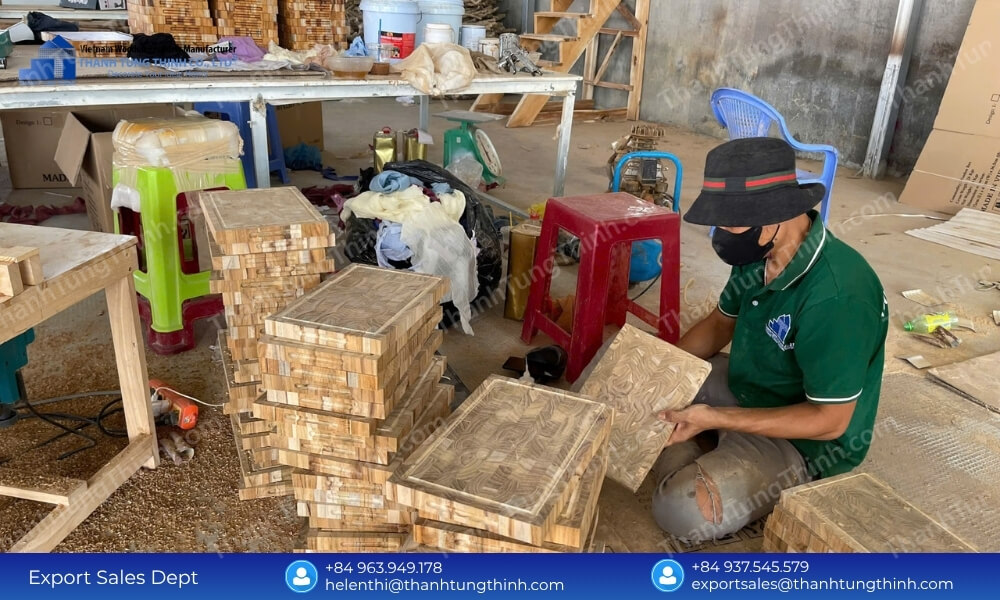
As an established, large-scale wood products manufacturer based in Vietnam, we specialize in mass-producing premium, export-quality cutting boards, chopping blocks, and serving trays for a demanding global B2B marketplace.
Our facility handles high-volume wholesale orders comfortably, providing stable container-load production capacities and dependable shipping schedules month after month. We use advanced kiln-drying systems to ensure all wood blanks achieve a perfectly balanced internal moisture level before fabrication, making them exceptionally stable, durable, and easy to clean from day one.

📩 Email: [email protected]
🌐 Website: https://thanhtungthinh.com/
📌 Pinterest: https://www.pinterest.com/THATUWOOD/
📌 Youtube: https://www.youtube.com/@thanhtungthinhmanufacturer
📌 Facebook: https://www.facebook.com/thanhtungthinh
📌 Linkedin: https://www.linkedin.com/company/thanh-tung-thinh-co-ltd
Questions & Answers
1. What is the single most important rule for how to care for an teak wood cutting board to avoid wood splits?
The most important rule is to always hand-wash the board with mild dish soap and warm water, towel dry it immediately, and let it air dry vertically. Never submerge it in water or wash it in a dishwasher.
2. Can I use standard kitchen olive oil or canola oil to condition my teak wood cutting board?
No, standard cooking oils spoil quickly when exposed to air, turning rancid inside the wood cells, which creates sour odors and breeds bacteria. Always use food-grade pure mineral oil or specialized beeswax creams.
3. How often should a high-volume commercial kitchen oil condition a premium teak wood cutting block?
In heavy-use commercial kitchens, the board should be oiled every two weeks to protect the wood grain from drying out. For regular home use, a thorough conditioning treatment once a month is sufficient.
4. Why must a premium teak wood cutting board always be dried vertically instead of flat on a counter?
Drying a wood board flat traps moisture underneath, causing the bottom fibers to expand faster than the dry top surface, which quickly leads to structural warping and mold growth.
5. What should I do if my hardwood cutting board develops a foul smell from ingredients like raw fish or garlic?
Sprinkle baking soda or coarse sea salt across the dry surface, rub it thoroughly using the cut side of a fresh lemon half, let it sit for a few minutes, then rinse and dry vertically.

