


Table of Contents
Sourcing the ultimate hardscape for high-volume commercial kitchens or selecting premium inventory for international retail distribution requires careful analysis of material science, financial longevity, and daily performance. Among the hardwood cutting blocks available on the global market, tropical hardwoods have sparked intense debate among culinary professionals and corporate buyers alike.
Many B2B procurement managers consistently ask: is teak wood cutting board good for heavy-duty applications, or is its reputation merely a result of clever marketing? This comprehensive evaluation dives deep into the properties of this tropical timber to discover if an is teak wood cutting board good investment strategy holds up under strict culinary stress tests.
The Natural Composition of Teak and Its Impact on Kitchen Prep
To understand whether an is teak wood cutting board good choice for high-volume environments exists, one must look at the natural growth characteristics of the Tectona grandis tree. Native to tropical environments, this wood species develops unique chemical and physical defenses during its growth cycle that set it apart from standard domestic hardwoods like maple, walnut, or cherry.
High Natural Oil and Rubber Content
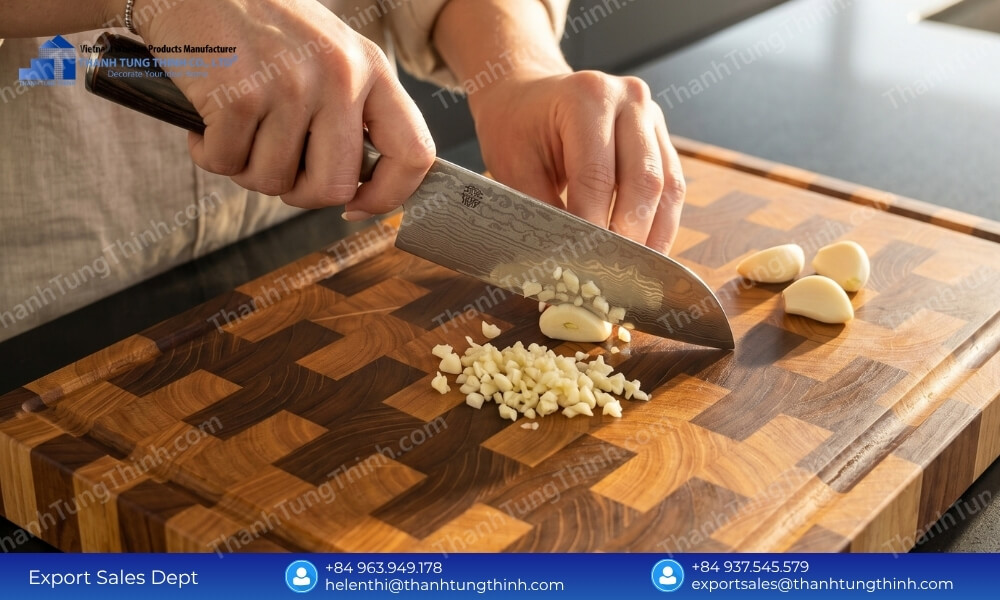
The most outstanding characteristic of a premium teak wood cutting board is the high concentration of natural oils and rubber resins locked inside its heartwood matrix. While domestic timbers rely entirely on manual applications of food-grade mineral oils to stay hydrated, this tropical hardwood carries its own built-in moisture protection system. These natural oils remain active long after the lumber is harvested, cured, and crafted into kitchenware products. This unique internal chemistry provides exceptional water resistance, making it highly effective at stopping liquid absorption, deep-set food staining, and bacterial colonization during daily food preparation.
Tightly Interlocking Grain and Fiber Stability
Tropical timbers develop dense, tightly interlocking grain patterns as a survival mechanism against extreme moisture fluctuations in tropical climates. This stable cellular matrix means a teak wood cutting board experiences minimal expansion and contraction when exposed to liquid. While standard hardwood cutting blocks frequently warp, twist, or split at the glued seams when washed continuously in commercial kitchens, tropical hardwoods hold their straight structural shape beautifully over years of hard service.
Comprehensive Advantages: Why Teak Captures the Premium B2B Segment
When multi-channel retail brand managers and international distributors choose to invest in tropical kitchenware lines, they are paying for specific premium performance attributes. Understanding these unique benefits allows wholesale buyers to market these luxury products effectively to high-end culinary establishments and boutique home retailers.
- Exceptional Moisture and Rot Resistance: The natural resins inside the wood fiber block water absorption, meaning the board dry rapidly and resists cracking, warping, or rotting even when exposed to damp kitchen environments.
- Low Maintenance Requirements for End Users: Because the wood naturally contains protective oils, a teak wood cutting board requires much less frequent mineral oil conditioning compared to traditional maple or walnut alternatives.
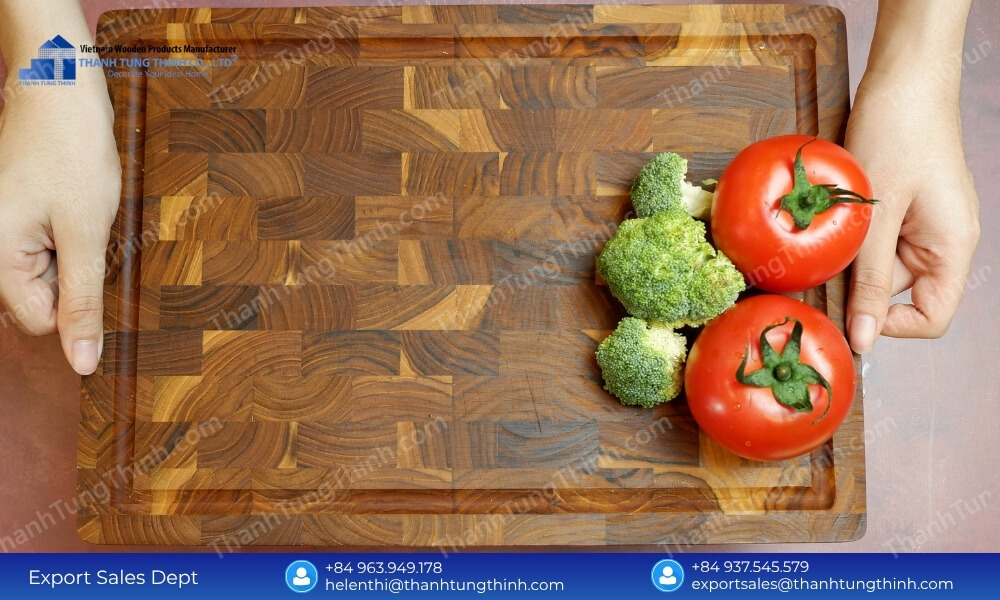
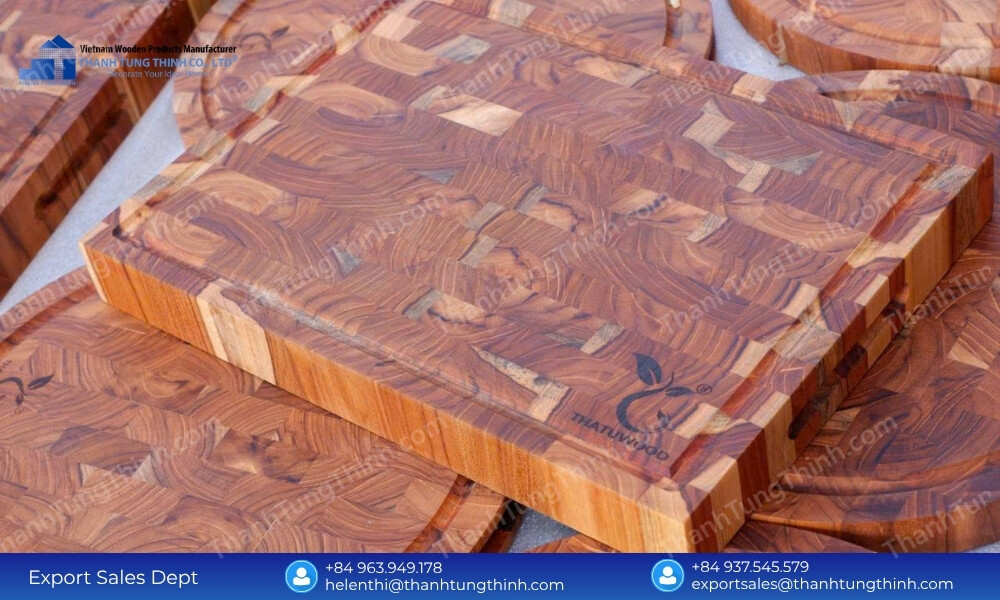
- Striking Organic Aesthetics and Color Longevity: Features a rich golden-brown hue accented by dark, dramatic grain streaks that deepen beautifully with age, allowing the board to serve double duty as high-end charcuterie sharing platters.
- Outstanding Dimensional Stability: High resistance to thermal warping ensures the cutting surface stays perfectly flat on stainless steel kitchen prep tables, protecting chefs from dangerous slipping accidents while slicing.
From a business standpoint, these advantages result in an exceptionally long shelf life and very low rates of product returns. Bulk shipments stored in international fulfillment centers remain highly stable, showing excellent resistance to ambient humidity shifts and structural warping during extended maritime shipping transit. This reliable durability makes it a highly profitable investment for B2B distributors seeking to build a premium brand reputation.
The Unbiased Reality: Notable Drawbacks of Teak Cutting Blocks
To provide a truly honest, balanced overview for our commercial wholesale partners, we must also examine the negative aspects of this material. Asking honestly: is teak wood cutting board good for every single kitchen environment requires identifying its limitations so buyers can make well-informed supply chain decisions.
High Silica Content and Edge Blunting Risks
The most significant disadvantage of using a tropical teak wood cutting board is the presence of microscopic natural minerals known as silica embedded within the wood fibers. The tree absorbs silica from the tropical soil as it grows, incorporating it directly into its cellular walls. While this mineral content makes the wood exceptionally tough and weather-resistant, it essentially acts like microscopic glass particles. Consequently, cutting repeatedly on a high-silica surface will blunt the razor-sharp edges of premium carbon steel chef knives faster than cutting on softer woods like maple or hinoki. For professional kitchens that prioritize knife edge preservation above all else, this attribute require more frequent knife sharpening sessions.
Sourcing Complexities and Environmental Tracking Regulations
Because this wood grows primarily in tropical regions, international supply routes are subject to strict environmental laws, including the Lacey Act in the United States and European Timber Regulations (EUTR). Sourcing these items from unverified, low-cost trading companies exposes B2B importers to severe legal fines if the timber was harvested through illegal logging practices. Ensuring your supply chain features verified plantation-grown wood with clear tracking documents adds complexity to the procurement process compared to buying locally available domestic woods.
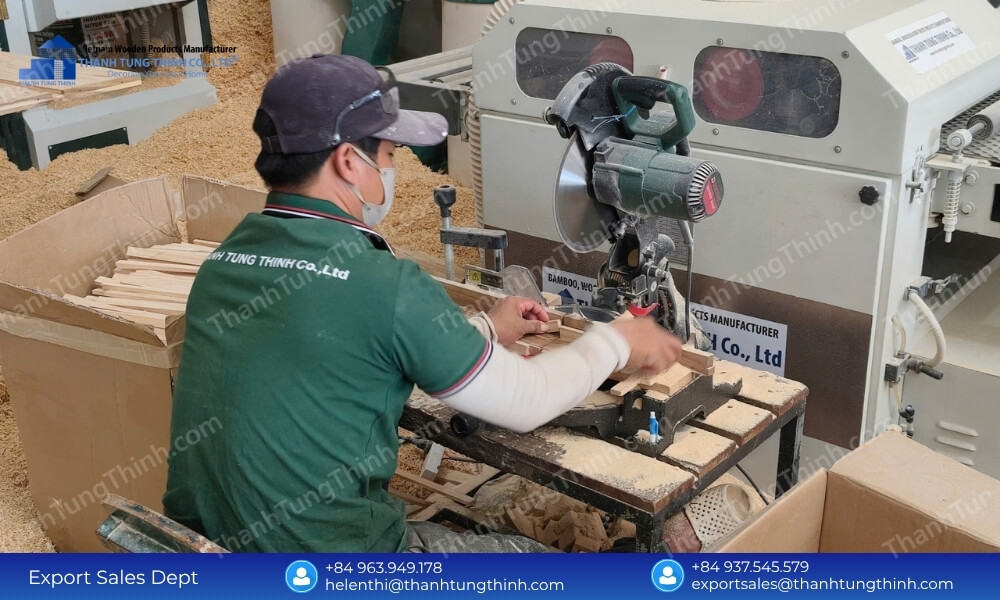
Strategic Commercial Comparison: Teak Versus Alternative Hardwoods
For global brand owners balancing inventory budgets against retail price points, selecting the right wood species is a vital strategic decision. This breakdown highlights where tropical options provide premium value and where alternative hardwoods might better suit specific market segments.
Teak vs. Hard Maple: The Battle for Edge Longevity
Hard maple has long been the gold standard for traditional Western butcher blocks because its fine, uniform grain is gentle on knife edges and offers excellent impact resistance. However, maple lacks natural protective oils and absorbs water easily, making it highly prone to warping and staining if left wet. A tropical teak wood cutting board sacrifices a small amount of knife-edge gentleness in exchange for superior water resistance and much lower maintenance demands, making it a better option for outdoor kitchens or busy humid prep stations.
Teak vs. Walnut: Balancing Rich Aesthetics with Durability
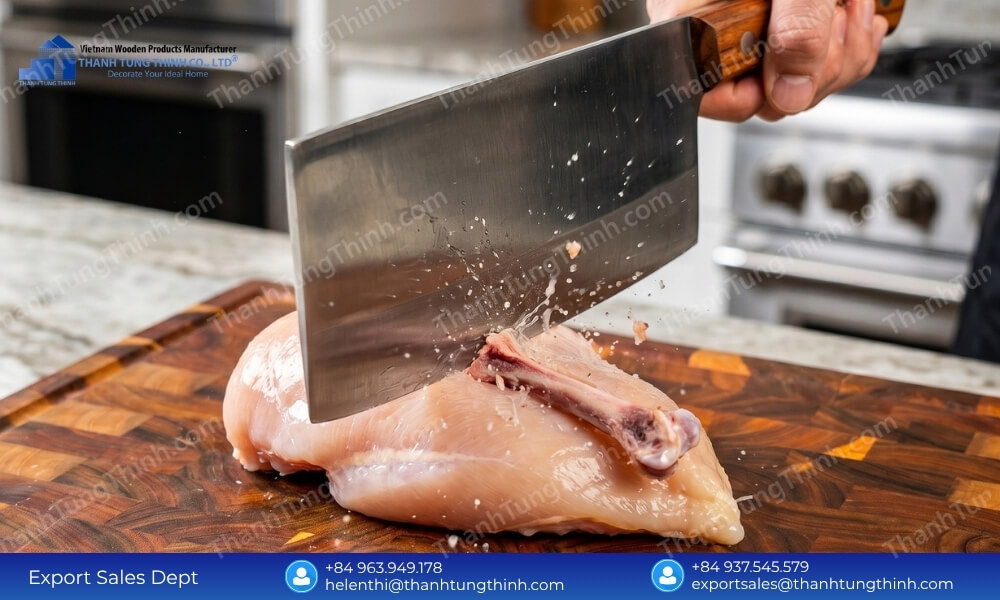
Black walnut is highly prized for its beautiful dark espresso tones and elegant appearance, making it a favorite for high-end presentation blocks. However, walnut is a softer wood that can show deep knife scars and gouges relatively quickly under heavy commercial usage. Choosing a premium teak wood cutting board provides comparable aesthetic appeal while offering a much harder, scratch-resistant cutting surface that holds up beautifully under heavy daily cleaver impacts.
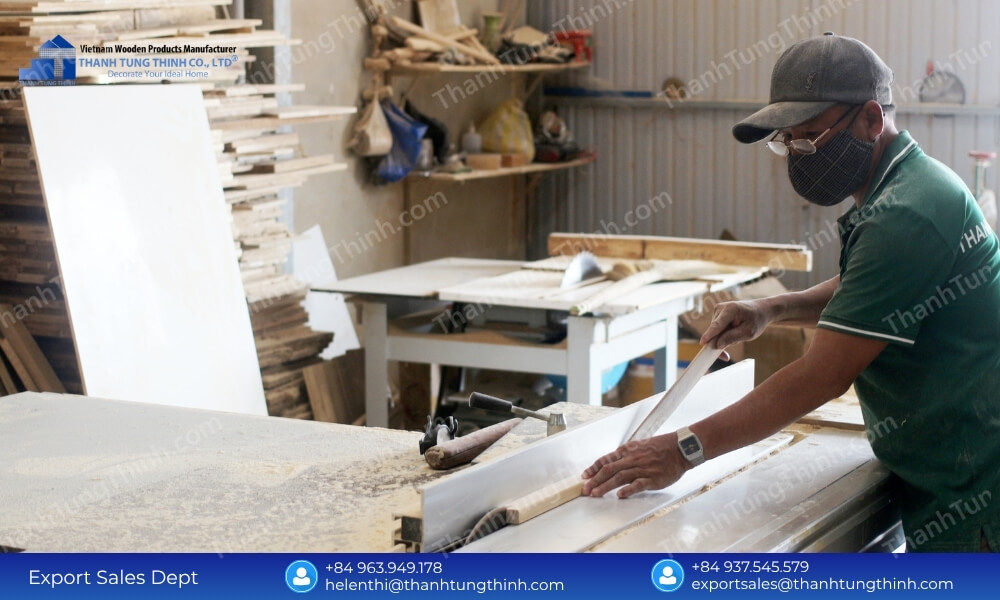
Operational Protocol: Maximizing the Lifespan of Tropical Woodware
Even the most durable wood items require correct operational care to reach their full service life. Training kitchen staff or educating retail consumers on proper maintenance ensures these premium blocks retain their structural integrity and stunning appearance for decades.
- Implement Immediate Hand Washing: Always wash the cutting block with warm water and a mild, neutral dish soap immediately after use. Never submerge the board or let it sit in standing water inside a wet sink.
- Prohibit Automatic Dishwashers: The intense heat, extended moisture exposure, and harsh chemical detergents inside an automatic dishwasher will destroy the wood fibers instantly, leading to warping and cracking.
- Enforce Vertical Air Drying: Wipe the washed board thoroughly with a dry towel and prop it up vertically on its side edge to dry. Drying flat traps moisture underneath, which can cause warping or mold growth.
- Apply Light Mineral Oil Treatments: Although the wood naturally contains protective oils, applying a thin layer of food-grade mineral oil once every few months helps maintain its beautiful golden-brown shine and seals fine knife marks.
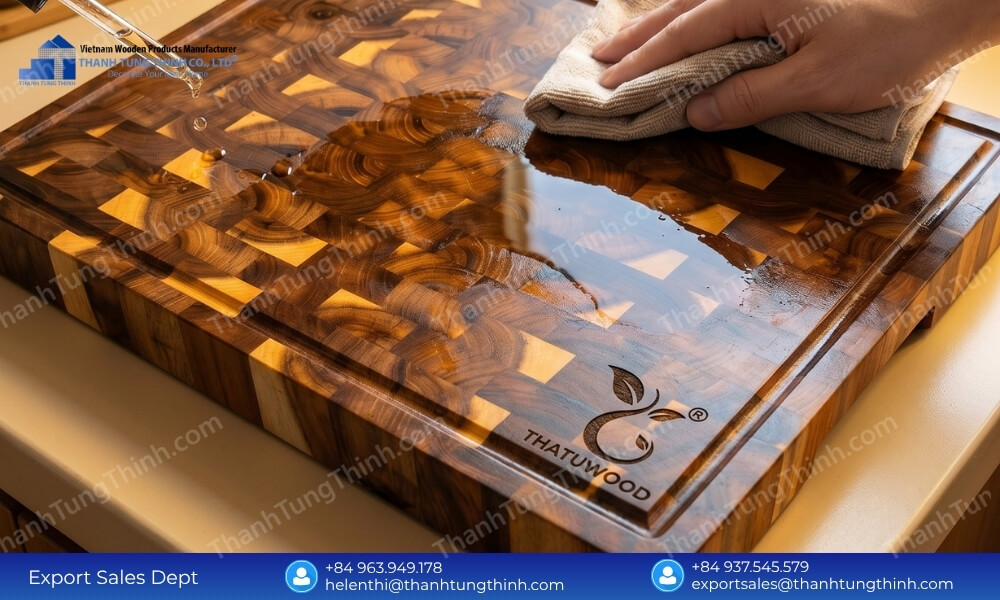
Supply Chain Security with Thanh Tung Thinh Factory
For international kitchenware distributors, corporate buyers, and luxury lifestyle brands, determining whether is teak wood cutting board good for your target market is just the first step. The true challenge lies in securing a transparent, reliable manufacturer capable of delivering premium-grade, legally compliant wood products in large volumes. This is where Thanh Tung Thinh provides exceptional manufacturing support.
As an established, large-scale wood manufacturer based in Vietnam, we specialize in mass-producing top-tier, export-quality cutting blocks, serving boards, and custom kitchenware for a demanding global B2B marketplace. Our facility handles high-volume wholesale orders comfortably, providing stable container-load production capacities and reliable shipping schedules month after month.
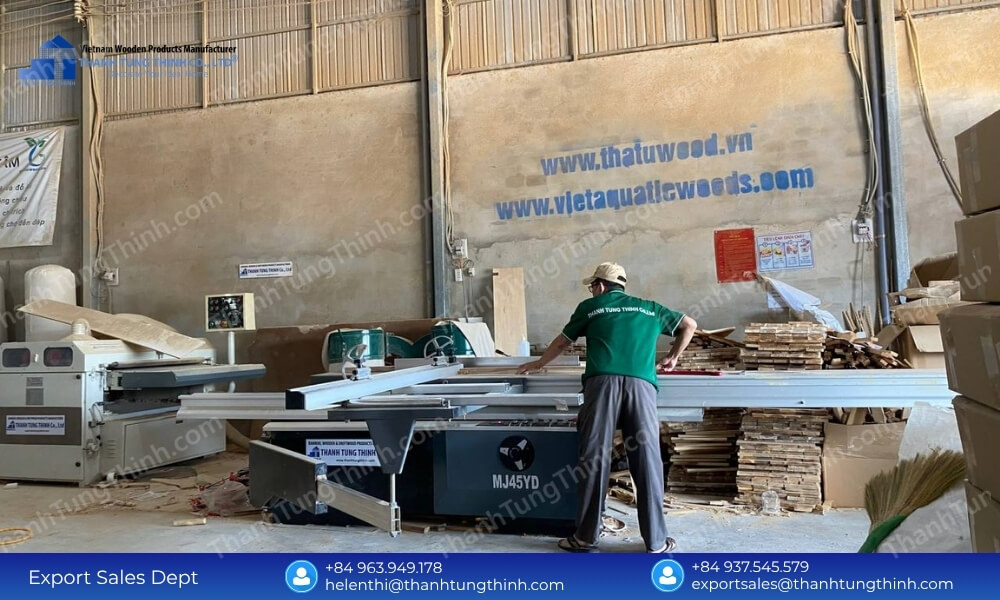
We use advanced kiln-drying systems to ensure all wood blanks achieve a perfectly balanced internal moisture level before fabrication, making them exceptionally stable and easy to clean from day one. Contact our international export sales department today to request custom product samples.
📩 Email: [email protected]
🌐 Website: https://thanhtungthinh.com/
📌 Pinterest: https://www.pinterest.com/THATUWOOD/
📌 Youtube: https://www.youtube.com/@thanhtungthinhmanufacturer
📌 Facebook: https://www.facebook.com/thanhtungthinh
📌 Linkedin: https://www.linkedin.com/company/thanh-tung-thinh-co-ltd
Questions & Answers
1. Is teak wood cutting board good for everyday use in a busy professional restaurant kitchen?
Yes, its natural oil content and high moisture resistance make it exceptionally stable against warping; however, kitchen staff must adjust to more frequent knife-sharpening routines due to the wood’s natural silica content.
2. Does a teak wood cutting board dull expensive kitchen knives faster than other hardwoods?
Yes, tropical wood naturally contains microscopic silica particles that make the fibers tough but can blunt fine knife edges faster than domestic woods like hard maple or black walnut.
3. How often do you need to apply mineral oil conditioning to a tropical teak cutting block?
Because the wood naturally carries its own protective oils, it requires much less maintenance; applying a thin layer of food-grade mineral oil once every two to three months is usually enough.
4. Is teak wood cutting board good at resisting deep food stains from ingredients like beets or berries?
Yes, the natural oils and dense interlocking grain prevent deep liquid absorption, allowing surface stains and juices to be wiped away easily with warm water and mild soap.
5. What happens if a kitchen worker accidentally runs a teak cutting board through a dishwasher?
The intense heat and harsh chemical detergents will strip away the protective natural oils and force rapid water absorption, resulting in severe warping, splitting, and adhesive failure.
6. Can international distributors secure full legal trade documentation when sourcing from Thanh Tung Thinh?
Yes, we supply a complete set of compliant shipping documents for every single export container, including official Phytosanitary Certificates, Fumigation Certificates, and authentic Certificates of Origin.
7. Is teak wood cutting board good for outdoor kitchens and heavy backyard grilling setups?
Yes, its exceptional weather resistance, natural water defenses, and resilience against temperature shifts make it the premier choice for outdoor cooking stations and commercial catering events.
8. What is the standard manufacturing turnaround time for a wholesale container order of cutting blocks?
Our standard factory production timeline takes 3 to 4 weeks from official order confirmation, with subsequent ocean shipping timelines varying depending on your specific global destination port.

