


Table of Contents
Introduction
In global trade, high-quality wooden products are built long before craftsmanship begins — they start with internationally standardized wood processing. Buyers in the U.S., EU, Japan, and Australia expect every piece of wood to be stable, safe, ethically sourced, and capable of withstanding long-distance shipping without warping or cracking.
At Thanh Tùng Thịnh (Thatuwood), we have spent over 15 years refining a closed-loop wood processing system that meets the technical and regulatory requirements of the world’s most demanding markets. Our combination of responsible sourcing, controlled drying cycles, strict moisture management, and detailed finishing ensures that each product — from kitchenware to gift boxes — achieves export-ready stability and long-term durability.
This article breaks down the international wood processing techniques that define true manufacturing quality — and why they matter for global brands.
Stage 1: Responsible Sourcing and Material Verification
Meeting international export standards begins long before the wood reaches the production line. It starts with responsible sourcing — a requirement that global buyers now see as a critical part of supply-chain integrity.
At Thanh Tùng Thịnh, this is the first checkpoint in our manufacturing system, ensuring that every piece of timber entering the factory is legal, ethical, sustainable, and technically suitable for high-precision production.
1. Legally Verified & FSC®-Certified Wood Sources

To comply with international market expectations, we work exclusively with:
- FSC®-certified plantations, ensuring a transparent Chain of Custody.
- Government-regulated timber suppliers with full documentation.
- Plantation wood such as Rubberwood, Acacia, and certified Teak — all traceable and responsibly harvested.
This eliminates risks related to deforestation, illegal logging, or customs violations, giving buyers complete confidence in the origin of their materials.
2. Compliance With Global Timber Regulations
Our sourcing process strictly adheres to international laws, including:
- EUDR (EU Deforestation Regulation) – ensuring no wood is linked to deforestation or non-compliant land.
- Lacey Act (U.S.) – guaranteeing legality at every stage of the supply chain.
- Vietnam Forest Law 2017 and VNTLAS framework – fulfilling national export requirements.
Every shipment is backed by verifiable documentation, preventing delays or regulatory issues when entering high-control markets like the U.S. and EU.
3. Material Profiling and Technical Assessment
Before any batch of wood is accepted, our QC team performs an internal technical check to ensure the material is suitable for export-grade production.
This includes analyzing:
- Density and fiber structure, which affect machining accuracy and strength.
- Initial moisture content determines drying time and stability.
- Color consistency, ensuring uniformity across product lines.
- Grain pattern characteristics are important for premium gift boxes and kitchenware surfaces.
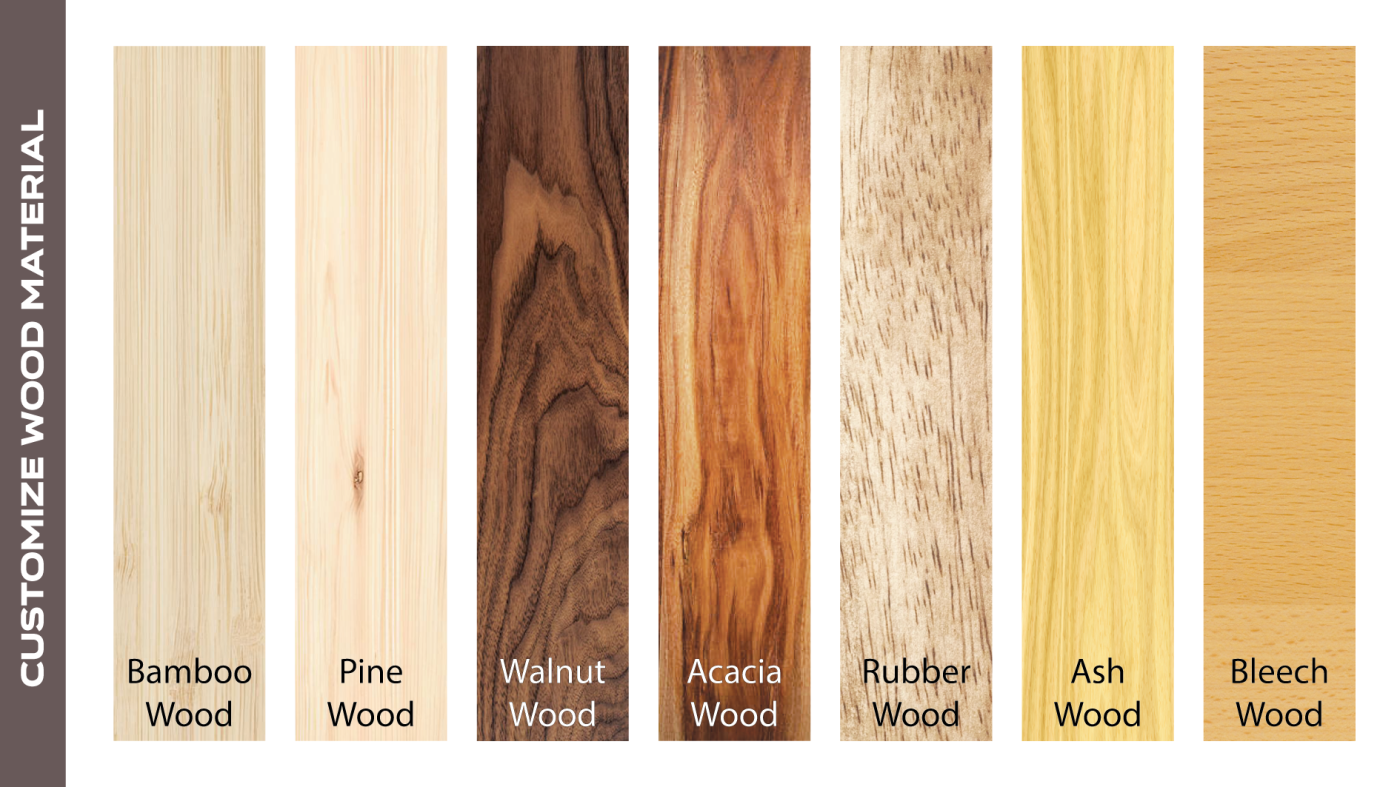
Read more: “Teak Wood for Wooden Products | Premium Materials with over 14 Years of OEM Expertise”
4. Rejection Criteria for Non-Compliant Wood
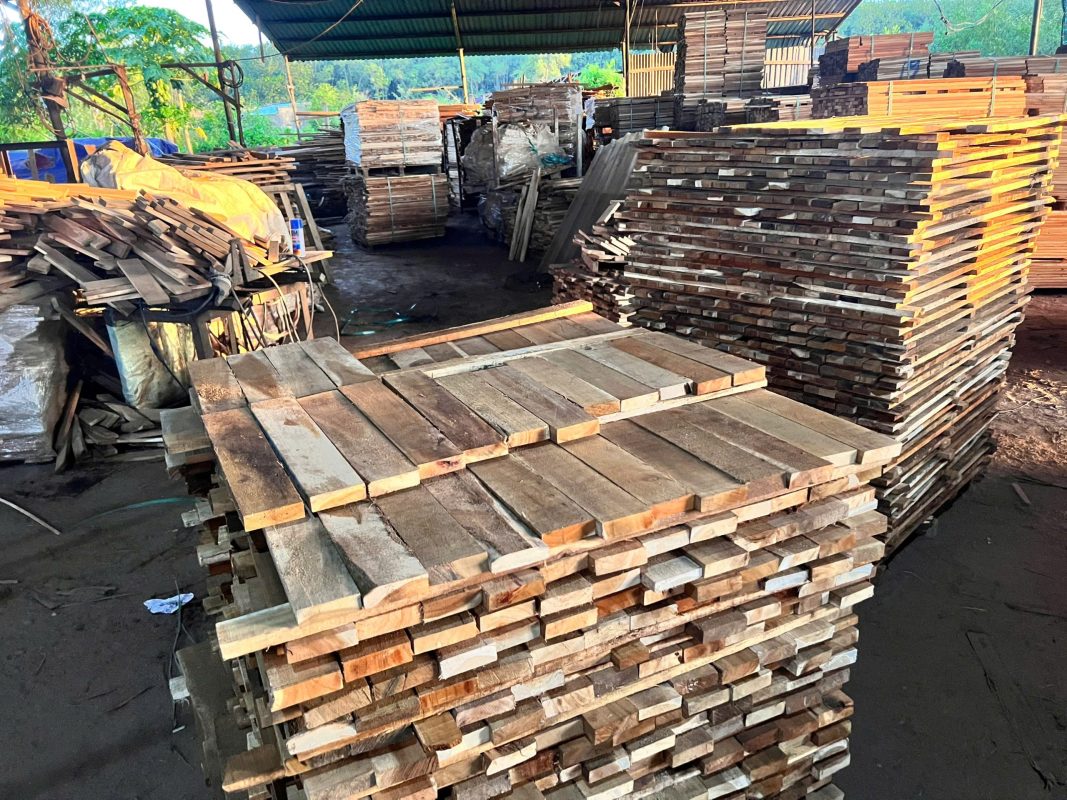
Not all wood meets international standards. To protect product quality, we strictly reject materials that show signs of:
- Fungal contamination — blue stain, mold, or discoloration.
- Unusual odor — indicating improper storage or early decay.
- Sap pockets or resin issues that may bleed through finishes.
- Warping, twisting, or internal cracks are caused by poor initial drying.
- Insect trails or structural weakness from improper treatment.
5. Documentation & Traceability
Every accepted batch is tagged and recorded with:
- Supplier origin
- Species identification
- Forest legality documentation
- Batch code for kiln drying
- Moisture records
- Date of intake and inspection results
This system supports full traceability, allowing buyers, auditors, or customs officials to verify wood origin at any time — a requirement increasingly demanded by large retailers and compliance departments.
Why This Stage Matters to Global Buyers
Responsible sourcing is not simply an ethical choice; it is a technical and commercial foundation for every export order.
High-quality wood at the start means:
- Fewer defects during production
- Better finishing and coating performance
- Higher stability in shipping and climate change
- Lower risk of customs rejection
- Stronger brand credibility for importers
This is how Thanh Tùng Thịnh ensures every product begins with international-grade raw material — setting the tone for the rest of the manufacturing process.
Stage 2: Kiln Drying — Achieving the Global Moisture Standard
Kiln drying is widely recognized as one of the most critical stages in international-standard wood processing. It determines whether a wooden product will remain stable during production, shipping, storage, and long-term use in different climates.
At Thanh Tùng Thịnh, we operate a controlled, data-driven kiln drying system designed specifically to meet the expectations of U.S., EU, Japanese, and Australian markets — all of which require strict moisture control.
1. Why Kiln Drying Is Essential for Export-Ready Products
Wood is a hygroscopic material — it continuously absorbs and releases moisture from the environment. Without proper drying, the following issues can occur:
- Warping and cupping during long-distance shipping
- Cracking or splitting along the grain
- Joint failure in assembled products
- Coating defects such as bubbles, peeling, or uneven absorption
- Swelling or shrinking due to climate change
- Mold and fungal growth in humid conditions
Global buyers consider kiln drying a non-negotiable standard because it ensures the wood remains structurally stable and visually consistent throughout its lifecycle.
Read more: “How to Import Wooden Products from Vietnam — Step-by-Step Guide for Global Buyers”
2. Controlled Drying Targets for International Markets
Different countries have different climate zones, but the universal export requirement is that wood must be dried to:
✔ Optimal Moisture Content (MC): 8–12%
This range is ideal for:
- Cold & dry climates: Europe, Canada
- Warm & humid climates: Southeast Asia
- Air-conditioned retail environments: U.S., Japan, Middle East
- Kitchenware & food-contact goods: stability and hygiene
Any wood above 15% MC risks fungal growth; below 6% MC may crack under tension.
Our process maintains the narrow band that international retailers expect for consistent performance.
3. Advanced Kiln Drying System
We use a computer-controlled kiln chamber with:
- Automated humidity and temperature sensors
- Programmable drying curves for each wood species
- Forced-air circulation for uniform heat distribution
- Slow-ramp and stress-relief cycles to prevent internal cracking
Each cycle typically lasts between 10 to 20 days, depending on:

- Species (Rubberwood, Acacia, Beech, Teak)
- Board thickness
- Density
- Initial moisture content
These parameters allow us to fine-tune the drying process to protect both structure and appearance.
4. Species-Specific Drying Programs
Different woods behave differently under heat.
Our team applies species-specific drying profiles for maximum stability:
• Rubberwood
- Requires gentle temperature ramping
- Higher risk of discoloration → controlled humidity to preserve color
- Used heavily in gift boxes and packaging
• Acacia
- Naturally oily, requires moderate temperature
- Prone to surface checking → slow-air circulation used
- Ideal for kitchenware and trays
• Teak
- Dense wood, slower drying to avoid internal stress
- Maintains rich color after controlled heat exposure
• Beech
- Sensitive to sudden temperature changes
- Needs gradual humidity reduction to prevent honeycombing
These tailored cycles ensure each species reaches optimal stability without compromising grain, color, or structural integrity.
5. Multi-Phase Moisture Testing
Before and after drying, wood undergoes digital moisture testing using:
- Pin-type moisture meters
- Capacitive testing for non-destructive measurement
- Random sampling across each batch
- Verification logs for traceability
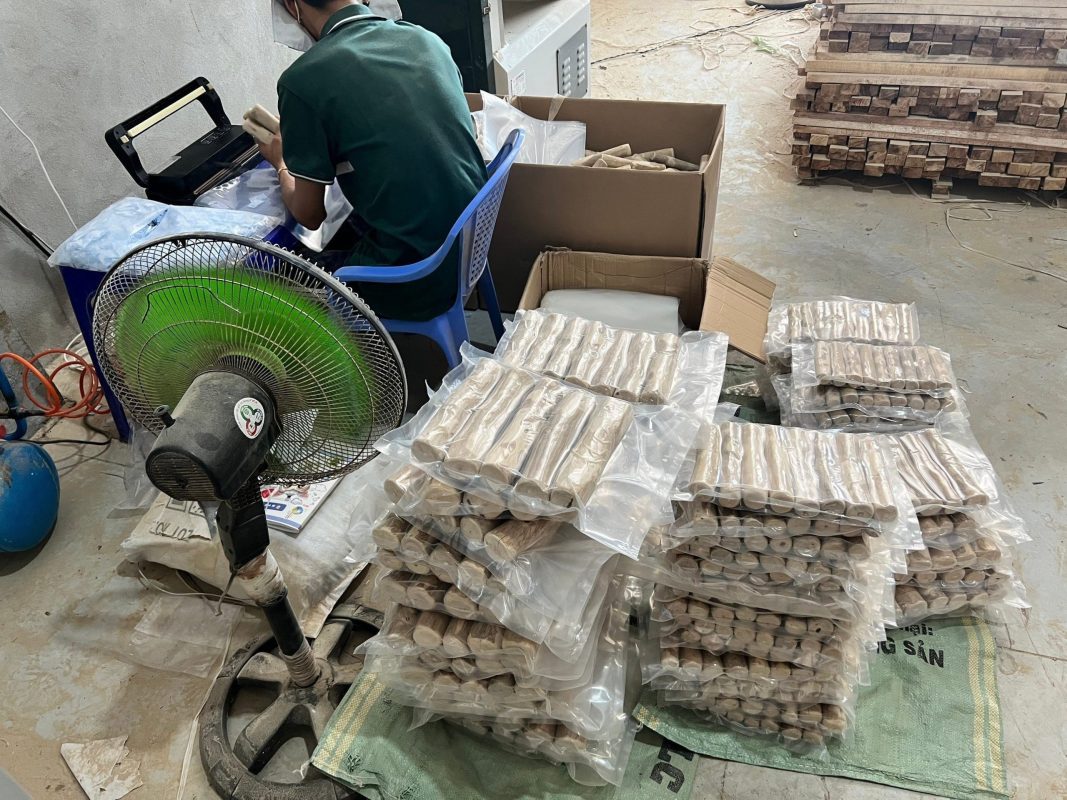
Each pallet receives a Moisture Record File, which is stored as part of our quality tracking system.
This gives global buyers confidence that their goods meet import requirements for moisture stability.
6. Stress-Relief and Equalization Phase
After the main drying cycle, wood enters a controlled conditioning phase, allowing the internal moisture to equalize naturally.
This step:
- Prevents internal tension
- Reduces the chance of cracking during machining
- Improves finishing uniformity
- Ensures each piece reacts predictably during CNC cutting
Skipping this phase is one of the main reasons cheap wooden products warp after shipping — but we treat it as an essential requirement for international-grade production.
7. Protection Against Mold and Humidity in Storage
Even after the wood reaches the target moisture level, improper storage can reverse the entire process.
To avoid this, we use:
- Humidity-controlled storage rooms
- Pallet elevation to prevent ground moisture absorption
- Regular ventilation cycles
- Pre-machining moisture checks
This ensures the wood remains stable until it moves into machining and shaping.
8. How Kiln Drying Protects Your Supply Chain
For global buyers, proper kiln drying provides:
- Lower defect rates in large shipments
- Reliable assembly fit for multi-part products
- Better finishing adhesion for oil, lacquer, or paint
- Reduced risk of product returns or warranty claims
- Strong protection against mold during sea freight
- Confidence for Amazon FBA or retail distribution
This is why drying quality is often a key differentiator between low-cost workshops and professional OEM manufacturers.
Stage 3: Moisture Conditioning & Sterilization
After kiln drying, the wood may appear stable on the surface, but internal moisture levels can still differ between the outer layers and the core. If not equalized properly, this imbalance causes stress during machining or shipping — leading to warping, cracking, or joint separation.
To eliminate these risks, Thanh Tùng Thịnh implements a strict Moisture Conditioning and Sterilization process, designed to meet export requirements for the U.S., EU, Japan, and Australia.
1. Moisture Conditioning: Equalizing the Internal Structure
Moisture conditioning is a controlled post-drying step that ensures the wood reaches a stable equilibrium. This stage is essential before machining, gluing, or finishing.
How Conditioning Works
After kiln drying, wood is transferred into a humidity-controlled conditioning chamber, where it stays for 3–5 days, depending on wood species and thickness.
Inside this controlled environment:
- The humidity level is gradually increased and decreased
- Temperature is kept consistent
- Airflow allows moisture to redistribute evenly
Why It Matters
Even if the kiln shows that moisture is at 8–12%, the wood may still contain:
- Dry outer shell
- Moist inner core
This imbalance can cause:
- Surface cracks when machining
- Glue failure in assembly
- Inconsistent staining or oil absorption
- Expansion during shipping in humid climates
Moisture conditioning stabilizes the wood at its core — creating predictable behavior during machining and finishing.
2. Stress Relief and Structural Stabilization
While moisture equalizes, wood fibers relax and settle, reducing internal tension caused during kiln heating. This prevents future deformation.
Benefits for Export-Grade Production
- Minimizes internal micro-cracking
- Ensures tighter tolerances for CNC or joinery
- Enhances long-term dimensional stability
- Reduces rejection rate during final QC
This stage is especially crucial for:
- Gift boxes
- Cutting boards
- Kitchenware components
- Products requiring perfect alignment (lid-base sets)
3. Sterilization: Ensuring Compliance With International Phytosanitary Standards
To prevent pests, fungi, and microbial growth — especially during long-distance sea freight — we apply a sterilization process compliant with ISPM-15, IPPC, and destination-country phytosanitary rules.
Sterilization Methods Used
We use two environmentally safe methods:
a. High-Temperature Heat Treatment (HT)
- Timber is heated to 56°C (or higher) at the core for at least 30 minutes
- Penetrates deep into the wood structure
- Eliminates insects, larvae, eggs, mold spores, and bacteria
This is the international standard for wooden products entering U.S., EU, Canada, Japan, Korea.
b. Eco-Friendly Anti-Fungal Treatment
For sensitive products (kitchenware, gift boxes), we apply:
- Non-toxic anti-fungal sprays
- Food-safe and VOC-free solutions
- Surface-level protection without harmful residue
This ensures clean, odor-free, export-ready wood.
4. Mold & Moisture Risk Management During Storage
Even after sterilization, wood must be stored correctly to preserve its stability.
Our factory maintains strict storage protocols to avoid reabsorption of moisture.
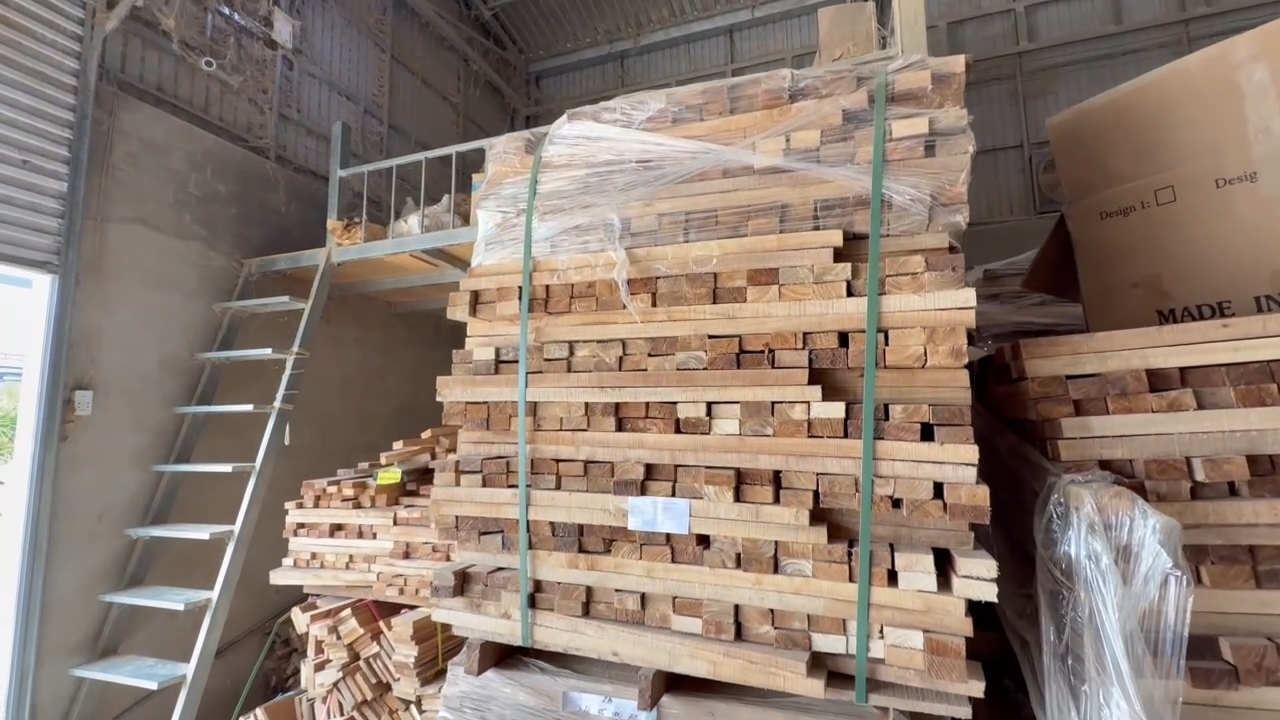
Storage Controls
- Humidity maintained between 50–60%
- Pallets elevated off the floor
- Cross-ventilation to avoid stale air pockets
- Regular flipping of stacks for even acclimation
- Separation of species to prevent cross-contamination of odors or oils
Read more: “Differences between industrial and artisan wood processing”
5. Certification & Documentation for Export Assurance
Global buyers require proof of proper sterilization and moisture control. We provide:
- Moisture test reports
- ISPM-15 certificates
- HT (Heat Treatment) logs
- Batch traceability codes
- Pre-shipment QC reports
This documentation is essential for clearing strict customs inspections in the U.S., EU, and Japan.
Read more: “12 Documents Required for Exporting”
6. How Moisture Conditioning & Sterilization Protect the Final Product
When executed properly, this stage guarantees:
- Zero mold growth during 30–45 days of sea freight
- Minimal warping in climate transitions
- Stronger joints and glue adhesion in manufacturing
- Consistent finishing results (oil, stain, lacquer)
- Longer product lifespan in consumer use
For brands dealing with food-contact goods, premium packaging, or long-term retail storage, this stage is directly tied to customer satisfaction.
7. Why This Stage Matters to International Buyers
Many factories skip or shorten this step to save time, resulting in:
- Moldy goods upon arrival
- Swollen or warped lids in gift boxes
- Cracks on cutting boards
- High return rates and brand damage
At Thanh Tùng Thịnh, moisture conditioning and sterilization are treated as mandatory quality protocols, not optional steps.
For global buyers, this means fewer complaints, fewer refunds, and consistently higher-quality products across all shipments.
Stage 4: Precision Machining and Shaping
Once the wood has been fully stabilized through kiln drying and moisture conditioning, it reaches a stage where it can be shaped with accuracy and predictability. This is where true craftsmanship and industrial capability come together.
At Thanh Tùng Thịnh, the machining stage is built around a combination of modern CNC technology, strict tolerance control, and skilled workmanship — ensuring that each component maintains consistency across thousands of units.
1. CNC Machining for High Accuracy and Repeatability
For global buyers, dimensional precision is essential — especially in products such as gift boxes, cutting boards, wooden lids, and kitchenware. Any deviation affects product fit, function, and customer perception.
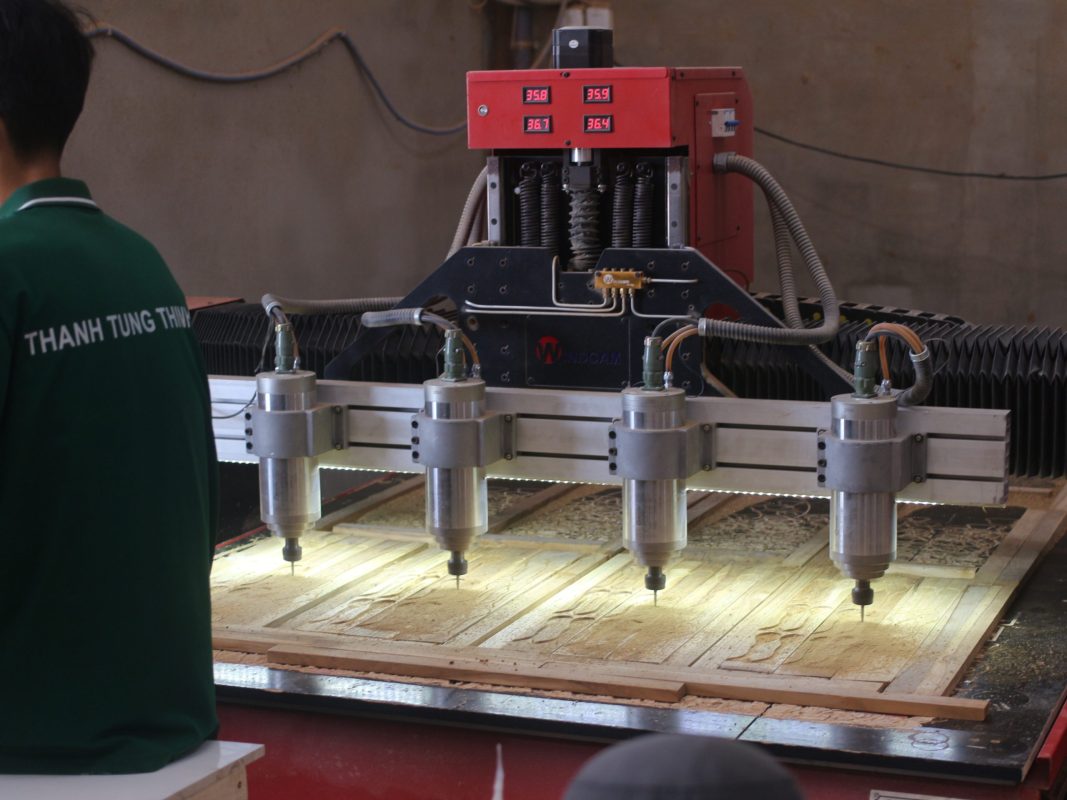
Our CNC machining lines deliver:
- ±0.2 mm consistent tolerance across large batches
- Uniform cutting paths for complex shapes
- Smooth edges and accurate contours
- High repeatability for mass production
- Compatibility with multi-part assemblies (lids, bases, trays, inserts)
Why CNC precision matters
- Ensures tight alignment of box lids and joints
- Minimizes gaps and misfits in assembly
- Reduces hand-adjustment time
- Protects the brand’s quality image
- Improves yield and reduces production waste
2. Profiling, Routing, and Shaping
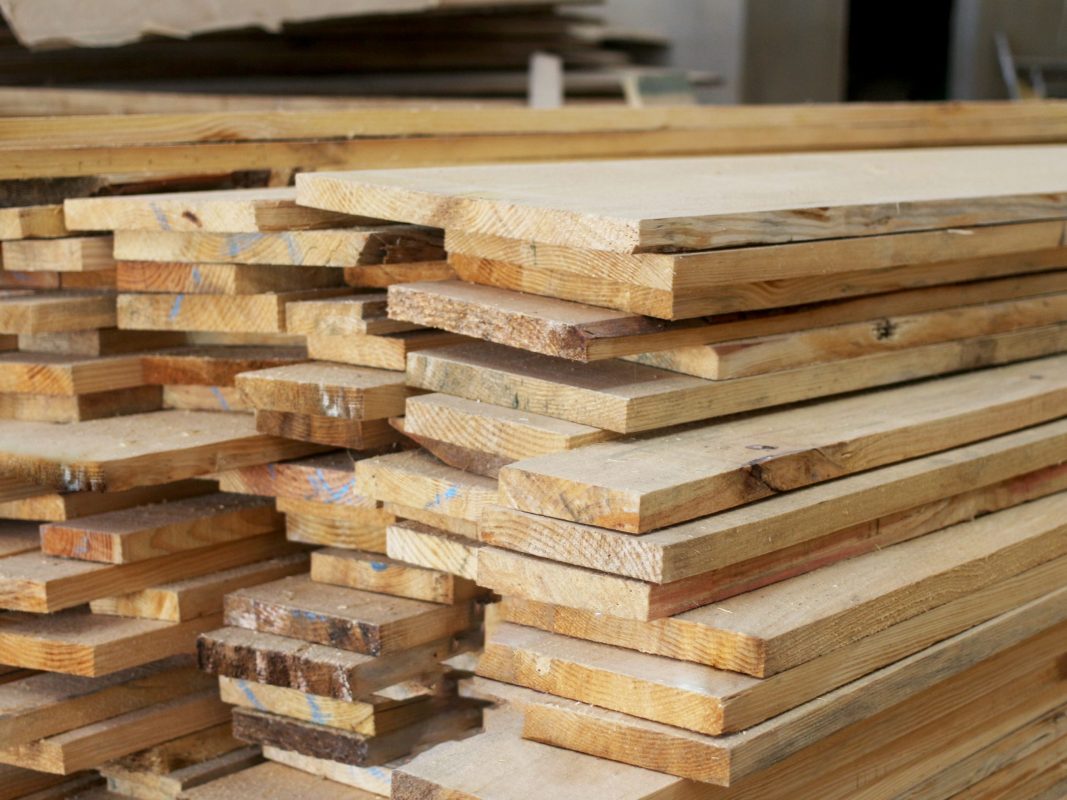
After the initial cutting, the wood undergoes additional shaping techniques depending on the product design.
Profiling
- Creates beveled edges, rounded corners, and signature curves
- Enhances ergonomics for items like handles and trays
- Reduces sharp edges for food-contact and home-use products
Routing
- Used for creating grooves, pockets, and inlays
- Essential for magnetic-lid boxes, storage compartments, and coaster sets
- Ensures smooth and precise cavity depth
Shaping
- Produces complex 3D structures
- Allows customization of premium decorative pieces
- Ensures symmetry and balance in high-end gift packaging
These steps collectively define the finished form, functionality, and visual appeal of each wooden product.
3. Multi-Stage Sanding for a Smooth, Export-Ready Finish
Sanding is one of the most defining parts of product touch and appearance.
Consumers judge the quality of a wooden product the moment they touch it — which is why we use a multi-stage sanding system:
- P80: Initial leveling and removal of machining marks
- P150: Secondary smoothing
- P240: Fine surface refinement
- P320: Final polishing for smooth, premium touch
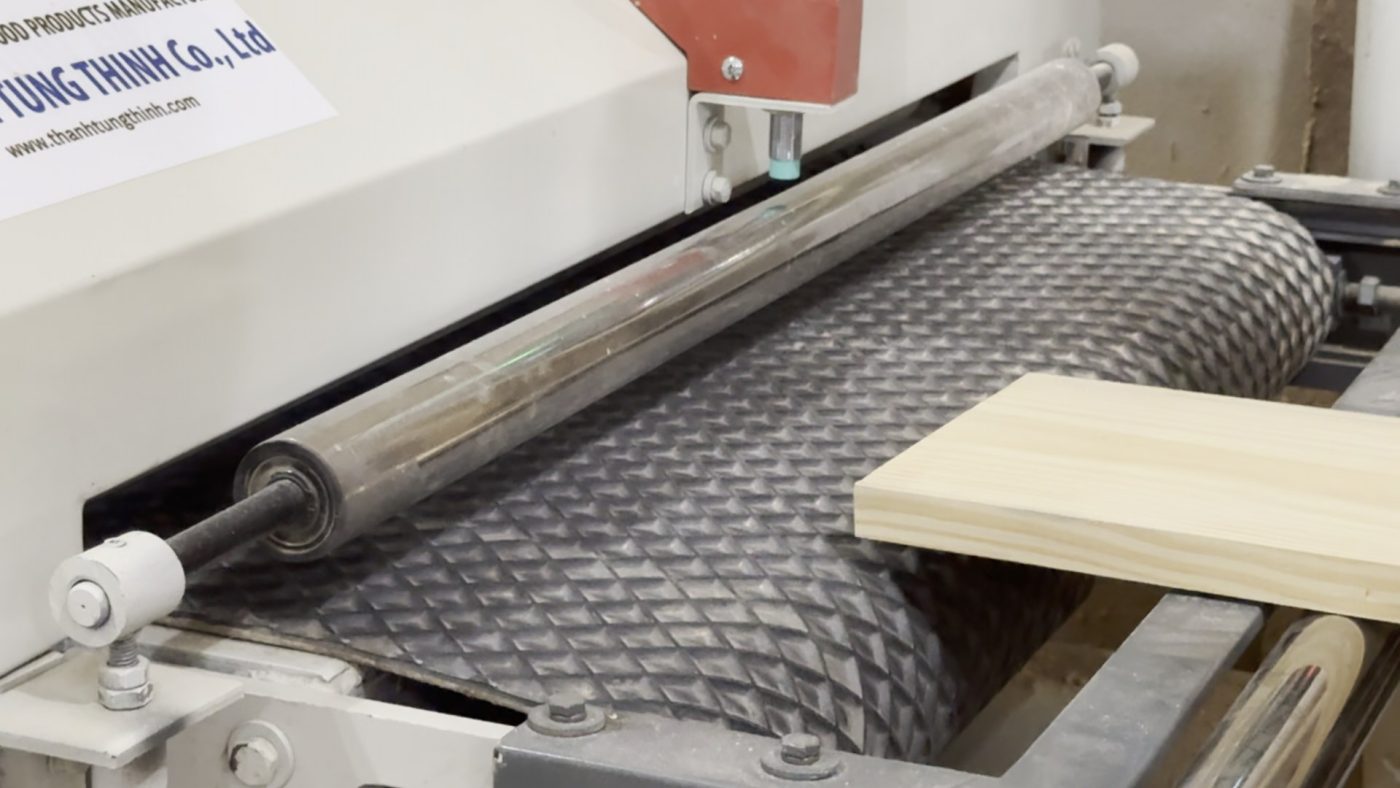
Advantages of this approach
- Eliminates fiber fuzz and sharp micro-edges
- Prepares the surface for even oil or lacquer absorption
- Enhances the grain clarity for premium woods (Teak, Acacia)
- Creates tactile comfort — no roughness or splinters
4. Assembly, Joinery, and Structural Fit
For multi-component wooden products — such as boxes, frames, organizers, or kitchen tools — joinery accuracy is key.
We use a combination of:
- Dowel joints
- Mortise-and-tenon styling (for premium builds)
- Finger joints for strength and efficiency
- Adhesive bonding using export-grade wood glue
Each piece is checked for:
- Flush alignment
- Zero wobble fit
- Smooth closure (for lids, drawers, or doors)
- Balanced weight distribution
Why is joinery precision important
Assembly issues are one of the leading causes of product returns in Western markets. Our process minimizes those risks by ensuring that every component fits perfectly — every time.
5. Edge Rounding & Safety Shaping
International markets, especially the U.S. and EU, have strict requirements for consumer safety.
To meet these expectations, we apply:
- Rounded edges for kitchen and dining products
- Soft-touch corners for children’s or pet-related items
- Splinter-free finishes through additional micro-sanding
This eliminates risks of:
- Cuts
- Splinters
- Sharp-corner damage during transport
These refinements elevate your product’s quality and prevent customer complaints.
6. Tolerance Control & Defect Prevention
During machining, wood can behave unpredictably if not processed correctly. To ensure reliability, our factory implements a tolerance control protocol:
- Dimensional checks at the start, midpoint, and end of every batch
- Machine recalibration at scheduled intervals
- Random sampling inspections
- Identification and removal of pieces with micro-cracks, burn marks, or structural instability
Outcome
- Consistent size across 5,000 or 50,000 units
- Precise fit in packaging sets
- Stable performance in high-humidity or low-humidity climates

7. Skilled Human Craftsmanship Supporting Automation
Even with automation, human skill remains essential.
Our skilled carpenters and craftsmen:
- Inspect grain direction before machining
- Adjust manual sanding for detailed edges
- Refine difficult curves that machines cannot perfect
- Perform final-touch smoothing for premium lines
This blend of automation + craftsmanship ensures:
- Technical consistency
- Handcrafted quality
- A premium feel suitable for both mass-market and luxury brands
8. How Precision Machining Benefits Global Buyers
For importers and brands, precision machining delivers:
- Stronger product identity through consistent shape and feel
- Fewer defects and returns
- Better compatibility with accessories (hinges, magnets, inserts)
- Higher value perception in retail and e-commerce
- Reliability across multiple production runs
- Faster lead times due to efficient production flow
A well-machined product is easier to finish, easier to assemble, and easier to sell.
Conclusion of Stage 4
Precision machining transforms raw wood into the exact shape envisioned by designers and sourcing teams.
At Thanh Tùng Thịnh, our machining process is engineered for:
- Accuracy
- Stability
- Repeatability
- Premium touch
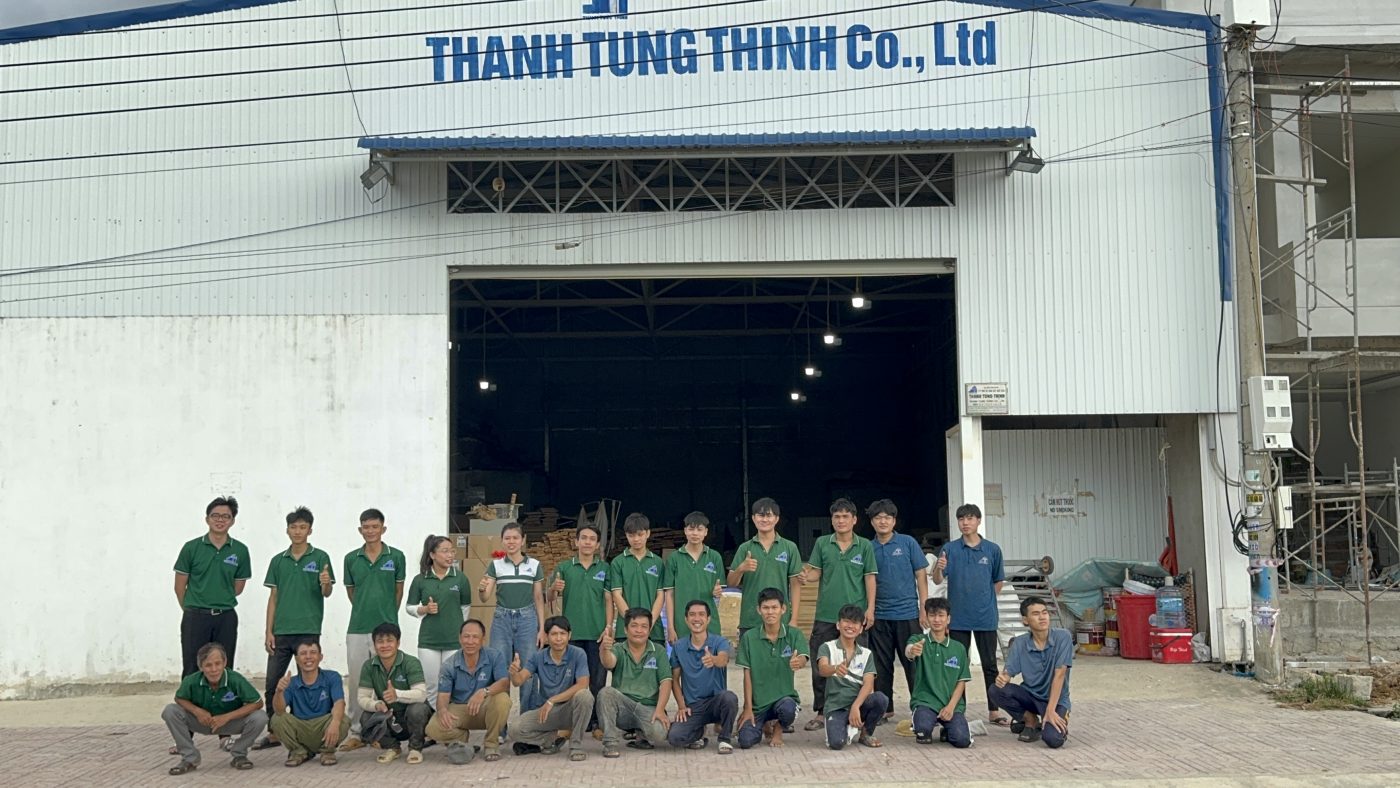
This stage ensures that each product is not only functional — but also refined, safe, consistent, and aligned with the expectations of global buyers.
It is one of the core pillars that define us as an international-standard OEM manufacturer.

