


Table of Contents
How to import wooden products from Vietnam has become one of the most common questions among global buyers and sourcing professionals seeking sustainable, high-quality alternatives to Chinese suppliers. Vietnam’s wood industry now stands out for its competitive pricing, FSC-certified materials, and strict compliance with international standards such as the Lacey Act, FDA, and Prop 65. Whether you are importing wooden kitchenware, décor, or packaging, understanding the complete Vietnam wood export process is essential to ensure legal, efficient, and profitable trade partnerships.
Introduction — Why Vietnam Is the Global Hub for Wooden Housewares and Kitchenware
In recent years, Vietnam has rapidly emerged as one of the world’s most competitive destinations for sourcing wooden housewares and kitchenware. With exports valued at over USD 15 billion annually, the country now ranks second globally in total wood exports, only behind China — a clear reflection of its manufacturing maturity and international trust.
For global importers looking to diversify their supply chain, Vietnam offers a unique combination of cost efficiency, craftsmanship, and compliance.
Unlike many emerging producers, Vietnamese manufacturers integrate FSC-certified sourcing, FDA-compliant finishes, and BSCI-audited factories into every stage of production. This ensures that wooden products meet strict international standards such as Lacey Act compliance, Prop 65, and the EUDR (2024) requirements for legal timber sourcing.
Beyond compliance, Vietnam has developed an extensive ecosystem for OEM and ODM wooden manufacturing — particularly in provinces like Bình Dương, Đồng Nai, and Bình Thuận, where clusters of export-oriented factories specialize in acacia, rubberwood, and beech materials.
These facilities combine modern CNC technology with hand-finishing techniques, enabling both large-scale volume production and artisanal precision.
For buyers in the U.S., EU, Japan, and Australia, sourcing from Vietnam means access to:
- FSC-certified wooden suppliers with transparent documentation.
- Stable lead times and competitive FOB pricing.
- Sustainable acacia wood products are already approved under U.S. and EU food-contact regulations.
- A proven Vietnam wood export process refined over two decades of global trade.

Let’s explore how global importers can efficiently manage the full Vietnam wood export process, step by step.
Step 1 — Identify the Type of Wooden Product You Want to Import
Before starting the Vietnam wood export process, buyers must clearly define which category of wooden products they plan to import. Each category carries different HS codes, documentation, and compliance requirements under U.S., EU, or Japanese regulations.
A. Choose the Right Product Segment
Vietnam’s manufacturing network covers a broad range of export-ready wooden items:
| Segment | Examples | Typical HS Code | Compliance Focus |
|---|---|---|---|
| Wooden Houseware & Kitchenware | Cutting boards, trays, utensils, spice jars | 4419 | FDA / Prop 65 (Food-contact Safety) |
| Home Décor & Gift Items | Candle holders, coasters, organizers | 4420 | Lacey Act / FSC Certification |
| Wooden Packaging & Boxes | Tea, wine and cosmetic boxes | 4415 / 4421 | Non-toxic finishing / ISPM-15 |
| Furniture Components or Panels | Chair legs, table tops or frames | 9403 | EUDR Legal Sourcing / CARB Compliance |
Understanding the right product group helps you select qualified suppliers, budget correctly for import duties, and prepare matching compliance documents.
Read more: “How to Choose the Right Custom Wooden Box Supplier for Your Business to Raise Sales in 2025”
B. Select the Right Wood Material
Vietnam offers multiple sustainable wood species, but the most in-demand for wooden kitchenware export are:
- Acacia wood — high density (~1,700 Janka), beautiful grain, naturally water-resistant.
- Rubberwood — eco-friendly, stable, and cost-efficient for mass production.
- Beech and Pine — lightweight options for decorative or gift items.
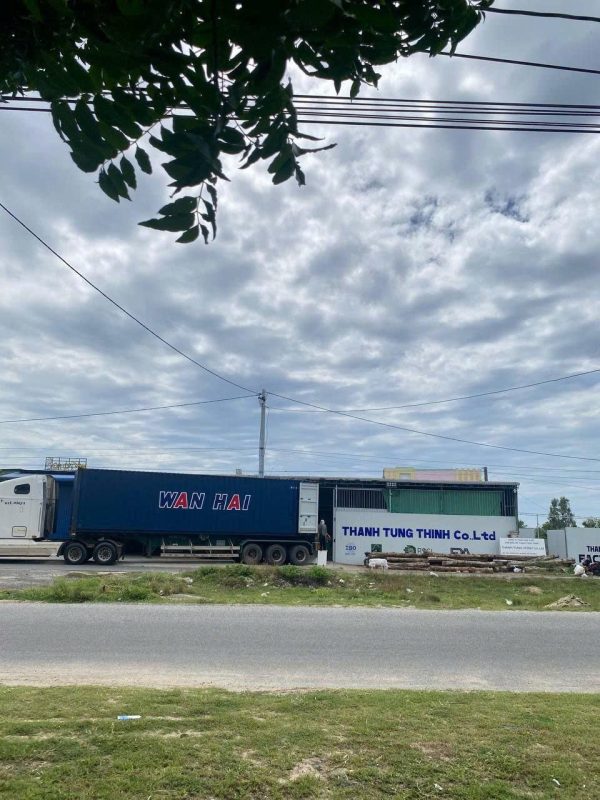
Factories such as acacia wood manufacturer Vietnam (e.g. Thanhtungthinh) maintain full FSC® Chain-of-Custody certification, ensuring legal origin and traceability under both Lacey Act compliance and EUDR Vietnam timber regulation.
For food-contact items, always confirm FDA and Prop 65 test reports for surface finishes.
C. Verify Export Feasibility and Demand
Evaluate market requirements before contracting:
- Check U.S. tariff rates via USITC or TARIC (EU).
- Estimate shipping weight — wooden kitchenware is lighter than furniture, reducing freight costs.
- Review existing best-sellers on Amazon and Etsy to validate design demand.
- Ask suppliers for standard carton dimensions and export packaging specs.
By finalizing the correct product type and wood material at this early stage, importers save weeks of sampling and compliance review later in the process.

Step 2 — Find a Reliable OEM Wooden Product Factory in Vietnam
Once you’ve defined the product category, the next step in how to import wooden products from Vietnam is choosing the right manufacturer partner.
Vietnam’s wood industry includes hundreds of exporters, but only a few meet the standards expected by U.S. and EU buyers — especially for FSC-certified houseware, kitchenware, and eco-packaging.
Finding the right partner means evaluating not just price, but compliance, production capability, and communication quality.
A. Verify Factory Certifications and Compliance
A trustworthy OEM wooden product factory Vietnam should hold internationally recognized certifications such as:
- FSC® Chain of Custody — confirms legal, sustainable wood sourcing.
- BSCI / SEDEX — ensures ethical labor and fair working conditions.
- ISO 9001:2015 — quality management system for consistent production.
- FDA / Prop 65 Reports — confirms food-contact safety for kitchenware exports.

Reputable suppliers, such as FSC certified wooden supplier Vietnam (e.g., Thanhtungthinh), provide audit copies, testing reports, and product traceability data on request.
This documentation protects importers under Lacey Act compliance and upcoming EUDR Vietnam timber regulation for 2024 and beyond.
Read more: “BSCI Certification — The Key to Responsible and Sustainable Global Trade in 2025”
B. Evaluate Manufacturing Capacity and Technology
Ask each potential supplier to detail:
- Machinery & Technology: CNC shaping, hydraulic gluing, laser engraving, UV finishing.
- Monthly Capacity: small-batch MOQ (500–1,000 pcs) and scalability to 50,000+ pcs/month.
- Defect Rate: top factories maintain below 1.5% rejection per AQL 2.5.
- Lead Time: typically 30–45 days after sample confirmation.
Acacia wood manufacturer Vietnam factories, for example, combine high-density hardwood with modern finishing systems to produce export-grade cutting boards, trays, and lids suitable for both retail and hospitality sectors.
C. Check Experience with Target Markets
Choose manufacturers that have proven experience exporting to your market region.
Ask for reference clients or recent shipment destinations such as the U.S., Germany, Japan, or Australia.
Factories with this experience already understand:
- Local testing standards (FDA, CARB, REACH).
- Labeling and barcode requirements for retailers.
- Carton and pallet specifications for Amazon FBA or warehouse deliveries.
D. Assess Communication and Transparency
Effective collaboration depends on clear, consistent communication.
Look for suppliers that:
- Respond within 24 hours to inquiries.
- Offer bilingual export sales staff (English + Vietnamese).
- Provide detailed quotations, sample tracking, and production photos.
- Support real-time messaging or project dashboards.
Transparent communication minimizes misunderstandings and shortens lead times — essential for first-time importers.
E. Visit or Audit the Factory (If Possible)
For large or recurring orders, consider:
- An on-site visit or third-party factory audit (SGS, Intertek, Bureau Veritas).
- Review production layout, storage humidity, and packaging area.
- Confirm FSC certificate number validity on info.fsc.org.
Even one short visit or virtual factory tour can reveal more about professionalism and capacity than weeks of email exchanges.
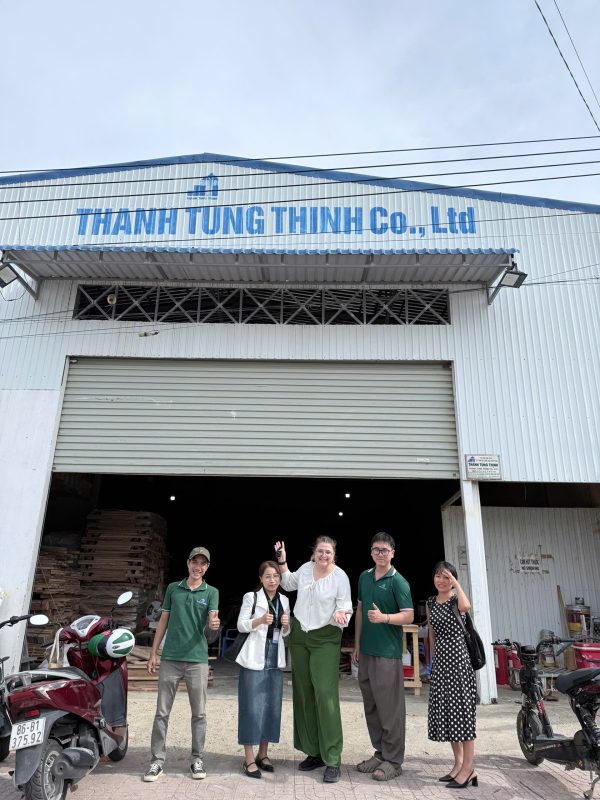
The right manufacturer is more than a supplier — it’s your long-term production partner. Choose one that builds trust through transparency, certification, and consistent quality.
Step 3 — Request Samples and Quality Verification
Once you have selected a suitable supplier, the next crucial stage in how to import wooden products from Vietnam is sampling and quality assurance.
This process ensures that your chosen factory can deliver products that match your standards, market expectations, and the compliance requirements of your importing country.
A. Request Pre-Production Samples
Before committing to bulk orders, importers should always ask for pre-production samples to evaluate:
- Material authenticity: Verify that the wood matches what was promised (e.g., acacia, rubberwood, or beech).
- Moisture content: Must be between 8–12 % to prevent warping or mold during shipping.
- Finish and coating: Ensure the surface is smooth, odor-free, and compliant with FDA food-contact regulations and California Prop 65 standards.
- Design accuracy: Check size, edge profile, engraving, and color consistency.
Factories such as Thanhtungthinh, an experienced acacia wood exporter in Vietnam, typically send 2–3 rounds of samples for confirmation before moving to full production.
B. Verify Testing and Certification
Always request official testing reports and certification documents from the supplier or a third-party laboratory:
- SGS / Intertek Test Report — verifies chemical safety and coating quality.
- FSC® Certificate — confirms sustainable sourcing, required for Lacey Act compliance and EUDR Vietnam timber regulation.
- FDA & Prop 65 Compliance Certificates — critical for wooden kitchenware export to the U.S. market.
- Moisture Test Record — attached to each shipment batch for traceability.
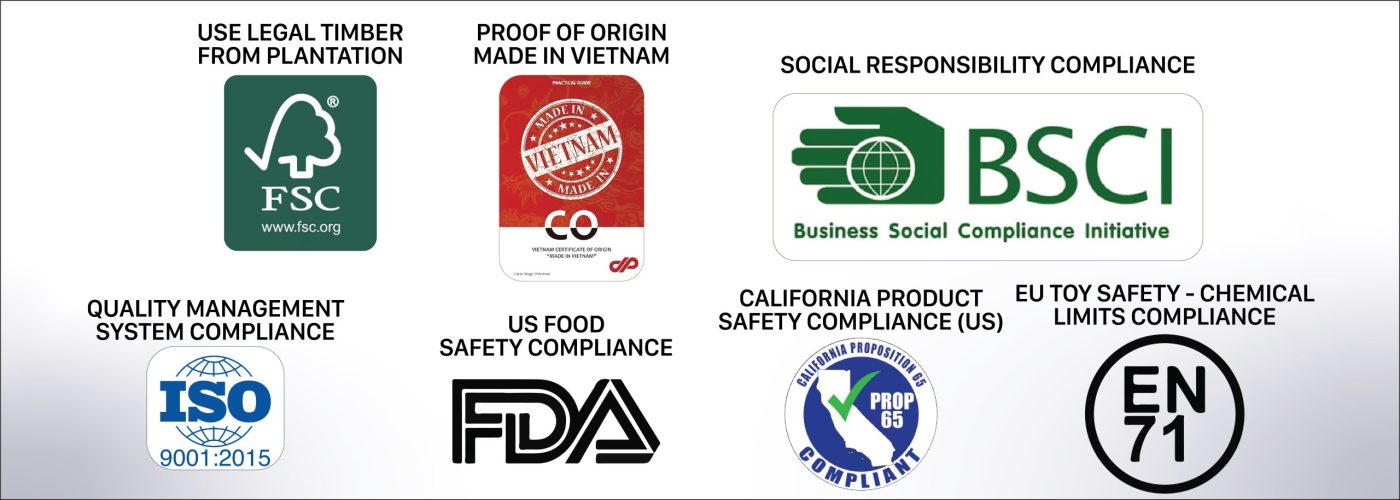
Testing should be repeated every six months or whenever there is a design or coating change.
C. Set Up a Formal Approval Process
For professional importers, product approval should follow these steps:
- Receive and review the master sample → confirm color, grain, and finishing.
- Sign a “Golden Sample” — a reference piece kept by both factory and buyer.
- Include technical specifications in the purchase order:
- Material species
- Size tolerance (± 0.2 mm)
- Surface finish type
- Labeling, packaging, and barcode position
This step prevents disputes once mass production begins.
D. Conduct Pre-Shipment and AQL Inspection
Even the best factories require inspection to guarantee consistency.
Arrange an AQL 2.5 level inspection with a certified third-party such as SGS, TÜV, or Bureau Veritas before shipment.
Inspectors typically review:
- 100 % of cartons for labeling accuracy.
- 10 % of units for surface defects or finishing irregularities.
- Moisture content, weight, and odor tests.
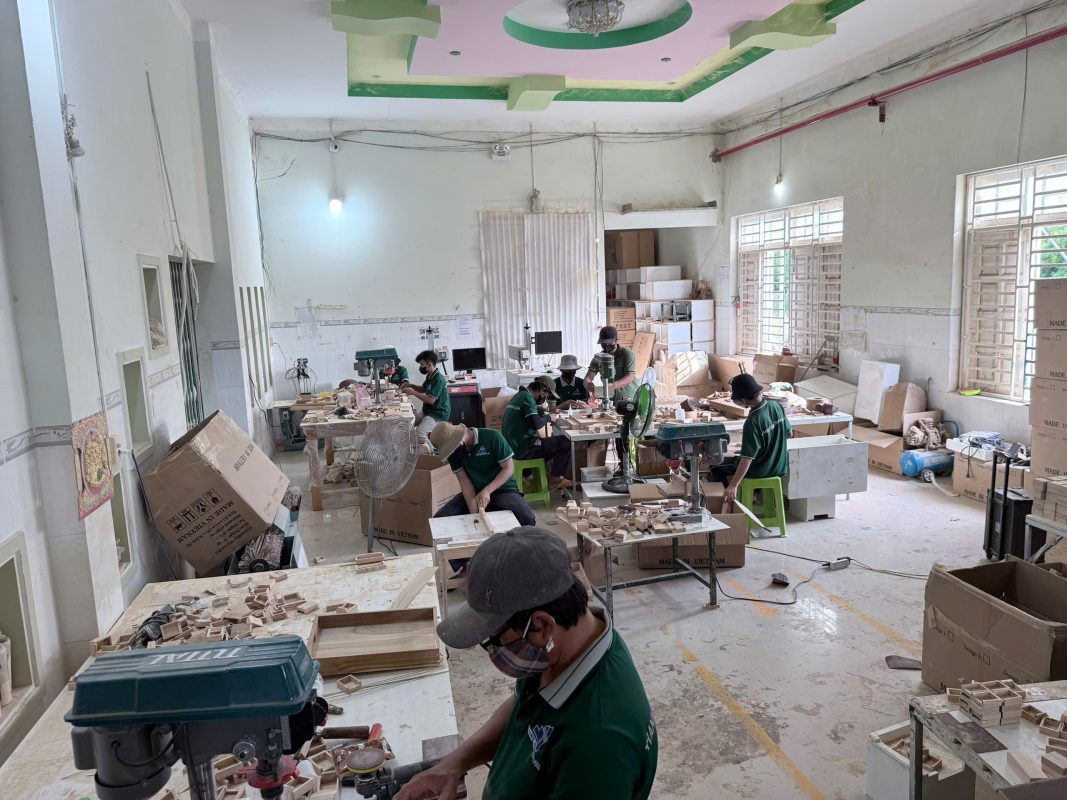
E. Confirm Export Packaging Standards
Proper packaging preserves product integrity during long sea shipments:
- Use E-flute or B-flute corrugated cartons.
- Include silica gel or desiccant bags in every carton.
- Apply ISPM-15-certified pallets for export.
- Request drop-test and vibration-test results for large retail programs.
Sampling and inspection may seem time-consuming, but they save importers from expensive claims and rejected shipments. Vietnam’s experienced wooden product exporters already integrate these controls into their standard export process.
Read more: “Wooden Dinnerware Supplier in Vietnam: A Profitable Choice for Global Buyers”
Step 4 — Negotiate Price, MOQ, and Incoterms
After confirming product quality through samples, the next step in how to import wooden products from Vietnam is negotiating the commercial terms — including pricing, minimum order quantity (MOQ), and Incoterms.
This is where successful importers balance cost efficiency with reliability, ensuring long-term partnerships with certified Vietnamese factories.
A. Understand Typical Pricing Structures
In the Vietnam wood export process, prices depend on five main factors:
| Factor | Impact on Price |
|---|---|
| Type of Wood | Acacia and rubberwood are more affordable; teak or walnut cost higher. |
| Finishing Level | Hand-sanded, oiled, or lacquered finishes add 5–15 %. |
| Packaging Specification | Gift boxes and barcode labeling increase cost. |
| Quantity | Larger orders reduce per-unit cost by 10–20 %. |
| Certification & Testing | FSC and FDA testing fees included or billed separately. |
Average export prices (FOB) for wooden kitchenware export products, such as cutting boards or trays, range from USD 2.5 – 5.5 per unit, depending on size and finish.
Always request a price breakdown — transparency helps avoid hidden costs and makes it easier to compare suppliers.
B. Set a Realistic MOQ
A qualified OEM wooden product factory in Vietnam usually offers a flexible MOQ depending on the product type:
| Product Type | MOQ Range |
|---|---|
| Wooden Kitchenware | 500 – 1,000 pcs per model |
| Gift Boxes & Lids | 1,000 – 2,000 pcs per design |
| Home Décor Items | 300 – 500 pcs per SKU |
| Furniture Parts | 50 – 100 sets |
Factories like Thanhtungthinh accommodate trial orders with small quantities, especially for new buyers testing the U.S. or EU market.
This flexibility allows importers to validate product performance before scaling to full container shipments.
C. Choose the Right Incoterm
Selecting the right Incoterm defines responsibility for shipping, insurance, and customs.
Below are the most common options when working with Vietnamese exporters:
| Incoterm | Responsibility Division | When to Use |
|---|---|---|
| EXW (Ex-Works) | Buyer arranges pickup from the factory | When you have your own forwarder in Vietnam |
| FOB (Free on Board) | Supplier delivers goods to port (e.g. Cat Lai, Quy Nhon, Hai Phong) | Most common for container shipments |
| CIF (Cost, Insurance, Freight) | Supplier covers freight to your port | Suitable for new importers with no freight partner |
| DDP (Delivered Duty Paid) | Supplier handles all customs and delivery | Best for small parcels or Amazon FBA |
For first-time importers, FOB is recommended — it offers flexibility and cost control while maintaining supplier accountability until port loading.
D. Negotiate Payment Terms
Standard payment methods in Vietnam’s wood industry include:
- T/T (Telegraphic Transfer): 30 % deposit + 70 % balance after a copy of the Bill of Lading.
- L/C (Letter of Credit): common for orders above USD 30,000.
- Paypal / Western Union: for sample orders or small-volume projects.
Ask suppliers for volume discounts and long-term price locks on repeat purchases.
Vietnamese exporters value relationship-based pricing — consistency often results in better terms and faster service.
E. Clarify Hidden Costs
To avoid misunderstandings, confirm all potential additional fees in writing:
- FSC license fee (if charged per shipment).
- Custom logo or engraving surcharge.
- Packaging and pallet material cost (ISPM-15 certified).
- Documentation or certification reissuance fee.
Transparent pricing builds trust and allows buyers to plan margins accurately.
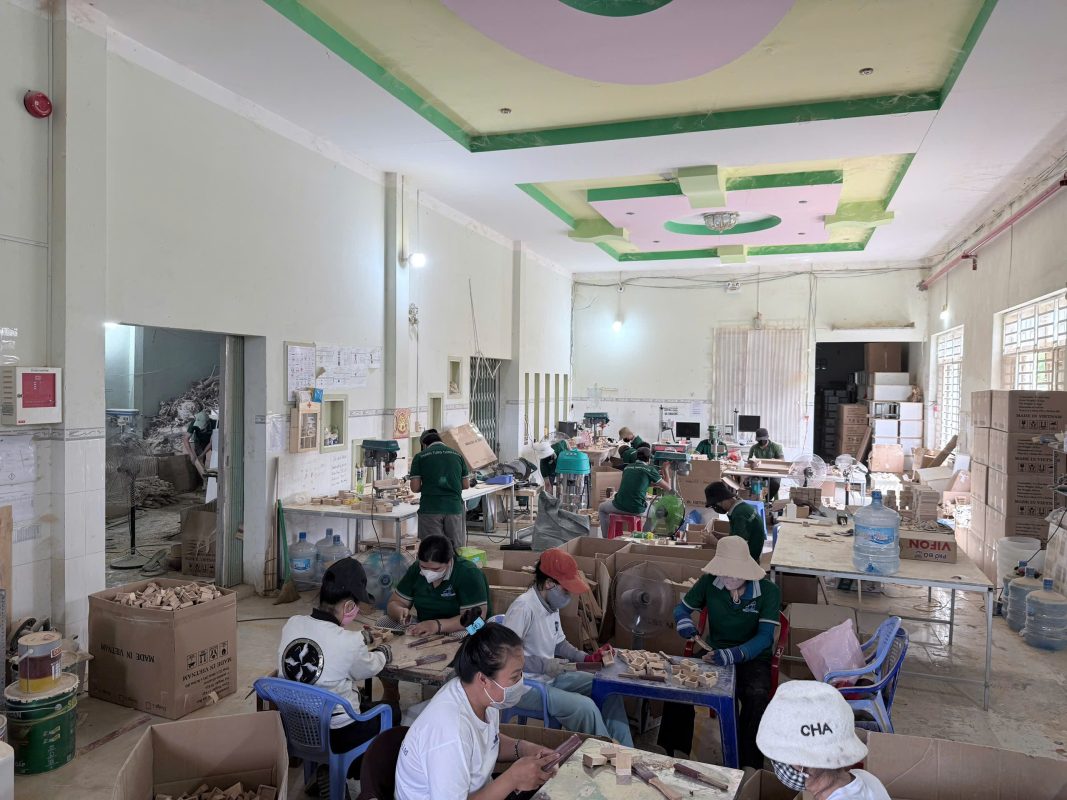
Step 5 — Compliance and Documentation Requirements
Compliance is the backbone of every successful shipment in how to import wooden products from Vietnam.
Whether you are importing to the U.S., EU, or Japan, buyers must ensure every product and every shipment meets both legal sourcing and product-safety standards.
Proper documentation not only prevents customs delays but also strengthens your credibility with retailers and eco-conscious consumers.
A. Lacey Act Compliance (U.S. Market)
For shipments entering the United States, the Lacey Act requires importers to declare that all wooden materials come from legal and traceable sources.
Importers must submit a Plant and Product Declaration (PPQ Form 505) specifying:
- Scientific name of the wood species (e.g., Acacia mangium, Hevea brasiliensis).
- Country of harvest (Vietnam).
- Quantity and value.
- Supplier information.
Vietnamese exporters like Thanhtungthinh, an FSC certified wooden supplier Vietnam, simplify this process by providing ready-to-file FSC and legality documents under each purchase order — ensuring smooth clearance and full traceability.
B. FDA and Prop 65 Regulations (U.S. Food-Contact Products)
For wooden kitchenware export items such as cutting boards, trays, and utensils, U.S. importers must comply with:
- FDA 21 CFR 175.300 – ensures coatings and finishes are food-safe.
- California Prop 65 – restricts lead, formaldehyde, and toxic chemicals.
Ask your supplier for:
- SGS / Intertek test reports covering coating composition.
- MSDS (Material Safety Data Sheet) for applied oils or sealants.
- Declaration of Conformity for each SKU, especially if sold on Amazon or retail channels.
Tip: Factories experienced with the U.S. market often pre-test their materials, making compliance faster and more cost-efficient.
C. FSC Certification (Global Sustainability Requirement)
The Forest Stewardship Council (FSC®) remains the international benchmark for responsible wood sourcing. Vietnam is one of the countries that could provide a reliable manufacturer partner.
FSC certification ensures:
- The wood originates from sustainably managed plantations.
- The full supply chain is traceable via Chain-of-Custody (CoC).
- The factory and supplier can legally export under environmental regulations like the EUDR Vietnam timber regulation (EU Deforestation Regulation 2024).
Buyers can verify certificate authenticity by searching the factory’s license code on info.fsc.org.
D. ISPM-15 Certification (Export Packaging)
Any shipment using wooden pallets or crates must comply with the ISPM-15 standard set by the International Plant Protection Convention (IPPC).
Vietnamese exporters provide:
- Heat-treatment (HT) mark on pallets.
- ISPM-15 Certificate for each container load.
This prevents quarantine or fumigation issues at destination ports.
E. EU and UK Requirements (EUDR / REACH)
For European markets:
- EUDR (2024): requires geolocation mapping of forests to prove non-deforestation.
- REACH Regulation: controls chemical use in coatings or adhesives.
- CE Marking (if applicable): needed for certain décor or children’s products.
Vietnamese exporters already adopting FSC + BSCI systems are best positioned to support importers through these new due diligence steps.
F. Required Export Documentation Checklist
| Document | Purpose | Issued By |
|---|---|---|
| Commercial Invoice | Declares product value & sale | Exporter |
| Packing List | Lists the contents of each carton | Exporter |
| Bill of Lading | Confirms shipment & destination | Shipping Line |
| FSC Certificate | Confirms sustainable sourcing | Supplier |
| Test Reports (SGS/FDA) | Confirms product safety | Third-party Lab |
| ISPM-15 Certificate | Pallet treatment proof | Exporter or IPPC agent |
| Lacey Act Declaration | Legal wood sourcing | Importer (U.S.) |
Proper documentation transforms complexity into confidence. Partnering with a transparent Vietnamese manufacturer ensures you stay compliant without delays or penalties.
Step 6 — Shipping, Inspection, and Customs Clearance
After finalizing compliance and documentation, the final stage in how to import wooden products from Vietnam is coordinating shipment, inspection, and customs clearance.
This stage ensures that your certified wooden goods reach their destination safely, on schedule, and without regulatory issues.
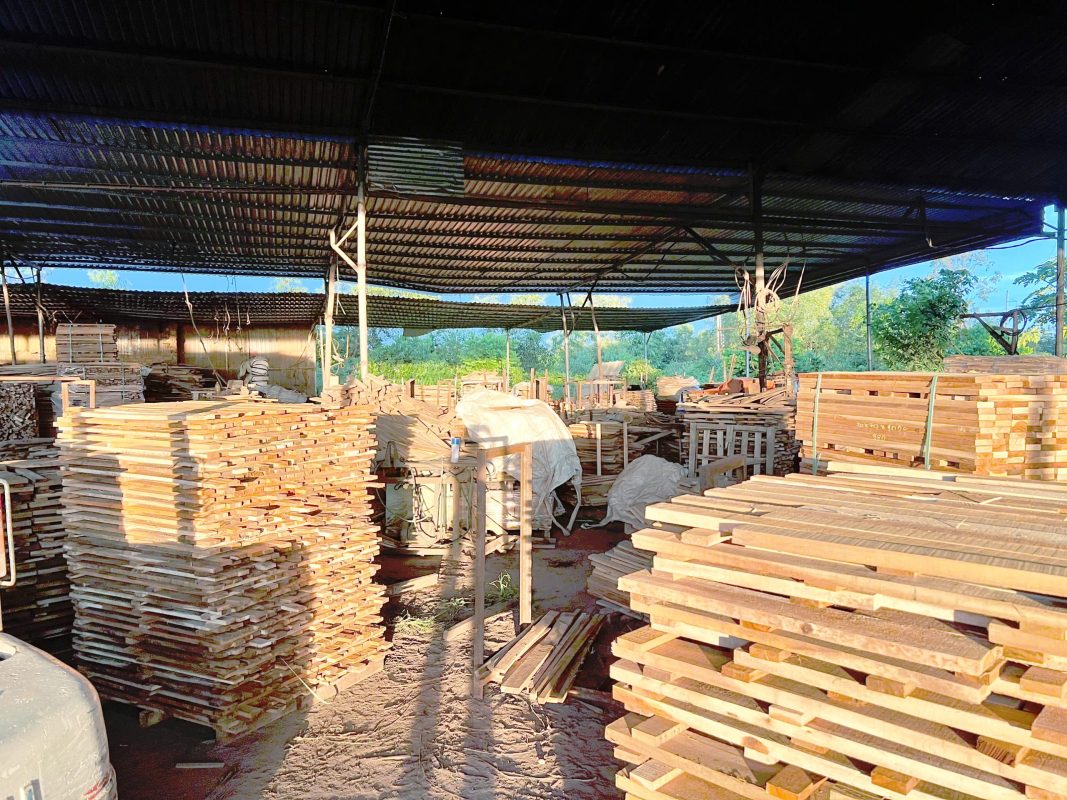
A. Arrange Pre-Shipment Inspection (PSI)
Before any container leaves the factory, a Pre-Shipment Inspection (PSI) is strongly recommended — especially for first-time importers.
Top Vietnamese suppliers like Thanhtungthinh include internal QC, but professional importers usually appoint independent third-party agencies such as:
- SGS
- Intertek
- Bureau Veritas
- TÜV Rheinland
These agencies typically inspect:
- Random sampling under AQL 2.5 standards.
- Moisture content (8–12%) using digital hygrometers.
- Surface finishing, logo engraving, and packaging integrity.
- FSC® labeling accuracy and traceability documentation.
B. Coordinate Freight and Port Logistics
In the Vietnam wood export process, shipments usually depart through one of three major ports:
| Port | Region | Typical Use |
|---|---|---|
| Cat Lai (HCMC) | Southern Vietnam | Main hub for kitchenware & houseware exports |
| Quy Nhon (Binh Dinh) | Central Vietnam | Furniture & large décor items |
| Hai Phong | Northern Vietnam | Exports to Korea, Japan, China |
For FOB (Free on Board) shipments, the OEM wooden product factory Vietnam handles inland trucking and loading.
For CIF (Cost, Insurance, Freight) or DDP (Delivered Duty Paid) shipments, the supplier arranges ocean freight and insurance up to your destination port.
Typical transit times:
- U.S. West Coast: 20–25 days
- U.S. East Coast: 30–35 days
- Europe: 27–32 days
- Japan / Korea: 5–8 days
C. Understand Export Packaging Standards
High-quality packaging prevents damage, moisture absorption, and deformation during long voyages.
Factories like FSC certified wooden supplier Vietnam standardize packaging with:
- E-flute or B-flute cartons (350–450 gsm).
- Shrink wrapping + silica gel packs inside each carton.
- Corner protectors for heavy boards and trays.
- ISPM-15 heat-treated pallets with export stamps.
Well-packed goods not only protect quality but also reflect the professionalism of the manufacturer.
D. Manage Customs Clearance at Destination
Upon arrival at your port, your appointed customs broker or freight forwarder will handle:
- Customs declaration using invoice, packing list, and Bill of Lading.
- Lacey Act submission (for the U.S.) or EUDR report (for the EU).
- Inspection (if selected) — USDA may review wooden packaging for ISPM-15 compliance.
- Duty payment and delivery order release.
To minimize risk, ensure the supplier’s invoice clearly lists:
- Scientific name of the wood (e.g., Acacia mangium).
- Country of harvest (Vietnam).
- FSC certificate code (e.g., FSC-C135627).
- HT stamp number for pallets.
These details prevent customs holds and guarantee a smooth import experience.
E. Post-Arrival Quality Verification
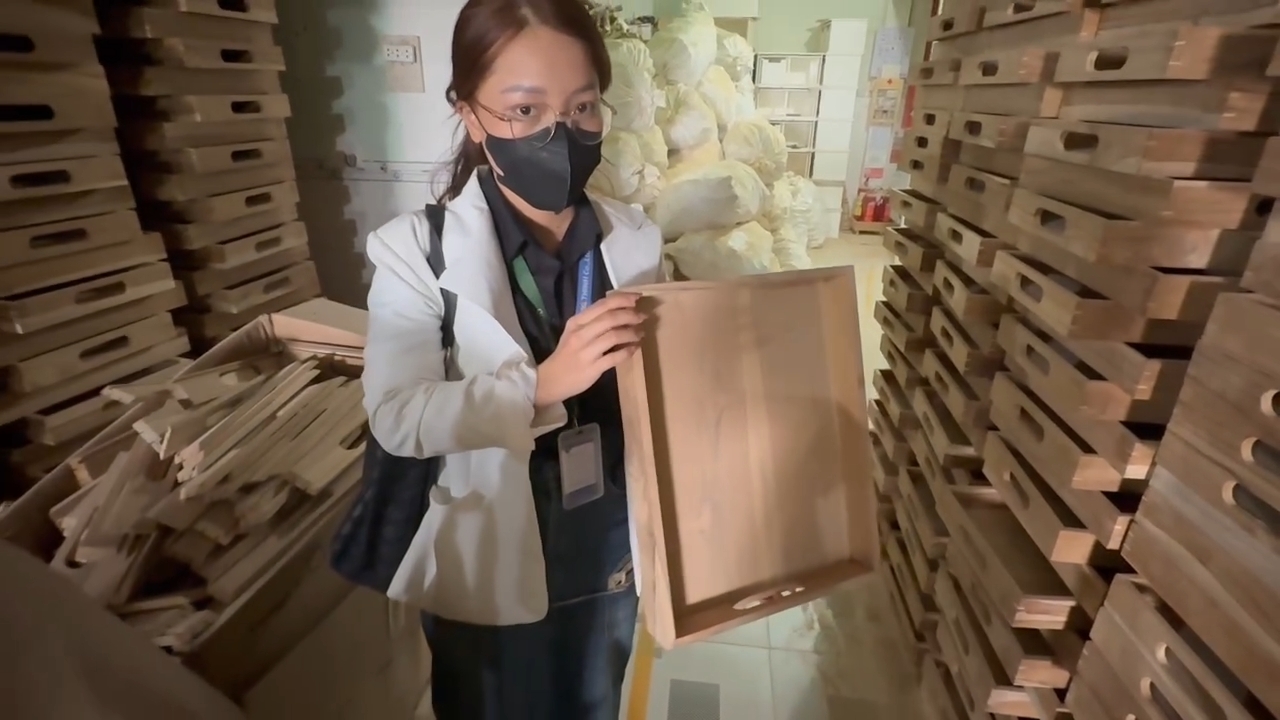
Once goods arrive at your warehouse, conduct a random inspection to confirm consistency with approved samples:
- Compare finishing, dimensions, and engraving with your “golden sample.”
- Check moisture and odor (should remain neutral, without chemical smell).
- Evaluate carton integrity after shipping.
Any discrepancies should be documented immediately for claim processing or supplier feedback.
Step 7 — Post-Import Review and Market Launch
Receiving your shipment is not the end of how to import wooden products from Vietnam — it’s the start of brand building and market growth.
Once the products arrive safely, importers must verify quality, analyze consumer response, and position “Made in Vietnam” as a selling advantage in sustainability-driven markets like the U.S. and Europe.
A. Verify Product Consistency and Packaging Integrity
Start by conducting a post-arrival inspection on random cartons:
- Check that surface finishing, engraving, and color tones match the golden sample.
- Measure moisture content (8–12 %) to ensure stability after transit.
- Review labeling accuracy — FSC, food-safe symbols, or barcode placement.
- Confirm eco packaging integrity, especially for sustainable wooden packaging Vietnam designs (e.g., gift boxes, trays, and lids).
Document any deviation immediately for supplier feedback or claim support.
A transparent FSC-certified wooden suppliers in Vietnam will always address valid post-delivery issues responsibly.
B. Assess Customer Feedback and Market Fit
Once your wooden kitchenware export items reach retailers or e-commerce customers:
- Monitor return rate, reviews, and average rating to gauge consumer perception.
- Gather feedback on weight, texture, and usability — acacia products are often praised for their natural grain and durability.
- Adjust future product specs or packaging accordingly.
Suppliers like acacia wood manufacturer Vietnam can quickly modify size, oil finishing, or logo placement based on feedback, supporting an agile re-ordering cycle.
C. Build a “Sustainable Origin” Brand Story
Western consumers increasingly value eco-friendly wooden gifts and traceable materials.
Highlight your supply chain story to strengthen brand identity:
- Showcase FSC and BSCI logos on packaging and digital assets.
- Communicate compliance: “FDA & Prop 65 Certified,” “Lacey Act Legal Timber.”
- Use photos or videos from the Vietnam factory to emphasize craftsmanship and ethical production.
Turning transparency into storytelling differentiates your brand from low-cost mass producers.
D. Plan for Re-Orders and Long-Term Supply
A key advantage of sourcing from Vietnam is supplier stability.
Establish a forecasting plan with your manufacturer for seasonal peaks (e.g., Q4 holiday sales or Lunar New Year promotions).
Negotiate volume discounts for repeat orders or multi-SKU programs.
Trusted partners such as OEM wooden product factory Vietnam typically maintain production slots for regular clients, ensuring continuity and predictable lead times.
E. Expand Product Line Strategically
Once market traction grows, consider diversifying your range:
- Add eco-packaging sets, gift boxes, or matching kitchen tools.
- Explore acacia wood and rubberwood combinations for design contrast.
- Launch limited-edition “Vietnam Handcrafted Series” to reinforce authenticity.
Vietnam’s exporters are skilled in OEM customization — they can adapt shapes, coatings, and packaging quickly to meet new trends.
The post-import stage is where successful importers turn logistics into brand loyalty. Vietnam’s sustainable craftsmanship and export reliability give you the perfect foundation for long-term growth.
Step 8 — Sustainability and Long-Term Partnership
The final step in understanding how to import wooden products from Vietnam is recognizing that sourcing is not only about cost — it’s about long-term sustainability, partnership, and shared values.
Vietnam’s wood industry is evolving rapidly, embracing eco-conscious manufacturing, transparent supply chains, and global compliance systems that make it one of the world’s most trusted sourcing destinations.
A. Sustainability as a Competitive Advantage
Modern buyers increasingly prioritize sustainable and traceable materials.
Vietnamese manufacturers are responding through:
- FSC® Certification: guaranteeing responsibly managed forests and legal timber sourcing.
- BSCI and SEDEX Compliance: ensuring fair labor and ethical production.
- Renewable Materials: using acacia wood, rubberwood, and bamboo from replantation forests.
- Low VOC Coatings: reducing emissions and improving indoor safety for end users.
Partnering with an FSC certified wooden supplier in Vietnam not only fulfills environmental obligations but also strengthens your brand’s reputation in eco-friendly markets like the U.S., EU, and Japan.
B. Strength of Vietnam’s Export Ecosystem
Vietnam’s supply chain offers importers a fully integrated structure — from raw material sourcing to finished goods export:
- Skilled OEM wooden product factory Vietnam clusters in Bình Dương, Đồng Nai, and Bình Thuận.
- National ports (Cat Lai, Quy Nhon, Hai Phong) are connected to major sea routes.
- Experienced logistics providers and export consultants.
- Supportive government policies encouraging legal and sustainable wood trade.
This combination allows buyers to scale production with reliability and transparency — qualities rarely matched by other sourcing hubs.
C. Building Long-Term Collaboration
For serious importers, sustainability must go hand-in-hand with consistency.
Establishing a multi-year partnership with a trusted manufacturer allows:
- Continuous product improvement and design customization.
- Priority in production scheduling and pricing stability.
- Co-branding opportunities (e.g., “Designed by [Buyer Brand], Crafted in Vietnam”).
- Shared sustainability initiatives (carbon reduction, recycled packaging, etc.).

D. Vietnam’s Vision for the Future
The government’s Forestry Development Strategy 2021–2030 promotes:
- Expanding FSC-certified plantations nationwide.
- Enhancing value-added wood exports (houseware, kitchenware, décor).
- Strengthening export control systems to align with EUDR and Lacey Act frameworks.
Conclusion — Partner with Certified Vietnamese Manufacturers for a Sustainable Future
The process of how to import wooden products from Vietnam combines efficiency, compliance, and innovation.
From acacia wood manufacturer Vietnam craftsmanship to FSC and BSCI certifications, Vietnamese suppliers deliver reliable, eco-conscious solutions for modern brands worldwide.
Choosing a sustainable sourcing partner today means building a responsible business tomorrow.
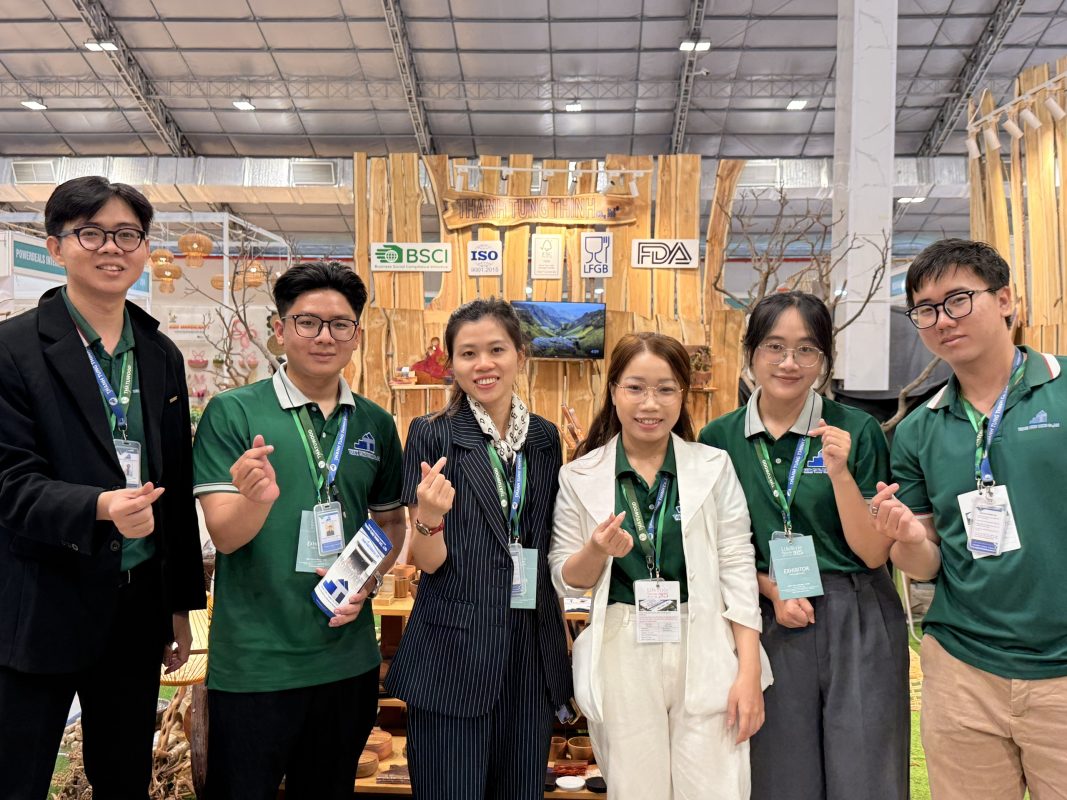
Partner with Thanhtungthinh — a certified OEM wooden product factory Vietnam, specialized in FSC-certified houseware, kitchenware, and sustainable wooden packaging Vietnam.

