


Table of Contents
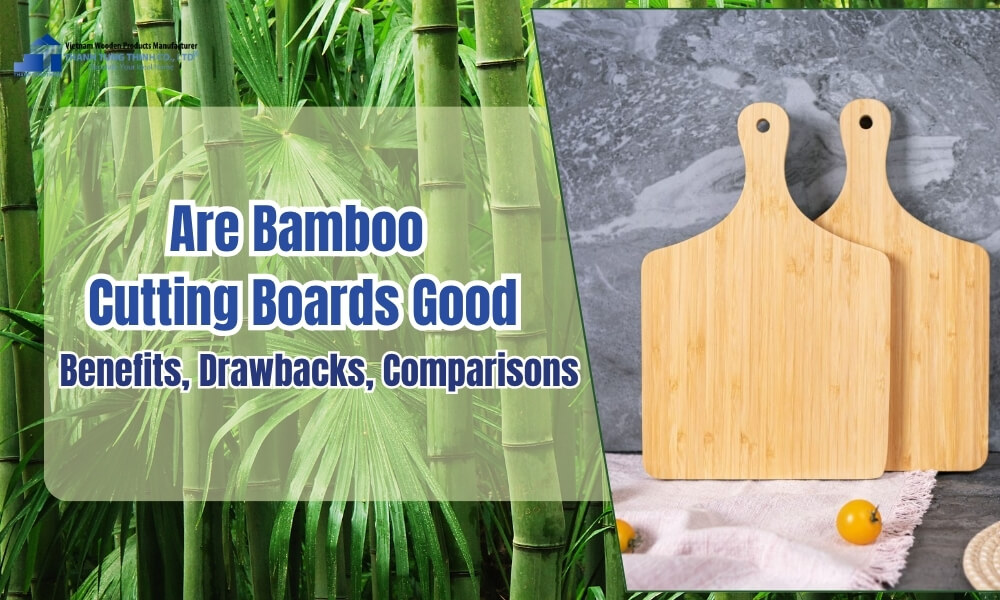
Global wholesale distributors, commercial kitchenware importers, and lifestyle brand owners frequently ask whether are bamboo cutting boards good investments compared to traditional hardwood blocks. When assessing if are bamboo cutting boards good for bulk inventory expansion, procurement managers must weigh their sustainability appeal against structural rigidity and adhesive compliance.
When investigating are bamboo cutting boards good for high-volume supply chains, understanding their intrinsic properties is paramount. Many purchasing agents wonder: are bamboo cutting boards good for luxury markets, or are bamboo cutting boards good for budget-conscious eco-friendly segments? Furthermore, experts evaluating are bamboo cutting boards good often question whether is bamboo good for cutting boards regarding knife preservation.
After reading this article, you will understand the following information:
- In-depth evaluation of whether are bamboo cutting boards good for global wholesale portfolios.
- Comprehensive analysis of bamboo structural characteristics and market popularity drivers.
- Detailed breakdown of advantages, disadvantages, and multi-material comparisons.
- Professional guidelines on when to source bamboo versus premium hardwood alternatives.
- Expert manufacturing insights and reliable bulk supply backing from ThanhTungThinh.
Are Bamboo Cutting Boards Good? Detailed Structural Analysis
Addressing whether are bamboo cutting boards good requires a granular examination of their structural mechanics and material properties. Bamboo is a unique, fast-growing grass that undergoes specialized shredding, drying, and high-pressure lamination to form solid kitchen panels.
When evaluating if are bamboo cutting boards good for daily commercial use, breaking down their performance across specific structural criteria reveals why they have become a staple in global distribution portfolios.
Exceptional Durability and Mechanical Strength
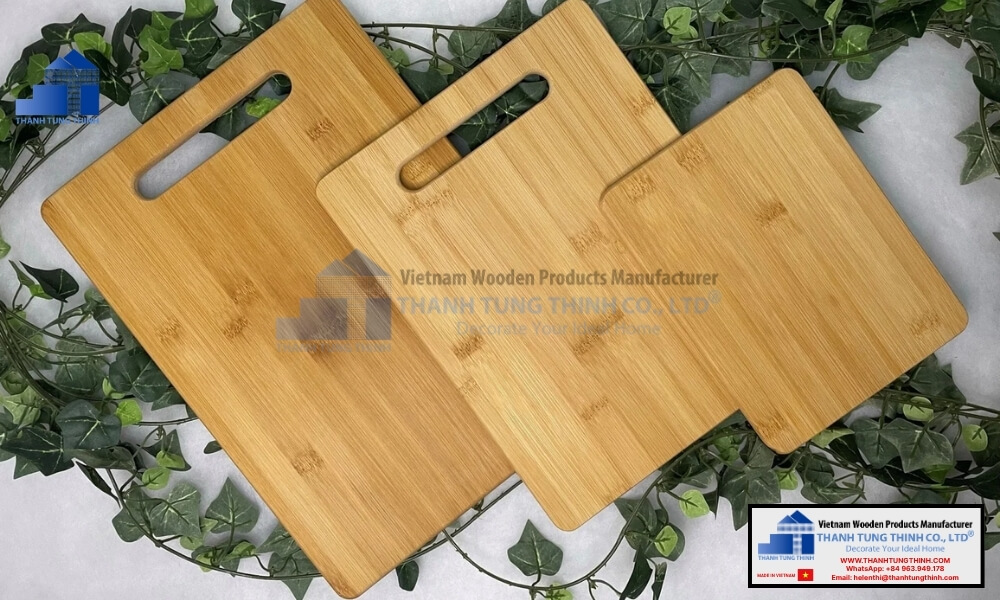
When analyzing whether are bamboo cutting boards good for heavy-duty kitchen environments, structural durability is a primary consideration. Bamboo possesses a natural tensile strength that rivals many traditional hardwoods. Its dense fiber alignment ensures that the board resists deep knife scarring and heavy institutional impacts, making it a robust asset for volume-driven culinary operations.
Effortless Hygiene and Simple Cleaning Protocols
A key factor determining whether are bamboo cutting boards good is how easily they can be sanitized. Because high-grade bamboo panels are non-porous and laminated under immense hydraulic pressure, food particles and liquids struggle to penetrate the surface. This tight cellular matrix allows commercial kitchens to clean and wash the boards quickly, maintaining strict hygiene standards.
Advanced Natural Moisture Resistance
Assessing whether are bamboo cutting boards good involves evaluating how well the material handles water exposure. Unlike softwoods that swell and distort easily, bamboo exhibits natural water-repellent properties due to its dense silica and fiber composition. When properly sealed with food-grade finishes, bamboo boards resist warping during standard shipping and frequent kitchen washing.
Superior Eco-Friendly and Sustainable
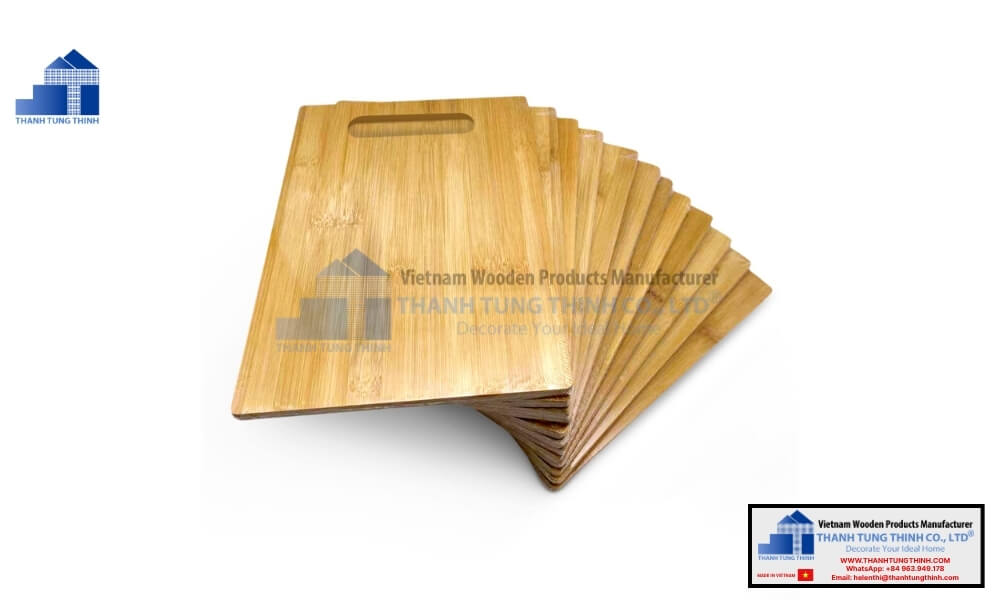
For distributors answering whether are bamboo cutting boards good in the context of green marketing, sustainability is unmatched. Bamboo is one of the fastest-growing renewable resources on Earth, maturing in just 3 to 5 years without requiring chemical replanting or synthetic fertilizers. This enables wholesalers to market eco-conscious products that appeal to environmentally responsible buyers.
High Versatility Across Culinary Applications
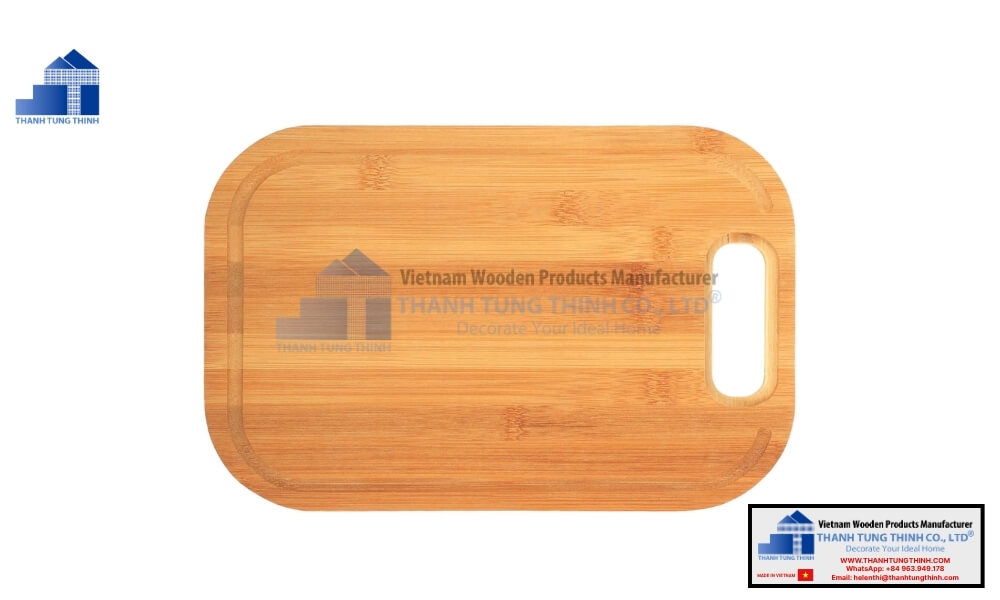
When questioning whether are bamboo wooden cutting boards good for diverse product lines, versatility stands out. Laminated bamboo can be engineered into various thicknesses, surface textures, and configurations-ranging from lightweight prep boards to integrated juice-groove carving blocks catering to multiple commercial kitchen needs.
Outstanding Cost-Effectiveness and Affordability
A major commercial driver when evaluating whether are bamboo cutting boards good is economic efficiency. Because bamboo grows abundantly and requires less processing time than slow-growth hardwoods, manufacturers can produce them at a lower cost. This allows wholesale distributors to offer competitive pricing tiers and achieve high-volume turnover.
Modern Aesthetic Appeal and Natural Style
Finally, deciding whether are bamboo wooden cutting boards good includes reviewing their visual presentation. Bamboo features a distinct, clean, blonde or caramel grain pattern that delivers a sleek, modern Scandinavian aesthetic. This attractive visual appeal makes bamboo cutting boards exceptionally popular for open-kitchen displays, boutique gifting, and contemporary culinary merchandising.
Why Are Bamboo Cutting Boards Becoming Popular in Global Distribution?
The rapid surge in demand driving inquiries into whether are bamboo cutting boards good stems from shifting global consumer preferences toward sustainability. Modern eco-conscious buyers actively seek renewable materials that reduce environmental footprints. Because bamboo matures in just 3 to 5 years without requiring replanting or chemical pesticides, wholesale distributors find that promoting renewable culinary surfaces attracts environment-driven institutional buyers.
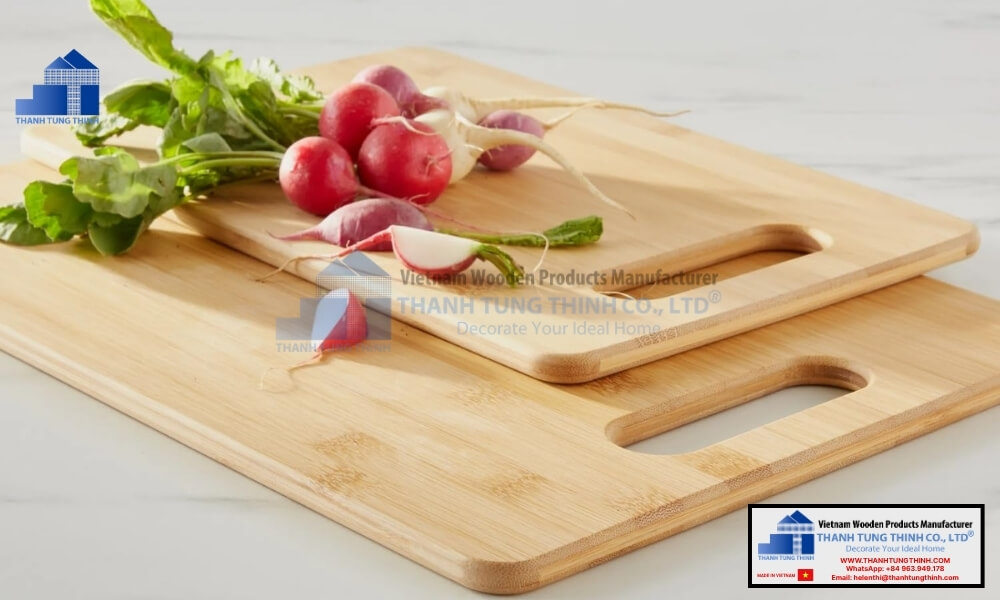
When analyzing if are bamboo cutting boards good for modern inventories, their lightweight nature, low raw material acquisition cost, and attractive golden grain aesthetics make them highly marketable commodities for volume-driven distribution portfolios.
What Are the Advantages and Disadvantages of Bamboo Cutting Boards?
Advantages of Bamboo Culinary Surfaces
When questioning whether are bamboo cutting boards good, evaluating their primary strengths reveals a robust, hard surface that resists deep knife scarring and stands up well to heavy institutional workloads. Their non-porous lamination prevents liquid penetration, ensuring a hygienic workspace when properly sealed.
Disadvantages and Limitations of Bamboo Boards
Conversely, assessing whether are bamboo cutting boards good uncovers notable drawbacks. Because bamboo boards are manufactured using multi-strip lamination, low-grade alternatives often rely on toxic formaldehyde adhesives that fail international food safety standards. Additionally, bamboo’s extreme rigidity can dull professional chef knives more rapidly than self-healing end-grain blocks.
Comparative Analysis: Bamboo Cutting Boards Versus Alternative Materials
To determine if are bamboo cutting boards good for your specific target market, evaluating how they stack up against alternative materials is essential.
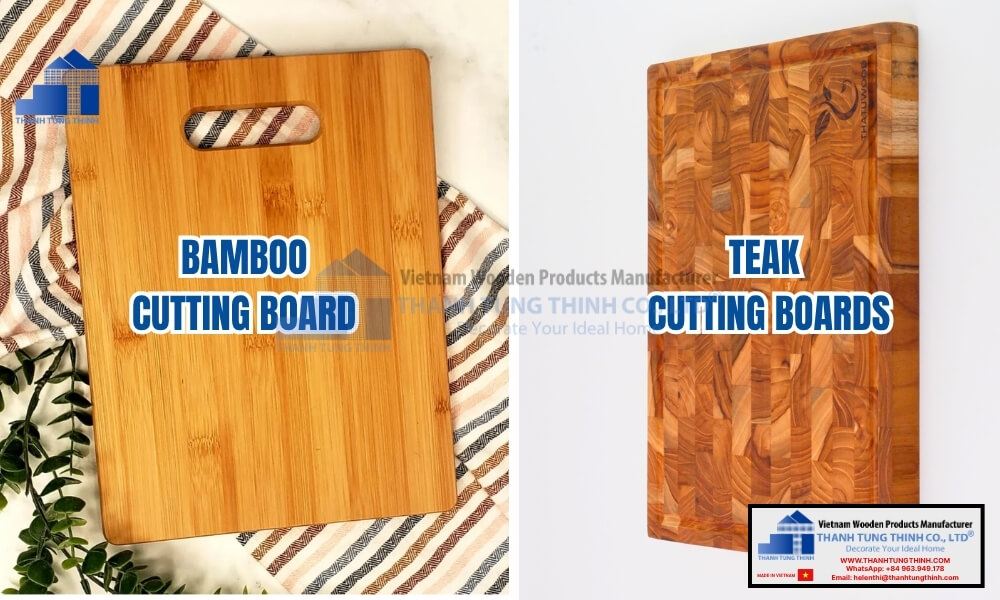
Bamboo Cutting Boards vs Teak Cutting Boards
While bamboo offers rapid renewability and a lower price point, Teak wood provides superior natural oil saturation, self-healing cellular properties, and luxurious chocolate-gold aesthetics that command higher profit margins in luxury wholesale markets.
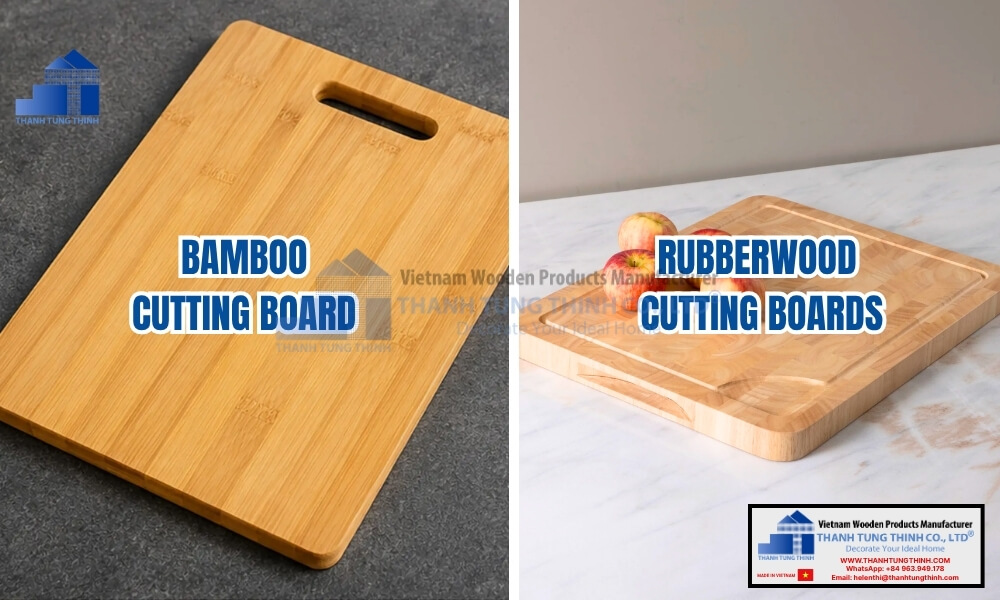
Bamboo Cutting Boards vs Rubberwood Cutting Boards
Rubberwood and bamboo both appeal to eco-conscious buyers due to their sustainable origins. However, rubberwood offers a softer, more forgiving cutting surface that preserves knife edges more effectively than high-density laminated bamboo.
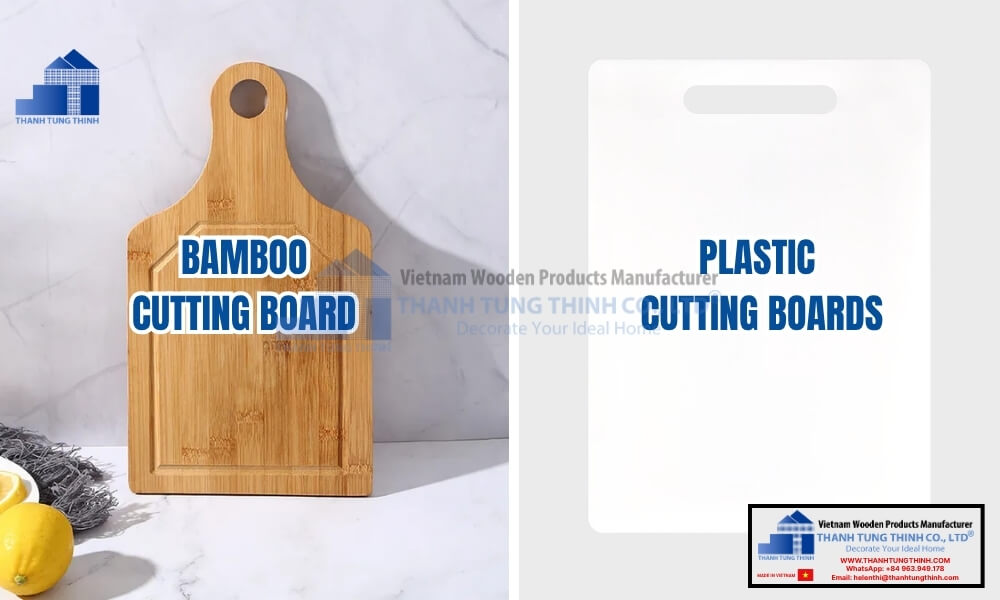
Bamboo Cutting Boards vs Plastic Cutting Boards
Compared to synthetic plastic boards that shed microplastics into food and develop deep, bacteria-trapping knife scars, high-grade bamboo boards offer a natural, non-toxic, and infinitely more professional aesthetic for commercial kitchens.
Bamboo Cutting Boards vs Walnut Cutting Boards
Walnut cutting boards represent the pinnacle of luxury craftsmanship with deep chocolate tones and moderate Janka hardness, whereas bamboo serves as a budget-friendly, high-volume utility alternative.
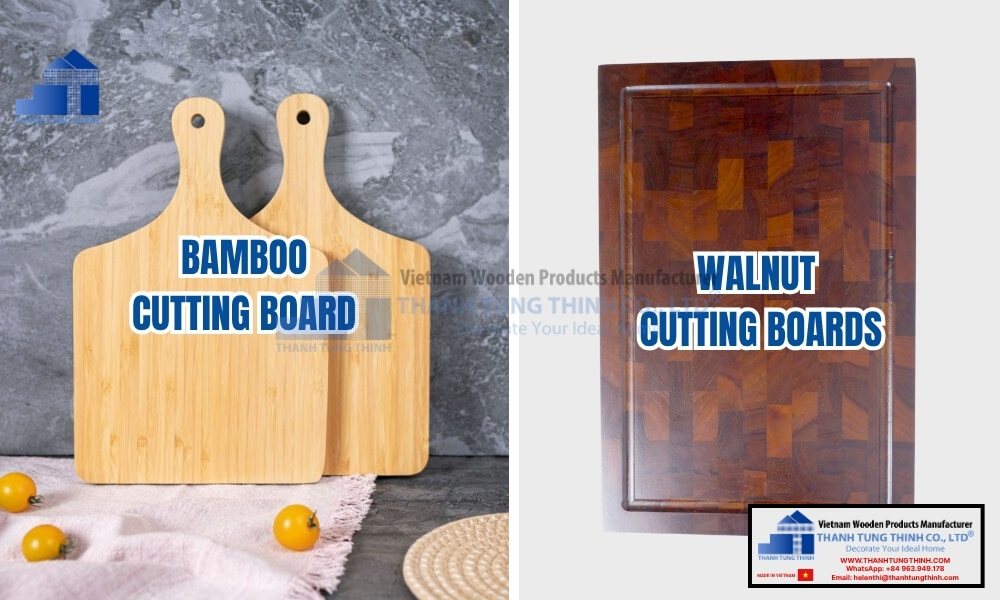
Expert Manufacturing Tip from ThanhTungThinh: When sourcing laminated wood or bamboo products, always verify that the manufacturer utilizes solvent-free, FDA-compliant adhesives to eliminate chemical leaching risks.
When Should Wholesale Distributors Choose Bamboo Versus Hardwood Alternatives?
Determining whether are bamboo cutting boards good for your specific distribution model depends on your client base. If your commercial network supplies budget-driven institutional caterers, eco-friendly promotional gift markets, or volume wholesale chains seeking accessible price points, bamboo is an exceptional inventory choice.
However, if your clients comprise upscale department stores, luxury restaurant chains, and professional culinary professionals demanding elite knife preservation and opulent aesthetics, investing in premium teak or walnut hardwood collections is the optimal strategic decision.
Conclusion: Elevating Your Wholesale Catalog with Sustainable Culinary Solutions
In summary, while bamboo cutting boards offer a reliable, cost-effective, and eco-friendly solution for budget-driven institutional and volume-based markets, they represent only one facet of a diverse kitchenware portfolio. For wholesale distributors aiming to maximize market reach and capture the high-margin luxury segment, the key lies in maintaining a balanced inventory pairing versatile bamboo utility lines with elite, premium hardwood collections.
For distributors who prioritize superior knife preservation, long-term durability, and opulent aesthetics that appeal to high-end hospitality and gourmet culinary clients, our premium teak end grain cutting board remain the ultimate choice. At ThanhTungThinh, we leverage over 15 years of manufacturing excellence to produce FSC-certified Teak surfaces that are not only visually stunning but also inherently antibacterial, moisture-resistant, and built for professional-grade longevity.
Ready to enhance your wholesale catalog with high-margin, expertly crafted culinary surfaces?
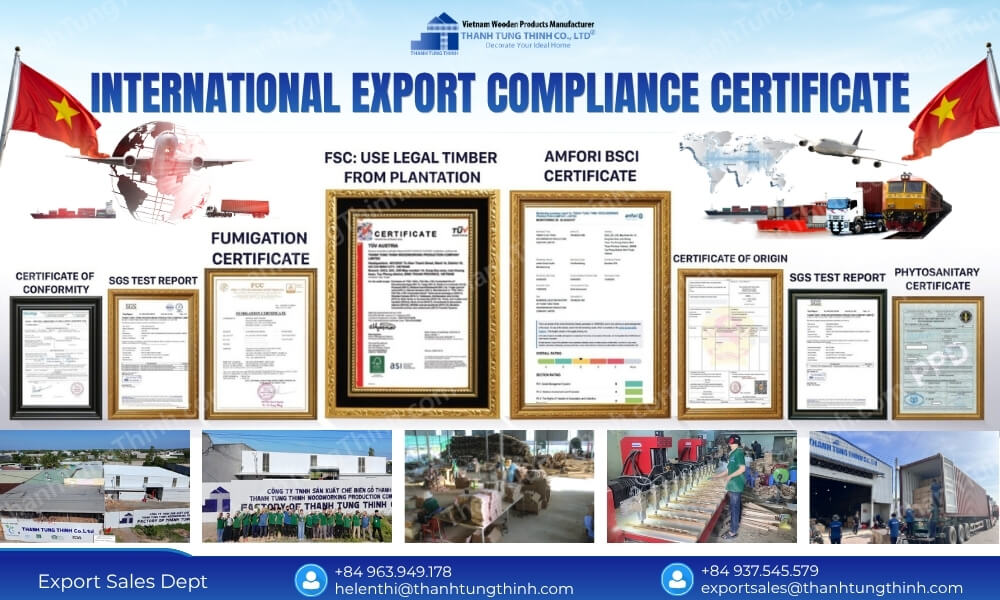
Partner with ThanhTungThinh today to gain access to our extensive collection of wooden cutting boards. We provide seamless end-to-end support, including custom OEM/ODM specifications, rigorous international quality compliance (FDA, LFGB, BSCI), and a reliable supply chain capacity of 5 forty-foot containers per month. Contact our export sales team now to request your comprehensive product catalog and lock in competitive volume pricing.
🌐 Website: https://thanhtungthinh.com/
📌 Pinterest: https://www.pinterest.com/THATUWOOD/
📌 Youtube: https://www.youtube.com/@thanhtungthinhmanufacturer
📌 Facebook: https://www.facebook.com/thanhtungthinh
📌 Linkedin: https://www.linkedin.com/company/thanh-tung-thinh-co-ltd
With more than 15 years of production experience, Thanh Tung Thinh Co., Ltd. is one of the leading reputable Wooden Products manufacturers and exporters specializing in Wooden Products, Wooden boxes products, Wooden Packaging, wooden souvenirs, kitchenware, household utensils, driftwood products, bonsai woods and pet, bird products from coffeewood; other customized products…In particular, all of our wood raw materials are FSC certified, demonstrating our commitment to strictly adhering to sustainable logging and environmental protection standards, providing complete peace of mind for our global customers.
📍 No. 227 To Hien Thanh St, W13, District 10, Ho Chi Minh city, Vietnam
📍 General Warehouse: 451/29/51 To Hien Thanh Street, Dien Hong Ward, Ho Chi Minh city, Vietnam
📍 Factory 1, 2: Lien Huong Town, Tuy Phong District, Binh Thuan Province, Vietnam
📍 Factory 3: Phuoc The Town, Tuy Phong District, Binh Thuan Province, Vietnam
☎ WhatsApp: +84 963.949.178
✉ Email: [email protected]
🌐 Website: www.thanhtungthinh.com
Frequently Asked Questions
Are bamboo cutting boards good for daily commercial kitchen use?
Yes, bamboo boards offer high density, moisture resistance, and solid durability for heavy institutional workloads, provided they are manufactured with food-safe, non-toxic adhesives.
Do bamboo cutting boards dull kitchen knives faster than wood?
Because bamboo possesses a high silica content and rigid lamination structure, it can dull knife blades slightly faster than softer hardwoods or self-healing end-grain blocks.
How does ThanhTungThinh ensure safety and quality in bulk cutting board manufacturing?
We enforce strict kiln-drying protocols, utilize FDA-compliant waterproof adhesives, and maintain comprehensive global certifications including FSC, BSCI, ISO 9001:2015, FDA, and LFGB.
What export capacity does ThanhTungThinh provide for international wholesale partners?
We maintain a reliable export output capacity of 5 forty-foot containers per month, seamlessly fulfilling large-scale international contracts on strict delivery timelines.
What materials offer higher profit margins than bamboo for distributors?
Premium hardwood collections such as sustainable Teak, Acacia, and American Black Walnut command higher wholesale price points and deliver superior profit margins in luxury markets.
Related articles
- TOP 6 Best Cutting Boards for Health: Natural Materials and Non Toxic Standards
- TOP 7 Best Wood For End Grain Cutting Board Every Wholesaler Must Know
- Why Choose An End-Grain Wooden Cutting Board? Top 5 Reasons You Need To Know
- What Is End Grain Wooden Cutting Board? Is It The Perfect Choice For Wholesalers?
- Top 8 Best End-Grain Wooden Cutting Boards of 2026 Favored by Wholesale Customers at ThanhTungThinh

