


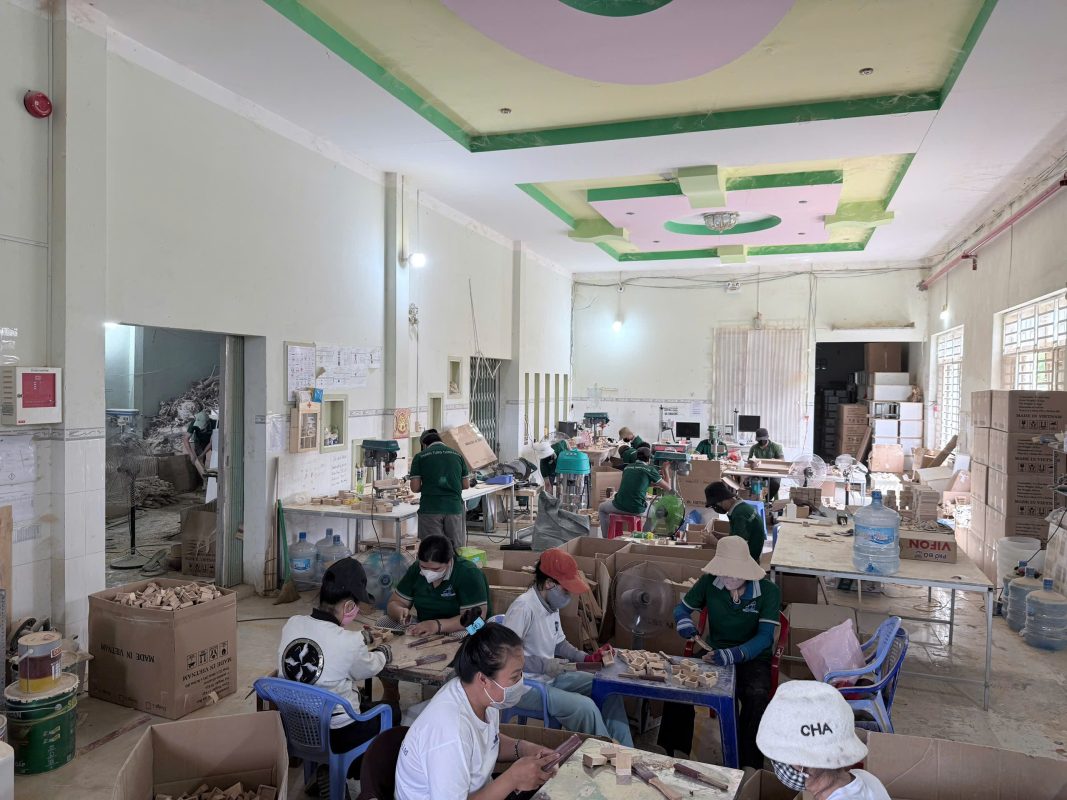
In Part One of “International-standard Wood Processing Techniques for Global Manufacturing” We just went through “Responsible sourcing, Klin Drying, Moisture Conditioning & Sterilization, Precision Machining and Shaping” – Now, for the rest of Part 2, we will provide the last 3 steps to be the greatest Wood treatment in manufacturing.
Table of Contents
Stage 5: Surface Treatment and Food-Safe Finishing – Wood processing technique
Once machining and shaping are completed, the wood enters the stage that ultimately defines how customers see, touch, and experience the final product: surface treatment and finishing.
For global markets, the finishing process is more than visual enhancement — it is a strict requirement to meet food safety regulations, chemical compliance, and durability expectations across various climates.
At Thanh Tùng Thịnh, we apply a controlled, multi-step finishing process engineered for export-grade performance, designed to satisfy requirements from retailers in the U.S., EU, Japan, and Australia.
1. Purpose of Surface Finishing in Export Manufacturing
Finishing serves three essential functions:
a. Protection
- Shields the wood from moisture, staining, UV light, and daily wear.
- Prevents microbial growth on kitchenware surfaces.
- Extends product lifespan in both humid and dry climates.
b. Aesthetic Enhancement
- Brings out natural grain patterns.
- Creates consistency across large production batches.
- Allows brands to match color tone across multiple SKUs.
c. Compliance
Finishes must meet strict regulations such as:
- FDA (U.S. Food and Drug Administration)
- California Proposition 65
- LFGB (Germany Food Safety Standard)
- REACH (EU chemical safety)
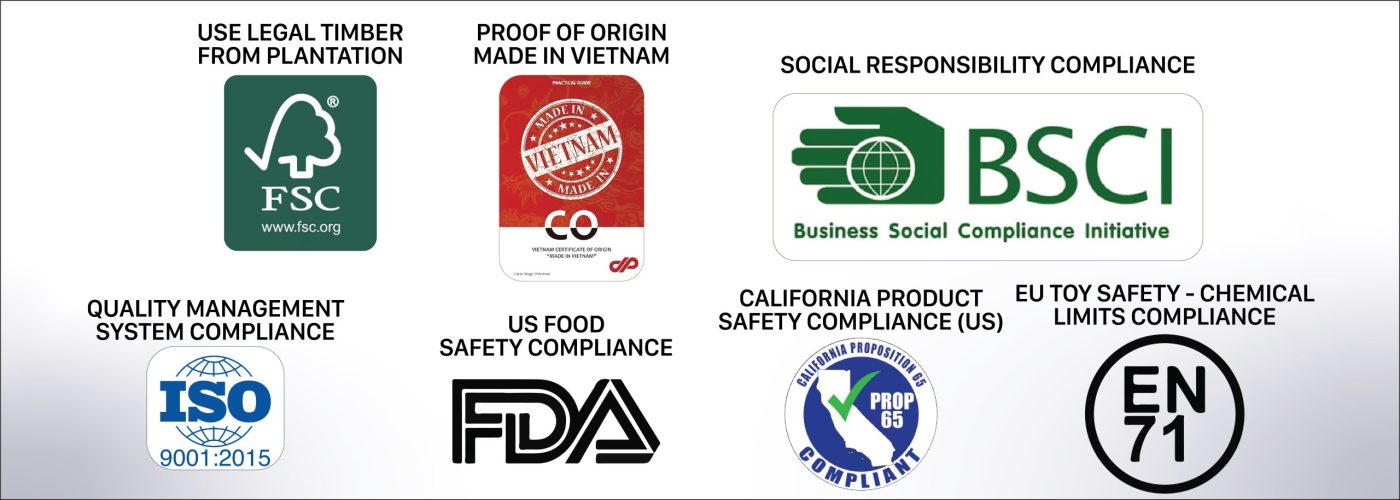
This is essential for cutting boards, utensils, trays, and any wooden item used near food.
2. Food-Safe Natural Oil Finishing
For products designed for food contact, we use 100% food-safe natural oils sourced from certified suppliers.
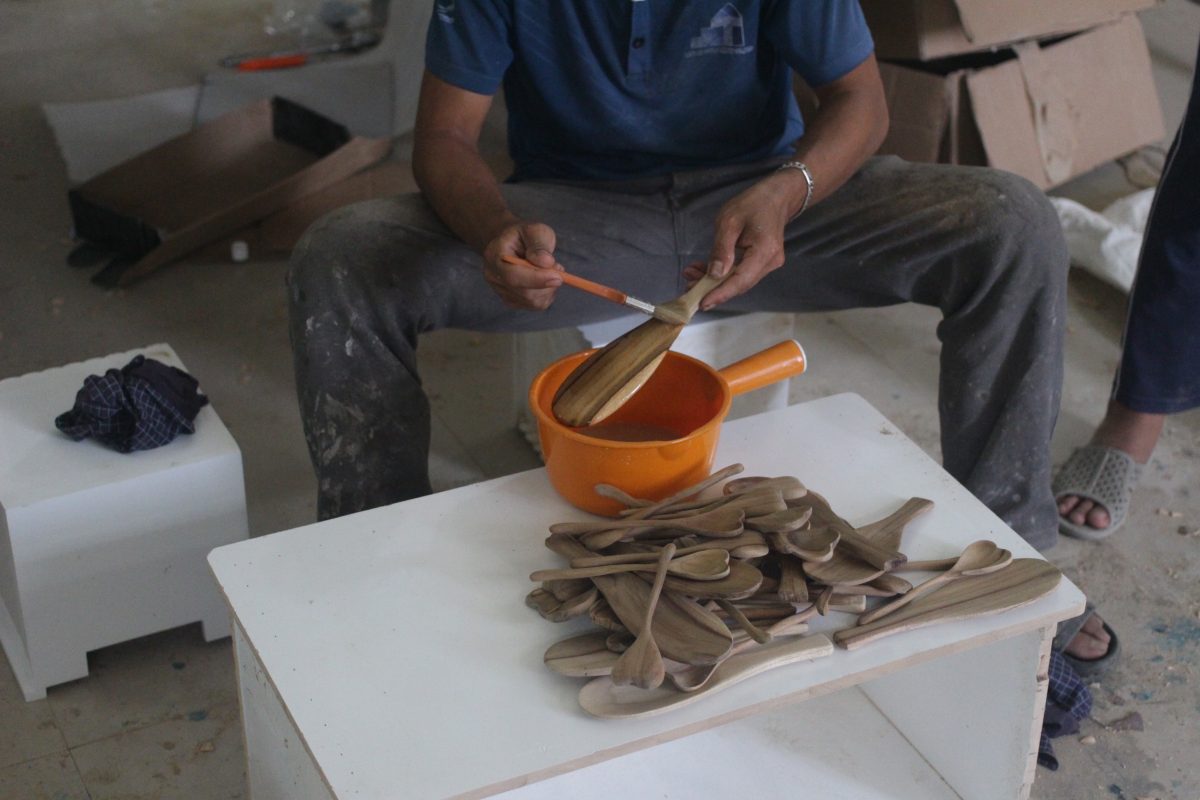
Advantages:
- Penetrates deep into the wood fibers
- Enhances water resistance while keeping natural texture
- Non-toxic, odor-free, and chemical-free
- Allows the wood surface to “breathe,” preventing cracking
Applications:
- Cutting boards
- Serving boards
- Salad bowls
- Wooden utensils
- Spice boxes
- Coasters
Why buyers choose natural oils
This finishing type is valued in Western markets, where consumers prefer natural, matte finishes over glossy coatings for kitchenware.
3. PU (Polyurethane) Coating for Durability
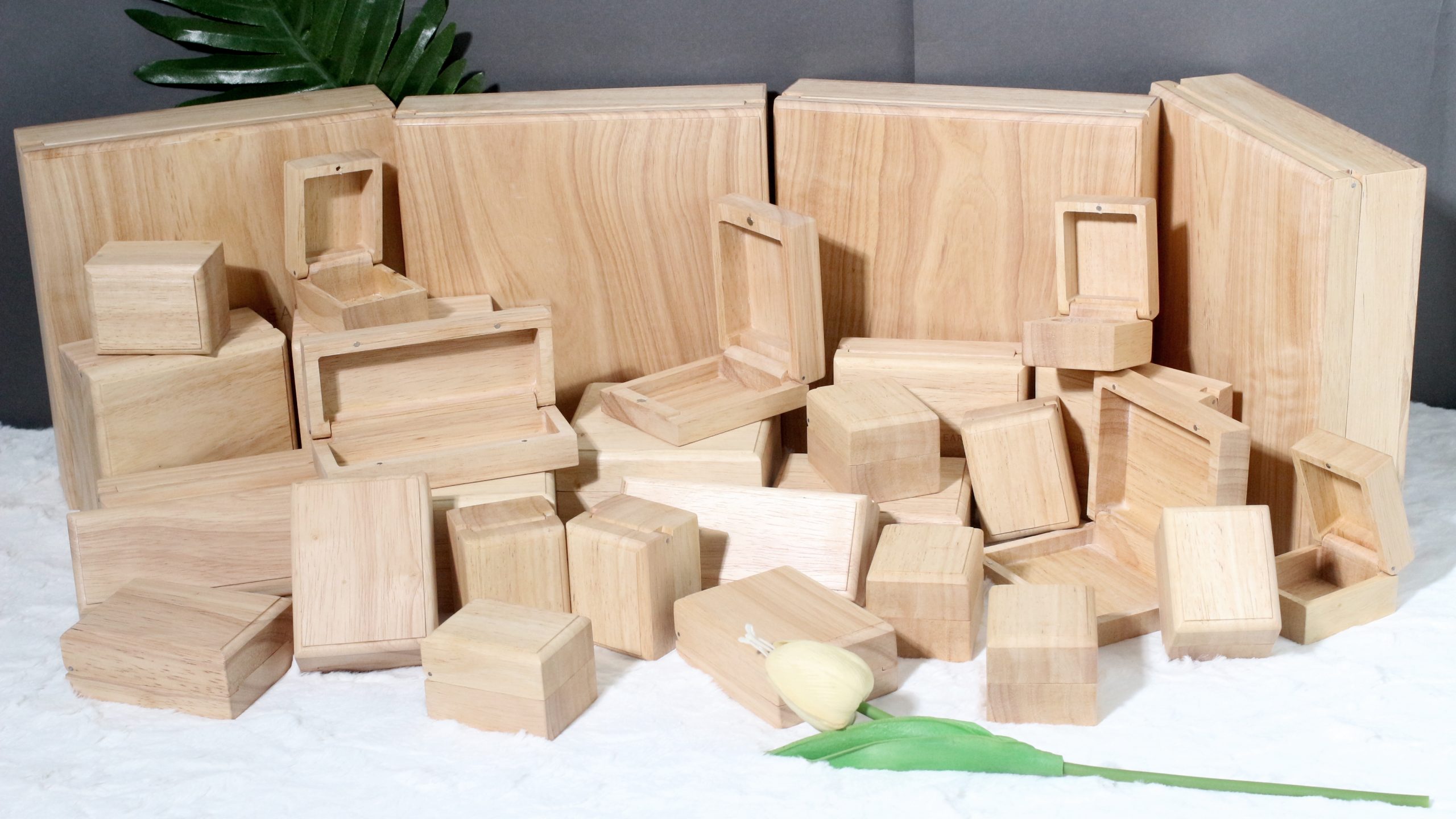
For home décor, gift boxes, and non-food-contact items, we offer PU coatings, which provide a protective sealed layer.
PU Finish Benefits:
- High resistance to scratches and surface abrasion
- Long-lasting gloss or matte appearance
- Excellent protection against staining or moisture
- Ideal for premium packaging and décor products
PU is used particularly for:
- Jewelry boxes
- Wooden lids and display pieces
- Candle holders
- Drawer organizers
- Decorative trays
4. UV Coating for High Productivity and Hardness
For large-volume export orders, UV coating is preferred because it dries instantly under ultraviolet light.
Advantages of UV Coating:
- Ultra-fast curing
- Highly scratch-resistant surface
- Uniform gloss level
- Increased resistance to humidity and color fading
- Ideal for e-commerce and retail stores requiring product durability
This is often recommended for:
- Cosmetic packaging
- Designed gift boxes
- Display stands
- Premium wood accessories
5. Color Staining and Tone Matching
Your buyers often require a specific palette — walnut, espresso, natural, dark teak, matte black, antique wash, or even pastel tones.
We use professional staining techniques to achieve consistent tones across hundreds or thousands of units.

Our staining process includes:
- Pre-stain sanding
- Water-based or oil-based stain application
- 24-hour absorption period
- Color inspection under controlled lighting
- Protective top-coat sealing
Why consistency is difficult but essential
Different pieces of wood absorb stain at different rates.
Our controlled staining procedures reduce:
- Blotching
- Uneven tone
- Patchiness
This ensures uniformity across large series of boxes, trays, and décor items.
6. Surface Testing and Quality Verification
Before approval, each finished batch undergoes a strict evaluation process:
a. Adhesion Test
Ensures the coating bonds firmly and won’t peel or bubble.
b. Hardness Test
Verifies scratch resistance for décor items and packaging.
c. Food-Safe Migration Testing
For kitchenware, we confirm:
- No heavy metals
- No chemical migration
- No harmful residues
Testing partners include:
SGS, Intertek, Eurofins, TUV Rheinland.
d. Climate Exposure Test
Finished products are tested under:
- High humidity
- Low humidity
- Sudden temperature changes
This ensures the coating remains stable in global distribution environments.
7. Manual Refinement for Premium Lines
Automation provides consistency, but manual finishing provides soul.
Our skilled finishing team performs:
- Detailed hand-sanding of edges
- Spot oiling for grain enhancement
- Smooth buffing for touch-finish quality
- Minor corrections to guarantee uniform tone
Premium gift boxes, trays, and display items often receive additional hand-finishing attention to elevate their retail value.
8. How Surface Treatment Protects Your Brand and Your Supply Chain

Key benefits for global buyers:
- Fewer customer complaints
- Reduced return rates
- Longer shelf life in retail environments
- Compliance with strict international regulations
- Stronger brand reputation on platforms like Amazon, Etsy, or big-box retail
- Higher perceived value and better margin potential
A stable, safe finish is one of the biggest differentiators between low-cost workshops and professional OEM factories.
Conclusion of Stage 5
Surface finishing defines the final identity of a wooden product.
At Thanh Tùng Thịnh, this process is engineered with precision, compliance, and longevity in mind — combining industry-grade coatings with meticulous hand craftsmanship.
Our finishing systems ensure that every exported piece is safe, beautiful, durable, and aligned with global food-contact and chemical standards.
Stage 6: Quality Assurance & International Testing Standards
In global manufacturing, quality is not an act — it is a controlled system.
For wooden products, especially those shipped across continents and sold through strict retail channels, every batch must pass through a well-defined, internationally recognized quality assurance (QA) pipeline.
At Thanh Tùng Thịnh, our QA framework follows a multi-level inspection process designed to minimize defects, ensure consistency, and meet the regulatory expectations of major markets, including the U.S., EU, Japan, and Australia.
1. Multi-Stage Inspection Throughout Production
We implement QC checkpoints at every critical stage — not only at the end.
a. Incoming Material Inspection

Before production begins, we verify:
- Wood moisture
- Structural integrity
- Grain pattern and color consistency
- Fungal or insect contamination
- Legality and certification (FSC®, EUDR, Lacey Act documentation)
This eliminates poor-quality raw materials from entering the workflow.
b. In-Process Inspection
During machining and assembly, our QC team monitors:
- Dimensional accuracy
- CNC precision
- Edge-sanding quality
- Joint alignment
- Cavity depth (for boxes or trays)
- Adhesive performance
This ensures issues are detected early, preventing mass defects.
c. Pre-Finishing Inspection
Before coating is applied, each item is evaluated for:
- Surface scratches
- Micro-cracks
- Rough patches or sanding marks
- Glue residues
- Oil absorption inconsistencies
Only clean, flawless surfaces proceed to finishing.
d. Final Inspection (Before Packing)
This final stage determines export approval.
Inspectors check:
- Overall appearance
- Moisture content (rechecked)
- Finish uniformity
- Branding clarity (engraving, UV print, foil stamping)
- Functionality (magnetic closure, sliding mechanisms)
- Weight and dimensional conformity
- Packaging integrity
If an item does not meet export standards, it is rejected or reworked immediately.
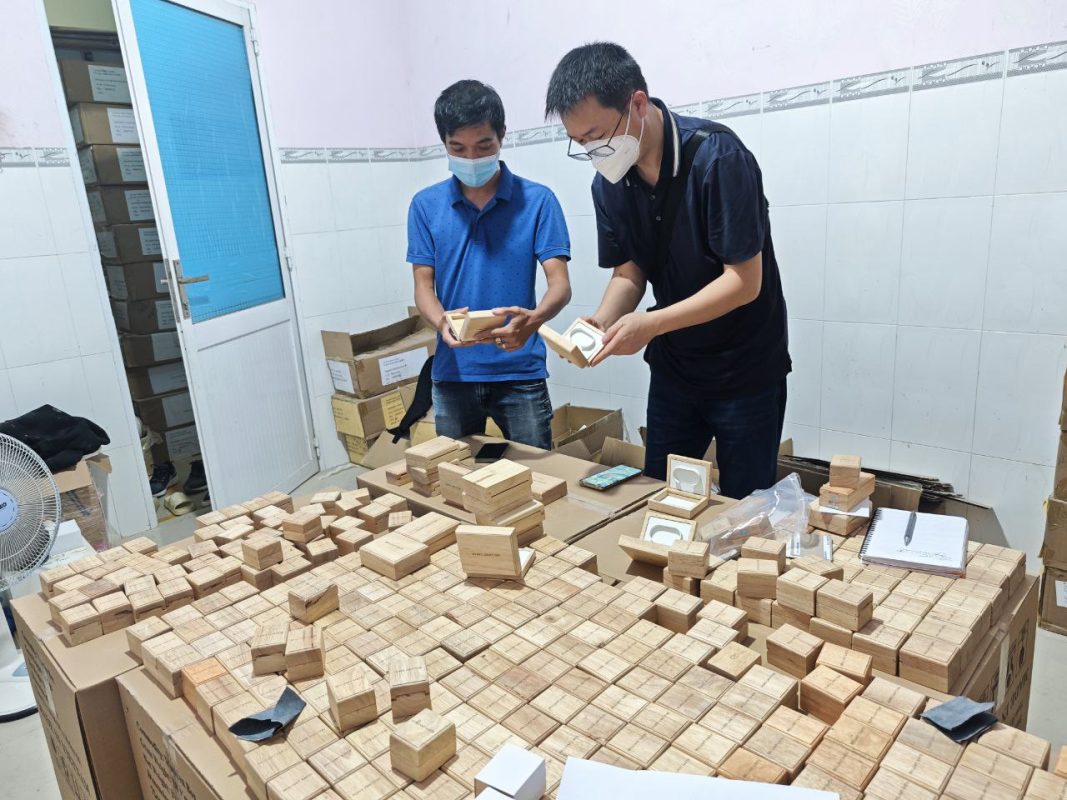
2. AQL Standards for Professional Export Quality
We strictly follow AQL (Acceptable Quality Limit) — the same system used by global retailers.
Read more: “Rubberwood for Gift Boxes & Jewelry Packaging — Sustainable Elegance for OEM Brands”
Inspection Levels Used:
- AQL 2.5 for general export orders
- AQL 1.5 for premium or highly sensitive retail clients
- AQL 0 for strict food-contact or luxury-grade collections
What AQL Means for Buyers
- Predictable, measurable quality
- Reduced defect rates at arrival
- Confidence for seasonal or large-volume orders
- Compliance with major retail chains and distributors
AQL is a globally recognized benchmark — and a key requirement for many importers.
3. International Laboratory Testing (SGS, Intertek, Eurofins)
Depending on the product category, we coordinate third-party testing for:
- Food safety (FDA, LFGB, Prop 65)
- Heavy metal compliance (lead, cadmium, arsenic)
- Formaldehyde & VOC release
- Coating adhesion and durability
- Chemical migration testing
- Impact and stress resistance
- Water-resistance tests
These tests ensure products meet:
- U.S. regulations
- European REACH and LFGB standards
- Japanese food-contact requirements
- Australian consumer safety laws
We provide full test reports upon request for OEM partners.
4. Moisture Stability & Climate Simulation Testing
The stability of wooden products heavily depends on how they react to different climates.
To guarantee export performance, we conduct:
a. Moisture Re-check Before Packing

Even after drying and machining, we re-measure moisture to ensure products remain within the 8–12% ideal range.
b. High-Humidity Exposure Testing
Simulates tropical climates to ensure:
- No mold formation
- No swelling or surface bubbling
c. Low-Humidity Testing
Simulates dry climates (U.S., Canada, Europe) to ensure:
- No cracking
- No shrinkage
- No joint separation
d. Temperature Shock Test
Exposes products to sudden and repeated temperature changes — ensuring coating durability and structural stability.
These simulations help prevent failures during:
- Sea freight
- Air-conditioned storage
- Retail shelf display
5. Product-Specific Functional Testing
Every product category has unique structural requirements.
We perform specialized functionality tests such as:
Gift Boxes & Jewelry Boxes
- Magnet strength testing
- Hinge alignment and torque testing
- Lid pressure-fit consistency
- Smoothness of internal cavity surfaces

Kitchenware
- Cutting resistance
- Oil absorption rate
- Water-dunk test
- Scratch resistance (for lacquered boards)

Home Décor
- Load-bearing tests
- Coating UV-resistance tests (to prevent discoloration)
- Balance and stability tests

These tests ensure each product performs reliably in the hands of consumers.
6. Batch Coding, Traceability & Export Documentation
Every shipment receives a full traceability pack, including:
- Batch number
- Wood origin
- Drying record
- Moisture logs
- Inspection results
- Sterilization and HT certificates
- FSC® or legal sourcing documentation
- Packaging specifications and carton reports

This documentation is essential for:
- U.S. Customs
- EU Customs
- Retail audits
- Sustainability compliance
- Product recalls (in rare cases)
Traceability is a major requirement for today’s B2B buyers — and we provide full transparency.
7. Why Our Quality Assurance Matters to Global Buyers
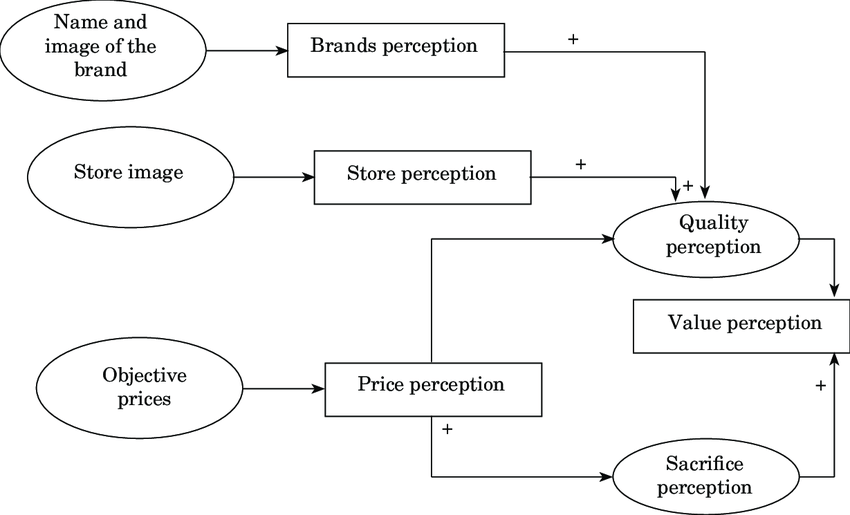
Poor quality costs importers time, money, and reputation.
Our QA process protects buyers from:
- Customer complaints
- High return rates
- Amazon penalties
- Retail compliance failures
- Container spoilage
- Regulatory violations
For global OEM clients, our QA delivers:
- Confidence in every shipment
- Predictable production quality
- Fewer unexpected risks
- Stronger retail readiness
- Higher brand trust on international platforms
This quality system is one of the core reasons many overseas buyers choose to build long-term partnerships with our factory.
Conclusion of Stage 6
Quality assurance is not a final step — it is a constant, integrated system that guides every phase of production.
At Thanh Tùng Thịnh, our multi-stage inspection, global-standard testing, and strict compliance documentation ensure that every exported wooden product meets the expectations of international buyers and end consumers.
Consistency is not an accident — it is engineered.
And our QA is the backbone that supports every successful export shipment.
Stage 7: Export Packaging & Logistics Preparation
Packaging is the final safeguard between a perfectly manufactured wooden product and its arrival in the hands of international customers.
For global shipments traveling through humidity changes, vibration, stacked loads, and sometimes harsh handling, proper export packaging is not optional — it is essential to protect your brand, reduce damage rates, and ensure products remain retail-ready.
At Thanh Tùng Thịnh, export packaging is treated as a technical discipline, not just an operational step. Each product receives a packaging solution designed around its size, finish, fragility, moisture sensitivity, and the logistics requirements of buyers in the U.S., EU, Japan, and Australia.
1. Controlled Pre-Packing Storage Conditions
Before packaging begins, finished goods are placed in a humidity-controlled staging area to prevent moisture absorption prior to boxing.
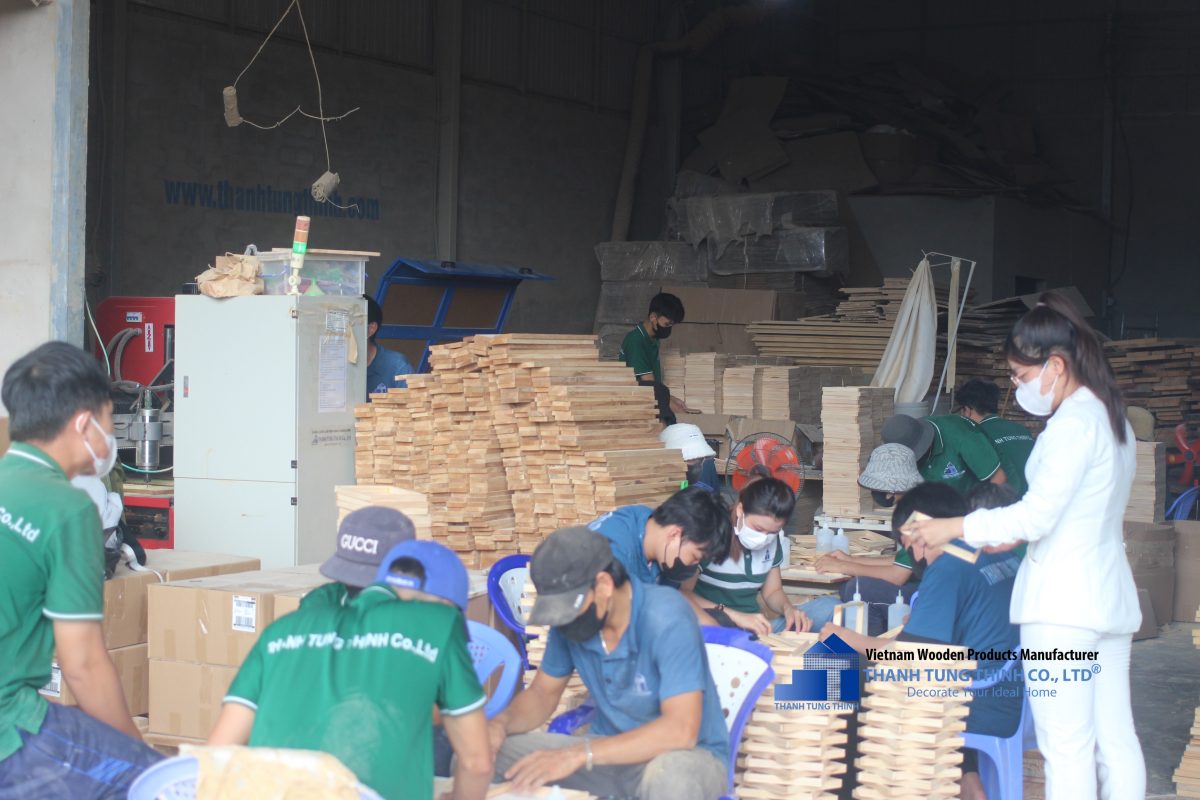
Storage controls include:
- Relative humidity is maintained around 50–60%
- Elevated pallets (not in contact with the floor)
- Cross-ventilation to avoid stagnant air pockets
- Regular moisture re-checks for sensitive items
- Species separation to prevent odor transfer (acacia, rubberwood, teak)
This ensures that every product enters the carton dry, clean, and dimensionally stable.
2. Moisture Protection & Mold Prevention
Sea freight shipping typically takes 25–45 days, traveling through tropical and temperate climates.
To prevent mold or moisture damage, we apply several protective layers:
a. Individual Polybags or Paper Wrap
Each box or carton contains silica gel to absorb internal humidity during transit.
- Prevents surface abrasion
- Acts as a barrier against humidity
- Protects oil-finished products from dust
b. Silica Gel Packs
c. Anti-mold Sheets or Stickers
Optional for high-risk climates or sensitive buyers (Japan, Korea, the UK).
d. Heat-Sealed Packaging (Optional for Premium Orders)
Provides airtight protection for premium boxes, lids, and high-gloss items.
These steps significantly reduce the risk of mold stains, swelling, or finish damage.
3. Carton Engineering for Export Durability
Every product category receives a carton tailored to its protection needs.
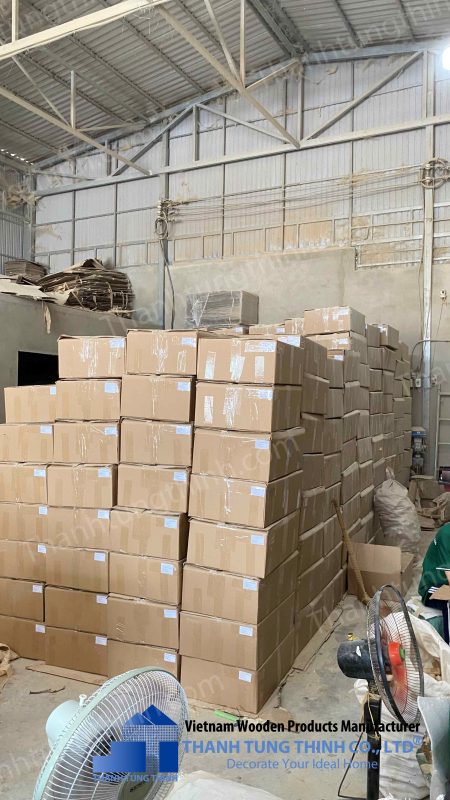
We use:
- B-flute or E-flute cartons for strength and shock absorption
- Double-wall cartons for heavy or multi-product sets
- Corner protectors for items with fragile edges
- Custom die-cut inner trays (cardboard or EVA foam) for jewelry boxes or fragile lids
Carton structure is tested for:
- Drop impact
- Compression resistance
- Vibration simulation
- Humidity exposure
4. Palletizing and Container Optimization
Efficient palletizing is essential for both cost efficiency and shipping safety.
We follow export-standard pallet configurations that maximize container load without compromising product integrity.
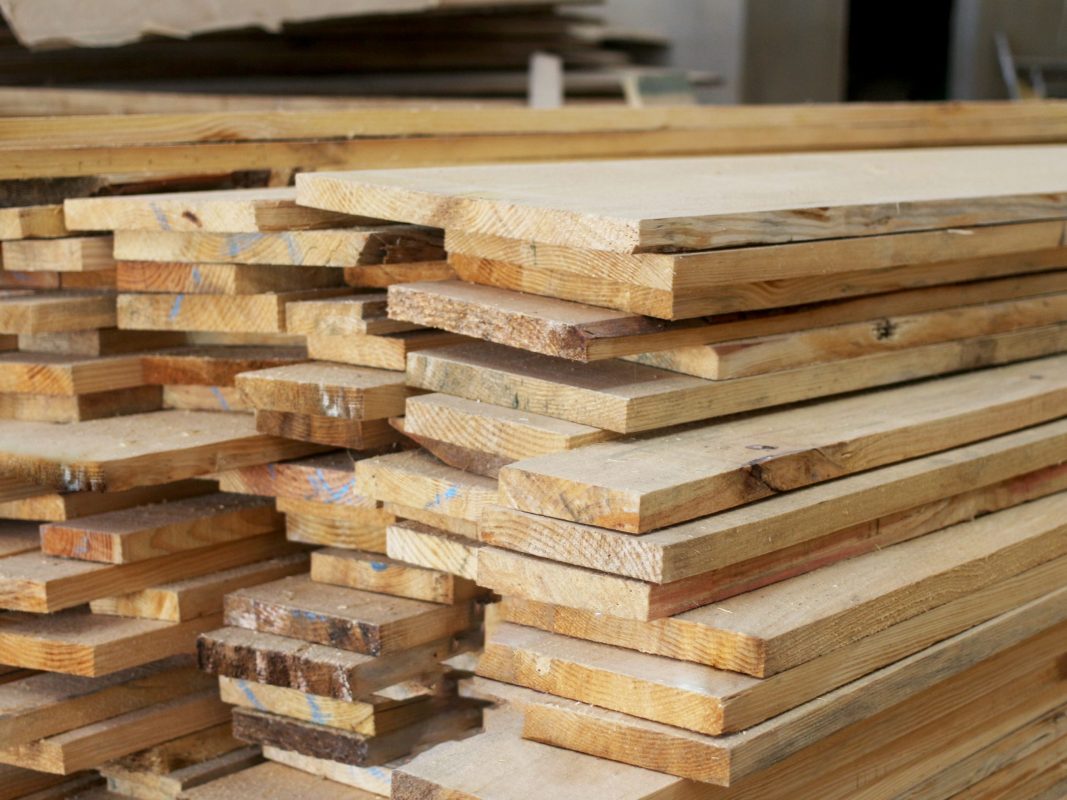
Pallet standards used:
- International-size pallets (110 × 110 cm or 100 × 120 cm)
- Heat-treated pallets (ISPM-15 compliant)
- 4-way forklift access
Palletization techniques:
- Even weight distribution
- Stretch wrapping to prevent shifting
- Corner boards to reinforce stability
- Accurate stacking height for container loading
- Labeling for easy identification and customs inspection
This ensures stable stacking during sea freight while optimizing unit cost per container.
5. Container Loading Procedures
Proper loading prevents:
- Shifting
- Impact damage
- Moisture condensation
- Carton collapse
Our loading protocol includes:
- Pre-inspecting containers for holes, rust, or moisture
- Using floor liners or pallets to elevate cartons
- Balanced loading across all container zones
- Airflow consideration for moisture-sensitive goods
- Securing loads with straps or nets in partial containers
We also perform photo documentation for DMF-free verification and customer records.
6. Retail-Ready Packaging & Custom Branding
Many buyers require products to arrive ready for retail or e-commerce fulfillment.
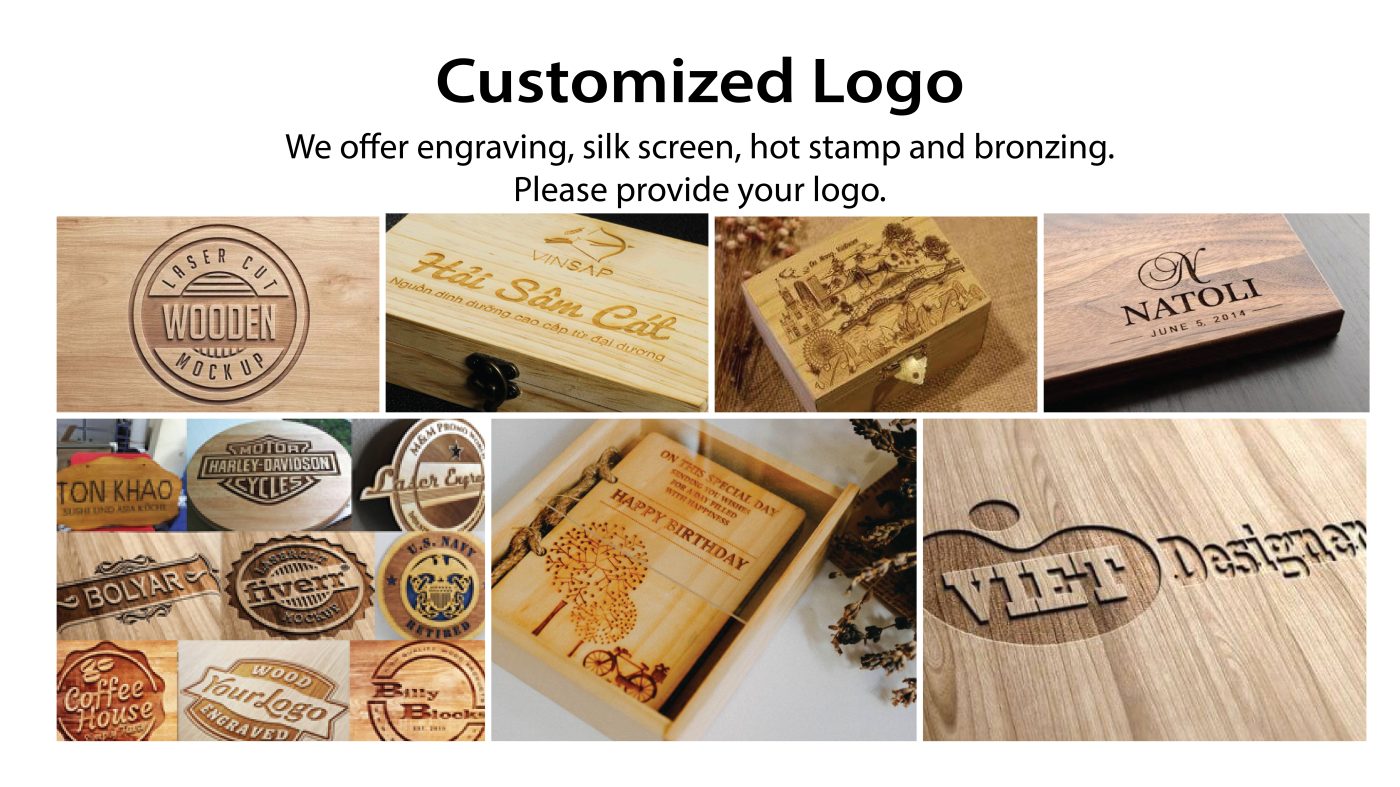
We offer tailor-made packaging solutions:
Options include:
- Color-printed boxes
- Barcode labeling (EAN/UPC)
- Insert cards or instruction manuals
- QR codes for brand story or care instructions
- Individual shrink-wrapping
- Amazon FBA–compliant packing
- Protective corner guards for high-end items
This ensures your product transitions directly from container → warehouse → shelf without additional repacking.
7. Compliance With E-Commerce & Retail Regulations
We specialize in meeting packaging standards for:
- Amazon FBA (polybag suffocation labels, barcode placement, carton weight limits)
- Walmart & Target packaging guidelines
- EU import labeling requirements
- Japan retail specifications (high moisture sensitivity)
This reduces compliance risk and ensures smooth entry into global retail networks.
8. Export Documentation & Customs Support
Every shipment includes a full set of export documents:
- Commercial invoice
- Packing list
- Fumigation/HT certificate (ISPM-15)
- FSC® certificate (when required)
- Certificate of Origin
- Export declaration
- Moisture logs
- Batch traceability sheet
- QC and pre-shipment inspection report

This documentation ensures seamless customs clearance and strengthens supply-chain transparency.
9. How Proper Packaging Protects Your Brand and Costs

For global buyers, professional export packaging saves:
- Money (by reducing damage or claims)
- Time (fewer replacements, fewer delays)
- Reputation (consistent quality upon arrival)
- Logistics stress (optimized container loading)
- Retail compliance issues
Improper packaging may lead to:
- Mold growth in transit
- Crushed corners or broken lids
- Worn or scratched finishes
- Customer complaints and returns
- Amazon penalties
- Rejected shipments at customs
Proper packaging is risk prevention, not cost — and it directly protects your margins.
Conclusion of Stage 7
Export packaging is the final checkpoint that guarantees your wooden products survive long sea journeys, arrive in pristine condition, and perform as expected in the global marketplace.
At Thanh Tùng Thịnh, packaging is not an afterthought — it is a strategic component of our manufacturing system, designed to protect your brand, your shipments, and your end consumers.
A well-packaged product is a complete product.
And every shipment leaving our factory is engineered for safety, stability, and retail readiness.
Conclusion: Engineering Export-Ready Wooden Products Through International Standards
From responsible sourcing to precision machining and export-grade packaging, the journey of a wooden product is defined by a rigorous, interconnected process. Each stage — from moisture control to surface finishing — contributes to the long-term stability, safety, and commercial value of the final item that reaches international buyers.
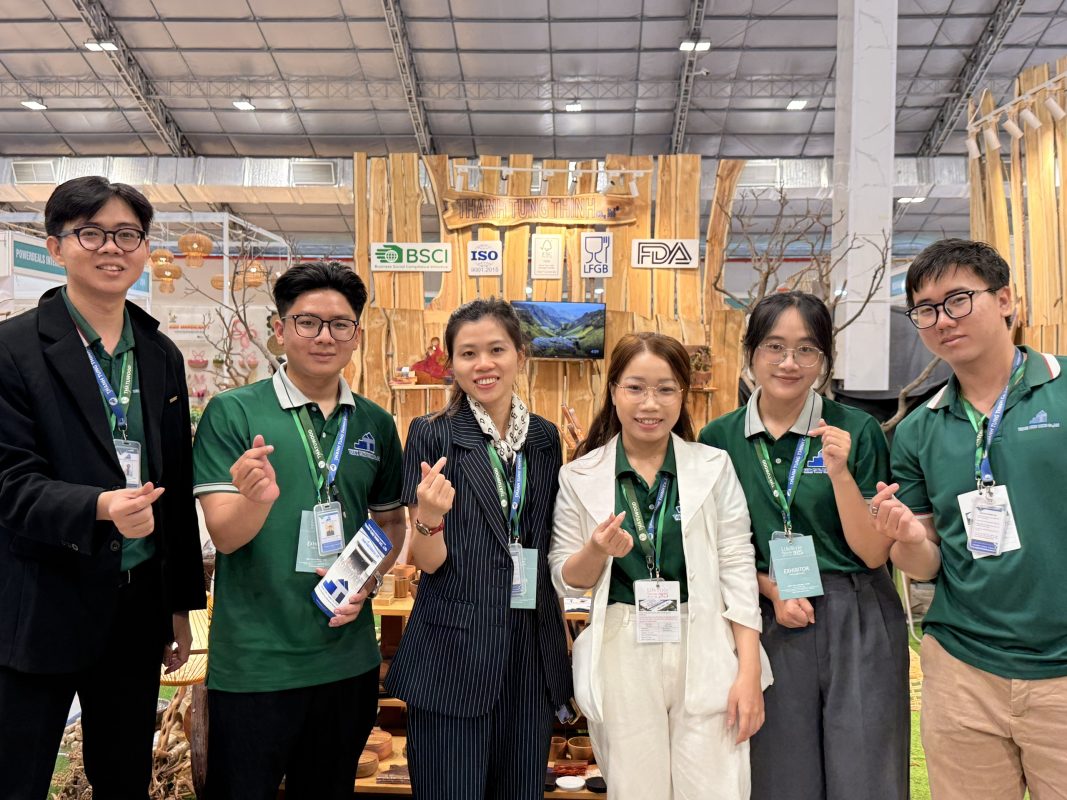
With more than 14 years of OEM and ODM experience, we have built a production ecosystem that integrates:
- Legally verified and FSC®-certified raw materials
- Data-driven drying and conditioning systems
- Advanced CNC machining with tight tolerances
- Food-safe and export-compliant finishing
- Multi-stage quality inspections with AQL standards
- Retail-ready packaging engineered for global transit
- Full traceability and documentation for international customs
This end-to-end process ensures that every item leaving our factory is technically stable, ethically sourced, visually refined, and globally compliant — ready to meet the expectations of consumers and retailers in the U.S., EU, Japan, Australia, and beyond.
For international buyers, the benefit is clear:
You receive a product that not only looks premium but performs reliably across climates, transport conditions, and real-world use.
In an era where supply-chain consistency and regulatory compliance define brand reputation, partnering with a manufacturer that understands the full spectrum of international wood processing standards is no longer optional — it is essential.
Thanh Tùng Thịnh is committed to being that partner.
With scalable capacity, modern machinery, and a dedication to craftsmanship, we support your brand in developing wooden product lines that are durable, sustainable, safe, and commercially competitive.

