


Table of Contents
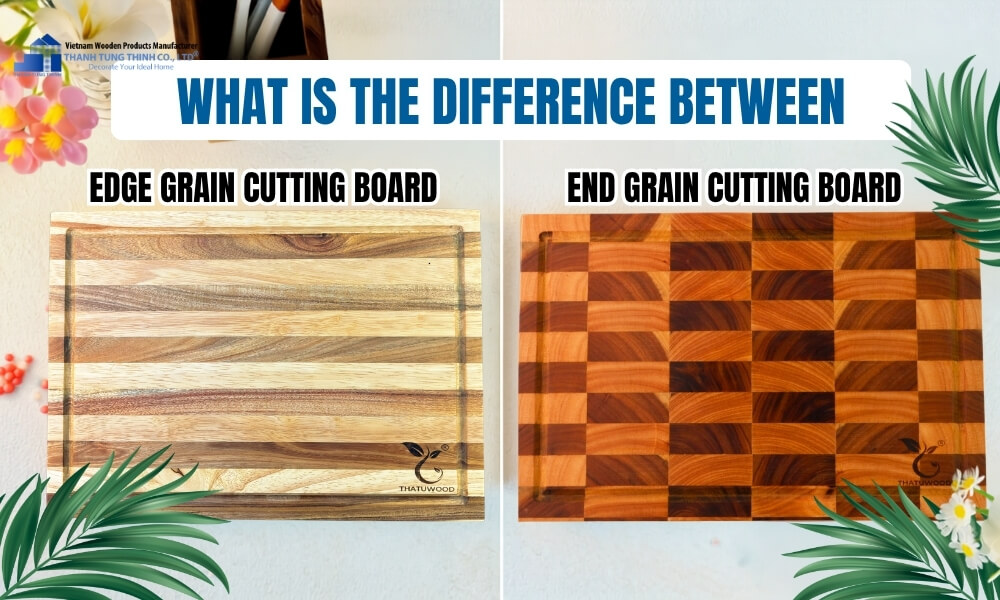
When commercial kitchenware distributors, wholesale buyers, and culinary brands evaluate wooden board options, they frequently encounter two technical terms: edge grain vs end grain cutting board. Understanding the structural differences between an edge vs end grain cutting board is critical for global importers looking to source premium wooden products that meet demanding professional standards.
At ThanhTungThinh, manufacturing top-tier kitchenware requires precise material science and expert craftsmanship. This comprehensive guide breaks down the debate surrounding an end grain vs edge grain cutting board, helping wholesale partners, retailers, and hospitality suppliers make informed purchasing and manufacturing decisions.
After reading this article, you will understand the following information:
- Clear understanding of physical structures, pros, and cons for every edge grain vs end grain cutting board.
- Detailed performance comparison table evaluating durability, knife-friendliness, and maintenance.
- Strategic insights into whether an end grain cutting board vs edge grain structure suits specific commercial applications.
- Debunking common myths regarding wooden cutting board hygiene and structural integrity.
- Expert maintenance tips from ThanhTungThinh to extend product lifespan for B2B wholesale buyers.
What is an Edge-Grain Cutting Board?
An edge-grain cutting board serves as the reliable, classic workhorse in both residential kitchens and commercial culinary environments. When global importers evaluate an edge grain vs end grain cutting board, edge-grain models represent the traditional standard that balances structural integrity with cost efficiency. At ThanhTungThinh, manufacturing these versatile surfaces involves precise timber selection and advanced woodworking processes tailored to meet international wholesale demands.
Structural Surface Characteristics
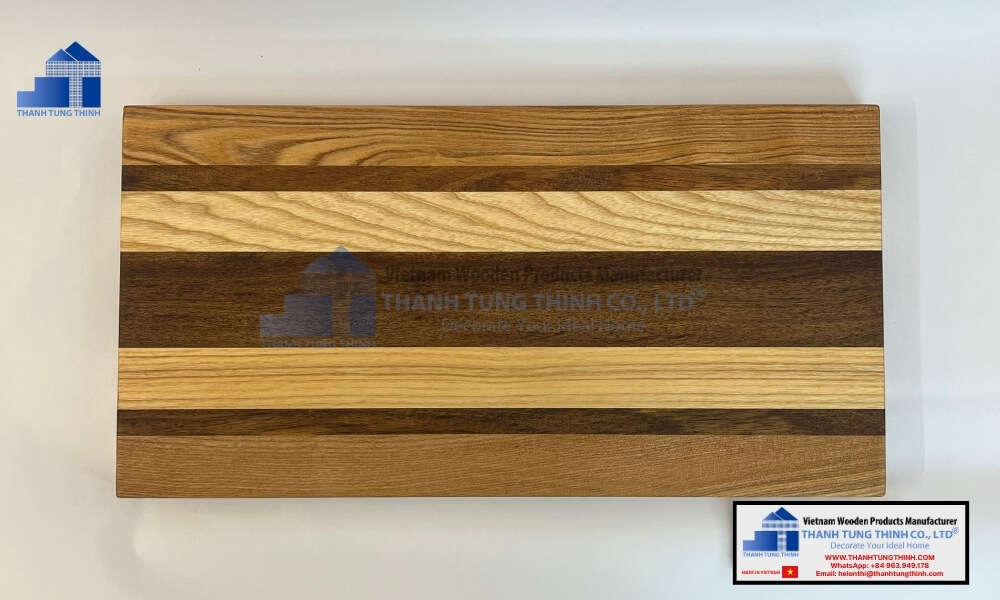
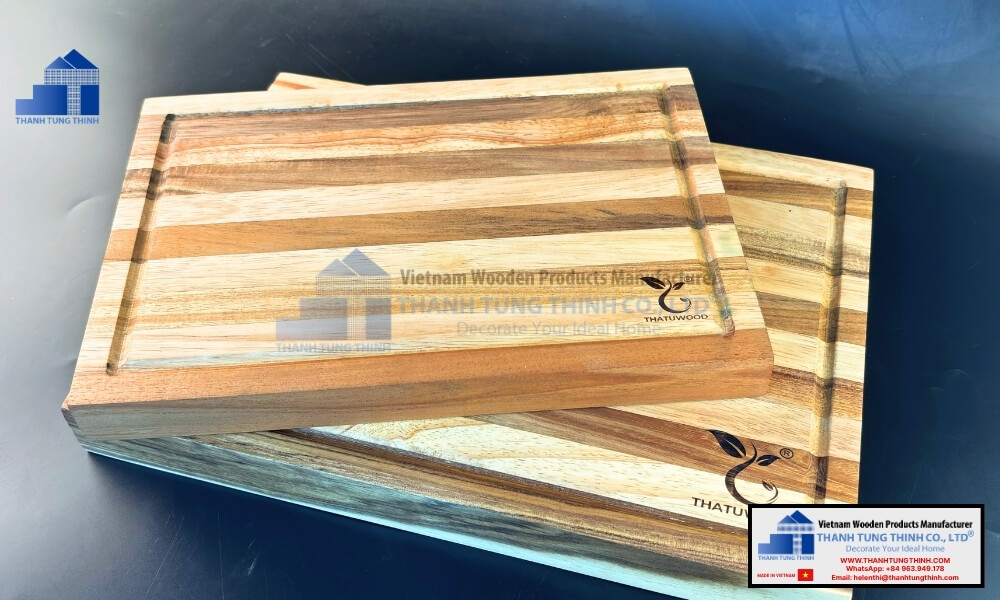
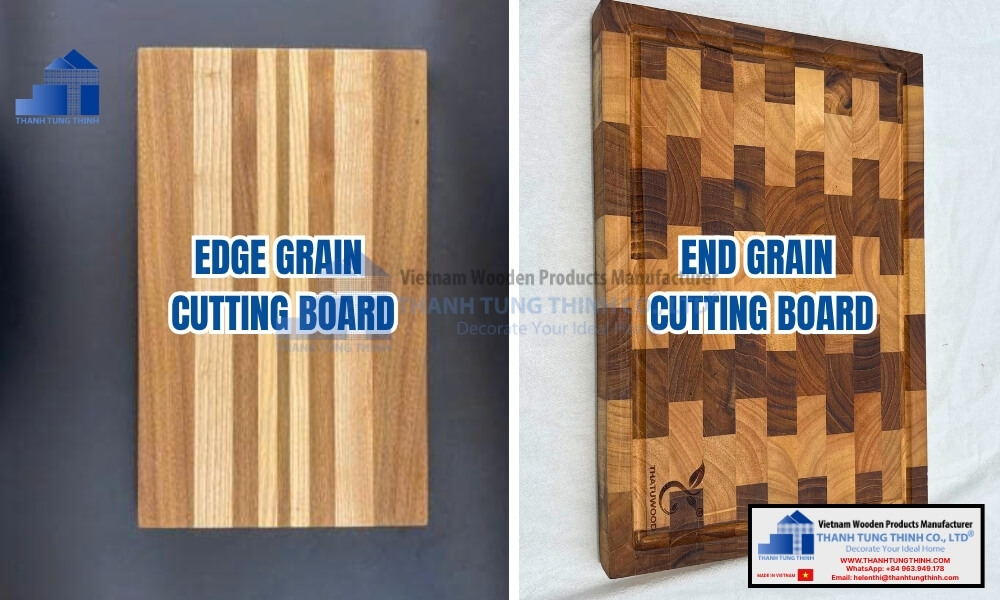
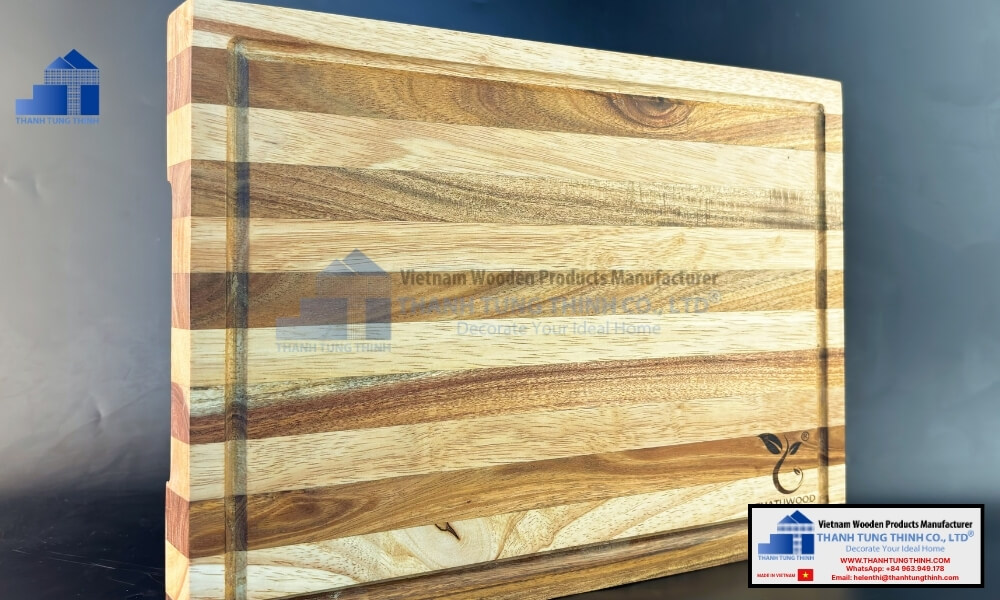
The construction of an edge-grain board relies on aligning long, continuous strips of premium hardwood such as durable Teak or Acacia side by side and bonding them under high pressure. Unlike vertical blocks, this method exposes the linear edges of the wood fibers to the chopping surface.
When comparing an edge vs end grain cutting board, this horizontal grain orientation provides high tensile strength and dimensional stability, ensuring the board maintains its flat profile under daily kitchen use and routine moisture exposure.
Design and Aesthetic Appeal
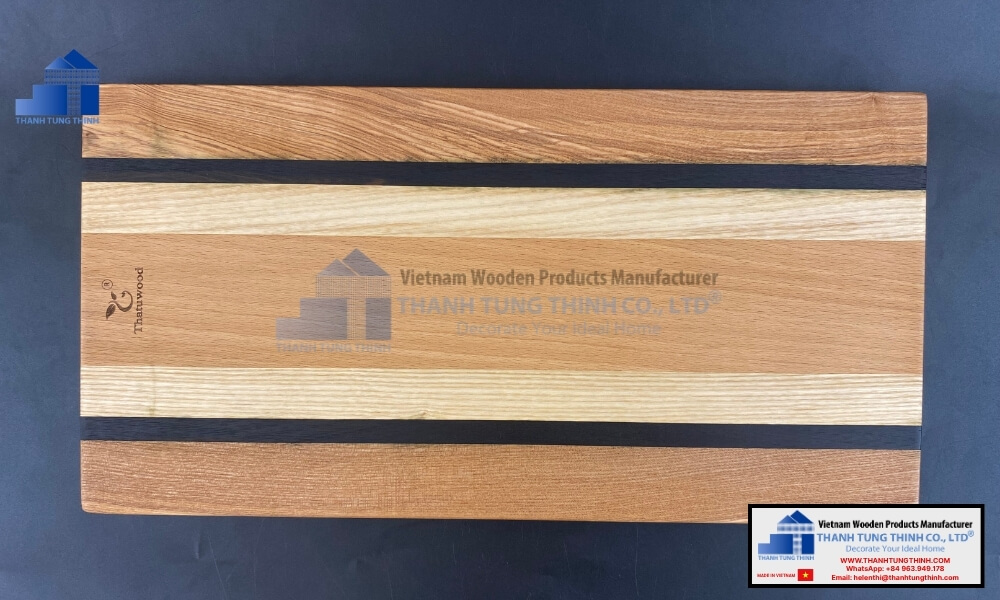
Aesthetically, edge-grain cutting boards feature clean, uninterrupted linear wood grain patterns that highlight the natural beauty of the timber. Because every individual strip comes from sustainably harvested mature trees, each finished product showcases unique natural grain variations and an exclusive look. ThanhTungThinh treats these surfaces to achieve a high-smooth finish, sealed with safe plant-based oils that comply with strict international food-contact regulations like FDA and LFGB.
Advantage & Disadvantages of Edge Grain Cutting Boards
Advantage:
- Cost-Effective Production: Simpler manufacturing steps and reduced material waste translate to more accessible wholesale pricing tiers.
- Lighter Profile: The streamlined strip construction keeps the board lightweight, facilitating easier handling, packaging, and international shipping.
- Everyday Durability: Offers robust resistance to heavy impact, making it ideal for daily food preparation in households and restaurants.
Disadvantages:
- Lower Knife Preservation: Continuous horizontal fibers do not part like end-grain fibers, causing knives to dull slightly faster under intensive daily chopping.
- Visible Scratching: Deep cuts across the linear grain can remain visible over time, requiring periodic sanding and re-oiling to restore the pristine finish.
What is an End-Grain Cutting Board?
An end-grain cutting board represents the pinnacle of culinary craftsmanship, highly sought after by culinary professionals and premium home chefs alike. When analyzing an end grain vs edge grain cutting board, understanding the precise engineering behind an end-grain surface highlights why it remains a top-tier item in global wholesale catalogs. At ThanhTungThinh, crafting these specialized boards requires advanced woodworking techniques and strict adherence to international export standards.
Structural Surface Characteristics
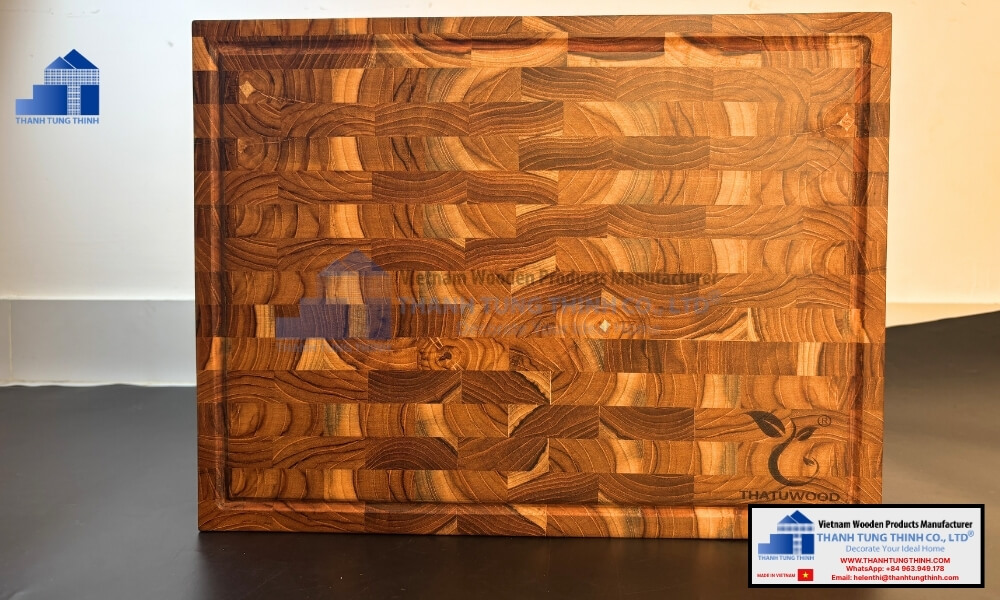
The defining feature of an end-grain surface lies in how the lumber is arranged. Instead of laying flat, short blocks of premium hardwood such as durable Teak or Acacia are glued together vertically. This exposes the cross-section of the wood growth rings directly to the top.
This unique orientation creates a microscopic “honeycomb” structure of open wood fibers. When evaluating an end grain vs edge grain cutting board, this vertical fiber orientation allows knife blades to slip between the fibers rather than slicing straight across them, preserving knife sharpness over years of heavy daily use.
Design and Aesthetic Appeal
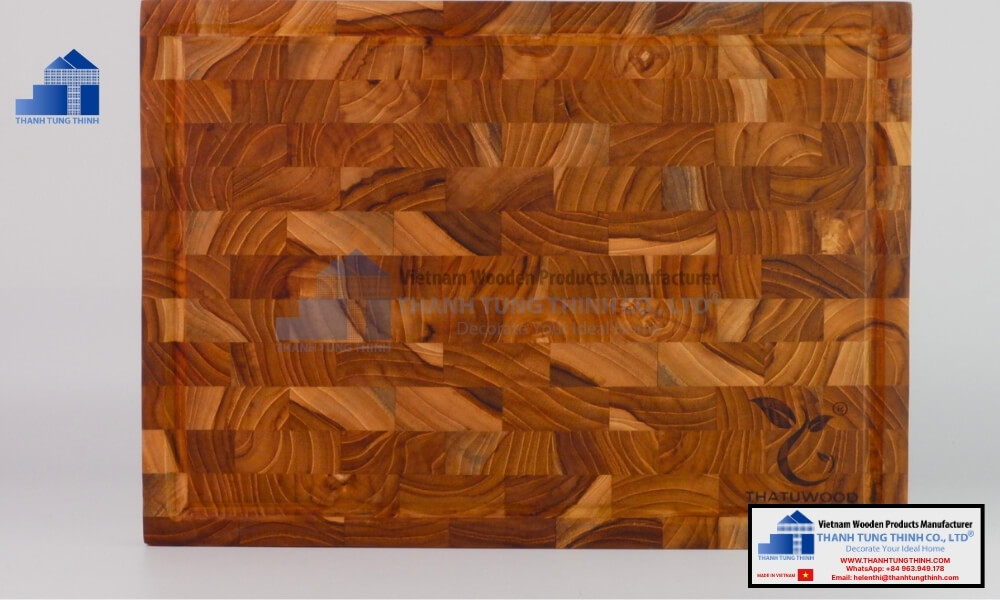
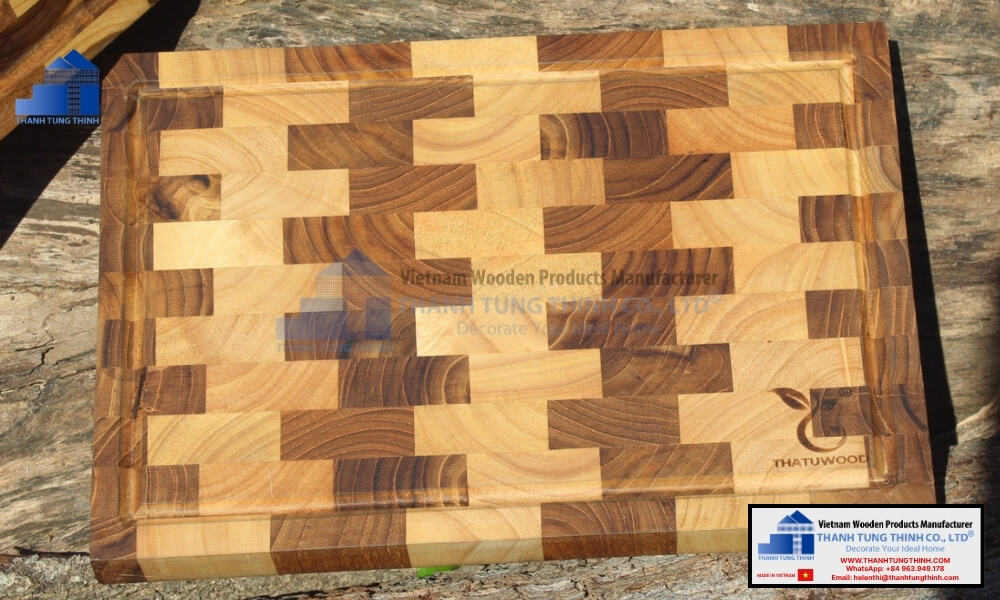
Visually, end-grain cutting board blocks are renowned for their striking checkerboard or mosaic patterns. Because every piece of timber possesses unique natural wood grain variations, each manufactured unit is entirely one-of-a-kind. For B2B importers and luxury retail brands, offering an end grain cutting board vs edge grain variant elevates a product line’s aesthetic value.
ThanhTungThinh meticulously finishes these surfaces to a high smooth texture, applying a food-grade plant oil coating that passes strict FDA and LFGB regulations, ensuring safety alongside breathtaking visual appeal.
Advantage & Disadvantages of Edge Grain Cutting Boards
Advantage:
- Self-Healing Properties: Vertical fibers spring back after knife impact, hiding minor surface scratches and extending the board’s lifespan.
- Blade Preservation: Significantly reduces blade dulling compared to traditional edge-grain setups.
- Heavy-Duty Durability: High resistance to intense chopping and heavy commercial kitchen environments.
Disadvantages:
- Higher Price Point: Complex manufacturing processes and increased labor hours result in higher production costs.
- Heavier Weight: The dense block construction makes these units heavier and less portable than standard edge-grain models.
- Maintenance Requirements: Requires regular oiling with food-safe mineral oil or plant wax to maintain moisture balance and prevent splitting.
Compare: Edge Grain vs End Grain Cutting Board Side-by-Side
To help procurement managers select the right inventory mix, the following evaluation details how an edge vs end grain cutting board performs across key commercial metrics.
| Evaluation Criteria | Edge-Grain Cutting Board | End-Grain Cutting Board |
| Knife Friendliness | Moderate; continuous fibers can dull blades over intensive daily use. | Exceptional; vertical wood fibers absorb impacts and preserve blade sharpness. |
| Durability & Lifespan | High durability, well-suited for standard residential and light commercial use. | Superior longevity; heavy-duty construction resists deep gouges and heavy wear. |
| Production Complexity | Moderate assembly; highly efficient for large-scale volume production. | Complex manufacturing; requires precise multi-step block alignment and gluing. |
| Price Point | Budget-friendly to mid-range wholesale pricing tier. | Premium pricing tier; commands higher retail margins for B2B buyers. |
Which is Better: End Grain or Edge Grain Cutting Boards for Wholesale Markets?
A frequent question among commercial buyers is which is better end grain or edge grain cutting boards for specific target demographics. The answer depends entirely on the end-user’s cooking habits and budget positioning.
For high-end culinary enthusiasts, professional chef supplies, and luxury retail collections, an end grain vs edge grain cutting board choice leans heavily toward end-grain blocks due to their superior ergonomics and heirloom quality.
Conversely, for high-volume promotional items, everyday home cooking, or budget-conscious hospitality chains, an edge vs end grain cutting board provides reliable performance at a more accessible price point. Successful wholesale distributors often stock both variants to capture a broader market share across global distribution channels.
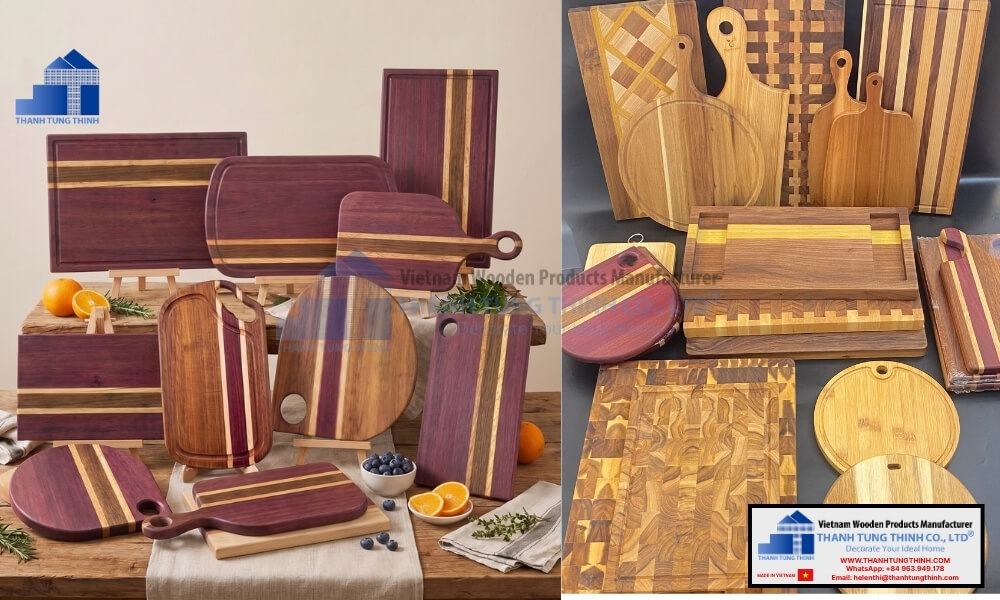
Sharing experiences from ThanhTungThinh: We recommend focusing on edge-grain models made from Teak or Acacia. With competitive pricing and reliable durability, these serve as ideal “entry-level products” for rapid capital turnover and capturing the mass market.
Common Misconceptions About Wooden Cutting Boards
Myth: Wooden boards are hard to maintain
Many buyers worry that wooden boards require complex, tedious upkeep. In reality, maintaining a wooden board is remarkably simple: a quick wash with warm water, thorough towel drying, and an occasional application of food-safe mineral oil every few weeks to keep the timber hydrated and protected against moisture.
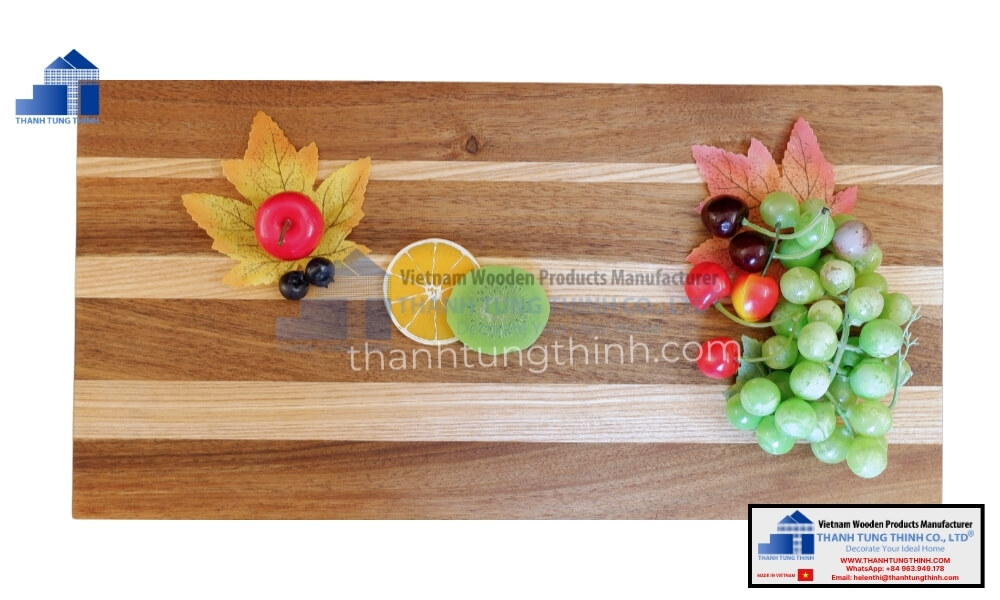
Myth: You can clean wooden boards in the dishwasher
Some users assume wooden boards can be sanitized safely in a commercial or home dishwasher. High heat, harsh detergents, and prolonged water immersion in a dishwasher will strip natural oils, swell the wood fibers, and cause severe warping or cracking, meaning wooden cutting boards must always be washed by hand.
Myth: Wood absorbs and spreads bacteria from meat
A common fear is that porous wood traps raw meat juices and harbors harmful bacteria. Scientific studies prove the opposite: natural hardwoods like Teak and Acacia possess inherent antimicrobial properties.
Myth: Plastic is more hygienic than wood
Consumers often believe plastic surfaces are cleaner because they are non-porous. However, knife cuts on plastic create deep, unhealable grooves that trap food particles and bacteria, which are nearly impossible to clean out, whereas quality wooden cutting boards offer natural antimicrobial defenses and self-healing or easily refinishable surfaces.
Instructions for Use and Care to Keep Your Wooden Cutting Board Durable, Beautiful, and Like New
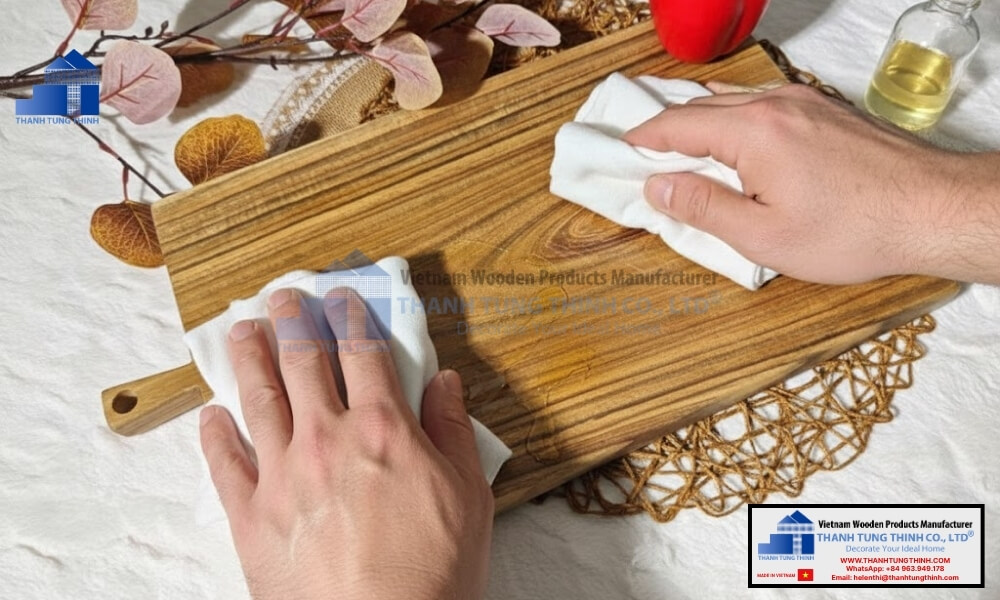
Maintaining optimal hygiene and appearance requires structured upkeep guidelines. Importers can pass these care tips along to end consumers to maximize product satisfaction:
- Clean the cutting board with warm water and a mild detergent after each use.
- Wipe dry with a clean cloth or allow to air-dry in a cool, well-ventilated area.
- You can use baking soda or lemon for natural cleaning, or soak it briefly to eliminate odors.
- Do not soak in water.
- Do not use a dishwasher.
- Periodically apply food-safe cutting board oil to maintain the surface’s appearance and durability (apply a thin layer and let it air-dry for 12–16 hours; reapply every 3–4 days with heavy use, or weekly with moderate use).
Conclusion and B2B Wholesale Partnership at ThanhTungThinh
Navigating the nuances of an edge grain vs end grain cutting board highlights the diverse preferences of culinary consumers worldwide. While edge-grain boards offer streamlined efficiency and classic styling, end-grain blocks deliver unmatched knife preservation and heirloom-quality elegance. For global importers and kitchenware distributors, offering a well-rounded catalog featuring both structural variants is the key to capturing maximum market share across residential and commercial sectors.
Expand your product offerings today with ThanhTungThinh’s premium collection of custom edge-grain and end-grain cutting boards as teak end grain cutting board, teak and rubberwood checkerboard cutting board, teak and rubberwood square checkerboard cutting board . Contact our commercial sales team now to request our latest catalog, volume wholesale pricing, and dedicated OEM/ODM partnership details.

🌐 Website: https://thanhtungthinh.com/
📌 Pinterest: https://www.pinterest.com/THATUWOOD/
📌 Youtube: https://www.youtube.com/@thanhtungthinhmanufacturer
📌 Facebook: https://www.facebook.com/thanhtungthinh
📌 Linkedin: https://www.linkedin.com/company/thanh-tung-thinh-co-ltd
With more than 15 years of production experience, Thanh Tung Thinh Co., Ltd. is one of the leading reputable Wooden Products manufacturers and exporters specializing in Wooden Products, Wooden boxes products, Wooden Packaging, wooden souvenirs, kitchenware, household utensils, driftwood products, bonsai woods and pet, bird products from coffeewood; other customized products…In particular, all of our wood raw materials are FSC certified, demonstrating our commitment to strictly adhering to sustainable logging and environmental protection standards, providing complete peace of mind for our global customers.
📍 No. 227 To Hien Thanh St, W13, District 10, Ho Chi Minh city, Vietnam
📍 General Warehouse: 451/29/51 To Hien Thanh Street, Dien Hong Ward, Ho Chi Minh city, Vietnam
📍 Factory 1, 2: Lien Huong Town, Tuy Phong District, Binh Thuan Province, Vietnam
📍 Factory 3: Phuoc The Town, Tuy Phong District, Binh Thuan Province, Vietnam
☎ WhatsApp: +84 963.949.178
✉ Email: [email protected]
🌐 Website: www.thanhtungthinh.com
Frequently Asked Questions
What makes an end-grain board more expensive than an edge-grain board?
Manufacturing an end grain vs edge grain cutting board requires significantly more raw material preparation, precise cross-cutting, and complex multi-stage gluing processes. Skilled craftsmanship is mandatory to align the vertical growth rings accurately, which increases labor time and drives production costs higher compared to simpler edge-grain configurations.
Can an edge-grain board withstand heavy commercial kitchen use?
Yes, high-density hardwoods such as Acacia and Teak utilized by ThanhTungThinh ensure that an edge vs end grain cutting board maintains structural integrity under rigorous daily demands. They are widely utilized in restaurants and commercial food preparation environments where efficiency and durability are vital.
How does wood species selection affect the performance of these boards?
The choice of timber directly influences hardness, moisture resistance, and aesthetic appeal. ThanhTungThinh utilizes sustainably harvested Teak and Acacia featuring high natural oil content and a controlled moisture content of 8% to 12%, ensuring superior resistance against warping, cracking, and bacterial absorption across all product lines.
Are these wooden cutting boards certified for international export standards?
All manufacturing protocols at ThanhTungThinh comply with stringent global regulations. Our facilities maintain major international certifications including FSC, BSCI, ISO 9001:2015, FDA, and LFGB compliance, guaranteeing seamless customs clearance and safe distribution across European and North American markets.
What is the typical production and shipping lead time for wholesale orders?
Equipped with a large-scale manufacturing plant and a steady export output capacity of 5 forty-foot containers per month, ThanhTungThinh efficiently handles bulk orders. We leverage a skilled local workforce near raw material sources to rapidly scale production for large or urgent commercial procurement requests.
Related articles
- Top 8 Best End-Grain Wooden Cutting Boards of 2026 Favored by Wholesale Customers at ThanhTungThinh
- Bulk Natural Teak Wood Cutting Board Supply — Uninterrupted B2B Chain
- Do Teak Wood Cutting Boards Splinter? The Ultimate Durability Guide
- Certified Teak Wood Cutting Board Manufacturer: Strict Quality Control System
- High-Margin Teak Wood Cutting Board Wholesale Supply for Distributors
- Premium Teak Wood Cutting Board Supplier: Ready-to-Ship Wholesale Inventory

