


Table of Contents
For importers, retailers, kitchenware brands, and hospitality buyers, sourcing wholesale end grain cutting boards is about more than appearance. It is about product quality, stable supply, customization, and pricing that protects margin.
End grain cutting boards sit in the premium segment of the wooden kitchenware market. They offer stronger visual appeal, better long-term value, and a higher perceived price point, which makes them a strong fit for private label collections, commercial kitchen supply, and specialty retail.
If your business needs factory-direct sourcing, consistent production, and custom options for the U.S. market, wholesale end grain cutting boards are one of the most commercially attractive categories to consider.
Why Wholesale End Grain Cutting Boards Stand Out in the B2B Market
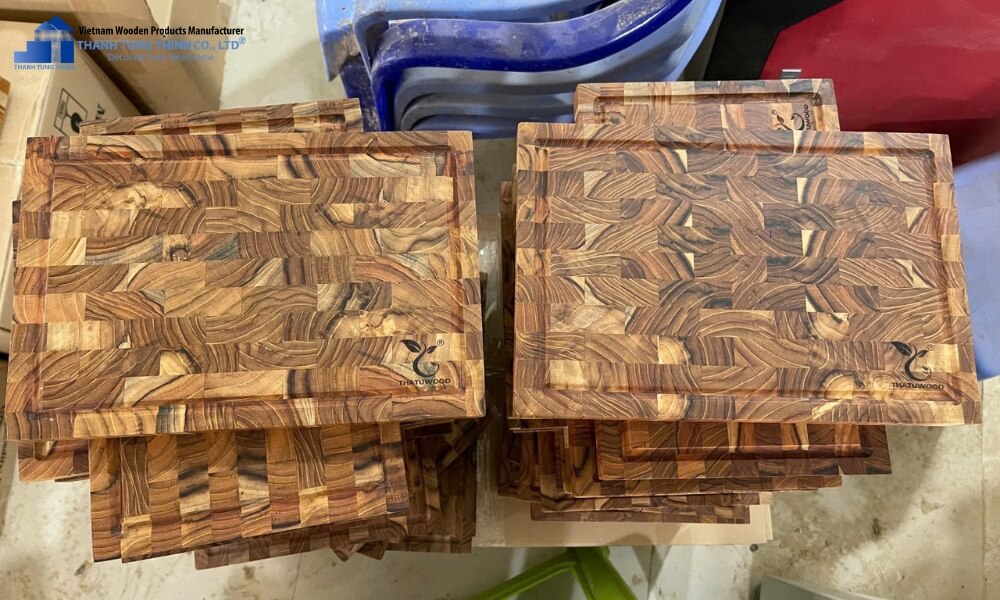
End grain cutting boards are made by arranging wood fibers vertically, creating a surface that is both durable and visually premium. This structure gives the board its distinctive butcher block look, which is one reason it performs well in high-value retail and commercial channels.
For B2B buyers, this matters because premium appearance supports higher resale pricing. A well-made end grain board is not just a kitchen tool. It is also a product that strengthens shelf appeal, brand image, and customer trust.
Compared with lower-end wooden boards, end grain designs are more suitable for premium collections. They are widely used in kitchenware stores, online marketplaces, hospitality supply programs, and branded gift lines.
>>> Read more: Top 5 Factors to Consider When Choosing a Provider For Wholesale End Grain Cutting Board
Why U.S. Buyers Choose End Grain Over Standard Wooden Boards
The U.S. market values products that combine performance with visual quality. End grain cutting boards meet both expectations.
They are often seen as more premium than standard boards because the construction looks thicker, more solid, and more professional. For kitchenware brands, this makes product positioning easier. For distributors and wholesalers, it creates a stronger argument for higher average selling prices.
This is especially important in competitive channels where buyers compare not only material and size, but also finish quality, board thickness, and overall presentation. A premium-looking board gives your business more room to compete without relying only on low pricing.
Factory-Direct Pricing vs. Trading Company Sourcing
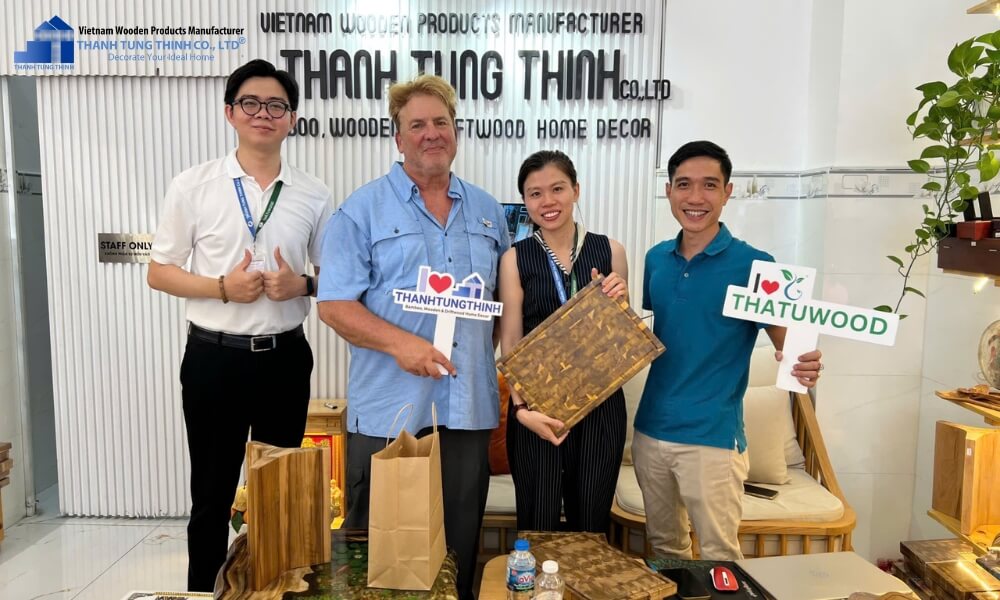
For U.S. B2B buyers, the difference between factory-direct sourcing and trading company sourcing affects more than price. It also impacts communication speed, customization accuracy, production control, and long-term supply stability. When sourcing wholesale end grain cutting boards, buyers need to evaluate total business value, not only the quoted unit cost.
| Criteria | Factory-Direct Sourcing | Trading Company Sourcing |
| Pricing Control | More transparent and usually more competitive | Often includes intermediary markup |
| Communication | Direct communication with the production side | Information passes through a middle layer |
| Customization | Easier to adjust size, thickness, logo, and packaging | Slower and less precise in custom development |
| Quality Control | Better visibility into materials and production standards | Less direct control over manufacturing details |
| Sample Process | Faster alignment between sample and mass production | Higher risk of mismatch between approved sample and bulk order |
| Lead Time Management | More accurate production scheduling | Timeline may be less transparent |
| Repeat Orders | Better consistency across multiple purchase orders | Greater risk of variation between batches |
| Problem Resolution | Faster correction through direct factory feedback | Slower due to extra communication steps |
Factory-direct sourcing is especially valuable for buyers who need OEM support, private label packaging, and repeat bulk orders with consistent specifications. While trading companies may appear convenient in some cases, direct factory cooperation usually gives importers, retailers, and kitchenware brands better control over cost, quality, and execution. For businesses building long-term supply chains in the U.S. market, factory-direct sourcing creates a stronger foundation for stable growth.
Best Wood Options for Wholesale End Grain Cutting Boards
Choosing the right wood species affects pricing, durability, product positioning, and customer appeal. In wholesale sourcing, the wood type should match your target market, not just your cost target.
Acacia End Grain Cutting Boards
Acacia is one of the most practical options for wholesale programs. It offers a good balance between visual appeal, durability, and cost efficiency.
For B2B buyers, acacia works well in mid-range to premium collections. It has attractive natural grain variation and supports strong value positioning in retail and e-commerce channels.
Teak End Grain Cutting Boards
Teak is a premium wood option with strong commercial appeal. It is known for its durability, rich color, and strong performance in moisture-prone kitchen environments.
For U.S. buyers targeting premium consumers, teak end grain cutting boards are ideal for upscale product lines. They are especially suitable for brands that want to highlight long-lasting quality and a more refined finish.
Walnut and Maple End Grain Cutting Boards
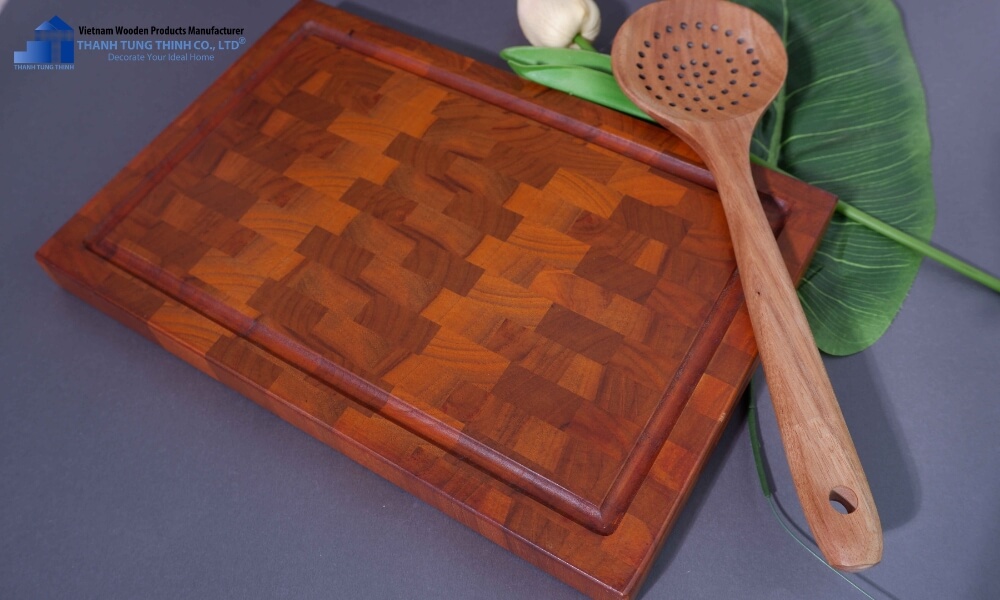
Walnut and maple are often chosen for higher-end or design-focused collections. Walnut offers a darker, more luxurious appearance, while maple delivers a clean and classic premium look.
These species can help brands differentiate their catalog, especially in specialty kitchenware, chef-focused collections, or gift-oriented product lines.
Key Customization Options for B2B Buyers
One of the biggest advantages of sourcing wholesale end grain cutting boards directly from a manufacturer is customization. Buyers in the U.S. rarely want standard products only. They want specifications that align with their market and branding strategy.
Common customization options include size, thickness, shape, juice groove, inner handles, reversible design, and packaging style. These details influence both usability and product positioning.
Logo engraving is another major value driver. Private label buyers often need laser engraving or branded packaging to build a stronger retail presence. Factory-level customization makes that process more efficient and more consistent across repeat orders.
For importers and distributors, OEM and ODM support can also reduce development time. Instead of starting from zero, buyers can adapt proven designs to fit their brand direction and target pricing.
Who Typically Buys Wholesale End Grain Cutting Boards
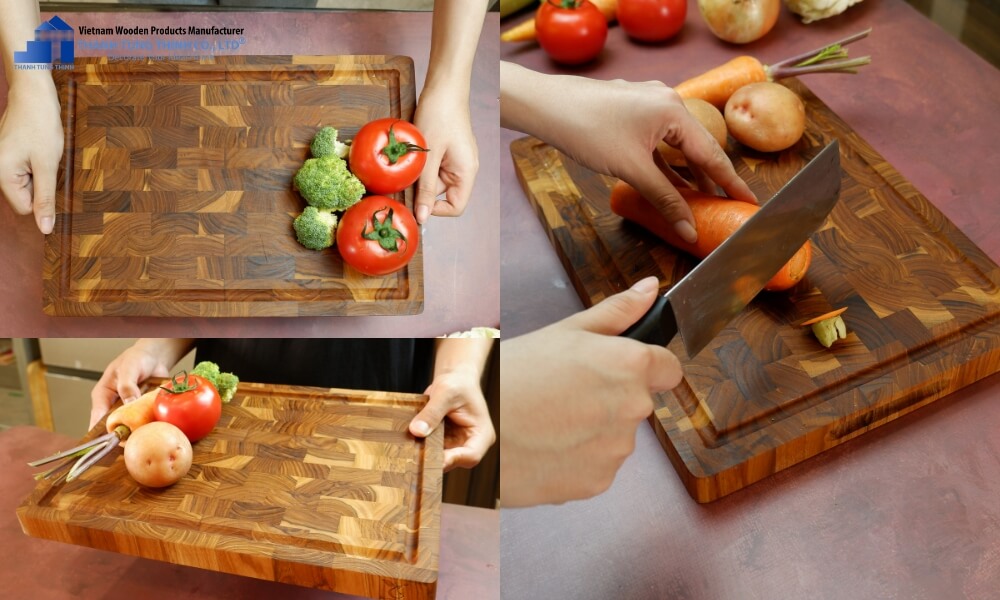
This category serves multiple B2B segments in the U.S. market. That is one reason it has strong long-term demand. Kitchenware brands buy end grain boards to expand premium product lines. Retailers use them to strengthen in-store and online assortment with higher-value wooden kitchen products.
Hospitality buyers, including restaurants and hotels, also source end grain boards for kitchen use and presentation use. In addition, corporate gifting companies often choose wooden cutting boards for branded gift programs because they combine practicality with premium presentation.
This wide buyer base makes wholesale end grain cutting boards a flexible product category for manufacturers and distributors alike.
What B2B Buyers Should Look for in a Manufacturer
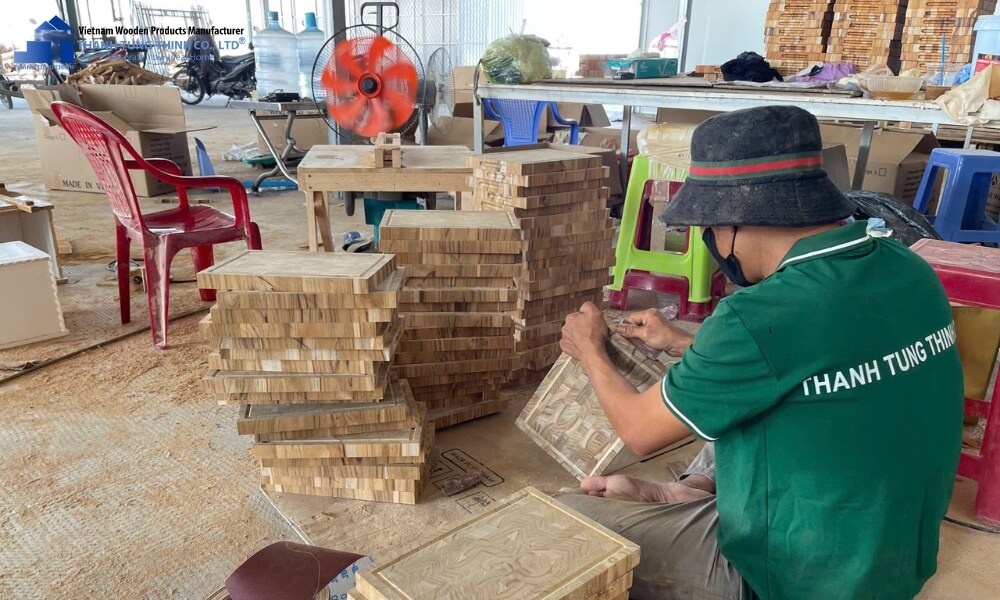
Not every supplier can support serious wholesale programs. For B2B sourcing, product quality is only one part of the decision. A reliable manufacturer should have stable raw material supply, repeatable production standards, and experience handling export requirements. Without these three factors, even a good-looking sample can become a risky bulk order.
Buyers should also look at sanding quality, board assembly, moisture control, finishing process, and packaging standards. End grain products require precision. Weak construction or poor finishing can damage both brand reputation and reorder potential.
Sample approval is another key part of supplier evaluation. A manufacturer that can provide clear specifications, consistent samples, and structured production follow-up is better positioned for long-term B2B cooperation.
Why Factory Direct Pricing Matters
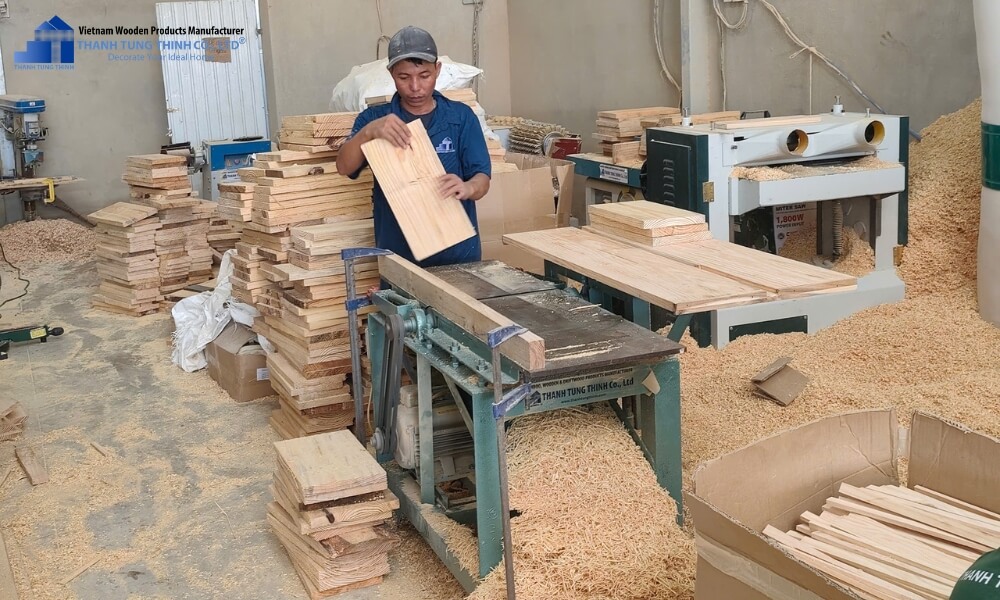
Factory-direct sourcing gives buyers more control over cost structure. It reduces extra layers in the supply chain and improves communication during product development.
For wholesale buyers, this matters in several ways. First, it helps protect margin. Second, it creates a faster path from concept to sample to production. Third, it reduces the risk of inconsistent quality caused by unclear communication through intermediaries.
In the end, factory-direct pricing is not only about paying less. It is about getting better alignment between product specs, lead time, quality expectations, and commercial goals.
Quality Control and Compliance for the U.S. Market
U.S. buyers are increasingly cautious about quality assurance and supply chain transparency. That is why manufacturers need to support not only production, but also documentation and compliance readiness.
For wooden kitchenware, buyers often look for responsible sourcing, food-contact safety positioning, and social compliance readiness. These factors help reduce procurement risk and make the supplier more credible in retail and wholesale discussions.
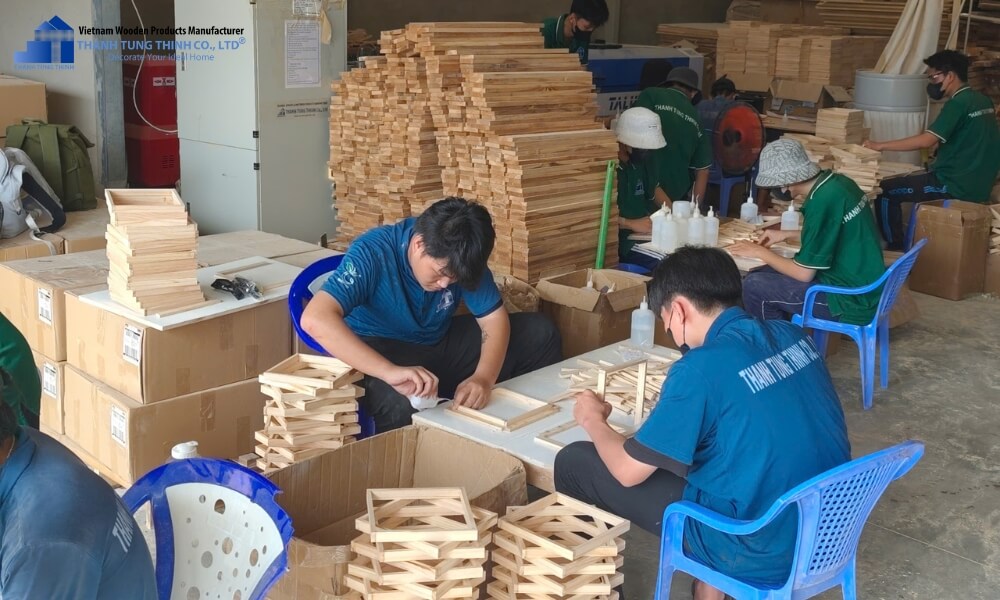
Quality control must also cover practical issues such as cracking risk, uneven surfaces, poor edge finishing, glue line consistency, and packaging damage during shipment. In B2B trade, quality failures do not stay small. They affect return rates, brand trust, and future orders.
MOQ, Lead Time, and Sample Process
MOQ is one of the first questions wholesale buyers ask. In this category, MOQ usually depends on design complexity, customization level, wood species, and packaging requirements.
Standard models generally move faster into production, while custom designs take longer due to sampling and approval stages. That is why buyers should confirm specifications early and keep packaging decisions aligned with the product timeline.
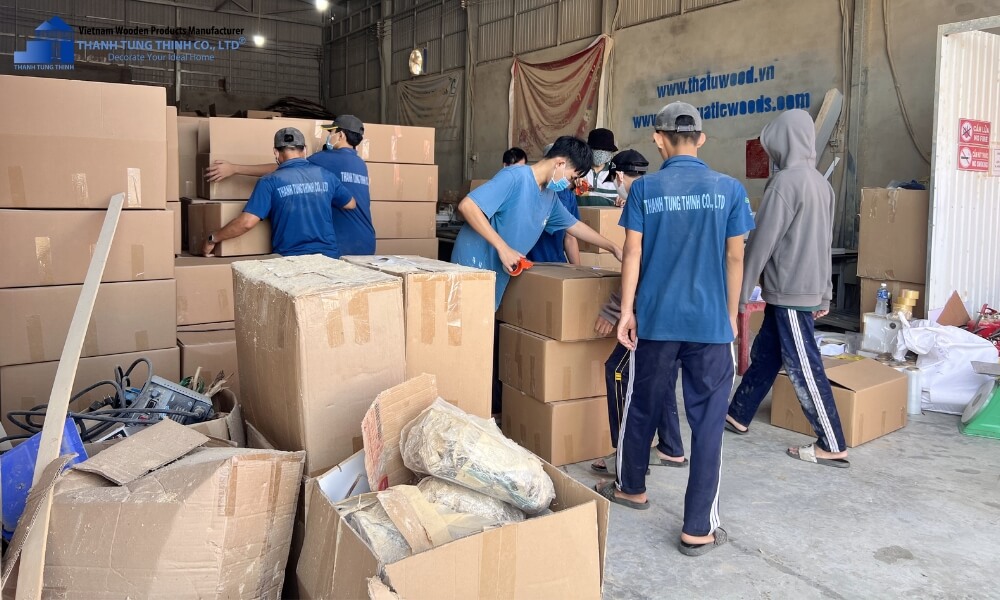
A structured sample process helps reduce mistakes before mass production. It gives both sides a clear quality benchmark and improves execution once the purchase order is confirmed.
Why End Grain Boards Are Strong for Premium Product Lines
End grain cutting boards are not just functional products. They are high-perception products. This matters in the U.S. market, where premium kitchenware often depends on presentation as much as utility. A thick, well-finished end grain board immediately communicates value to the end customer.
For brands, that supports stronger merchandising. For distributors, that supports better margin potential. For private label buyers, it creates a category with both practical demand and premium storytelling power.
A Smart Choice for Wholesale Growth
For B2B buyers in the U.S., wholesale end grain cutting boards offer a strong combination of premium appeal, customization flexibility, and factory-direct commercial value. They fit well in retail, hospitality, e-commerce, and promotional channels.
The right manufacturing partner makes the difference. When a supplier can deliver stable quality, bulk production support, export-ready packaging, and custom development, the product becomes more than a board. It becomes a scalable business line.
If your company is expanding a kitchenware catalog or building a premium private label range, wholesale end grain cutting boards are a category worth developing with the right factory partner.
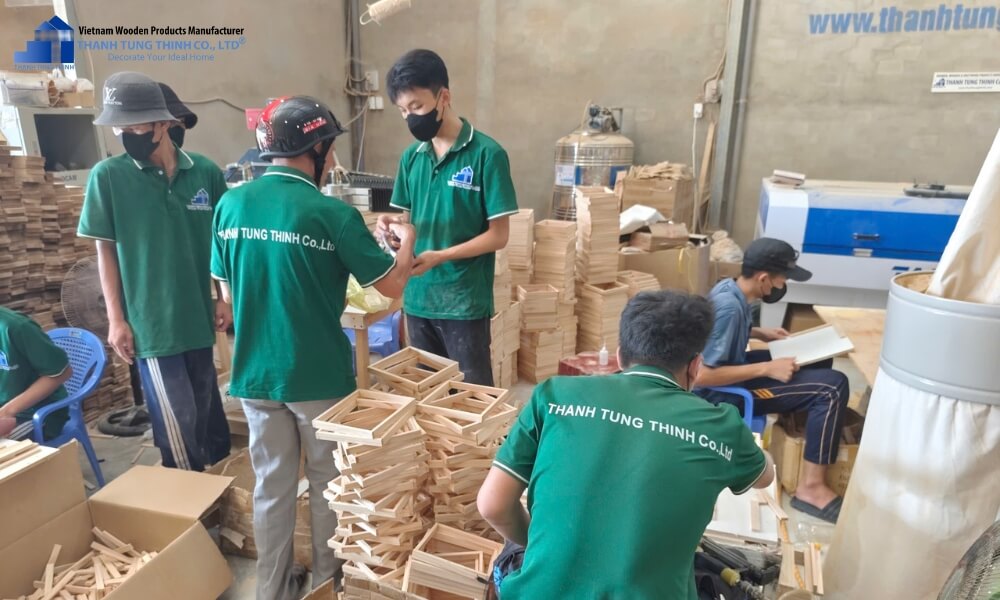
Why Partner with Thanh Tung Thinh for Wholesale End Grain Cutting Boards
Thanh Tung Thinh is a direct wood manufacturer in Vietnam with more than 14 years of experience in producing and exporting wooden kitchenware for international markets. For U.S. B2B buyers, this means better control over pricing, product specifications, and production consistency when sourcing wholesale end grain cutting boards.
As a factory-based supplier, Thanh Tung Thinh supports OEM and private label development for importers, retailers, kitchenware brands, and hospitality buyers. The company works with premium wood materials such as acacia and teak, while focusing on stable quality, reliable bulk production, and export-ready packaging for long-term B2B cooperation.
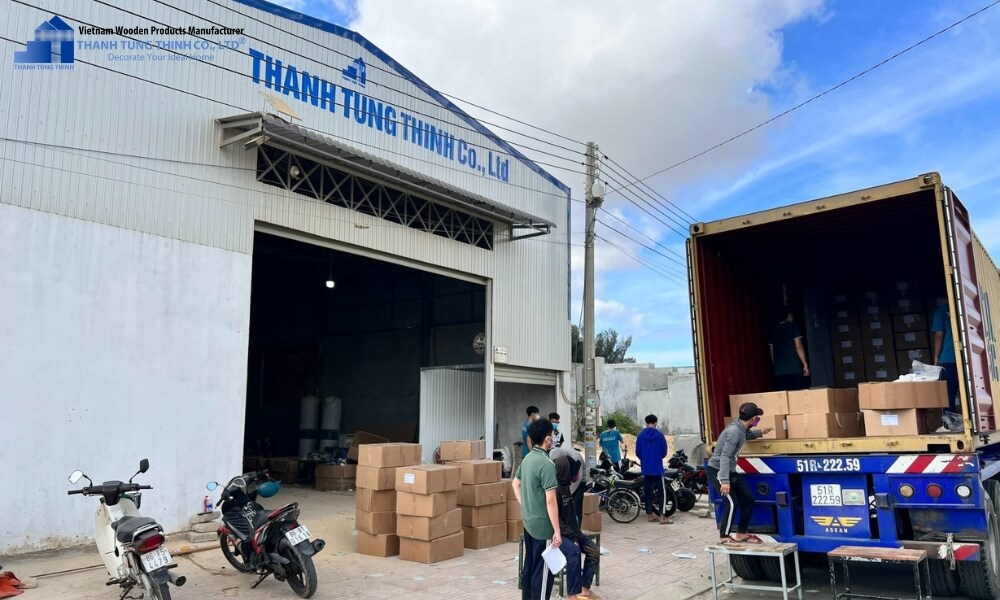
Beyond manufacturing, Thanh Tung Thinh also provides practical support throughout the sourcing process, including sample development, customization, logo engraving, packaging options, and production follow-up. This helps buyers reduce sourcing friction, improve lead time visibility, and build premium wooden cutting board collections with greater confidence.
For buyers looking for factory direct pricing, scalable capacity, and a reliable partner for custom wooden kitchenware, Thanh Tung Thinh offers a strong supply foundation for repeat wholesale orders and private label growth in the U.S. market.
FAQ About Wholesale End Grain Cutting Boards
What are wholesale end grain cutting boards?
Wholesale end grain cutting boards are wooden cutting boards produced in bulk for B2B buyers such as importers, retailers, distributors, hospitality buyers, and private label brands.
Why are end grain cutting boards considered premium?
They have a thicker, more professional appearance and are commonly positioned in the premium segment of the kitchenware market. This makes them suitable for higher-value retail and branded collections.
Which wood is best for end grain cutting boards?
Acacia is a strong value option, teak is ideal for premium positioning, and walnut or maple work well for specialty or upscale collections. The best choice depends on your target market and pricing strategy.
Can wholesale end grain cutting boards be customized?
Yes. Common options include size, thickness, juice groove, inner handles, engraving, private label packaging, and custom product development.
Are end grain cutting boards suitable for restaurants and hospitality?
Yes. They are widely used in commercial kitchens, food presentation, hospitality supply, and branded service environments where durability and presentation both matter.
What should I ask a supplier before placing a bulk order?
You should confirm wood species, board construction, finishing quality, MOQ, lead time, sample policy, customization options, packaging standards, and export experience.

