


Table of Contents
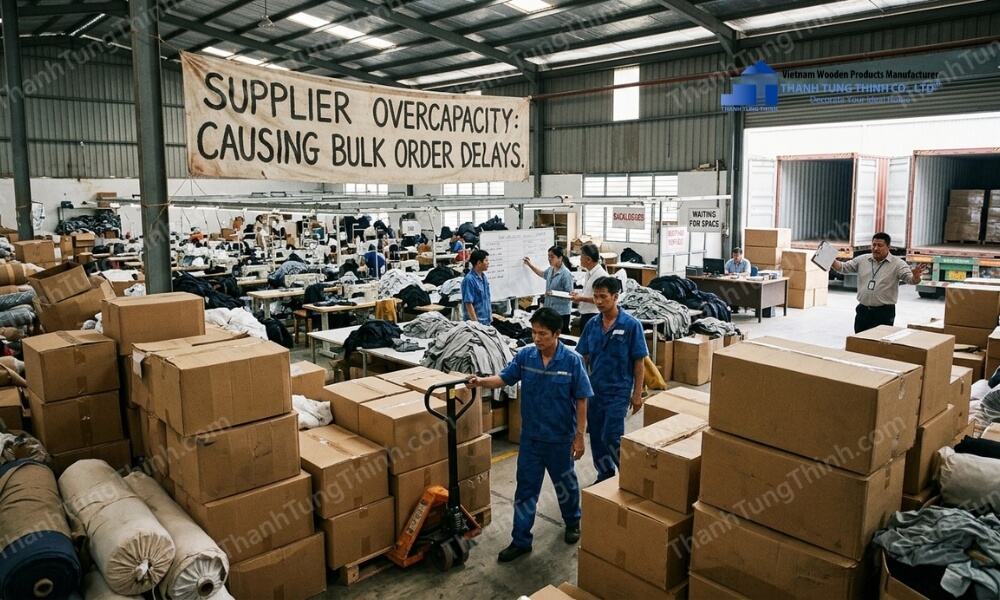
Supplier overcapacity problems are one of the most common yet overlooked causes of delayed bulk orders. Many buyers focus heavily on price and product quality but fail to evaluate whether a supplier can actually handle production volume. When a factory operates beyond its real capacity, delays are no longer accidental – they become predictable. This is why understanding supplier capacity is critical in B2B sourcing.
In practice, supplier overcapacity problems are not short-term issues but structural weaknesses in factory operations. They often result from aggressive order intake, lack of planning, and weak production control systems. Suppliers may continue accepting orders even when their production lines are already overloaded. For buyers, this creates risks that only become visible after the order is placed.
What Are Supplier Overcapacity Problems and Why They Happen
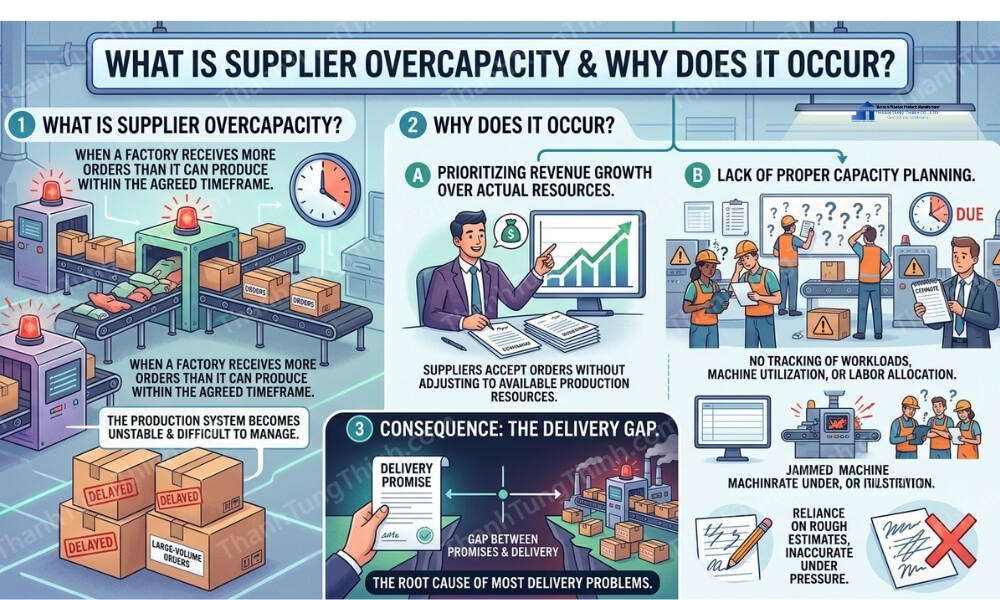
Supplier overcapacity problems occur when a factory accepts more orders than it can realistically produce within the agreed timeline. This usually happens when suppliers prioritize revenue growth without aligning it with actual production resources. As order volume increases, the production system becomes unstable and difficult to manage. Over time, this leads directly to delayed bulk orders.
The root issue lies in the absence of proper capacity planning. Many factories do not track real-time workload, machine usage, or labor allocation. Instead, they rely on rough estimates, which quickly break down under pressure. This gap between promise and execution is the foundation of most delivery failures.most delivery problems.
Common Causes of Supplier Overcapacity Problems in Manufacturing
Supplier overcapacity problems are rarely random. They are usually the result of internal operational decisions that prioritize short-term gains over long-term stability. Understanding these causes helps buyers detect risks early.
- Accepting orders beyond actual production capacity
- Lack of structured production scheduling systems
- Over-reliance on manual planning instead of data tracking
- Pressure to maximize revenue by taking every order
- Limited workforce or machinery compared to demand
These factors create an unstable production environment. Once capacity is exceeded, delays begin to spread across all orders.

Signs of Supplier Overcapacity Problems You Should Not Ignore
Recognizing supplier overcapacity problems early can prevent major disruptions. Most factories will not openly admit they are overloaded, so buyers must rely on indirect signals. These signs often appear before delays become obvious.
- Lead times increase after order confirmation
- Updates become vague or inconsistent
- Delivery schedules change frequently
- Suppliers agree too quickly without detailed planning
- Sample or pre-production stages take longer than expected
When multiple signals appear together, the risk of delay is high. Ignoring these warning signs often leads to repeated delivery issues.

How Supplier Overcapacity Problems Lead to Delayed Bulk Orders
When supplier overcapacity problems occur, production efficiency drops significantly. Orders are placed into queues, and priorities shift based on urgency or profitability. This creates an unstable workflow where timelines are constantly adjusted. As a result, delays become a standard outcome.
Smaller buyers are usually affected the most. Larger clients receive priority, while smaller orders are pushed back without clear communication. This lack of transparency makes inventory planning difficult. Overcapacity does not just slow production – it breaks predictability.
Hidden Risks Behind Supplier Overcapacity Problems
Supplier overcapacity problems do not only affect delivery timelines. They also create quality and consistency risks that many buyers underestimate. When factories are overloaded, they may rush production to meet deadlines. This often leads to inconsistent finishing or incorrect specifications.
Another hidden issue is uncontrolled outsourcing. Suppliers may subcontract production to third-party workshops without proper quality control. This increases variability and reduces product consistency. For B2B buyers, this can damage brand reputation in the long run.

Operational Comparison: Stable vs Overloaded Suppliers
| Factor | Stable Supplier | Overloaded Supplier |
|---|---|---|
| Capacity control | Accept orders within limits | Accept excessive orders |
| Lead time | Predictable and consistent | Frequently delayed |
| Production planning | Structured and scheduled | Reactive and unstable |
| Quality control | Maintained across batches | Inconsistent under pressure |
| Communication | Clear and transparent | Vague and delayed |
This comparison highlights a key insight. Delays are not caused by external factors alone but by how well a supplier manages internal operations.
How to Evaluate a Supplier’s Real Capacity
Evaluating capacity requires a structured approach rather than surface-level checks. Buyers need to move beyond pricing and product samples to assess operational capability in real production conditions. This ensures that the supplier can handle bulk orders without compromising delivery timelines. A reliable supplier should be able to provide clear, data-backed answers instead of general commitments.
- Ask for monthly production capacity and current workload
- Request a detailed production timeline with milestones
- Evaluate workforce size and machinery availability
- Check how the supplier handled previous large orders
- Review communication practices during production
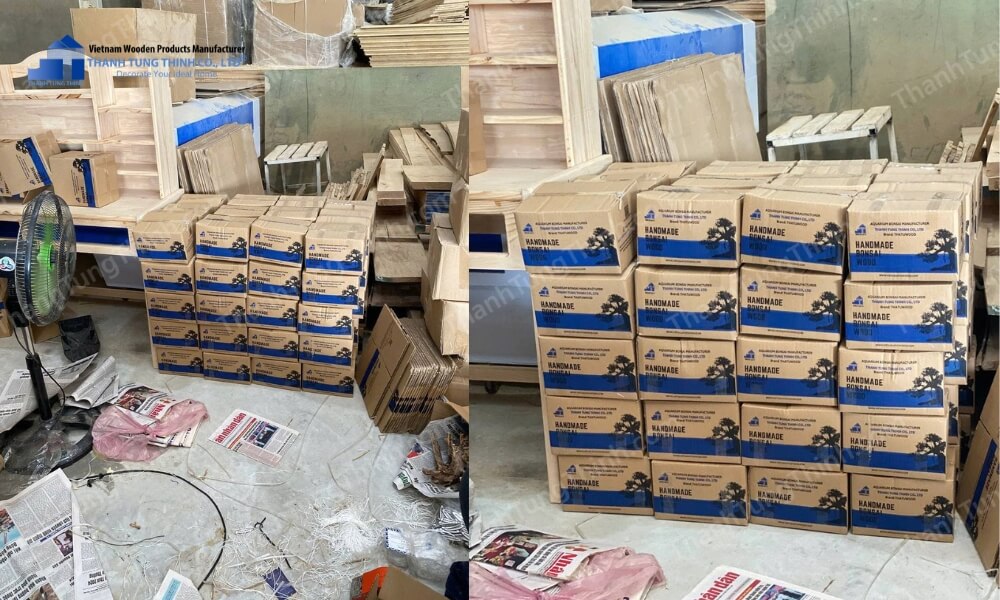
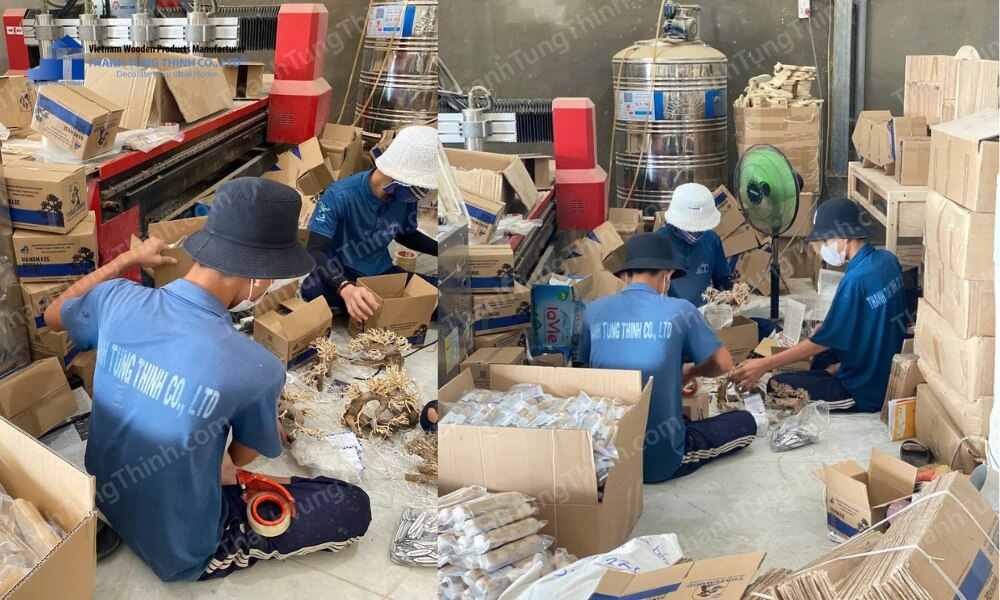
In real sourcing scenarios, manufacturers like Thanh Tung Thinh Co., Ltd typically operate with defined production systems and stable capacity planning. With more than 15 years of experience, the company specializes in a wide range of wooden products including kitchenware, wooden boxes, packaging solutions, household items, natural driftwood, bonsai wood, and pet products made from coffee wood. This diversified product portfolio, combined with export-focused production processes, allows them to maintain consistency across different product lines while supporting bulk orders at scale.
 WhatsApp: +84 96 394 91 78
 Email: [email protected]
 Website: https://thanhtungthinh.com/
 Pinterest: https://www.pinterest.com/THATUWOOD/
Why Direct Manufacturers Manage Capacity More Effectively
Direct manufacturers have full control over their production environment, including labor, machinery, and scheduling systems. This enables them to align order intake with actual capacity and avoid overbooking situations that lead to delays. As a result, delivery timelines are more predictable and easier to manage. For buyers, this translates into better planning and reduced operational risk.
In contrast, intermediaries often depend on external factories and lack visibility into real production conditions. This creates communication gaps and reduces control over timelines and quality. Companies like Thanh Tung Thinh Co., Ltd, which operate their own manufacturing facilities, can adjust production priorities across product categories such as kitchenware, wooden packaging, and driftwood products more efficiently. This flexibility is especially important for buyers sourcing multiple product lines within the same supply chain.
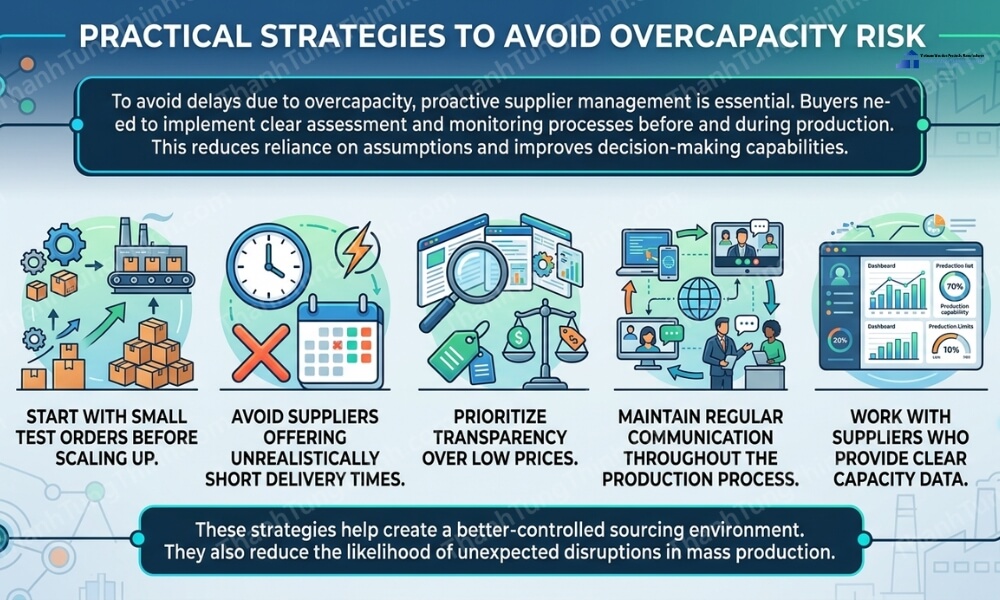
Practical Strategies to Avoid Overcapacity Risks
Avoiding overcapacity-related delays requires proactive supplier management. Buyers need to implement clear evaluation and monitoring processes before and during production. This reduces dependency on assumptions and improves decision-making.
- Start with smaller trial orders before scaling volume
- Avoid suppliers offering unrealistically short lead times
- Prioritize transparency over low pricing
- Maintain regular communication during production
- Work with suppliers that provide clear capacity data
These strategies help create a more controlled sourcing environment. They also reduce the likelihood of unexpected disruptions in bulk production.
Conclusion: Overcapacity Is the Root Cause of Most Delays
Supplier overcapacity problems are one of the primary drivers behind late delivery in bulk orders. Once a factory exceeds its limits, delays, quality inconsistencies, and communication breakdowns tend to follow. For buyers, this means that supplier selection directly impacts supply chain stability. Preventing these issues requires evaluating production capability from the beginning.
If your business is scaling bulk orders or expanding product categories, working with a manufacturer that demonstrates real production control becomes essential. You can consider contacting Thanh Tung Thinh Co., Ltd to request a catalog, review production capacity, or evaluate sample quality across different product lines. Taking this step early helps ensure more predictable delivery performance and supports long-term sourcing efficiency.
Read more:
- Late Delivery in Bulk Orders: Causes, Risks & How to Avoid It
- Manufacturing Lead Time Issues: What Really Causes Production Delays
- Delayed Shipment Impact on Business: Hidden Costs of Late Deliveries
- How to Avoid Late Delivery from Suppliers in Bulk Orders
- How to Choose a Reliable Manufacturer for Bulk Orders

