


Table of Contents
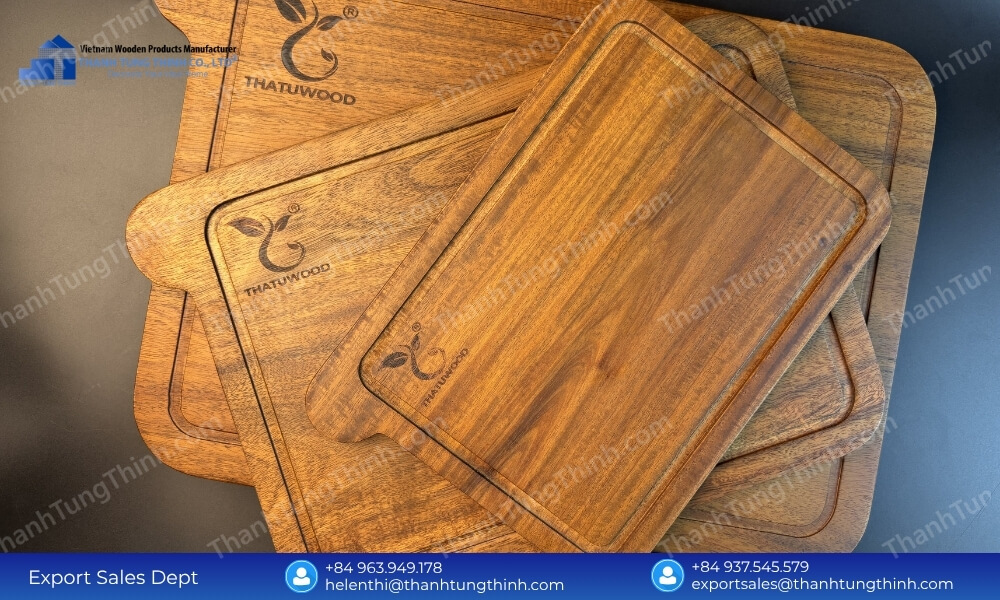
Acacia wood has taken the kitchenware industry by storm, praised for its stunning contrasting grain patterns and incredible durability. For commercial buyers, distributors, and culinary retailers looking to stock high-quality inventory, a critical question arises for heavy-duty applications: Do Acacia Wood Cutting Boards Splinter when subjected to intense, daily chopping, dicing, and cleaving?
The short answer is no—high-quality acacia wood cutting boards do not splinter easily, even under heavy use, thanks to their exceptional hardness and dense, interlocking grain structure. This resilient hardwood naturally resists deep scoring, moisture absorption, and surface degradation, making it one of the most reliable materials for high-volume commercial kitchens and busy home culinary spaces.
The Science Behind Acacia Wood and Its Resistance to Splintering
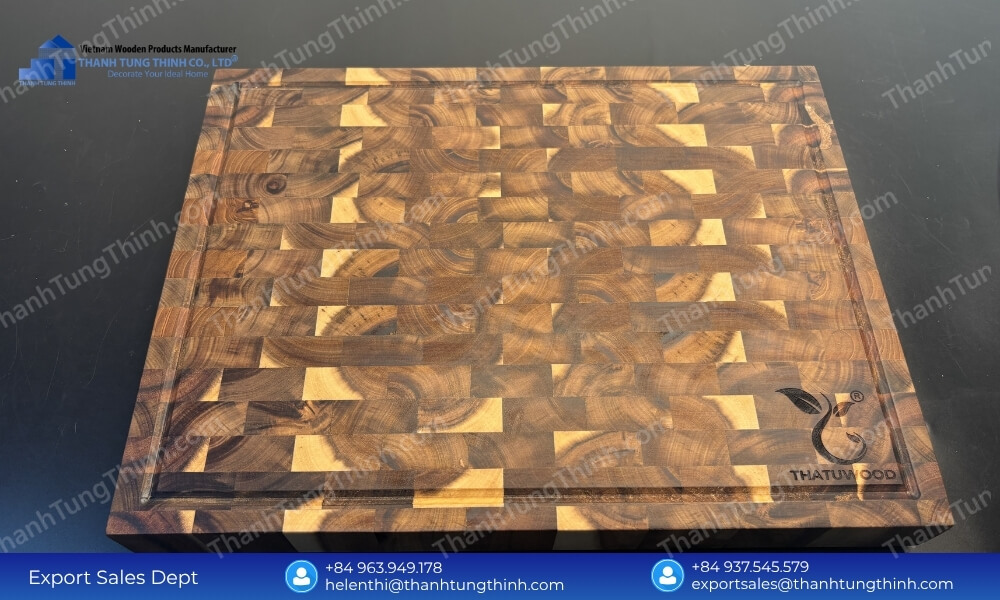
To understand why the answer to “Do Acacia Wood Cutting Boards Splinter?” is a resounding no, we must examine the botanical and structural properties of the acacia tree. Acacia is a dense hardwood native to tropical and subtropical regions, renowned for its natural resilience against harsh environmental conditions.
Janka Hardness and Density Metrics
The primary indicator of a wood’s resistance to scratching, denting, and splintering is its rating on the Janka hardness scale. The Janka scale measures the force required to embed a small steel ball halfway into a piece of wood.
| Wood Species | Janka Hardness Rating (lbf) | Density / Structural Weight | Risk of Splintering |
| Acacia Wood | 1,750 – 2,300 | High / Dense Interlocking | Extremely Low |
| Hard Maple | 1,450 | Medium / Straight Grain | Low |
| Walnut | 1,010 | Medium / Straight Grain | Low to Medium |
| Bamboo (Grass) | 1,380 | High / Linear Fibers | Medium (Fibers can peel) |
| Rubberwood | 960 | Low to Medium / Porous | Medium to High |
As illustrated in the data above, an acacia wood cutting board boasts a significantly higher Janka hardness rating than traditional favorites like hard maple or walnut. This immense density means that when a heavy chef’s knife or cleaver repeatedly strikes the surface, the wood fibers compress and bounce back rather than fracturing, shearing, or separating into dangerous splinters.
Interlocking Grain Patterns
Unlike bamboo or lower-grade softwoods that possess perfectly linear, straight fibers that can easily peel away in long slivers, acacia features a highly complex, interlocking grain pattern. The fibers grow in a wavy, crisscrossed manner.
This internal matrix distributes the impact force of heavy cutting tools across a wider surface area instead of allowing the stress to concentrate along a single fault line. Consequently, the physical structural makeup inherently prevents the material from splitting or chipping away over time.
Why Do Acacia Wood Cutting Boards Splinter in Rare Scenarios?
While the inherent properties of the timber shield it from damage, you might occasionally hear isolated complaints from end-users asking, “Do Acacia Wood Cutting Boards Splinter after a few months?” When splintering does occur, it is almost never a failure of the wood itself; rather, it is a symptom of poor manufacturing processes, improper wood curing, or extreme user neglect.
Inadequate Kiln Drying and Moisture Imbalance
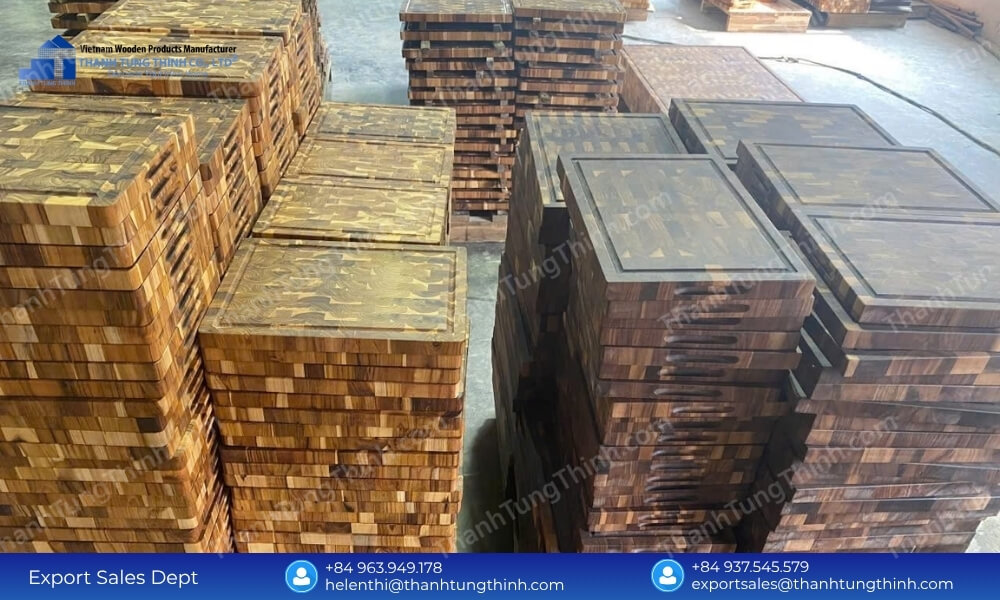
Before timber can be machined into kitchenware, it must undergo a meticulous kiln-drying process to reduce its internal moisture content to an optimal 8% to 12%. If a manufacturer rushes this stage to cut costs, the wood will retain internal moisture pockets. When exposed to dry kitchen environments or repetitive washing, the uneven drying causes the wood to warp, check, and crack. These structural fractures eventually manifest as surface splinters.
Low-Grade Adhesives and Poor Joint Milling
Most heavy-duty cutting boards are constructed via edge-grain or end-grain lamination. This requires individual wood strips to be glued together under immense pressure. If a factory uses non-food-safe, low-grade adhesives that degrade when exposed to water, or if their joint milling machines lack precision, the seams between the wood blocks will begin to separate. This separation creates sharp, frayed edges that users mistake for wood splintering.
Severe Maintenance Neglect and Dishwasher Abuse
Wood is a organic, living material that requires basic hydration. The fastest way to ruin a premium acacia wood cutting board is to submerge it in water or wash it in a commercial dishwasher. The intense heat and prolonged exposure to harsh detergents strip away the wood’s natural protective oils, causing the fibers to dry out, become brittle, and ultimately fray on the surface.
How Professional Manufacturing Prevents Splintering Under Heavy Use
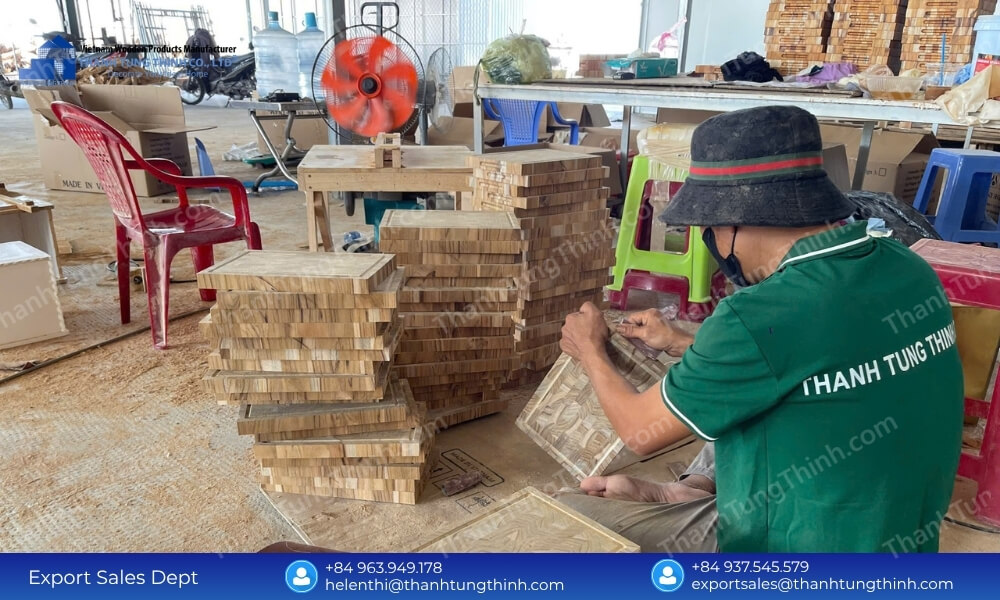
For B2B buyers, wholesalers, and brand owners, sourcing cutting boards that never disappoint the end consumer comes down to choosing the right manufacturing partner. Premium factories implement specialized production safeguards that guarantee an acacia wood cutting board can endure decades of heavy commercial use without a single fiber coming loose.
When looking for a world-class manufacturing partner that understands the strict tolerances required for international export, Thanh Tung Thinh stands out as a premier wooden kitchenware manufacturer and exporter. With years of experience supplying international markets with bulk orders, their production process directly eliminates the variables that lead to wood degradation.
- Precision Kiln Stabilization: Every piece of raw acacia timber processed by Thanh Tung Thinh undergoes a controlled, extended kiln-drying cycle. This ensures uniform internal moisture levels, eliminating the risk of warping and micro-cracking later in the product life cycle.
- Premium Food-Grade Bonding: The company utilizes advanced, FDA-approved, water-resistant food-safe adhesives combined with heavy hydraulic pressing. This guarantees that edge-grain and end-grain joints remain completely seamless, creating a solid, monolithic cutting surface that resists heavy impact.
- Multi-Stage Ultra-Fine Sanding: Before any oil or wax finish is applied, boards pass through multiple stages of mechanical and hand sanding with progressively finer grit abrasives. This eliminates any loose or raised surface grain, ensuring a perfectly smooth, splinter-free finish right out of the box.
Maintenance Protocols for Commercial and Retail Users
To ensure that end consumers or commercial chefs never have to experience a situation where their acacia wood cutting board begins to fray, implementing a standardized maintenance protocol is essential. Providing a clear care guide alongside your retail product adds massive value to your brand.
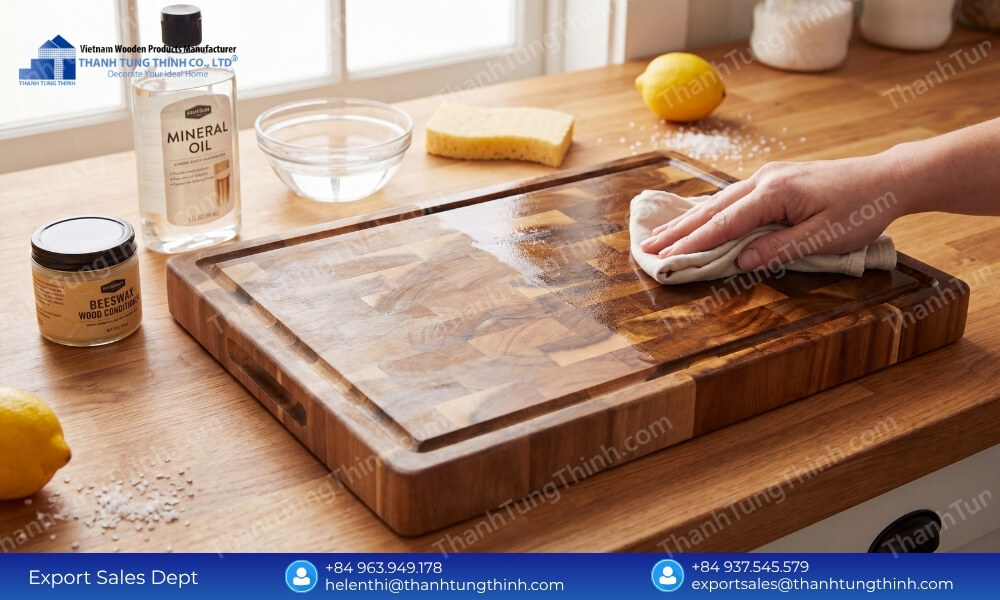
- Immediate Post-Use Cleaning: Boards should be scraped clean of food debris, wiped down with a damp cloth and mild dish soap, and rinsed immediately. Never leave a wooden board soaking in a sink full of water.
- Proper Air Drying: Always dry the cutting board by standing it upright on its edge or hanging it by a handle. This allows air to circulate evenly around both large faces, preventing uneven contraction and warping.
- Routine Food-Safe Mineral Oiling: Depending on the frequency of use, the board must be seasoned with food-grade mineral oil or beeswax cream every 2 to 4 weeks. This seals the outer pores, locks in the core moisture balance, and prevents the wood from becoming dry and brittle.
- No Dishwashers Allowed: Educate consumers that the thermal shock and saturated moisture environment of a dishwasher will void any product warranty and rapidly cause structural splitting.
Partnering with Thanh Tung Thinh for Bulk and Wholesale Success
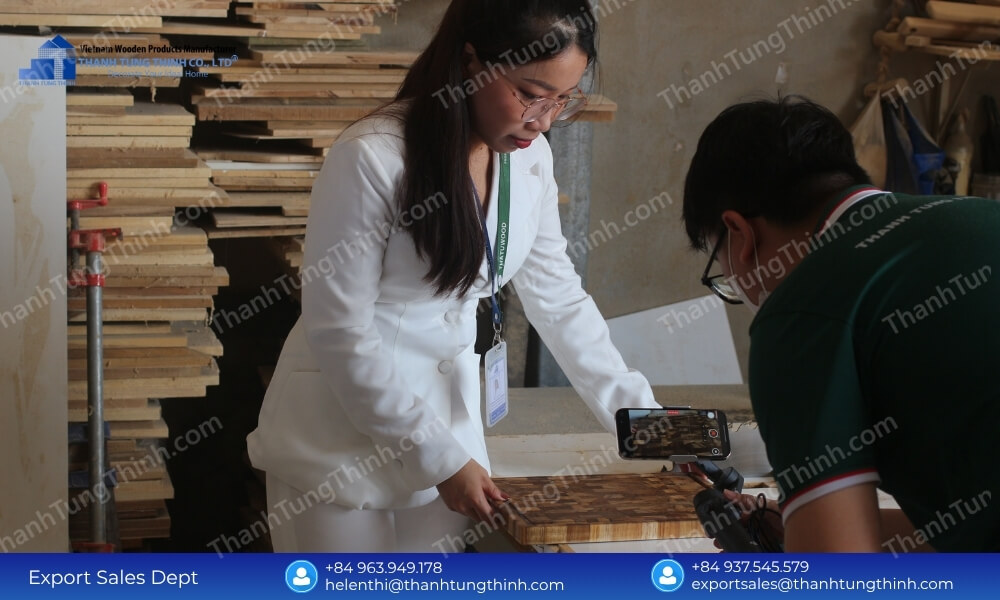
For international B2B buyers, sourcing reliable wood kitchenware requires a partner that combines raw material access with mass-production capabilities. Thanh Tung Thinh fulfills these requirements by offering tailored OEM and ODM solutions for businesses worldwide. By utilizing acacia—a highly sustainable, fast-growing timber plantation crop in Vietnam—wholesale buyers gain access to an ethically harvested, eco-friendly supply chain that appeals to modern consumers.
The company’s large-scale facilities are engineered to handle high-volume container orders while maintaining consistent dimensional accuracy across every batch. From thick end-grain butcher blocks to slim edge-grain serving platters, every aspect of an acacia wood cutting board can be customized.
With options for laser-engraved logos and bespoke packaging, Thanh Tung Thinh ensures your inventory stands out distinctively while meeting the uncompromising quality assurance standards of the global retail landscape.

Conclusion: Secure Your Premium Acacia Inventory Today
When evaluating the market potential of wooden kitchenware, understanding product durability is paramount. To answer the critical industry question—Do Acacia Wood Cutting Boards Splinter under heavy use?—the outcome is a clear, definitive no, provided the product is sourced from a manufacturer that executes flawless drying cycles and uses superior bonding technologies.
Acacia’s immense density, high Janka hardness, and beautiful aesthetics deliver unparalleled value to end-users and excellent profit margins for distributors. If you are looking to elevate your product catalog with reliable wooden cutting boards, Thanh Tung Thinh is your trusted manufacturing partner.
Specializing in high-volume export orders, we provide the strict quality assurance, sustainable sourcing, and competitive B2B pricing your business needs to dominate the market. Contact the Thanh Tung Thinh team today to discuss custom specifications, request production samples, and secure your next bulk wholesale shipment.
📩 Email: [email protected]
🌐 Website: https://thanhtungthinh.com/
📌 Pinterest: https://www.pinterest.com/THATUWOOD/
📌 Youtube: https://www.youtube.com/@thanhtungthinhmanufacturer
📌 Facebook: https://www.facebook.com/thanhtungthinh
📌 Linkedin: https://www.linkedin.com/company/thanh-tung-thinh-co-ltd
Frequently Asked Questions
1. Do acacia wood cutting boards splinter more easily than bamboo cutting boards?
No, acacia wood is much less prone to splintering than bamboo. Bamboo is technically a grass composed of long, rigid, linear vascular bundles that can peel off in sharp slivers when deeply scored by sharp knives, whereas acacia’s dense interlocking hardwood grain resists this entirely.
2. Is an acacia wood cutting board safe for raw meat preparation under heavy use?
Yes, absolutely. Acacia contains natural oils and features a dense grain structure that prevents deep liquid penetration, reducing bacterial harbor hazards. When cleaned correctly after processing meat, it is highly hygienic for commercial use.
3. Why does my new acacia wood board feel slightly rough after the first wash?
This is a natural phenomenon known as “grain raise.” When raw wood fibers come into contact with water for the first time, they expand and stand up. Premium boards from top manufacturers like Thanh Tung Thinh undergo extensive pre-washing and fine sanding to minimize this effect.
4. How often should a commercial kitchen oil an acacia wood cutting board?
In a high-volume commercial kitchen where boards are washed multiple times a day, they should be oiled at least once a week with food-safe mineral oil to prevent the dense wood from drying out and cracking.
5. Can heavy cleaver chopping split an edge-grain acacia cutting board?
While acacia is incredibly tough, repetitive, high-impact slamming with a heavy meat cleaver can eventually stress edge-grain seams. For heavy cleaver work, we strongly recommend ordering thick end-grain butcher blocks.
6. What certifications should I look for when sourcing acacia cutting boards in bulk?
When importing wooden kitchenware, ensure your manufacturing partner complies with international food-safety standards, using FDA-approved, non-toxic glues and finishes, along with proper phytosanitary certification for customs clearance.
7. Does acacia wood dull high-end kitchen knives quickly due to its hardness?
No, despite its impressive Janka hardness rating, acacia remains a natural wood, meaning it possesses inherent elasticity that yields to high-end steel blades far better than glass, ceramic, or plastic boards, preserving knife edges.
8. What is the average lifespan of a wholesale-sourced acacia cutting board?
When engineered by a reputable manufacturer utilizing proper kiln-drying techniques and high-quality adhesives, a commercial acacia cutting board can easily last upwards of 5 to 10 years with standard, routine maintenance.

