


Table of Contents
The technical question does teak wood cutting board dull knives faster than traditional Western domestic woods remains a vital inquiry during product sourcing. To protect bulk inventory investments and the expensive forged steel blades used by commercial culinary clients, buyers must analyze the botanical anatomy and mineral composition of tropical lumber.
This comprehensive fact-check analyzes the scientific reality behind blade edge degradation to determine exactly how tropical hardwood interacts with professional cutlery, answering once and for all if the phrase does teak wood cutting board dull knives is a verifiable fact or an overblown culinary myth.

The Core Physics of Knife Edge Wear and Wood Hardness
To accurately evaluate if and why a specific type of wood affects cutlery sharpness, one must first explore the physics of edge degradation within commercial kitchen environments. Knife dulling is not a random occurrence; it is a mechanical process governed by friction, structural hardness variations, and the microscopic composition of the surface material.
Understanding the Mechanics of Edge Rollover and Abrasion
When a chef slices or chops food on a cutting surface, the microscopic apex of the blade edge—which can be as thin as a single micron on high-end Japanese carbon steel knives—comes into direct mechanical contact with the wood fibers. Dulling happens through two primary paths:
- Edge Rollover: This occurs when a blade strikes a material that is structurally too hard, causing the ultra-thin steel apex to bend or fold over to one side, which immediately destroys its slicing efficiency.
- Abrasive Wear: This happens when microscopic hard particles within the cutting board scrape against the steel, physically grinding away the metal apex over time.
The Role of the Janka Hardness Scale in Culinary Sourcing
The global woodworking industry utilizes the Janka Hardness Scale to measure a wood species’ resistance to denting and wear by calculating the force required to embed a small steel ball into the timber. When B2B procurement teams ask: does teak wood cutting board dull knives, they often look first at this metric.
Traditional wood blocks, such as hard rock maple or black walnut, feature Janka ratings that fall within an optimal zone—hard enough to resist deep scratching but soft enough to absorb blade impacts smoothly. Tropical timber sits comfortably within this structural sweet spot, meaning its basic wood density is not inherently hard enough to cause immediate blade rollover.
The Root Cause: Botanical Silica and Its Abrasive Effect on Cutlery
If the basic hardness rating suggests it sits within a safe zone, why does the question does teak wood cutting board dull knives persist across the culinary trade? The answer lies not in wood cell density, but in a unique botanical trait: the accumulation of natural mineral silica.
Tectona grandis trees absorb liquid silicon dioxide from tropical soils, integrating microscopic quartz sand deposits directly into their cell walls. While this mineral shield provides excellent defense against pests and rot, it introduces an abrasive component to the kitchen surface.
When a fine knife blade makes contact, the steel edge scrapes against these silica deposits. This micro-abrasive friction acts like ultra-fine sandpaper, grinding away the blade’s razor-sharp apex. Consequently, analyzing whether does teak wood cutting board dull knives requires recognizing that mineral friction, rather than raw hardness, drives cutlery edge wear.
Balancing the Equation: Why Major Commercial Brands Choose Teak
Despite the proven micro-abrasive effect of internal silica, tropical wood remains one of the top-selling premium categories for global kitchenware importers and retail store networks. To maintain a balanced perspective for your B2B supply chain strategy, your sales teams must understand why many commercial operators actively prefer a teak wood cutting board over domestic alternatives, willingly accepting more regular knife maintenance routines.
- Exceptional Waterproofing and Hydrophobic Properties: Tightly interlocking wood cells combined with high concentrations of natural oily resins prevent the absorption of contaminated meat juices, minimizing the risk of bacterial cross-contamination in busy kitchens.
- Outstanding Resistance to Splitting and Warping: The exceptionally low volumetric shrinkage rate ensures that these heavy-duty wood blocks stay perfectly flat on kitchen preparation tables, even when exposed to high temperature and humidity fluctuations.
- Low Maintenance Demands for Commercial Staff: While traditional domestic wood blocks require frequent manual conditioning with food-grade mineral oils to avoid cracking, tropical heartwood maintains its deep coloration and smooth texture with minimal conditioning.
- Premium Visual Appeal and Versatile Utility: The striking golden-brown wood grain patterns accented by dark tracking lines allow a professional teak wood cutting board to easily serve double-duty as a high-end serving display or charcuterie sharing board.
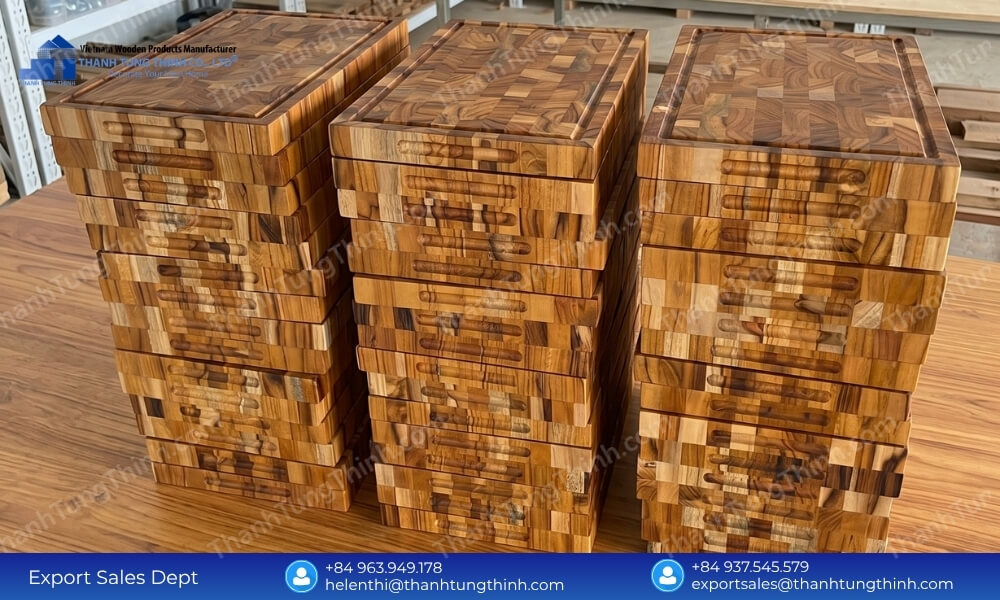
From an international distribution perspective, these operational benefits make the wood an incredibly stable and reliable product line to warehouse. Bulk pallets stored in large logistics hubs show excellent resistance to structural warping or humidity damage during long sea shipping transit. This reliable durability helps B2B importers minimize product waste and keep customer return rates low, proving that while does teak wood cutting board dull knives remains a valid point of care, its structural advantages offer strong commercial value.
Technical Sourcing Analysis: Edge Grain Versus End Grain Architecture
For large-scale B2B procurement managers and kitchenware brand designers, the architectural configuration of wood blocks is just as critical as the timber species. The way wood grain is oriented during factory fabrication alters how the surface interacts with knife edges, helping to offset the abrasive risks associated with natural silica content:
- Edge Grain Construction: Built by gluing long timber strips horizontally, exposing the sides of the wood fibers. This creates a highly durable, visually cohesive, and cost-effective layout. However, because the knife hits the fibers horizontally, embedded silica particles are held rigidly in place, maximizing abrasive friction and causing an edge-grain teak wood cutting board to dull cutlery faster.
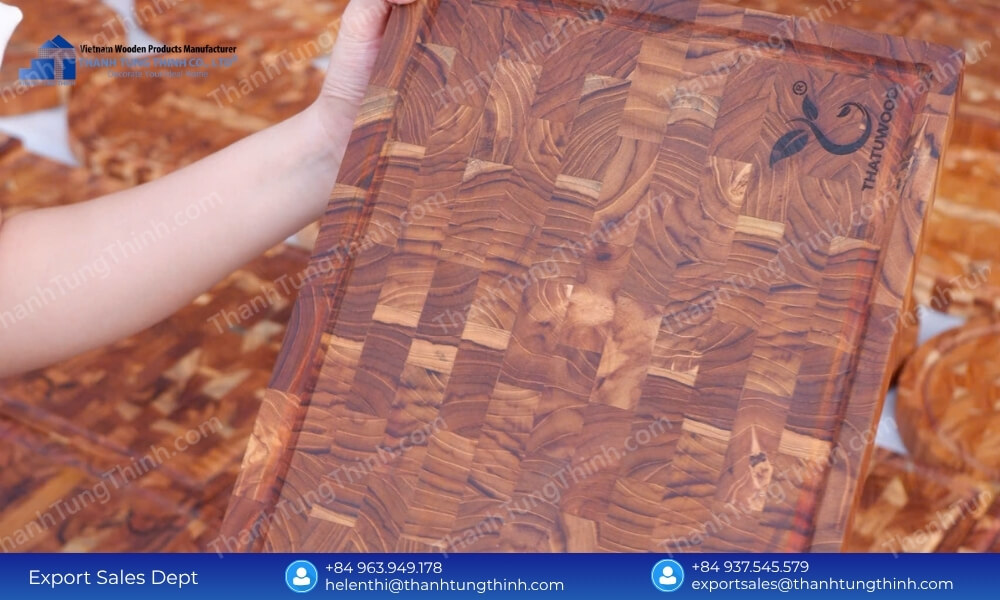
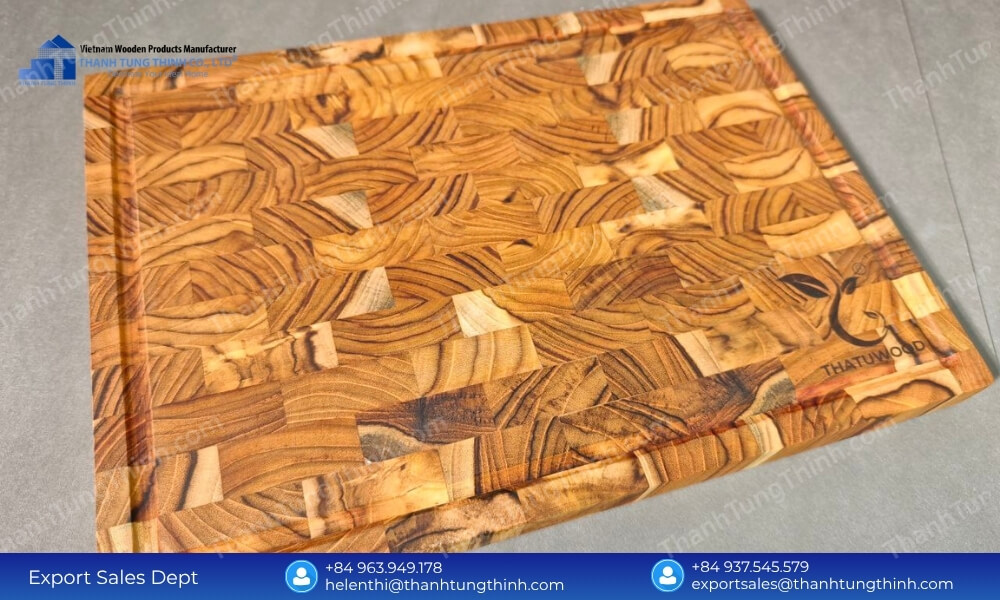
- End Grain Construction: Engineered by orienting wood blocks vertically, exposing the open ends of the fibers in a checkerboard pattern. When a blade strikes the surface, it splits open the vertical fiber bundles instead of cutting across them, allowing embedded silica particles to shift and reduce direct abrasive friction. As the blade lifts, the fibers naturally close, providing a “self-healing” mechanism that preserves sharpness.
For premium brands wondering how to address concerns around does teak wood cutting board dull knives, sourcing end-grain configurations offers an excellent, knife-friendly design solution.
Professional Care Guidelines to Mitigate Cutlery Wear
If your business distributes tropical hardwood kitchenware or utilizes it within commercial food preparation spaces, implementing a standardized care framework can significantly reduce knife wear while keeping cutting blocks in pristine, sanitary condition:
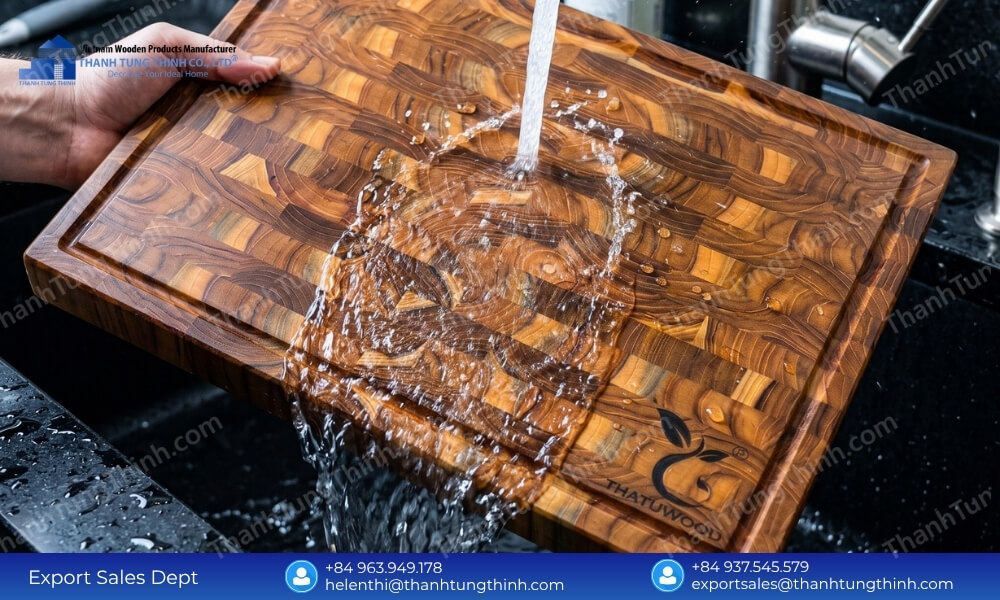
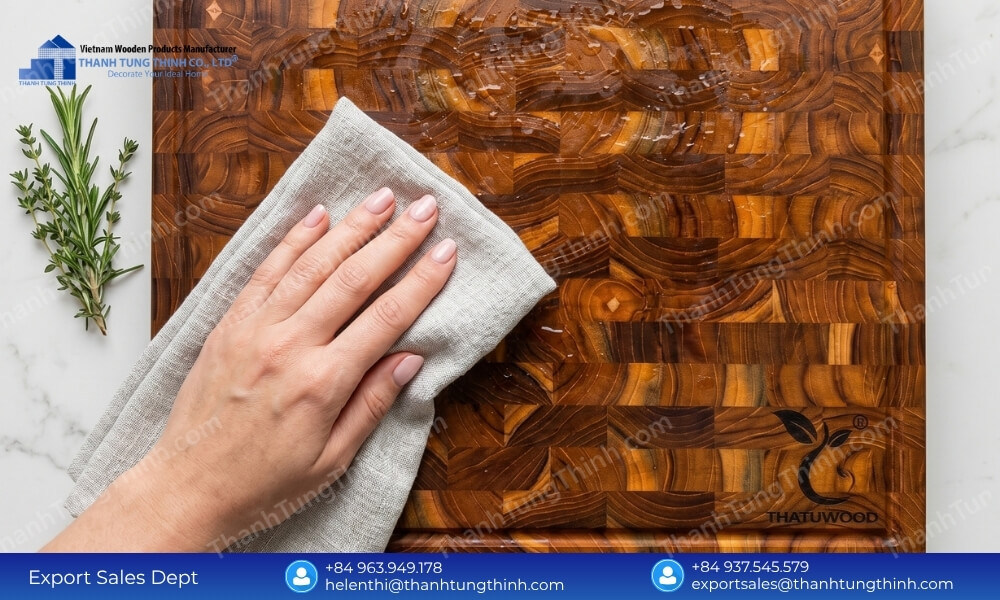
- Low-Moisture Washing and Air Drying Procedures: To preserve natural defensive saps and oils, clean the surface by hand with warm water and mild, neutral dish soap. Never submerge the block or use a high-temperature commercial dishwasher, which strips protective oils and leaves fibers brittle. Afterward, towel-dry and prop the board vertically to air dry evenly.
- Strategic Cutlery Selection: To minimize the impact of internal silica abrasions, commercial operators should pair wood boards with high-carbon forged steel cutlery or professional blades hardened to a higher Rockwell rating (60+ HRC), which resist abrasive wear much better than soft, low-carbon stainless steel.
- Enforcing Regular Honing and Sharpening Routines: Because a teak wood cutting board behaves like an ultra-fine natural abrasive, establishing a consistent edge-maintenance schedule using a ceramic honing rod before and after intense prep shifts realigns microscopic edge rollover immediately without prematurely grinding away steel.
Supply Chain Excellence with Thanh Tung Thinh Factory Directly
For international kitchenware distributors, global e-commerce brand managers, and large hospitality buyers, finding a definitive answer to does teak wood cutting board dull knives is only the first step toward successful market growth. The true foundation of commercial success lies in securing a transparent, highly capable manufacturing partner that can supply certified, premium-grade wood products in large volumes. This is where Thanh Tung Thinh provides exceptional manufacturing capabilities.
As a premier, large-scale wood products manufacturer based in Vietnam, we specialize in mass-producing top-tier, export-quality cutting boards, end-grain chopping blocks, and specialized serving trays for a demanding global B2B marketplace.
Our advanced facility comfortably manages high-volume wholesale orders, providing stable container-load production capacities and dependable shipping schedules month after month. We run automated kiln-drying operations to ensure every wood blank achieves a perfectly balanced internal moisture level before fabrication, making our finished boards exceptionally stable, warp-resistant, and easy to clean from day one.
Contact our international export sales division today to request custom product samples, discuss container-load minimum orders, and secure a reliable manufacturing partner for your business growth.
📩 Email: [email protected]
🌐 Website: https://thanhtungthinh.com/
📌 Pinterest: https://www.pinterest.com/THATUWOOD/
📌 Youtube: https://www.youtube.com/@thanhtungthinhmanufacturer
📌 Facebook: https://www.facebook.com/thanhtungthinh
📌 Linkedin: https://www.linkedin.com/company/thanh-tung-thinh-co-ltd
Questions & Answers
1. Does teak wood cutting board dull knives faster than traditional domestic maple blocks?
Yes, tropical wood contains natural microscopic minerals called silica embedded within its cellular matrix, which acts like an ultra-fine abrasive that gradually wears down razor-sharp knife edges faster than silica-free maple.
2. What is the primary cause of abrasive knife edge wear on a tropical wood block?
The primary driver is the natural silica content absorbed from tropical soils during the tree’s growth cycle, rather than the raw density of the wood cells or the structural Janka hardness rating.
3. Is an end grain teak wood cutting board safer for knife edges than an edge grain board?
Yes, end-grain configurations place the wood fibers vertically, allowing the knife blade to slide between the fiber bundles rather than slicing across them, which significantly reduces abrasive friction against the steel edge.
4. Can running a premium wood cutting block through a commercial dishwasher minimize its service life?
Yes, the intense heat cycles and aggressive chemical detergents inside an automatic dishwasher strip away the protective natural oils, causing the wood to warp, split, and fail along its glued seams.
5. What kind of kitchen knives work best when prepping food on a silica-rich wood surface?
Cutlery crafted from high-carbon forged steel or professional blades hardened to a higher Rockwell rating (60+ HRC) resist abrasive silica wear much better than soft, low-carbon budget stainless steel knives.

