



A wooden cutting board is one of the most trusted tools in a home kitchen. It’s durable, gentle on knives, and visually timeless. Yet the moment raw meat touches the surface, many home cooks start to worry.
Is it safe? Does bacteria linger in the wood? And most importantly, how to clean wooden cutting board after raw meat properly? The good news is that with the right cleaning routine and a few smart habits, a wooden cutting board can be both safe and practical for everyday use.
Can You Cut Raw Meat on a Wooden Cutting Board?
Short answer: yes – you can cut raw meat on a wooden cutting board.
Many professional kitchens and home cooks rely on wood boards every day. The key difference between safe and risky use isn’t the material itself but how the board is cleaned and maintained. Food safety experts such as the USDA recommend preventing cross-contamination by thoroughly cleaning cutting boards, utensils, and surfaces after handling raw meat (USDA Food Safety).
Questions like “can you cut meat on a wooden cutting board?” or “should you cut raw meat on a wooden cutting board?” usually stem from concerns about bacteria. Proper cleaning solves most of those concerns.

Why Wooden Cutting Boards Are Popular for Meat Preparation
Despite the debate, wooden boards remain a favorite among cooks for several reasons:
- Knife-friendly surface that preserves sharp edges
- Durability when properly maintained
- Natural texture that prevents food from sliding
- Aesthetic appeal in both modern and rustic kitchens
For many households, a wooden cutting board for raw meat is simply part of daily cooking.

When a Wooden Cutting Board Becomes Unsafe
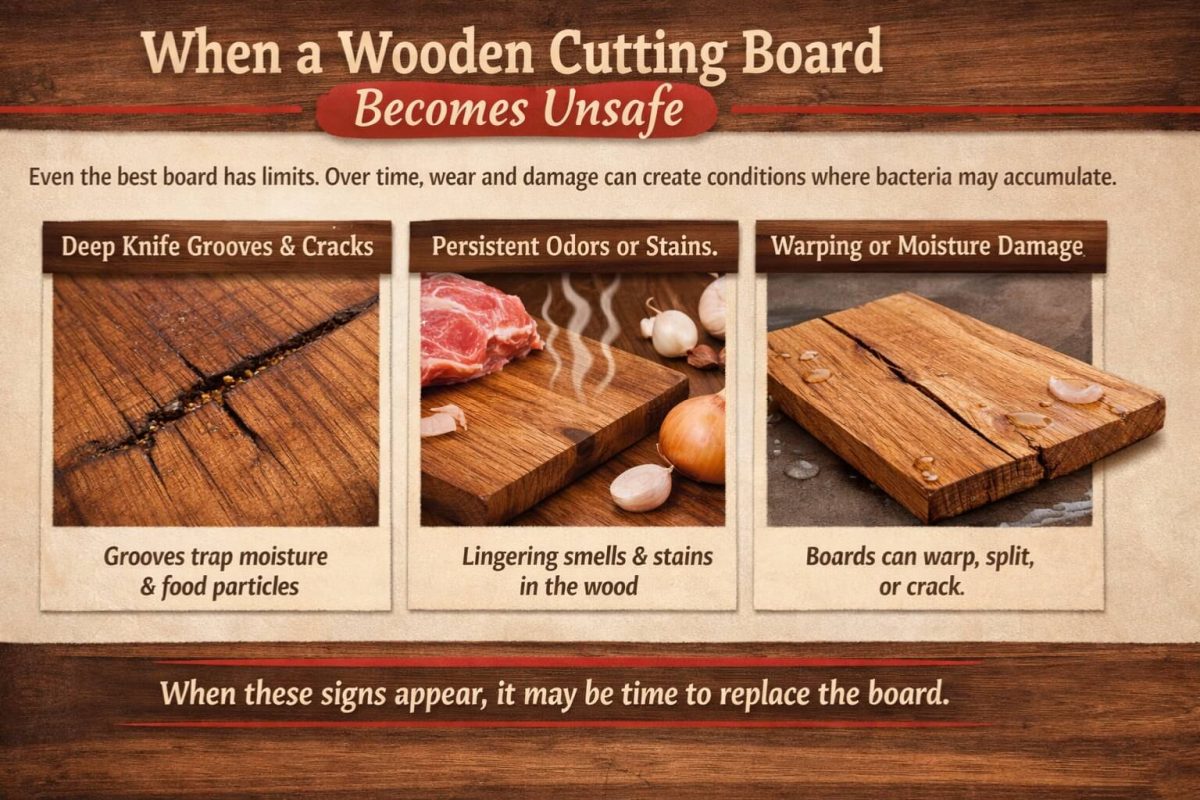
Even the best board has limits. Over time, wear and damage can create conditions where bacteria may accumulate.
Deep knife grooves and cracks – epeated chopping can leave deep cuts in the wood. These grooves trap moisture and food particles.
Persistent odors or stains – If a board retains strong smells even after cleaning, residue may have penetrated the surface.
Warping or moisture damage – Boards exposed to excess water can warp or split, creating uneven areas that are difficult to sanitize.
When these signs appear, it may be time to replace the board.
How to Clean Wooden Cutting Board After Raw Meat
Cleaning should begin immediately after preparing meat. Letting residue sit allows bacteria and odors to settle into the wood.
Follow this simple routine.
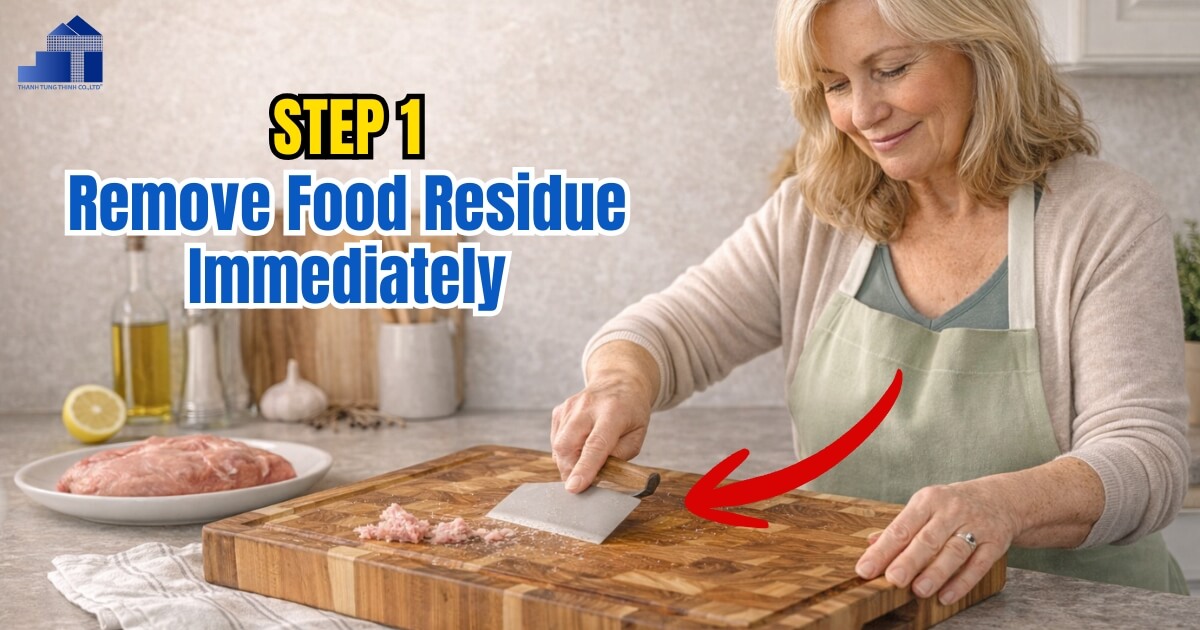
Step 1 – Remove Food Residue Immediately
The first thing I recommend is removing any visible food residue as soon as you finish cutting raw meat. Small bits of meat, fat, and juices can settle into the grain of the wood surprisingly fast, which makes the board harder to clean later.
Use a bench scraper, paper towel, or the back of a knife to clear away debris before washing. This simple habit helps prevent odors, reduces buildup, and makes the entire cleaning process much more effective.
Step 2 – Wash With Hot Water and Dish Soap
Once the surface is cleared, wash the board right away with warm to hot water and a mild dish soap. Use a soft sponge or brush to scrub the entire surface, paying close attention to knife marks and the edges where residue can collect.
This step is essential because it removes grease, proteins, and surface bacteria left behind after preparing raw meat. If you are wondering how to clean wooden cutting board after raw meat, this is the core step you should never skip.

Step 3 – Sanitize the Surface Properly
After washing, it is a good idea to sanitize the board, especially if it was used for poultry or heavily handled raw meat. You can use a food-safe sanitizing solution, a small amount of hydrogen peroxide, or another kitchen-safe sanitizer suitable for food-contact surfaces.
Apply it lightly across the board and let it sit for a short time before wiping or rinsing it away. Sanitizing adds an extra layer of protection and is particularly useful when cleaning a wooden cutting board raw meat was prepared on.

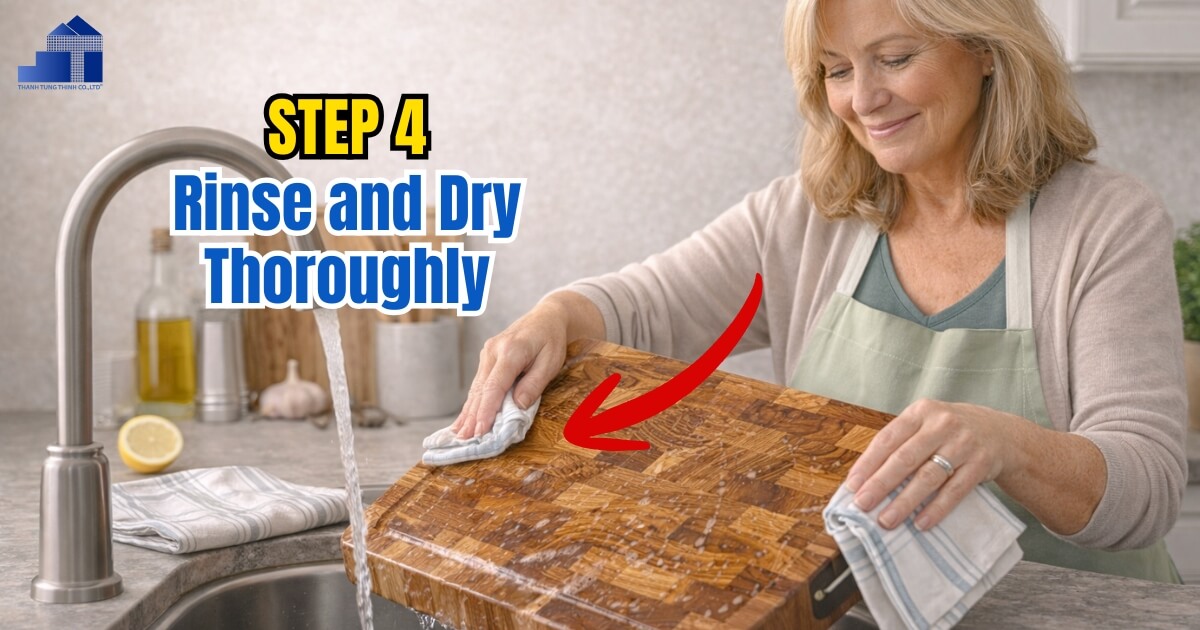
Step 4 – Rinse and Dry Thoroughly
Once the board has been cleaned and sanitized, rinse off any remaining soap or solution and dry it immediately with a clean towel. After that, stand the board upright or place it in a well-ventilated area so both sides can dry completely.
This step matters more than many people realize. A wooden board that stays damp for too long can develop odors, warp over time, or become more difficult to maintain. Proper drying is one of the most important parts of keeping a board clean and safe.
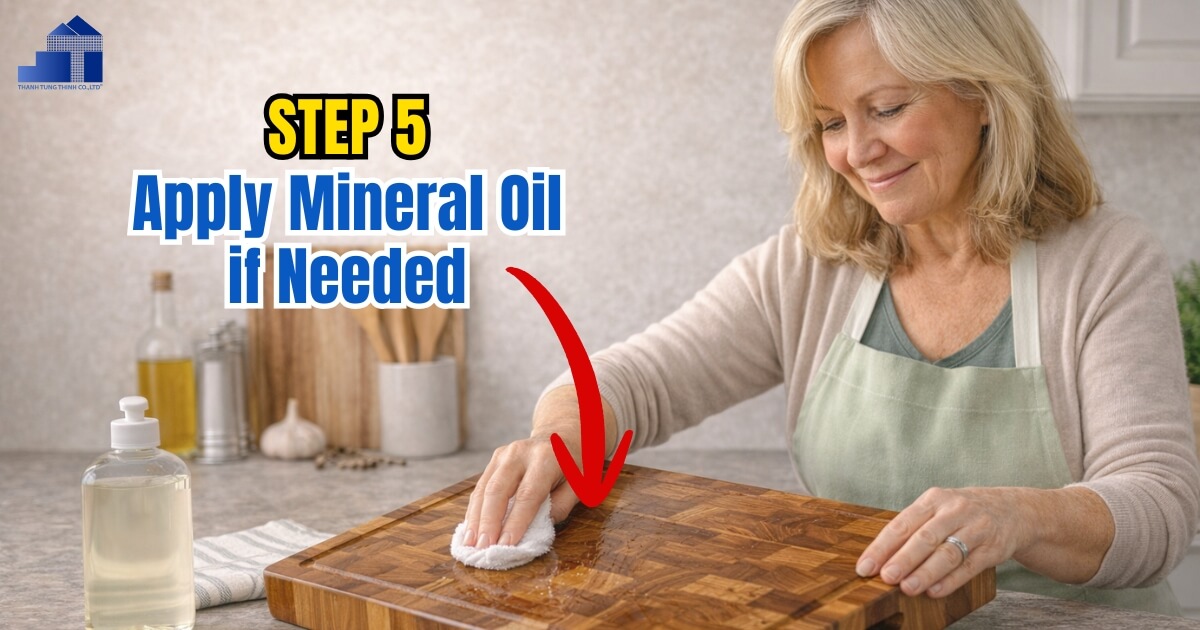
Step 5 – Apply Mineral Oil if Needed
If the board looks dry, rough, or faded after cleaning, apply a thin layer of food-grade mineral oil once it is fully dry. This helps restore moisture to the wood, prevents cracking, and keeps the surface in better condition over time.
A well-oiled board is not only more attractive, but also easier to maintain in the long run. For anyone regularly using wooden cutting board for meat, this final maintenance step can make a noticeable difference in durability.
How to Clean a Wooden Cutting Board After Chicken
Cleaning a wooden cutting board after raw chicken requires extra care because poultry juices can spread easily and increase the risk of cross-contamination. Wash the board immediately with warm to hot water and mild dish soap, scrubbing the entire surface, especially around knife marks and edges.
After that, sanitize the board with a food-safe solution, rinse it well, and dry it thoroughly with a clean towel before standing it upright to air dry completely. Because raw poultry can spread bacteria easily, the CDC recommends thoroughly washing hands, utensils, and food-contact surfaces after handling chicken (CDC Food Safety).
You should also clean any nearby surfaces, utensils, and knives that came into contact with the chicken, since bacteria can spread beyond the board itself. Just as importantly, wash your hands with soap before touching other ingredients. If you follow this routine, using a wooden cutting board for raw chicken can be safe and practical in a home kitchen.

Read more: How to Clean Wooden Cutting Board Safely (After Chicken, Raw Meat, and Everyday Use)
How to Remove Odors and Stains From a Wooden Cutting Board
Even with proper washing, meat can leave behind stubborn smells or discoloration. Here’s how to restore freshness.
Removing Raw Meat Odors
To remove raw meat odors from a wooden cutting board, sprinkle baking soda over the surface and scrub gently with a damp sponge. For stronger smells, rub the board with coarse salt and half a lemon, then rinse with warm water and dry it thoroughly. This helps freshen the board after raw meat on wooden cutting board use without damaging the wood.
Sprinkle coarse salt over the board, then rub it gently with half a lemon to loosen residue and freshen the surface. After that, rinse with warm water and dry the board thoroughly. This method works well for removing light odors and keeping the wood smelling clean.

Removing Stubborn Stains
Stubborn stains on a wooden cutting board are best treated as soon as possible, before they settle deeper into the wood. A small amount of baking soda or hydrogen peroxide can help lift discoloration from the surface without being too harsh when used carefully.
Apply the cleaner to the stained area, let it sit briefly, then scrub gently with a soft sponge or cloth. Rinse with warm water and dry the board thoroughly to prevent moisture from soaking into the wood.
What You Should Never Use on Wooden Cutting Boards
Some cleaning habits do more harm than good.
Avoid:
- Bleach in high concentrations
- Steel wool
- Dishwasher cleaning
- Long soaking in water
These methods weaken wood fibers and shorten the board’s life.
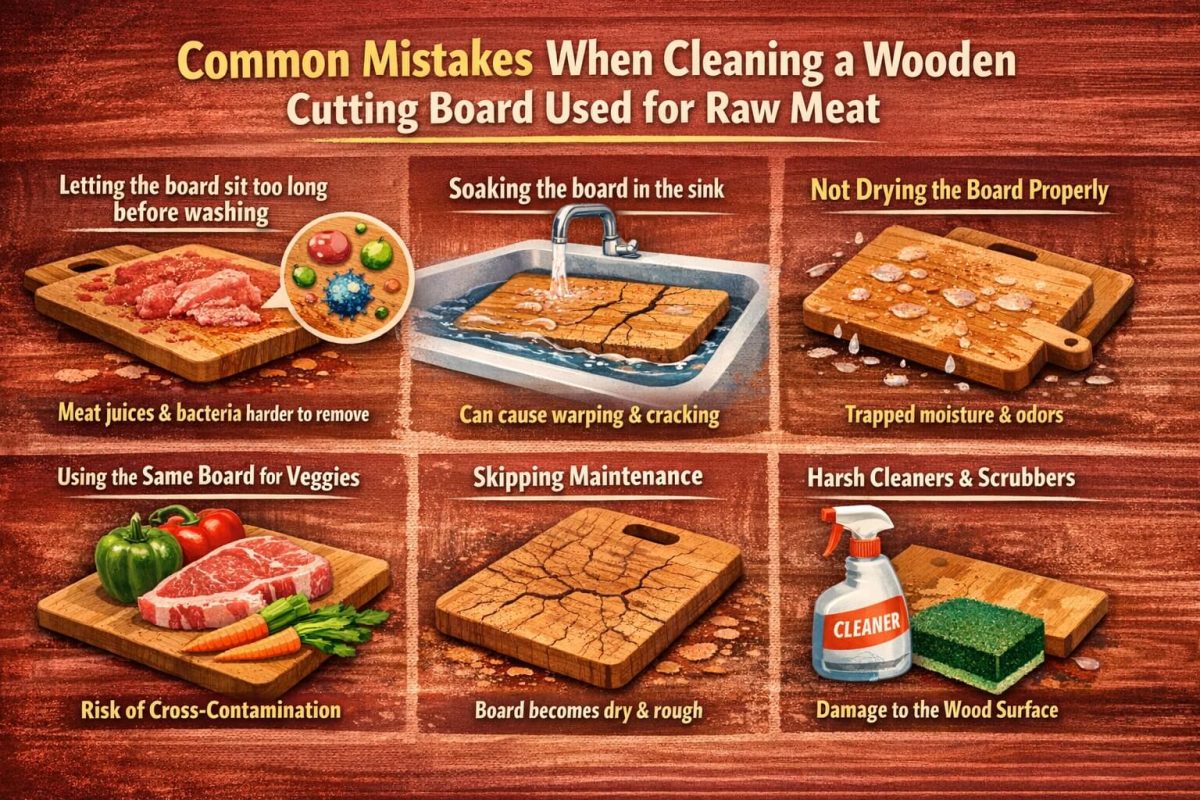
Common Mistakes When Cleaning a Wooden Cutting Board Used for Raw Meat
- Letting the board sit too long before washing can make meat juices, grease, and bacteria harder to remove.
- Soaking the board in the sink can cause the wood to swell, crack, or warp over time.
- Not drying the board properly can leave moisture trapped inside the wood and lead to odors or damage.
- Using the same board for vegetables without cleaning it first increases the risk of cross-contamination.
- Skipping regular maintenance can make the board dry, rough, and more likely to absorb stains and smells.
- Using harsh cleaners or abrasive scrubbers can damage the wood surface and shorten the board’s lifespan.
How Often Should You Deep Clean and Oil a Wooden Cutting Board?
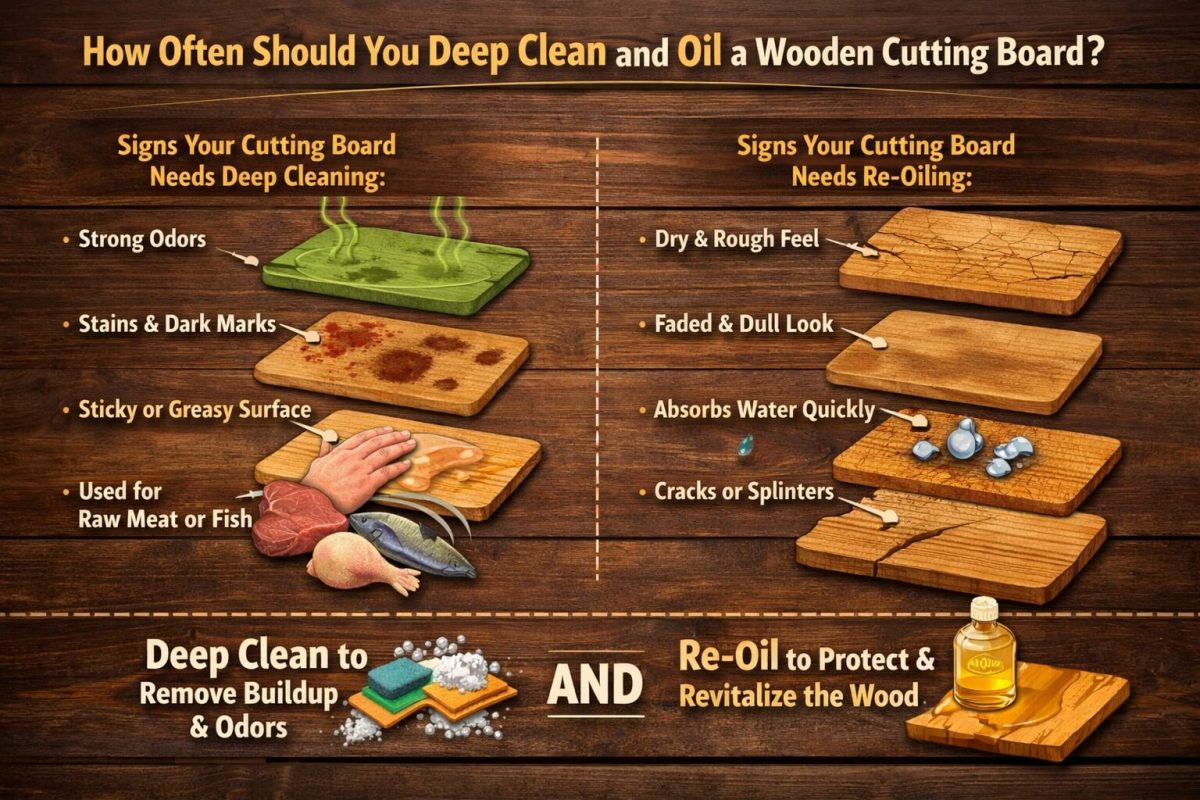
If your cutting board starts to hold onto strong smells, shows visible stains, feels sticky, or has dark marks settling into knife grooves, it likely needs a deeper cleaning. These signs usually mean that regular washing is no longer enough to fully remove buildup from the surface, especially after repeated use with raw meat, chicken, or fish.
If the board looks dry, feels rough, has a faded appearance, or absorbs water almost immediately, it likely needs re-oiling. Applying food-grade mineral oil helps restore moisture, protect the wood from cracking, and keep the surface in better condition over time.
Expert Tip – Safe Kitchen Workflow When Using Wooden Cutting Boards for Meat
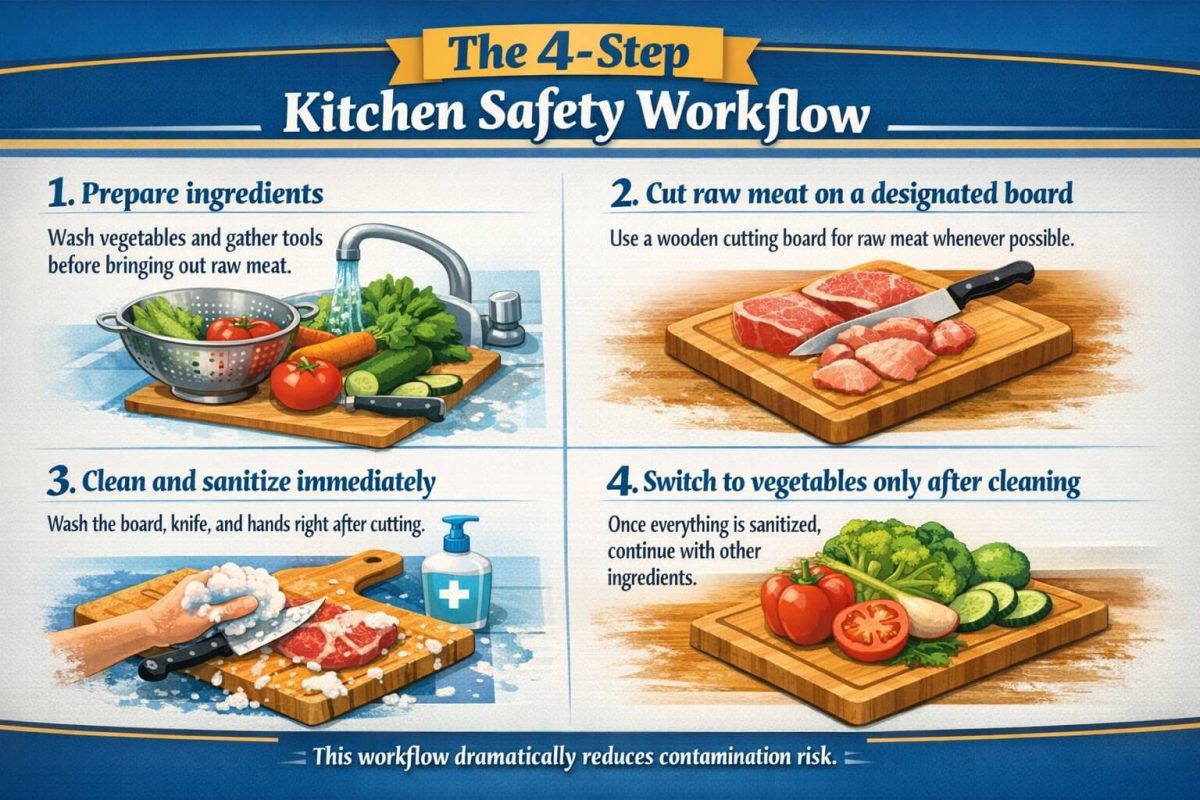
A clean board is important, but workflow matters just as much.
The 4-Step Kitchen Safety Workflow
Prepare ingredients – Wash vegetables and gather tools before bringing out raw meat.
Cut raw meat on a designated board – Use a wooden cutting board for raw meat whenever possible.
Clean and sanitize immediately – Wash the board, knife, and hands right after cutting.
Switch to vegetables only after cleaning – Once everything is sanitized, continue with other ingredients. This workflow dramatically reduces contamination risk.
Pro Maintenance Tips to Extend Board Lifespan
To extend the life of a wooden cutting board, keep it dry, oil it regularly with food-grade mineral oil, and store it upright so air can circulate around both sides. Avoid soaking it in water, putting it in the dishwasher, or exposing it to extreme heat, as these habits can cause cracking, warping, and surface damage over time.
If the board develops rough spots or shallow knife marks, light sanding can help refresh the surface and keep it in better condition for long-term use.
FAQ – Wooden Cutting Board and Raw Meat Safety
Is a wooden cutting board safe for raw meat?
Yes. With proper cleaning and drying, a wooden cutting board can safely handle raw meat preparation.
Can you cut raw chicken on a wooden cutting board?
Yes, you can cut raw chicken on a wooden cutting board, but thorough cleaning afterward is essential.
Can the same wooden board be used for meat and vegetables?
It can – but only after washing and sanitizing the board completely to prevent cross-contamination.
What is the best wooden cutting board for raw meat?
Hardwoods such as maple, walnut, or teak are ideal because they resist deep knife grooves and absorb less moisture.
When should you replace a wooden cutting board?
Replace the board when:
- Deep cracks appear
- Warping becomes severe
- Odors persist despite cleaning
Conclusion – The Best Way to Keep Your Wooden Cutting Board Clean and Safe
A wooden cutting board is not the fragile, bacteria-ridden surface many people fear. In fact, with proper care, it can be one of the most reliable tools in the kitchen.
The formula is simple:
- Clean immediately after raw meat preparation
- Wash with soap and hot water
- Sanitize occasionally
- Dry thoroughly
- Maintain the wood with mineral oil
Follow these habits and your wooden cutting board raw meat preparation routine will remain safe, hygienic, and efficient – meal after meal.
Want a cleaner, safer kitchen? Visit www.thanhtungthinh.com for more wooden cutting board care tips, product recommendations, and kitchen essentials.

