


Table of Contents
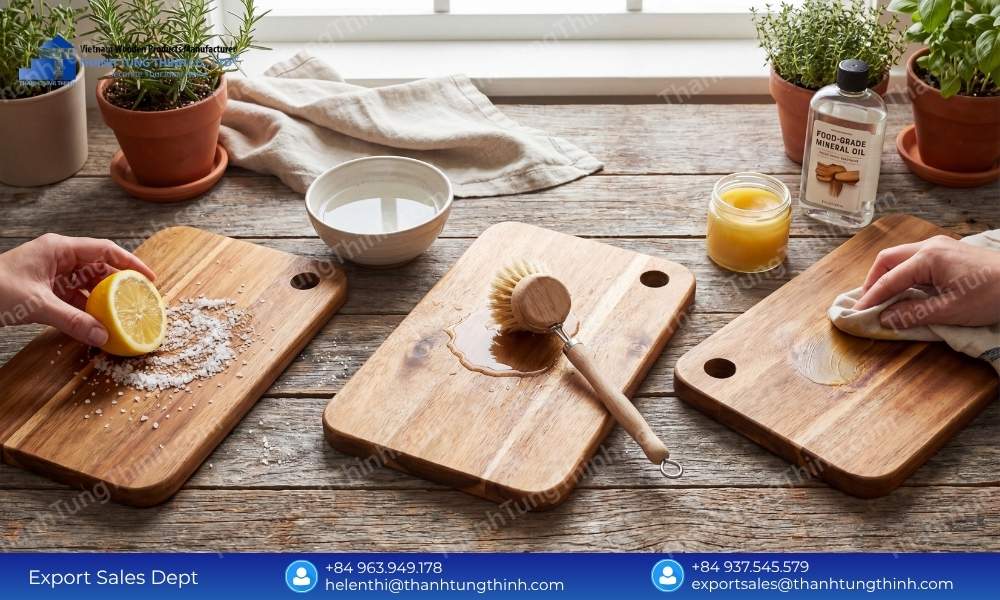
Acacia wood is highly celebrated for its rich grain patterns, durability, and moisture resistance, making it a prized choice for modern kitchen countertops. However, because it is a premium natural hardwood, it requires thoughtful, non-toxic care to prevent premature cracking, warping, and splintering caused by harsh conventional dish soaps and chemical sanitizers.
If you are wondering how to clean acacia wood cutting board surfaces safely, discovering green cleaning methodologies is essential. For eco-conscious home cooks and families prioritizing a non-toxic lifestyle, utilizing simple, plant-based, and kitchen-pantry ingredients offers the perfect solution.
By adopting these sustainable, eco-friendly maintenance techniques to sanitize and deodorize your wooden kitchenware, you effectively protect your family’s health, preserve the wood’s natural oils, and ensure your favorite acacia cutting board remains a gorgeous, functional heirloom for generations.
Why Choosing Natural Methods for Your Acacia Wood Cutting Board Matters
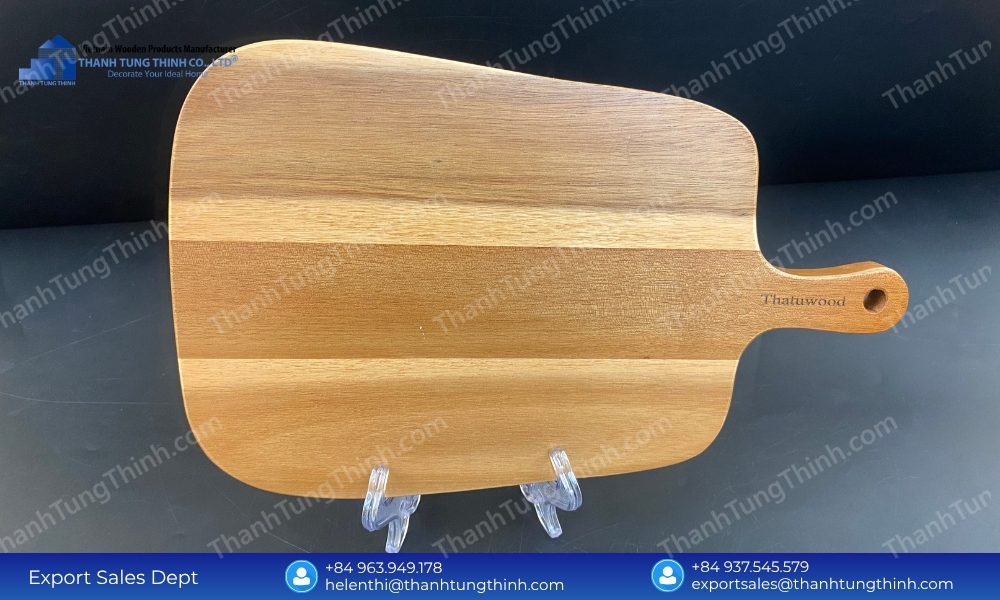
Maintaining a hygienic, eco-friendly kitchen requires careful attention, especially when caring for dense hardwoods. Unlike synthetic plastic, a high-quality acacia board possesses natural antimicrobial properties. However, because wood is a porous, living material, harsh traditional commercial detergents aggressively strip away its inherent moisture and protective oils, leading to warping, cracking, and chemical leaching into family meals.
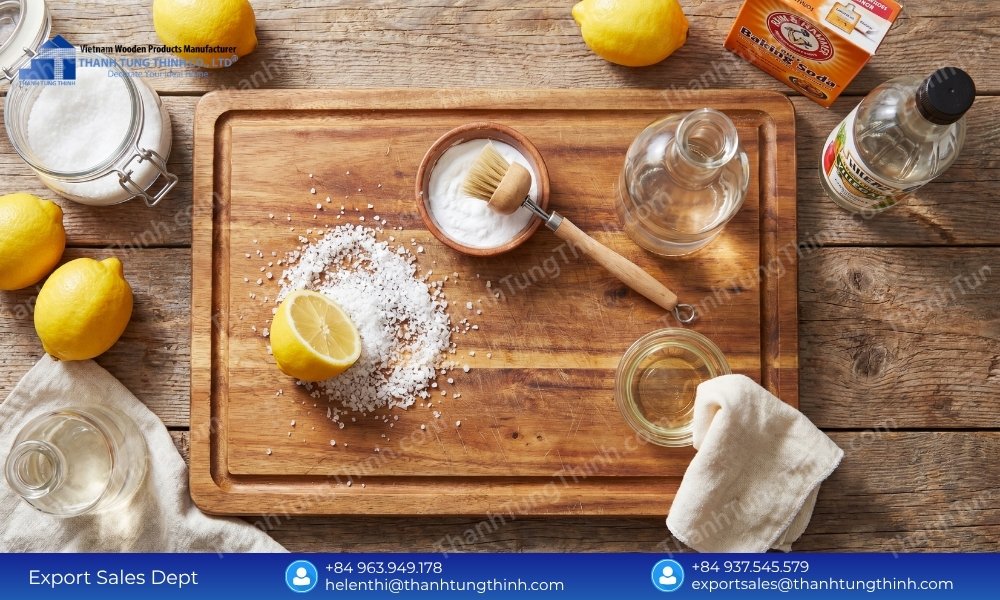
Learning how to clean acacia wood cutting board surfaces naturally solves this problem. Utilizing organic acids and mild abrasives—like lemon juice, coarse sea salt, and distilled white vinegar—effectively neutralizes harmful bacteria without degrading the wood matrix.
Embracing these eco-friendly methods guarantees a pristine, food-safe preparation surface, protects the structural integrity of your wooden utensils, and supports global sustainability by reducing chemical runoff into our water systems.
Daily Cleaning Routine: How to Clean Acacia Wood Cutting Board Surfaces After Light Use
To keep your wooden board in pristine condition, consistency is key. A light daily routine prevents food particles, juices, and moisture from penetrating deep into the wood grain, eliminating the need for aggressive scrubbing later on. Follow these simple steps after every light food preparation session, such as slicing bread, dicing vegetables, or serving fruits.
Step 1: Immediate Rinsing with Lukewarm Water
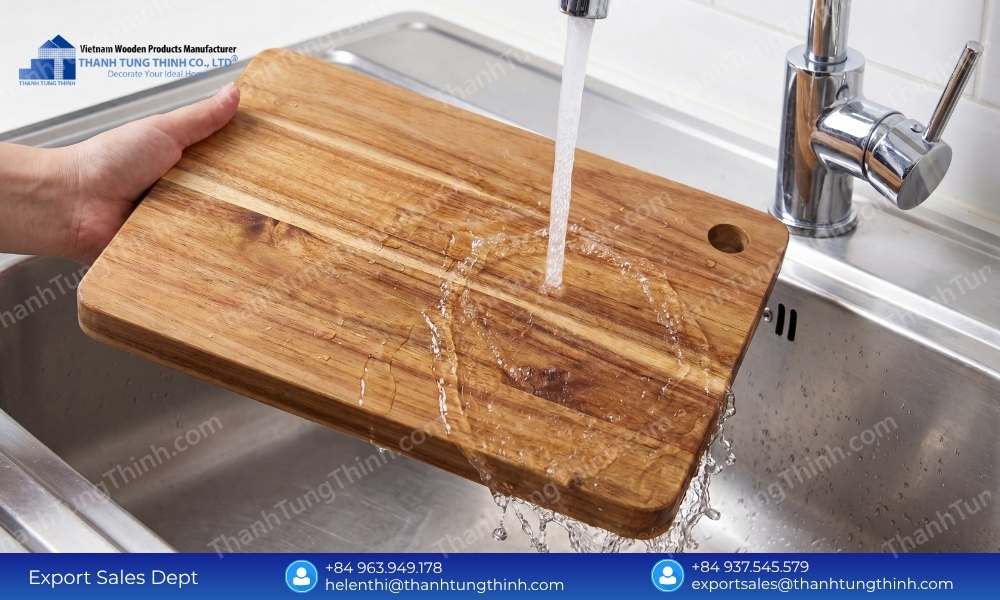
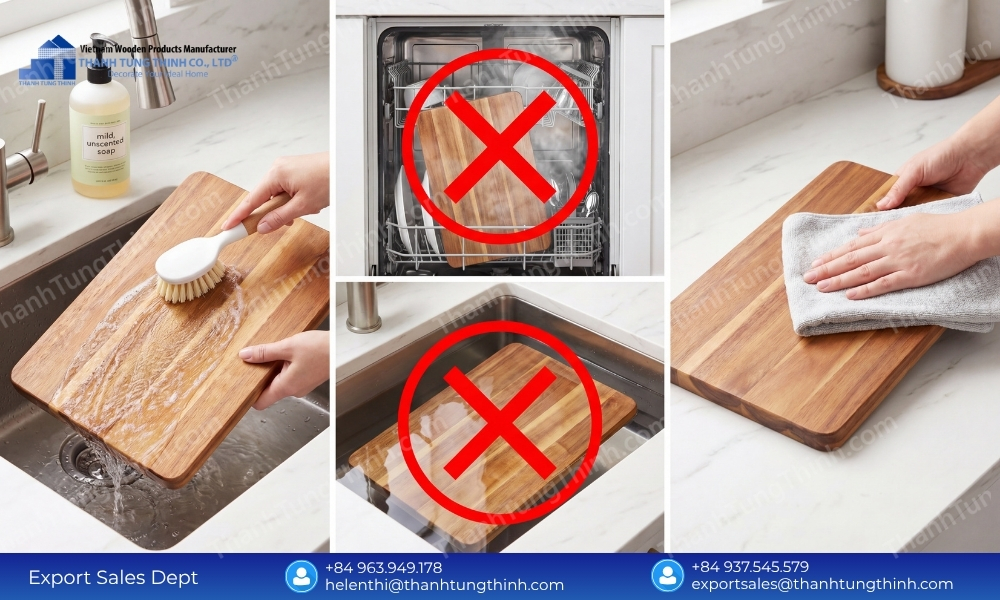
The moment you finish using your board, carry it to the sink and rinse both sides under running, lukewarm water. Avoid using hot water, as excessive heat can cause the wood fibers to expand too rapidly, leading to structural stress and potential warping over time. Never submerge or let your board soak in a sink filled with water.
Step 2: Applying a Mild, Plant-Based Dish Soap
If your food preparation involved slight oils or natural sugars, apply a tiny drop of an eco-friendly, plant-based, fragrance-free dish soap onto a soft sponge. Gently wipe down the entire surface of the acacia wood cutting board, following the direction of the natural wood grain to lift away any superficial residue without scratching the exterior.
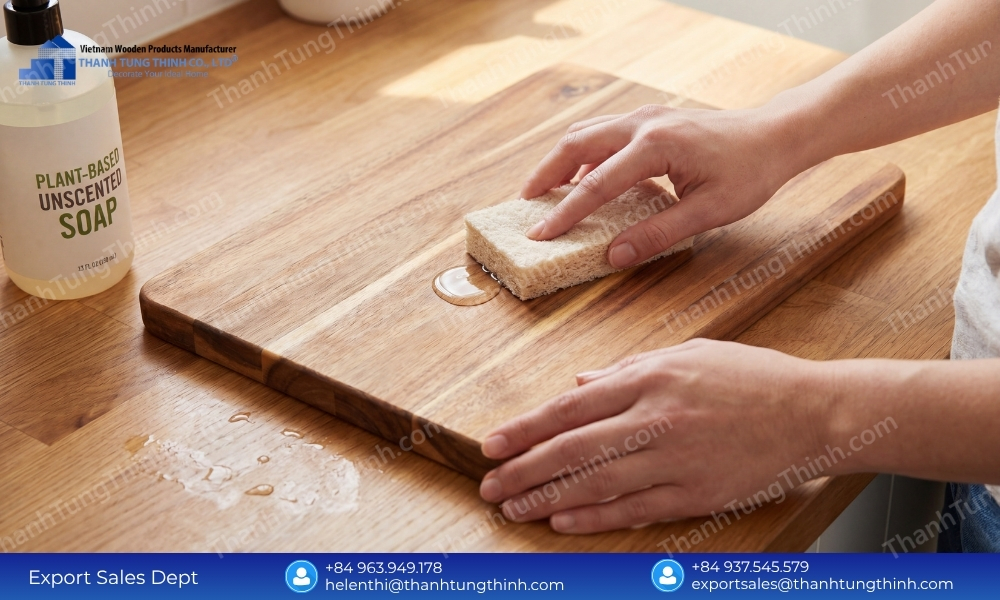
Step 3: Thorough Scraping and Rinsing
Use a clean, damp cloth or a silicone bench scraper to remove any remaining soapy residue. Rinse the board quickly under cool water to ensure no soap film is left behind, as residual soap can dull the vibrant colors of your acacia wood over time.
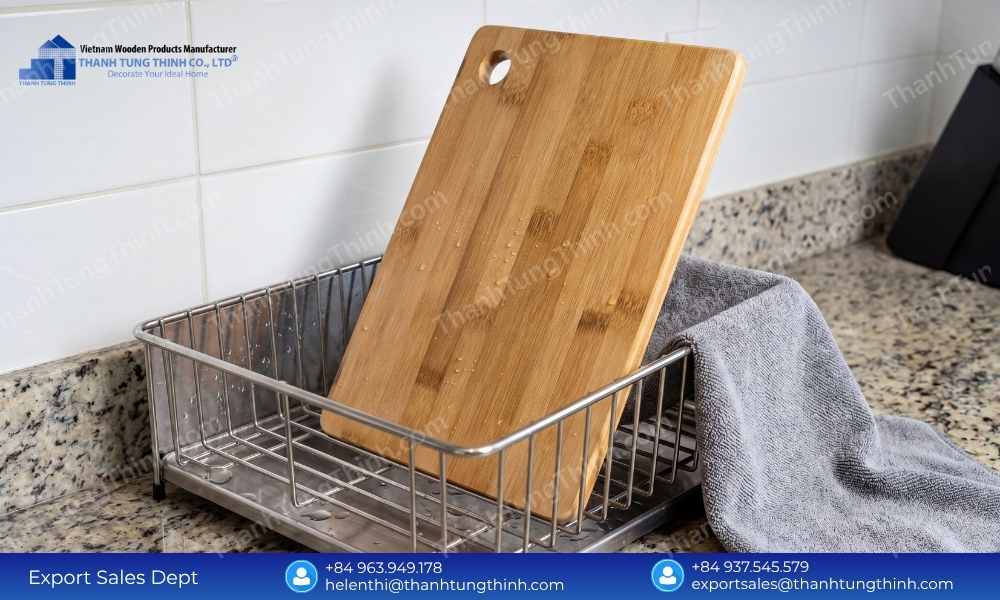
Step 4: Upright Air Drying
This is perhaps the most crucial step in the daily care process. Use a dry, lint-free microfiber towel to blot away as much standing surface water as possible. Afterward, prop the board up vertically on a dish rack or lean it securely against your kitchen backsplash.
Drying the board upright ensures that both sides receive equal airflow, allowing the wood to dry uniformly and preventing moisture from pooling underneath, which is a leading cause of mold growth and wood splitting.
| Daily Cleaning Step | Recommended Action | Avoid at All Costs |
| Rinsing | Use lukewarm, flowing water immediately after use. | Soaking, submerging, or filling the sink with water. |
| Soap Application | Use a minimal amount of plant-based, eco-friendly soap. | Harsh chemical detergents or industrial degreasers. |
| Scrubbing Tool | Use a soft cellulose sponge or microfiber cloth. | Steel wool, abrasive metal pads, or wire brushes. |
| Drying Method | Stand vertically in a well-ventilated area to air-dry. | Laying flat on a wet counter or putting in the dishwasher. |
Deep Cleansing Methods: How to Clean Acacia Wood Cutting Board Stains and Odors Naturally
Even with meticulous daily maintenance, cooking ingredients like raw garlic, pungent onions, vibrant beets, and juicy steaks can leave behind stubborn stains and strong, lingering odors. When standard washing falls short, it is time to deploy deep-cleansing kitchen staples that are tough on bacteria but completely gentle on your acacia wood cutting board.
The Dynamic Duo: Coarse Salt and Fresh Lemon Juices
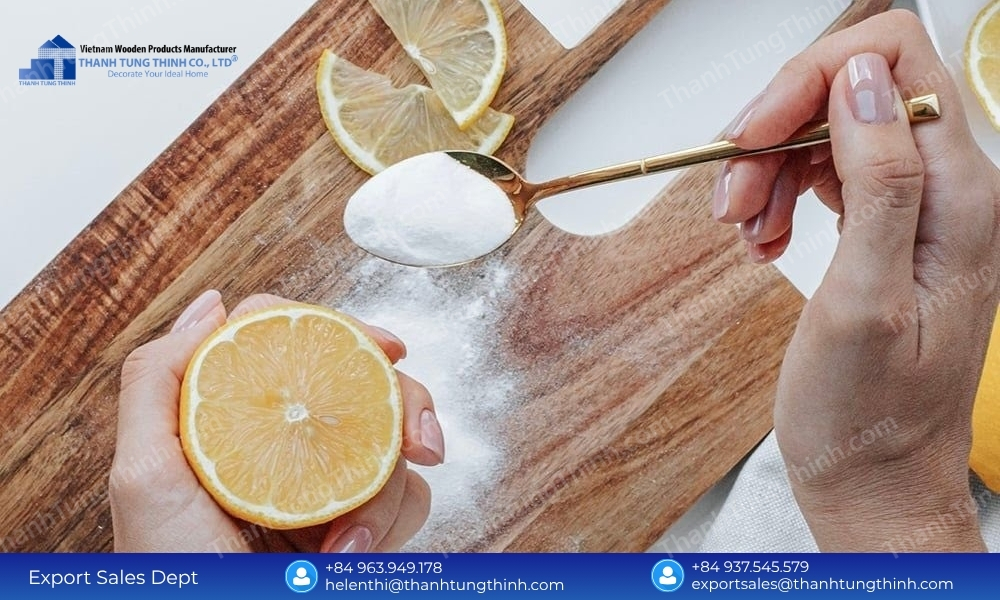
When it comes to mastering how to clean acacia wood cutting board surfaces naturally, nothing beats the synergy of coarse sea salt and fresh lemon juice. Lemon juice contains natural citric acid, which acts as an organic disinfectant and a powerful bleaching agent to lift unsightly food stains. Meanwhile, coarse salt acts as a gentle, non-destructive abrasive that pulls deep-seated impurities out of the knife scores.
- Generous Sprinkling: Ensure your board is completely dry, then sprinkle a thick, even layer of coarse kosher salt or sea salt across the entire surface.
- The Citrus Scrub: Slice a fresh lemon in half. Take one half and press it firmly down onto the salted board, flesh side down. Scrub the board thoroughly, squeezing gently to release the lemon juice as you move in circular motions.
- The Reaction Time: Allow the salt and lemon slurry to sit undisturbed on the board for 10 to 15 minutes. As it sits, the salt will begin to turn grey or take on the color of the lifted stains, proving that it is drawing out deeply embedded organic matter.
- Clean Rinse: Use a flexible bench scraper or a clean spatula to scrape away the discolored salt paste. Give the board a fast rinse under lukewarm water and dry it upright.
Neutralizing Pungent Food Smells with Baking Soda Paste
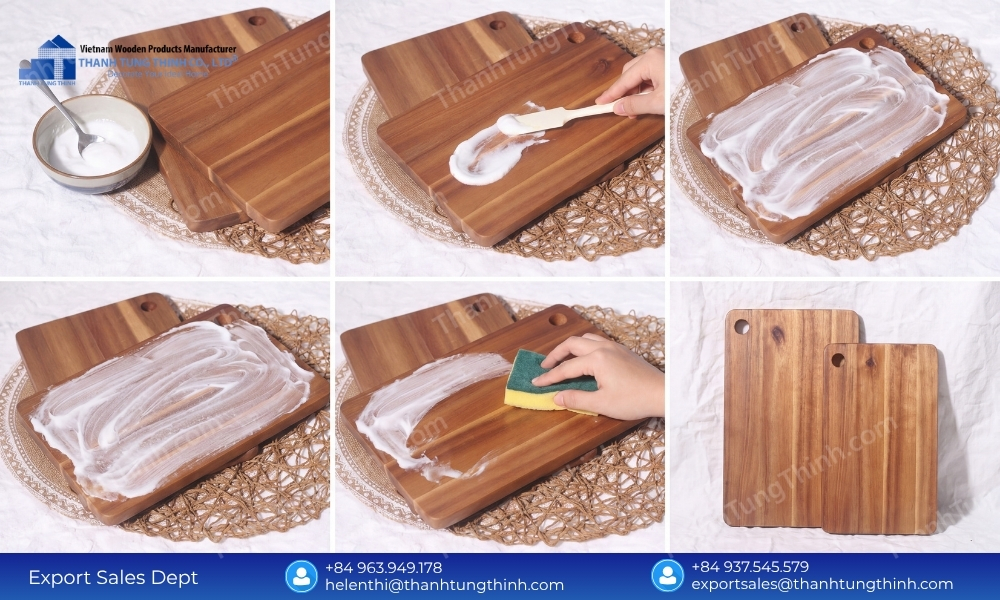
Baking soda (sodium bicarbonate) is a celebrated natural deodorizer that works by neutralizing both highly acidic and alkaline odor molecules. If your board has absorbed a stubborn aroma from chopping shallots or dicing fish, baking soda will quickly refresh the wood fibers.
- Creating the Paste: Mix two tablespoons of pure baking soda with one tablespoon of filtered water in a small bowl until it forms a smooth, spreadable paste.
- Application: Rub the paste directly onto the smelly areas of your acacia wood cutting board using your fingertips or a soft cloth.
- Resting Period: Let the paste rest on the wood for 5 to 8 minutes, allowing the compound to absorb the trapped volatile organic compounds responsible for the bad odor.
- Wiping Away: Wipe the paste away using a damp sponge, rinse with cool water, and ensure it dries completely in an upright position.
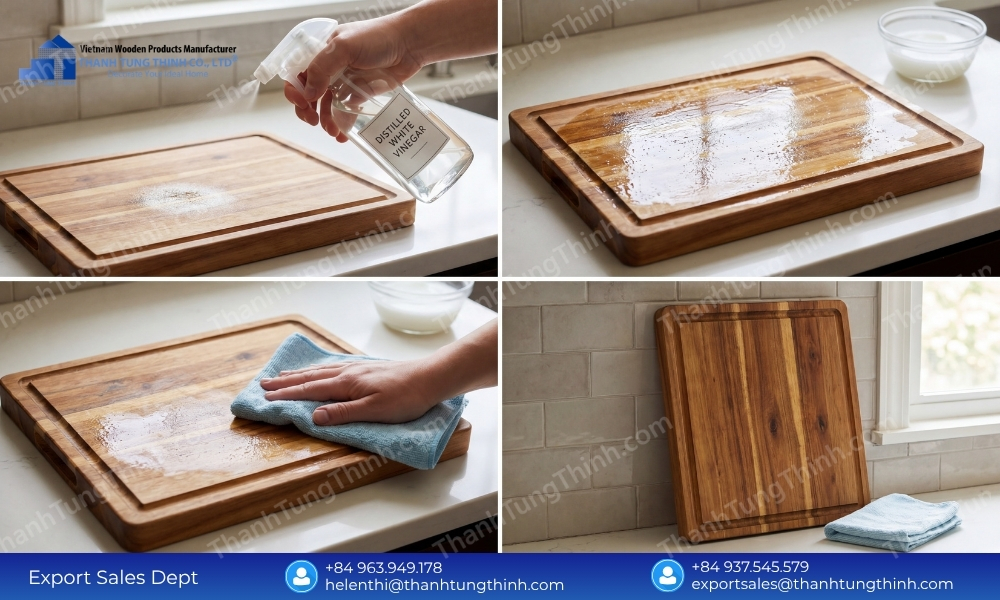
Disinfecting with Distilled White Vinegar
For an added layer of sanitary protection, especially after working with raw poultry or seafood, distilled white vinegar is an exceptional eco-friendly disinfectant. The acetic acid found in standard household vinegar is incredibly effective at killing household germs and inhibiting mold development without leaving behind toxic chemical residues.
To use this method, fill a clean glass spray bottle with undiluted, distilled white vinegar. Give your washed acacia wood cutting board a light, uniform misting across its entire surface. Let the vinegar sit for 3 to 5 minutes to neutralize surface pathogens. Finally, wipe the board down with a clean, damp cloth and set it aside to dry thoroughly. The strong vinegar scent will evaporate completely within a few minutes, leaving behind a perfectly sanitized, scent-free preparation surface.
Restoring and Conditioning: Long-Term Preservation of Your Acacia Wood Cutting Board
Cleaning is only half the battle when learning how to clean acacia wood cutting board tools. Because washing inevitably removes a small amount of the wood’s moisture, you must regularly replenish these oils to prevent the wood from drying out, cracking, or becoming dull. Conditioning creates a protective, hydrophobic barrier that prevents future liquids, stains, and bacteria from sinking deep into your premium acacia wood cutting board.
Selecting the Right Eco-Friendly Conditioning Oils
Never use culinary vegetable oils like olive oil, canola oil, or sunflower oil to condition your cutting boards. These fats oxidize quickly when exposed to air, turning rancid and creating a sticky, foul-smelling layer that breeds harmful bacteria. Instead, choose stable, food-safe, and sustainable options:
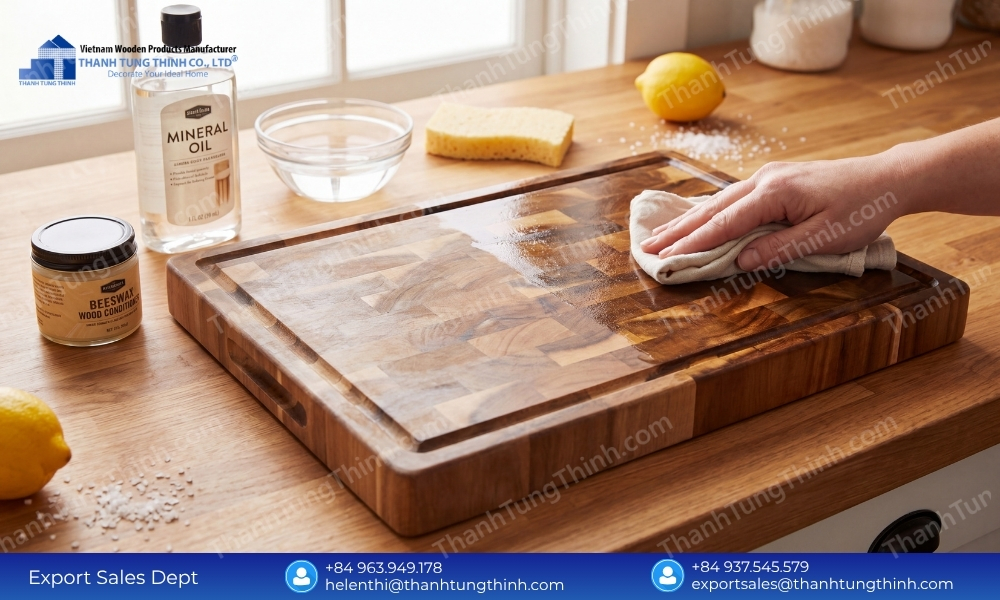
- Food-Grade Pure Mineral Oil: The industry standard for wooden kitchenware. It is completely flavorless, odorless, highly stable, and will never spoil or turn rancid over time.
- Pure Beeswax Blends: Mixing mineral oil with organic beeswax creates a luxurious, thick cream. Beeswax provides an extra layer of water resistance and fills in minor knife scratches beautifully.
- Fractionated Coconut Oil: Unlike regular coconut oil, fractionated coconut oil has had its long-chain fatty acids removed, leaving a completely shelf-stable oil that remains liquid and won’t go rancid.
Step-by-Step Oil Conditioning Application
To properly oil your board, ensure it has dried completely for at least 24 hours after its last cleaning session to prevent trapping moisture inside the wood cells. Pour a generous amount of your chosen food-grade oil directly onto the center of the acacia wood cutting board.
Using a clean microfiber cloth or a dedicated applicator pad, spread the oil across the entire surface, ensuring you cover the front, back, and all four outer edges. Rub the oil in circular motions, pressing firmly to help it penetrate deep into the dense acacia wood grain.
Once fully coated, let the board sit flat on a clean surface for 4 to 8 hours (or overnight) to absorb the oil.
In the morning, take a dry, clean cloth and vigorously buff the board to remove any unabsorbed, excess oil. Your board will be left with a rich, glowing luster and excellent protection against future liquid absorption.
Essential Safety Rules: What to Avoid with Acacia Wood Cutting Boards
Even the highest quality acacia wood cutting board can suffer irreversible damage if exposed to improper cleaning environments. To maximize the lifespan of your kitchenware and avoid warping, splitting, or mold growth, memorize these crucial kitchen rules:
- Never Place in a Dishwasher: The combination of intense heat, prolonged water submersion, and aggressive chemical detergents inside a dishwasher will completely destroy natural hardwood in a single cycle, causing severe cracking and warping.
- Avoid Submerging or Soaking: Allowing a wooden board to sit in a sink filled with water encourages the wood cells to absorb massive amounts of moisture, expanding the wood unevenly and ruining its structural integrity.
- Keep Away from Direct Heat Sources: Do not store your board near a hot stovetop, oven, or under direct sunlight, as rapid temperature shifts can cause the wood to dry out unevenly and split.
- Do Not Use Bleach or Ammonia: These harsh chemicals break down the natural lignin fibers that hold the wood together, causing the board to become brittle, structurally weak, and chemically contaminated.
Elevate Your Sustainable Kitchen with Premium Wooden Kitchenware
Mastering how to clean acacia wood cutting board tools naturally with earth-friendly alternatives like lemon and baking soda safeguards your family’s health while preserving your kitchen essentials. Beyond proper care, sourcing wooden kitchenware from manufacturers who prioritize sustainability, craftsmanship, and fair-trade practices is vital.
Thanh Tung Thinh, a premier manufacturer and global exporter based in Vietnam, steps in to elevate your culinary space. Specializing in high-quality, responsibly harvested wooden kitchenware, Thanh Tung Thinh creates magnificent acacia cutting board collections that blend traditional artistry with strict international quality standards. Every piece supports global reforestation and green manufacturing practices.
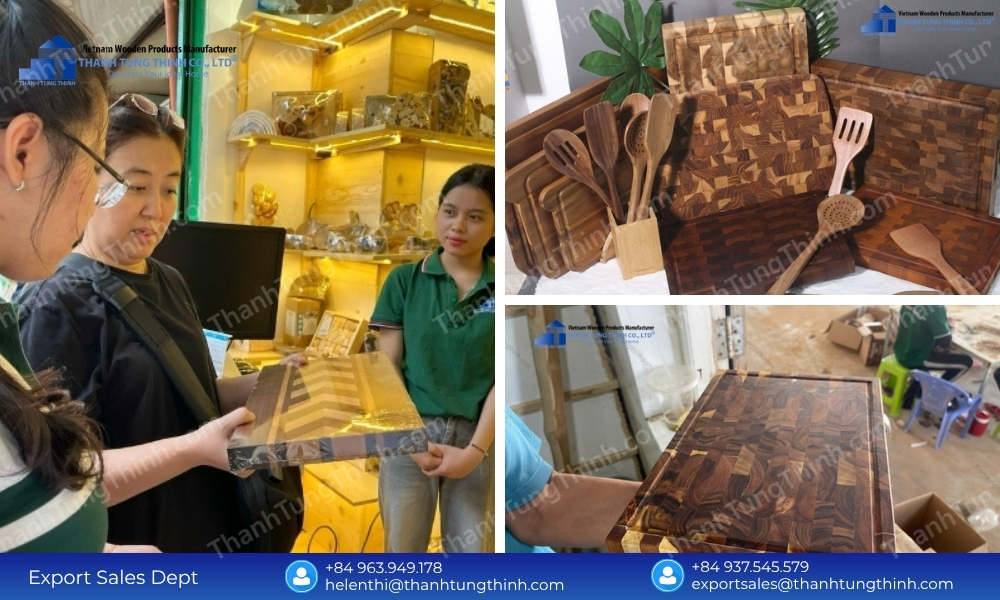
Whether you are an eco-conscious home chef looking for a durable, non-toxic prep surface or a global business seeking a reliable wholesale partner for premium wooden goods, Thanh Tung Thinh offers exceptional, eco-friendly products tailored to your needs.
📩 Email: [email protected]
🌐 Website: https://thanhtungthinh.com/
📌 Pinterest: https://www.pinterest.com/THATUWOOD/
📌 Youtube: https://www.youtube.com/@thanhtungthinhmanufacturer
📌 Facebook: https://www.facebook.com/thanhtungthinh
📌 Linkedin: https://www.linkedin.com/company/thanh-tung-thinh-co-ltd
Frequently Asked Questions About Cleaning Acacia Wood Cutting Boards Naturally
1. How often should I deep clean and oil my acacia wood cutting board?
For a household that cooks daily, a deep natural cleaning with lemon and salt should be performed once every two weeks. Oil conditioning should happen once a month, or whenever the wood begins to look dry, pale, and water stops beading up on its surface.
2. Can I use hydrogen peroxide to sanitize my acacia wood cutting board?
Yes, 3% food-grade hydrogen peroxide is an excellent eco-friendly sanitizer. It effectively kills bacteria and viruses through oxidation and breaks down harmlessly into water and oxygen, making it completely non-toxic for kitchen applications.
3. What should I do if my acacia wood cutting board develops mold?
If you notice small black spots of mold, create a thick paste of baking soda and a few drops of white vinegar. Scrub the affected area vigorously with a stiff-bristled brush. Rinse, dry completely, and apply a light mist of hydrogen peroxide to eliminate any remaining spores. Once dry, sand the area lightly and re-oil the board immediately.
4. Why is my acacia wood board rough to the touch after cleaning?
This is a natural phenomenon known as “raising the grain.” When dry wood comes into contact with moisture, the loose wood fibers absorb water and stand upright. To fix this, wait for the board to dry completely, sand it down gently with fine 220-grit sandpaper until smooth, wipe away the dust, and apply a fresh coat of conditioning oil.

