


Table of Contents
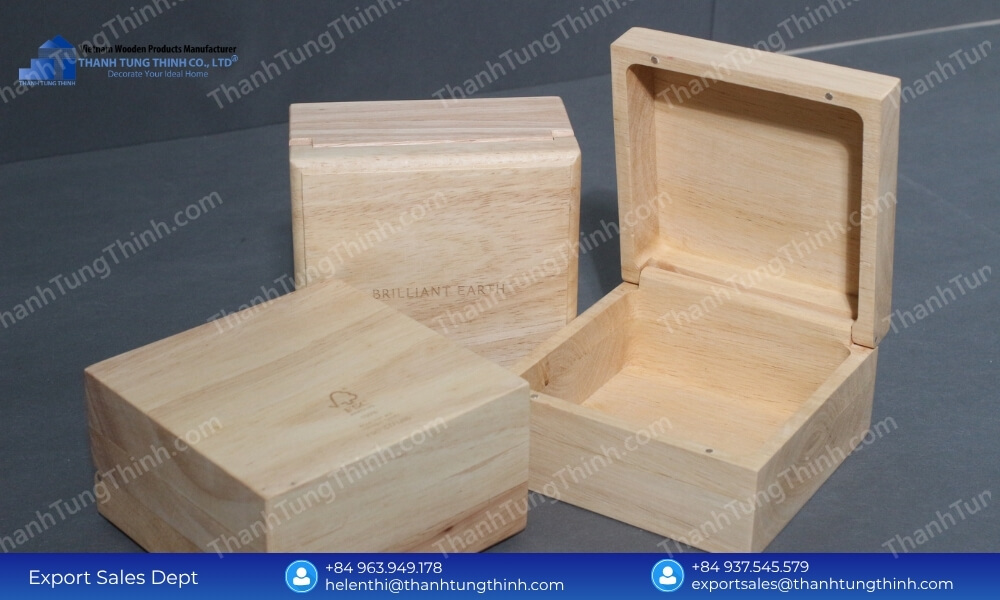
When dealing with high-end merchandise, the packaging must flawlessly reflect the value of the contents inside. Exquisite Wooden Jewelry Boxes serve as the ultimate presentation and preservation vessel for luxury goods; however, acquiring them consistently, in massive volumes, and without quality degradation requires a profound understanding of industrial factory capabilities.
Delving into the precise wooden jewelry box manufacturing process is not merely an academic exercise it is a mandatory strategic evaluation of your supply chain’s reliability, scalability, and technical competence. An optimized factory floor ensures that whether you order one thousand units or one hundred thousand units, every single hinge, lacquer coat, and velvet insert is executed with mathematical precision.
Decoding the Wooden Jewelry Box Manufacturing Process for B2B Scale
To a B2B procurement specialist, a premium jewelry box is the result of a highly synchronized industrial symphony, where evaluating the specific wooden jewelry box manufacturing process reveals a factory’s true capacity and ability to meet strict enterprise deadlines. Scaling for a global retail rollout requires a perfect equilibrium: factories relying entirely on manual labor cannot scale, while total automation without artisan oversight produces flawed, sterile items lacking a luxury feel.
The most efficient manufacturing lines utilize high-speed industrial machinery for structural components alongside meticulous hand-craftsmanship for final detailing. By analyzing this assembly line capacity stage by stage, B2B buyers can accurately assess risk, forecast lead times, and guarantee both the structural and aesthetic integrity of their bulk investments.
Phase 1: Raw Timber Procurement and Intensive Moisture Control
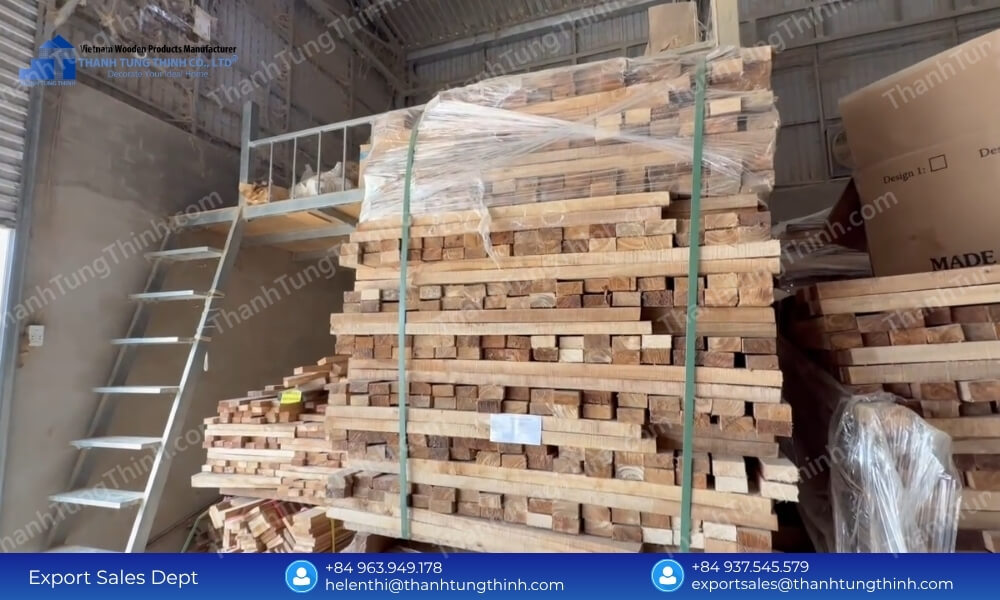
The foundation of manufacturing high-quality wooden jewelry boxes lies in timber stabilization, which targets wood’s natural tendency to absorb and release moisture. Machining raw timber without proper stabilization inevitably leads to catastrophic warping, cracking, or splitting when exposed to different global climates during shipping. To prevent this, industrial factories utilize large-scale, digitally monitored commercial kilns to subject timber—such as walnut, oak, mahogany, or cherry—to a multi-week baking cycle.
This process uniformly reduces the internal moisture content to a strict export standard of 8% to 12%. While this intensive drying phase often creates bottlenecks for ill-equipped suppliers, a high-capacity factory operating multiple advanced kilns continuously ensures an uninterrupted supply of stabilized wood ready for the assembly line.
Phase 2: Precision CNC Milling and Component Calibration
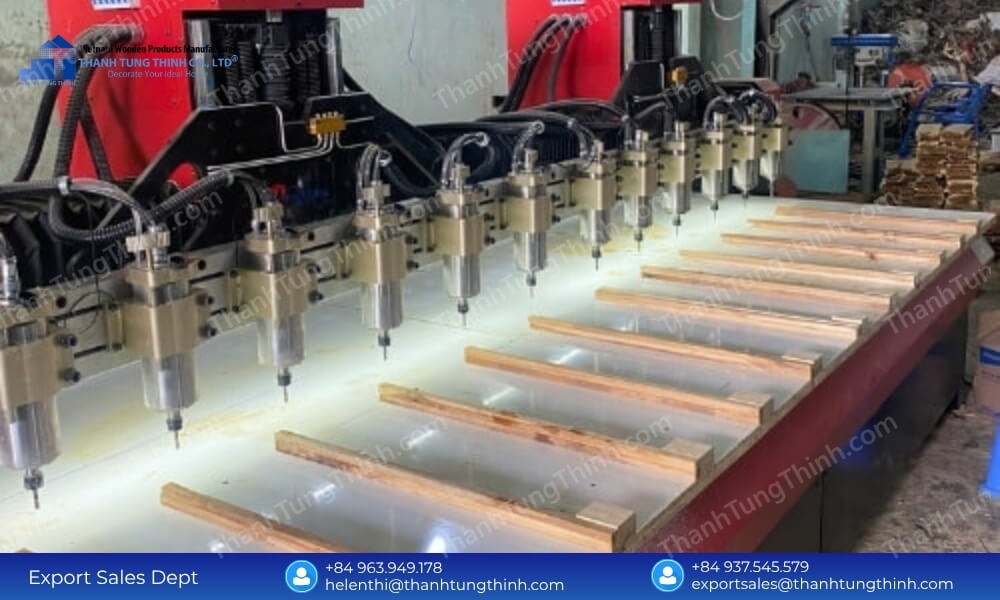
After timber stabilization, the wooden jewelry box manufacturing process transitions to high-tech engineering within the heavy machinery sector. To achieve the tight tolerances necessary for luxury products, modern factory floors utilize multi-axis Computer Numerical Control (CNC) routers and automated panel saws directed by detailed 3D CAD models. This automation ensures sub-millimeter precision and absolute uniformity across tens of thousands of units.
Furthermore, sophisticated nesting software optimizes the cutting layout on each board, drastically reducing raw material waste and driving down per-unit costs for wholesale buyers. Following these primary cuts, specialized routing machines carve out intricate details like hinge mortises, lock grooves, and edge profiles, serving as the core driver of a factory’s overall assembly line capacity.
Phase 3: The Assembly Line – Structural Integrity and Joinery
With precision-cut components ready, the wooden jewelry box manufacturing process enters the assembly phase, where structural integrity depends entirely on joinery quality and industrial adhesives. High-capacity assembly lines pair traditional woodworking joints (such as dovetails, box joints, or reinforced miters) with modern pneumatic clamping systems. Automated dispensers apply exact, metered amounts of high-strength PVA glue or structural epoxies as components move down the conveyor line.
Workers rapidly assemble the boxes and place them into massive, calibrated pneumatic presses that apply uniform pressure to ensure joints dry square, tight, and gap-free. The speed of these pneumatic stations dictates the factory’s overall throughput, enabling a streamlined assembly line to cure thousands of structural shells per day to meet global B2B volume demands without compromising joint strength.
Phase 4: Surface Refinement and Multi-Stage Sanding
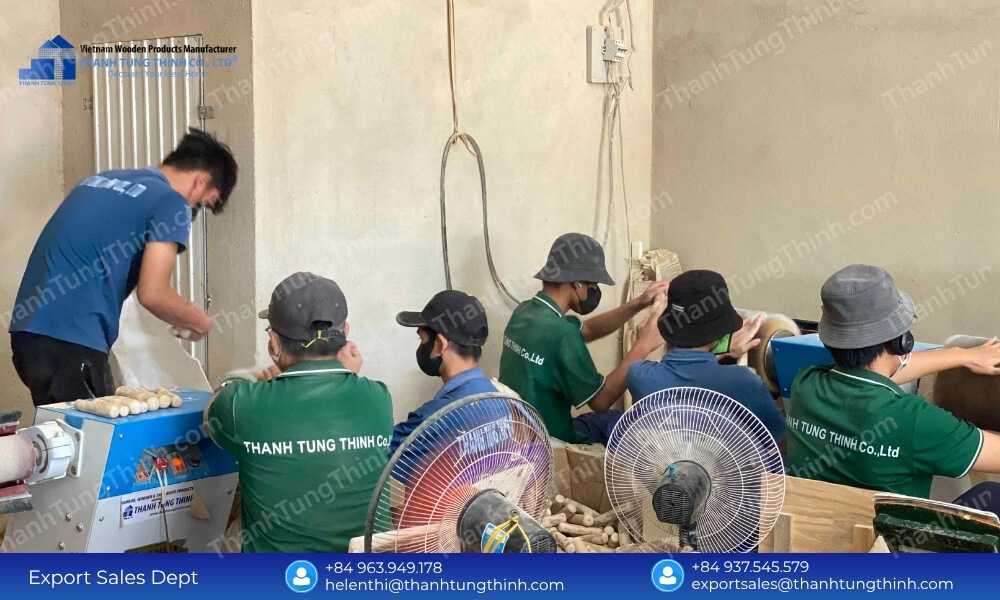
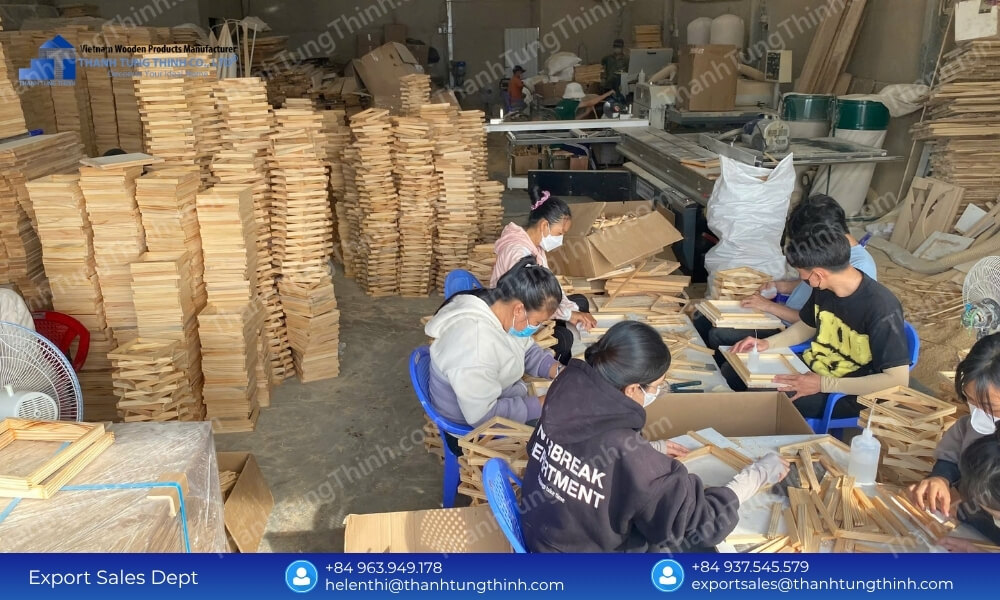
While structural integrity is essential, achieving a luxury tactile experience depends entirely on surface preparation. Within the wooden jewelry box manufacturing process, the sanding phase levels joints and strips away rough fibers by feeding assembled shells through massive, automated wide-belt sanders using progressive abrasive grits.
Because heavy machinery cannot reach intricate internal corners or delicate routed edges, the boxes then move to specialized downdraft sanding tables where skilled technicians use pneumatic orbital sanders and hand-sanding blocks to create a flawless, glass-smooth canvas. Rushing this stage will cause subsequent lacquering to highlight every scratch and imperfection.
To prevent this, high-capacity factories like Thanh Tung Thinh heavily staff and closely monitor their sanding divisions, ensuring high production volumes never compromise the silky, premium feel of the wood.
Phase 5: Advanced Lacquering and Climate-Controlled Curing
Applying the finish is the most sensitive and visually critical stage of the wooden jewelry box manufacturing process, demanding pristine, dust-free surfaces ranging from matte natural oils to high-gloss piano lacquers. To achieve this at scale, advanced factories utilize positive-pressure, climate-controlled clean rooms that pump filtered air to keep airborne contaminants off the wet lacquer.
Automated robotic spray arms or skilled technicians using HVLP guns apply multiple layers: a sealer coat to block wood pores, base coats to build depth or color stains, and top coats to provide the final sheen and UV/moisture protection. Between coatings, the boxes pass through infrared curing tunnels for rapid drying. This continuous-flow finishing line represents a massive infrastructure investment that keeps assembly line capacity high while delivering flawless aesthetics.
Phase 6: Precision Interior Upholstery and Hardware Installation
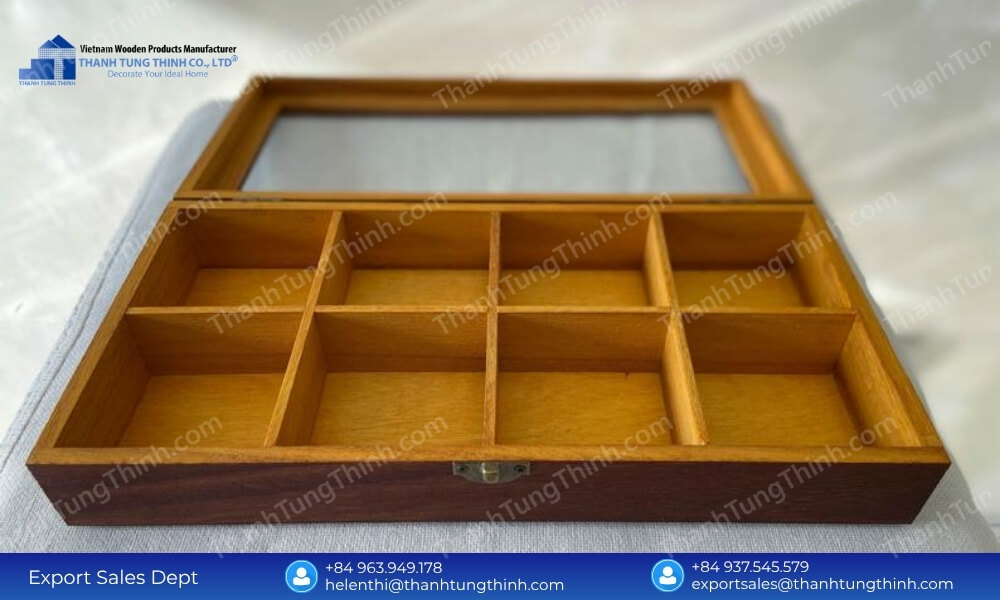
The final step from a finished wooden shell to a functional luxury item happens during the upholstery and hardware installation phase. To protect delicate metals and gemstones from scratches and tarnishing, the wooden jewelry box manufacturing process utilizes automated die-cutting machines to stamp out exact interior shapes from premium materials like anti-tarnish velvet, suede, or high-density EVA foam.
These inserts are adhered to the interior walls, ring rolls, and trays using specialized, odorless adhesives that prevent harmful off-gassing. Simultaneously, hardware such as hinges, clasps, locks, and handles is installed using customized alignment jigs and pneumatic screwdrivers to guarantee straight alignment and a uniform, smooth lid closure. Because misaligned hardware is the top cause of B2B retail returns, this stage demands intense focus and rigorous quality checks.
Rigorous Quality Assurance Protocols in Mass Production
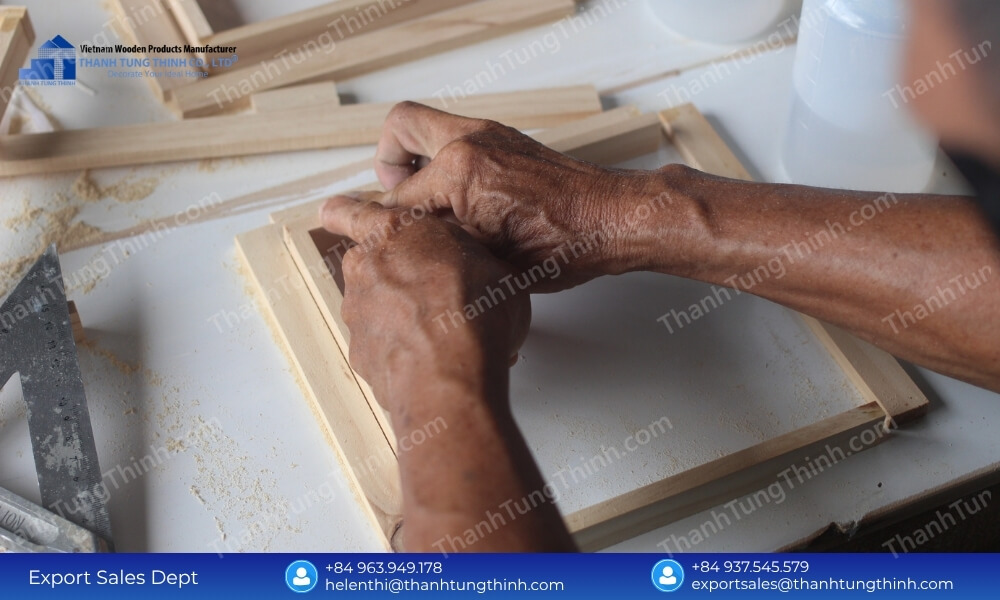
When manufacturing Wooden Jewelry Boxes by the tens of thousands, statistical probability dictates that defects will occur. The strength of a factory’s wooden jewelry box manufacturing process is measured by its ability to catch these defects on the assembly line, long before they are packed into a shipping container.
Industrial QA relies on a strict Acceptable Quality Limit (AQL) framework. A world-class factory implements multi-tiered inline inspections:
- Moisture Audits: Digital moisture meters are used continuously before cutting to verify the timber remains within the 8-12% tolerance.
- Dimensional Checks: Technicians use digital calipers to measure randomly selected CNC-cut parts to ensure the machinery has not drifted out of calibration.
- Hardware Cycle Testing: Lids are mechanically opened and closed hundreds of times to ensure hinges do not squeak, bind, or fail under repeated stress.
- Adhesion and Finish Tests: Cross-hatch tape tests are performed on random samples to guarantee the lacquer has properly bonded to the wood and will not flake off over time.
By embedding these QA checkpoints directly into the flow of the assembly line, defective units are immediately pulled and corrected, ensuring that the B2B buyer receives a flawless bulk shipment.
OEM/ODM Customization Capabilities on the Factory Floor
In the competitive B2B retail space, standing out requires unique branding and proprietary designs. A highly capable factory must be able to adapt its wooden jewelry box manufacturing process to accommodate Original Equipment Manufacturer (OEM) and Original Design Manufacturer (ODM) requests without stalling its assembly line capacity.
Whether an enterprise client requires a specific Pantone color match for the interior velvet, a specialized hidden magnetic closure system, or their corporate logo intricately laser-engraved onto the lid, the factory must execute it flawlessly. Because a direct manufacturer controls the entire production line, implementing these custom variables is seamlessly integrated into the CAD programming and the finishing schedules. This allows B2B buyers to develop entirely bespoke, highly marketable product lines without suffering the massive lead times typically associated with custom manufacturing through third-party brokers.
Packaging Logistics: Securing Large-Scale FCL Shipments
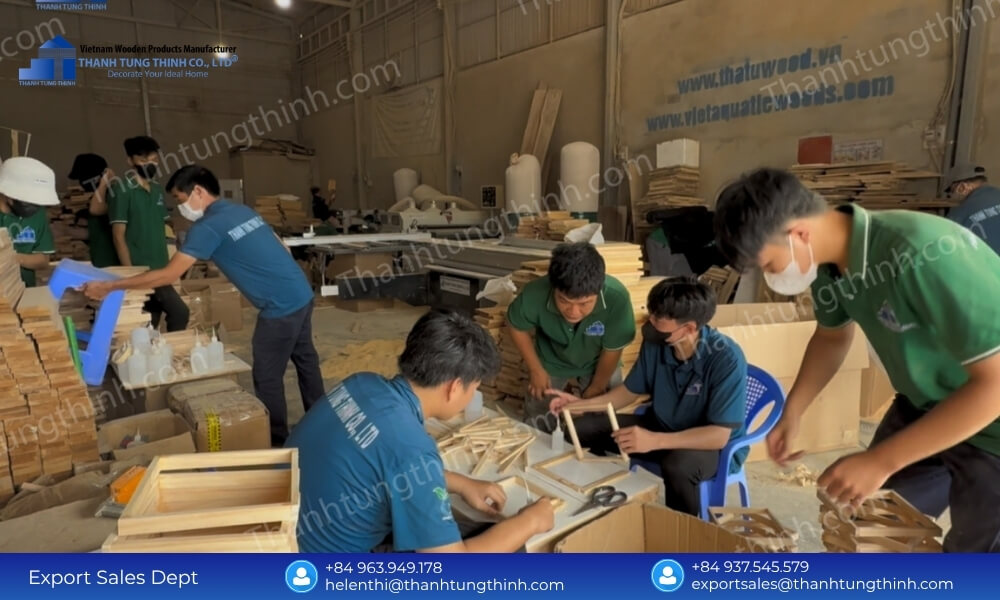
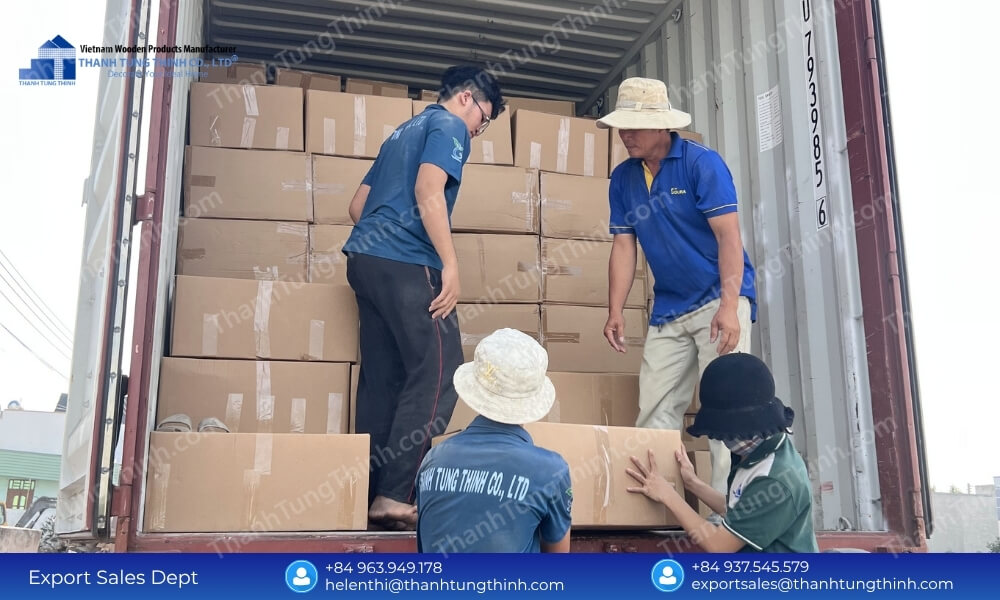
The final stage of the wooden jewelry box manufacturing process occurs off the main assembly line and within the logistics staging area. Even the most beautifully crafted Wooden Jewelry Boxes are worthless if they are destroyed during a turbulent ocean transit.
Industrial factories utilize highly engineered export packaging. Each box is typically wrapped in scratch-resistant EPE foam, placed into a custom-fitted inner carton, and then packed into heavy-duty, double-walled corrugated master export cartons.
Prior to loading, sample cartons are subjected to rigorous drop testing to ensure the internal packaging absorbs the kinetic energy of a fall. By mastering these FCL logistics, the manufacturer ensures a frictionless transfer of inventory from their factory floor directly to your global distribution centers.
Elevate Your B2B Supply Chain with Thanh Tung Thinh
Navigating global manufacturing requires a partner with absolute technical supremacy and transparent operational capacity. The wooden jewelry box manufacturing process is an intricate discipline demanding massive infrastructure, rigorous quality control, and a deeply experienced engineering team. For B2B enterprises, large-scale wholesalers, and luxury retailers seeking to optimize their supply chain, Thanh Tung Thinh offers a state-of-the-art facility engineered specifically for high-volume, precision output.
From intensive kiln-drying protocols to positive-pressure lacquering clean rooms, every stage is optimized to deliver flawless wooden jewelry boxes at scale. Partnering with Thanh Tung Thinh bypasses broker inefficiencies, grants direct access to unparalleled assembly line capacity, and secures high-tier OEM customization. Contact their wholesale experts today to discuss bulk production requirements, schedule a virtual factory tour, and establish an industrial partnership.
📩 Email: [email protected]
🌐 Website: https://thanhtungthinh.com/
📌 Pinterest: https://www.pinterest.com/THATUWOOD/
📌 Youtube: https://www.youtube.com/@thanhtungthinhmanufacturer
📌 Facebook: https://www.facebook.com/thanhtungthinh
📌 Linkedin: https://www.linkedin.com/company/thanh-tung-thinh-co-ltd
Read more:
- Wooden Jewelry Box Manufacturer Vietnam Factory Tour
- ODM Wooden Jewelry Box Production Uncopyable Designs
Frequently Asked Questions (Q&A)
1. Why is the kiln-drying stage so critical in the wooden jewelry box manufacturing process?
Kiln-drying stabilizes the raw timber by reducing its internal moisture content to a strict 8-12%. Without this intensive process, the wood would naturally absorb or release moisture during global transit, causing the finished boxes to warp, crack, or split.
2. How does CNC machining improve the quality of bulk B2B orders?
Computer Numerical Control machinery cuts wood with sub-millimeter accuracy based on digital CAD files. This ensures that whether we produce one hundred or ten thousand units, every single box is structurally identical with perfectly tight joinery.
3. What steps are taken to ensure a flawless lacquer finish on the assembly line?
We utilize positive-pressure, climate-controlled clean rooms for all lacquering. This prevents airborne dust from settling on the wet finish. We also apply multiple layers of sealers and topcoats, curing them rapidly in infrared tunnels for a glass-smooth surface.
4. How does the factory manage quality control when producing massive volumes?
We implement strict inline Acceptable Quality Limit (AQL) inspections. Instead of just checking at the end, our technicians perform moisture audits, dimensional checks, and hardware cycle tests at every major transition point on the assembly line.
5. Can your factory handle heavily customized OEM designs for my luxury brand?
Absolutely. Our advanced manufacturing process is highly adaptable. We can integrate custom laser-engraved logos, specific velvet Pantone colors, and bespoke hardware designs seamlessly into our high-capacity production schedules.
6. What is the typical bottleneck in factory assembly line capacity?
Historically, the finishing and lacquering phase is the bottleneck because chemicals require time to cure. We have overcome this by investing heavily in automated UV and IR drying tunnels, allowing our finishing line to match the speed of our CNC milling department.
7. How are the boxes packaged to survive long-haul ocean freight in shipping containers?
Each box is meticulously protected with non-abrasive EPE foam, secured in an individual inner box, and packed into double-walled master export cartons. We conduct rigorous drop testing to ensure the packaging absorbs severe impacts during transit.
8. Why is Thanh Tung Thinh the preferred manufacturer for enterprise-level B2B buyers?
Thanh Tung Thinh combines massive, scalable assembly line capacity with the meticulous quality control required for luxury goods. We offer total supply chain transparency, direct factory pricing, and the logistical expertise to flawlessly execute massive FCL global exports.

