


Table of Contents
Premium wooden kitchenware continues to perform well in global retail, private label, and wholesale channels. For international buyers, the opportunity is no longer just about finding a low-price product. It is about finding a supplier that can support stable quality, OEM flexibility, and repeat-order execution.
That is why many buyers search for an end grain cutting board supplier Vietnam instead of just looking for a generic product listing. They want a sourcing partner that can deliver premium boards, clear production standards, and scalable supply. With the right manufacturer, this category can support both margin growth and long-term brand development.
What Does “End Grain Cutting Board Supplier Vietnam” Mean in B2B Sourcing?
In B2B terms, an end grain cutting board supplier Vietnam is more than a seller of wooden boards. A qualified supplier should be able to manage manufacturing, finishing, quality control, packaging, and export coordination. For overseas buyers, that means the supplier needs to function as a real production partner, not just a trading contact.
The keyword also signals a clear sourcing intention. Buyers searching this phrase are usually not browsing casually. They are already comparing supplier options, manufacturing capability, and market fit in Vietnam. That makes supplier evaluation more important than product photos or basic quotations.
Why Buyers Search for an End Grain Cutting Board Supplier Vietnam
International buyers usually search for an end grain cutting board supplier Vietnam because they want more than a finished product. They want better pricing visibility, better control over specifications, and a stronger path to wholesale scale. End grain boards sit in a more premium segment, so the supplier behind them matters even more.
The main reasons buyers look for this supplier type are straightforward:
- Factory-direct pricing: Buyers want to reduce intermediary layers and improve margin structure.
- Stable production quality: Premium cutting boards need better consistency in structure, sanding, and finish.
- OEM and private label support: Many buyers need logo engraving, custom sizes, packaging, and market-specific features.
- Repeat-order reliability: Buyers are usually building a long-term product line, not just placing a one-time order.
- Export readiness: They need a supplier that understands documentation, production planning, and international shipment handling.
The commercial takeaway is simple. Buyers search this keyword because they are looking for a sourcing partner, not just a product source.
Why Vietnam Is a Strong Sourcing Base for End Grain Cutting Boards
Vietnam is a strong sourcing base for wooden kitchenware because it combines woodworking capability, export experience, and commercially competitive manufacturing. For premium board categories, that matters because buyers need both craftsmanship and process control. A product may look good in a sample, but long-term success depends on whether the factory can reproduce that quality at scale.
For an end grain cutting board supplier Vietnam, the value proposition is especially relevant in private label and wholesale programs. Buyers often want flexibility on size, branding, and packaging without moving into the highest-cost sourcing markets. Vietnam gives many of those buyers a practical balance between product quality, factory adaptability, and cost efficiency.
What Makes a Good End Grain Cutting Board Supplier Vietnam?
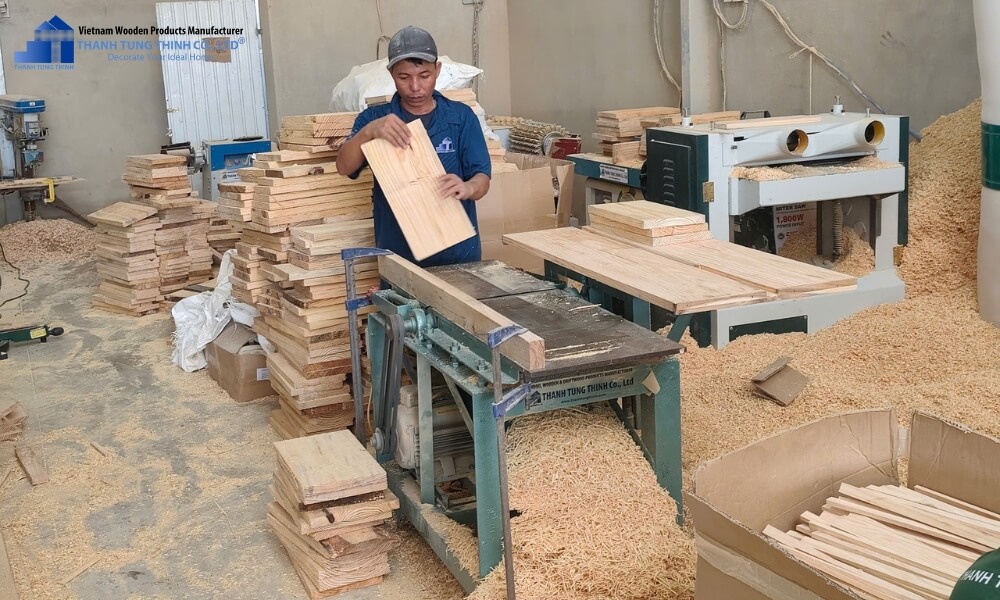
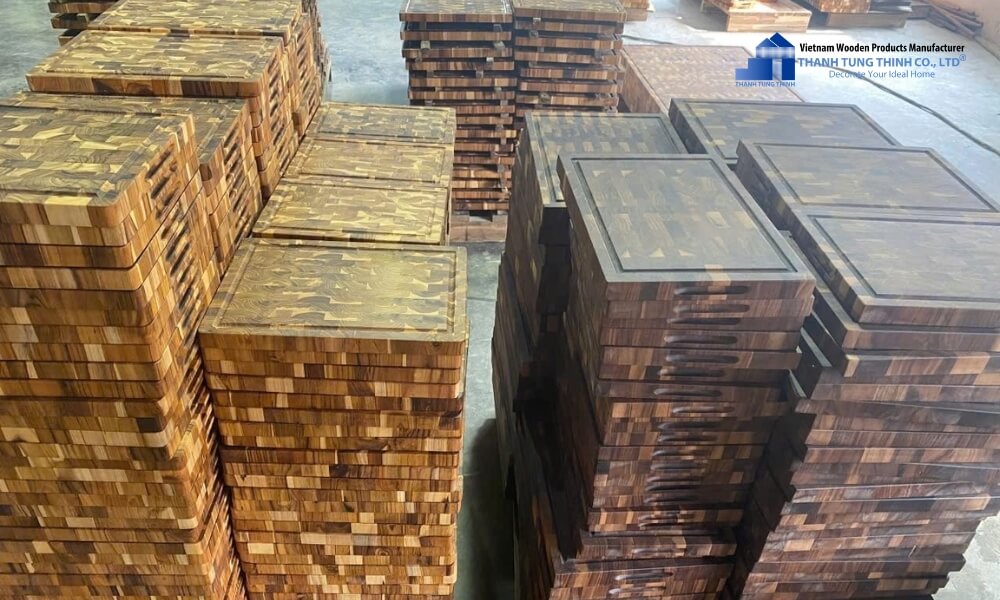
A good end grain cutting board supplier Vietnam should be judged on manufacturing performance, not just sales presentation. End grain boards require tighter construction control than many basic wooden kitchen items. Moisture stability, glue-line consistency, finishing quality, and dimensional accuracy all matter because small defects can damage the premium feel of the product.
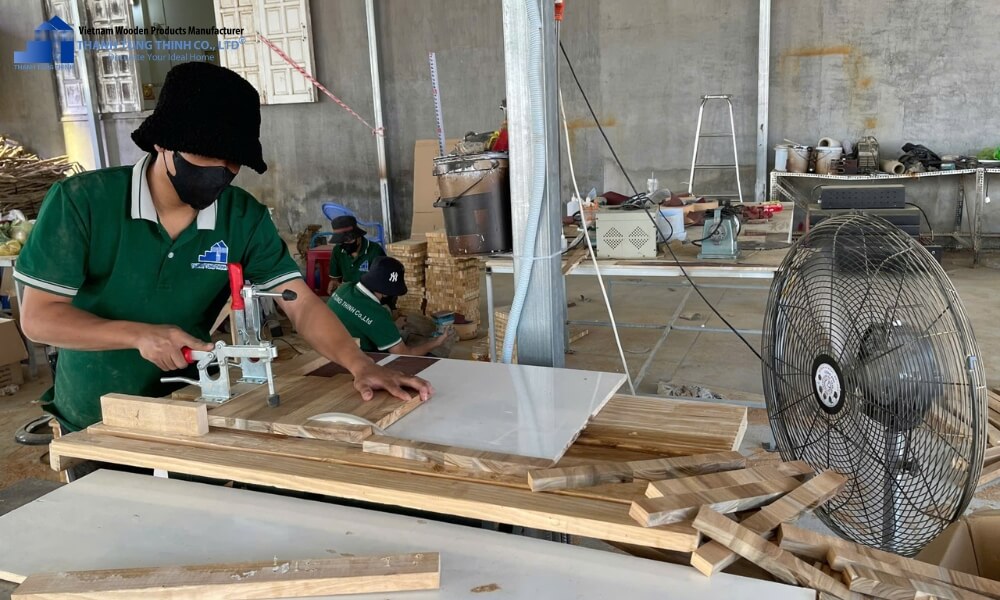
A strong supplier should show real factory capability, not just sourcing access. They should understand wood preparation, moisture control, sanding standards, oil finishing, and packaging requirements for export markets. Just as important, they should be able to communicate clearly about lead time, MOQ, OEM feasibility, and defect handling. In B2B sourcing, clarity is part of quality.
Key Things Buyers Should Check Before Choosing an End Grain Cutting Board Supplier Vietnam
Before selecting an end grain cutting board supplier Vietnam, buyers should assess the supplier through a structured evaluation process. A good-looking sample is only one checkpoint. The bigger issue is whether the supplier can maintain the same quality across volume production and repeated orders.
The most important points to check usually include:
- Sample quality: The sample should reflect actual production capability, not just a one-off display piece.
- Wood stability: Moisture control and material preparation are essential to reduce cracking, warping, or separation risk.
- Production consistency: The supplier should be able to hold the same standard across multiple batches and reorder cycles.
- MOQ flexibility: Buyers need to understand whether the supplier can support both launch volumes and scale-up volumes.
- Lead time discipline: Clear production planning matters for launches, replenishment, and seasonal programs.
- QC process: A strong supplier should explain inspection flow, finishing standards, and claim handling clearly.
The conclusion here is practical. Buyers should assess the supplier as an operating system, not just as a catalog contact.
End Grain Cutting Board Supplier Vietnam for Private Label Programs
Private label buyers usually need more from an end grain cutting board supplier Vietnam than standard wholesale buyers do. They are not only purchasing boards. They are building a branded product with specific commercial objectives. That means the supplier needs to understand logo placement, packaging requirements, custom sizing, and product presentation for target markets.
End grain boards are especially well suited to private label because they already carry strong visual value. When paired with the right branding and packaging, they become easier to position in premium retail, gifting, and e-commerce channels. For a private label buyer, the right supplier should be able to support both the product and the brand layer around it.
Price Factors When Working With an End Grain Cutting Board Supplier Vietnam
Price in this category depends on specification detail, not just on raw material. When working with an end grain cutting board supplier Vietnam, buyers should compare quotations only after aligning wood species, dimensions, thickness, construction details, finish level, and packaging format. Otherwise, two offers may look similar on paper while representing very different products.
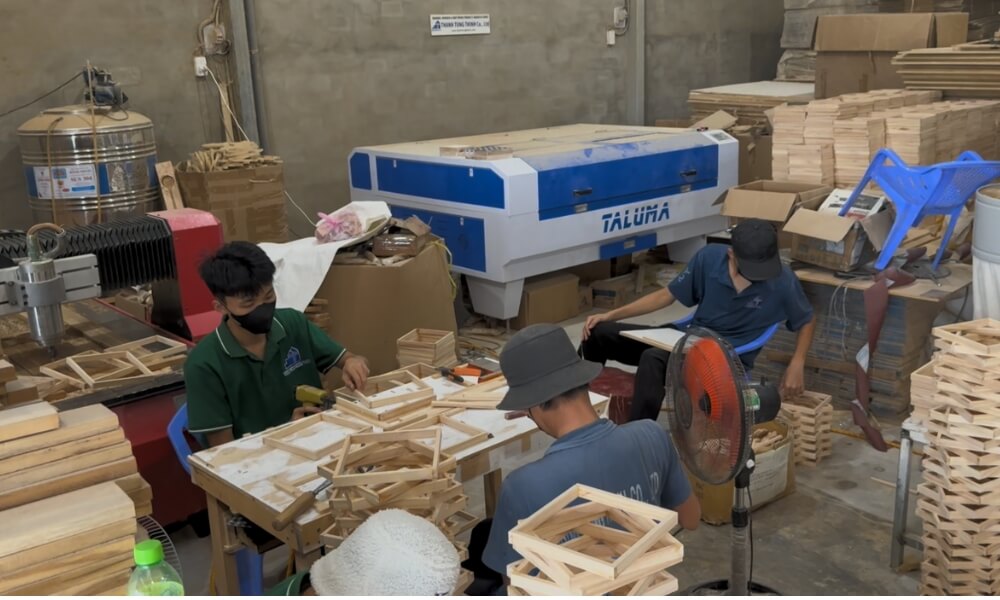
The main price drivers are usually wood type, board size, board thickness, added features, branding requirements, and order volume. Juice grooves, handles, feet, logo engraving, printed packaging, and retail-ready inserts all add cost, but they can also add significant commercial value. Buyers should review pricing through a full landed-cost lens rather than chasing the lowest opening quote.
Factory-Direct vs. Trading Company: Which Supplier Model Is Better?
For many buyers, the strongest option is a factory-direct end grain cutting board supplier Vietnam because the communication chain is shorter and the technical discussion is clearer. When customization is involved, direct factory access usually improves execution accuracy. It also gives better visibility into how specifications affect pricing and production lead time.
That said, a trading company can still work if it is highly organized and transparent. The real issue is whether the buyer can get clear answers on material, construction, packaging, and quality control. In premium wood products, the more distance there is from the production floor, the more room there is for misalignment. That is why factory-direct sourcing often makes more sense for end grain cutting board programs.
Questions to Ask an End Grain Cutting Board Supplier Vietnam
A serious buyer should test the supplier early through targeted questions. This helps validate whether the supplier has real experience with premium wooden kitchenware and understands international B2B expectations. Good suppliers usually answer clearly and specifically. Weak suppliers often stay vague.
Key questions include:
- What is your MOQ? This helps define whether the supplier fits the buyer’s launch and growth plan.
- Can you provide samples? Sampling shows how the supplier handles product details, finishing, and communication.
- What wood species do you use? Material affects both quality and price positioning.
- How do you control moisture and stability? This question reveals whether the supplier understands one of the biggest risk points in wood products.
- What OEM options do you support? Buyers need clarity on logo engraving, custom sizing, packaging, and inserts.
- What is your lead time? Production timing affects launches, reorder flow, and container planning.
- How do you handle claims or defects? The answer shows whether the supplier is structured for long-term B2B cooperation.
The conclusion is simple. The right questions often reveal the right supplier faster than any product brochure does.
Common Mistakes Buyers Make When Choosing a Supplier
One of the biggest mistakes buyers make when selecting an end grain cutting board supplier Vietnam is focusing too heavily on price. A lower opening quote may look attractive, but it means very little if the goods arrive with stability problems, inconsistent finishing, or weak packaging. In wood products, the real commercial cost often appears after shipment, not before.
Another common mistake is approving a sample without checking whether the factory can scale the same quality. Buyers also underestimate the importance of moisture control, packaging detail, and production planning. These gaps can create avoidable after-sales issues. A smarter sourcing process looks beyond the sample and evaluates the supplier’s ability to repeat performance at volume.
Why Thanh Tung Thinh Is Worth Considering
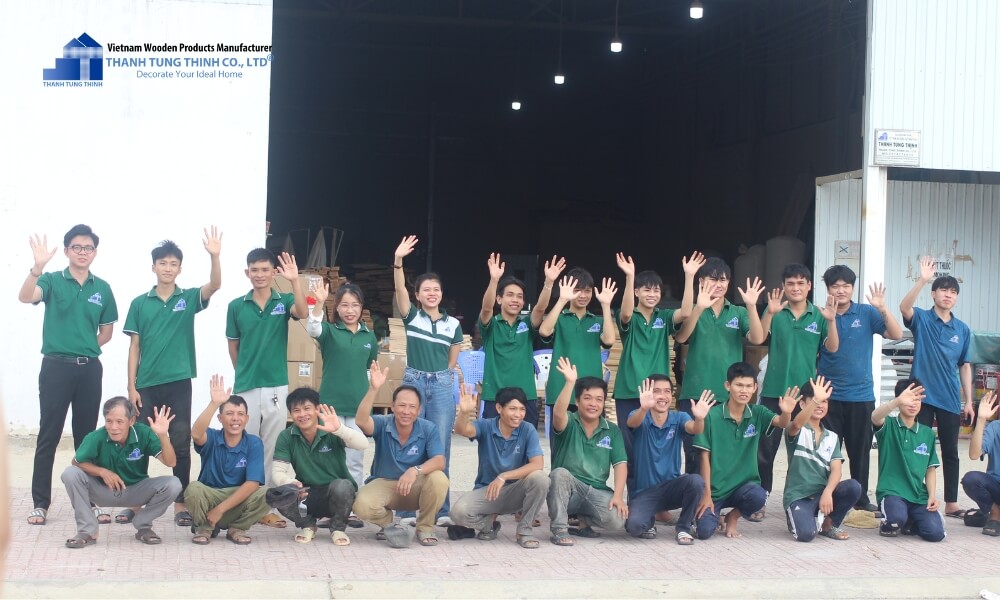
If you are looking for a reliable end grain cutting board supplier in Vietnam, Thanh Tung Thinh is worth considering as a factory-direct manufacturing partner. On its official company profile, Thanh Tung Thinh presents itself as a direct manufacturer and exporter with more than 14 years of production experience in wooden products, including kitchenware and related wood categories. For B2B buyers, that matters because direct factory communication usually improves alignment on specifications, pricing, production planning, and OEM requirements.
The company also highlights a production base supported by more than 30 skilled carpenters, a QC team that checks each stage from raw material intake to sanding and finishing, and export activity to over 25 countries, including demanding markets such as the US, Japan, Australia, Canada, Germany, the UK, Korea, and Singapore. Its About Us page also lists a head office and showroom in Ho Chi Minh City, a general warehouse, and two factories in Binh Thuan Province, which helps strengthen buyer confidence in real operating capacity and export readiness.
- Factory-direct support: Buyers can work more directly on specifications, quotations, and production expectations instead of relying only on intermediary communication.
- Export experience: The company states that it has shipped to more than 25 countries, which is a useful signal for international wholesale and private label buyers.
- Quality control focus: Thanh Tung Thinh says its QC team monitors production from raw material input through sanding and finishing, which is highly relevant for premium wooden products such as end grain cutting boards.
- Wholesale and OEM readiness: With dedicated export sales contacts and a stated manufacturing base, the company appears structured for B2B discussions around volume orders, OEM options, and repeat sourcing.
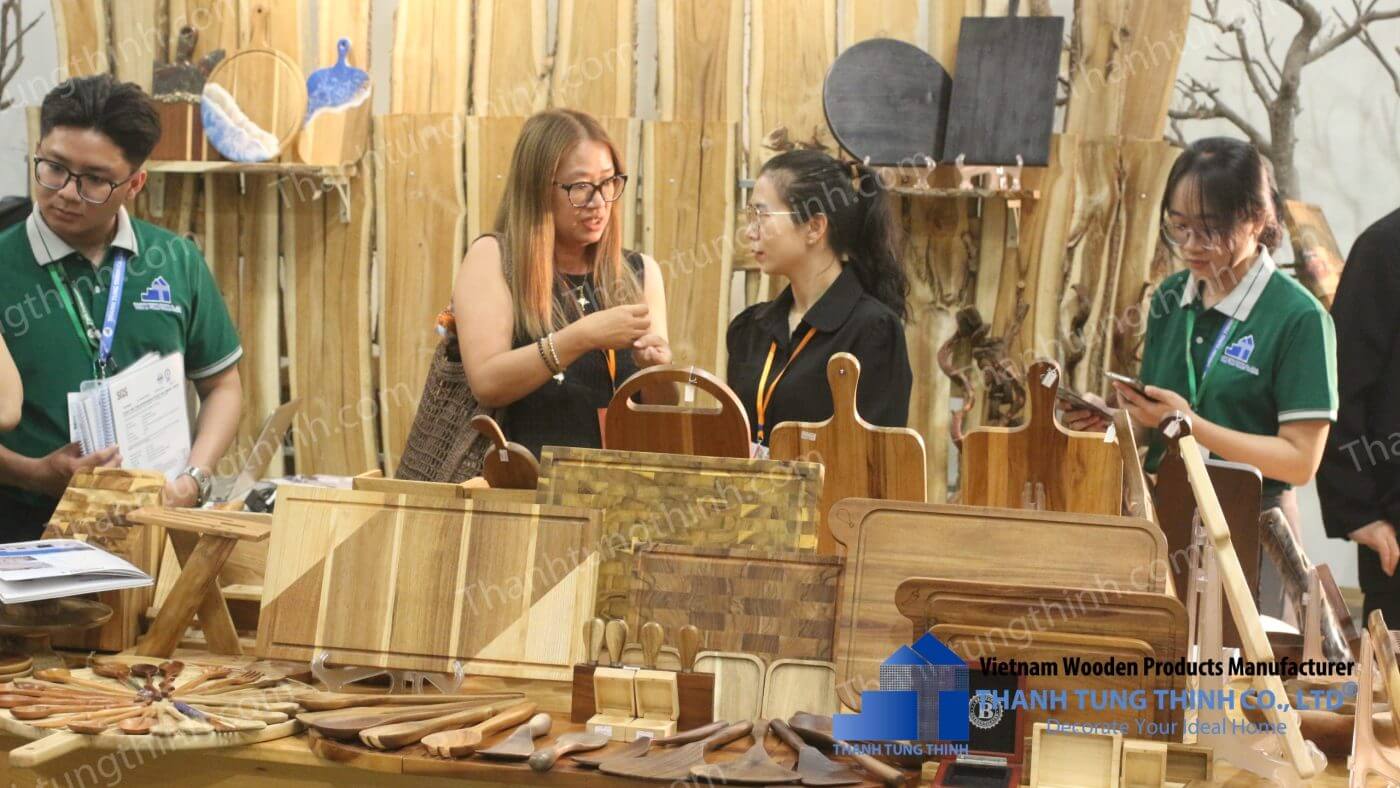
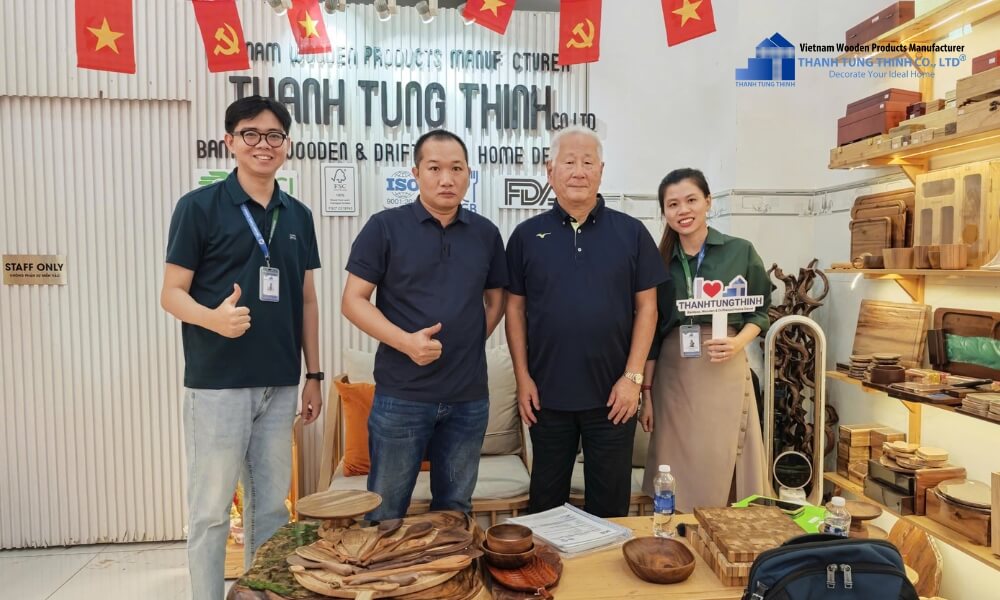
The practical takeaway is simple: if your business needs a Vietnam-based supplier that combines factory-direct communication, export experience, and a clearer production foundation, Thanh Tung Thinh is a sourcing option worth shortlisting.
Contact Thanh Tung Thinh to discuss your product specifications, MOQ, OEM options, and wholesale pricing for end grain cutting boards.
 WhatsApp: +84 96 394 91 78
 Email: [email protected]
 Website: https://thanhtungthinh.com/
 Pinterest: https://www.pinterest.com/THATUWOOD/
Final Answer: How to Choose the Right End Grain Cutting Board Supplier Vietnam
The right end grain cutting board supplier Vietnam should be selected based on production capability, wood stability, finishing consistency, OEM support, and export experience. Buyers should not make the decision based on price alone. A reliable supplier protects product quality, reduces commercial risk, and supports long-term business growth.
Vietnam is a strong sourcing base for buyers that want premium wooden kitchenware with private label flexibility and wholesale scalability. The strongest suppliers are the ones that can combine material control, production consistency, responsive communication, and clear export execution. For buyers building a serious end grain cutting board program, supplier quality will define commercial success more than the product category alone.
FAQ
What should I look for in an end grain cutting board supplier Vietnam?
You should look for real factory capability, stable wood preparation, consistent finishing quality, OEM support, and export experience. A strong supplier should also communicate clearly about MOQ, lead time, and quality control. Sample quality matters, but production consistency matters more. The goal is to choose a supplier that can repeat the same quality at scale.
Is Vietnam a good sourcing base for end grain cutting boards?
Yes. Vietnam is competitive because it combines woodworking capability, export know-how, and commercially practical production costs. For premium wooden kitchenware, that creates a strong sourcing position. It is especially attractive for buyers that need OEM flexibility and long-term supply support. The value is strongest when the supplier has real manufacturing discipline.
Can a Vietnam supplier support private label cutting boards?
Yes, many can, but the level of support depends on the supplier’s OEM experience. A good supplier should be able to support logo engraving, custom dimensions, packaging, and branding materials. Buyers should still verify this during the sample and quotation stage. Private label success depends on execution, not just on product availability.
What affects the price of end grain cutting boards from Vietnam?
The main factors are wood species, board size, thickness, construction complexity, finishing, packaging, branding, and order volume. Added features like juice grooves, handles, or custom boxes also affect price. Buyers should compare offers only when the specifications are aligned. Otherwise, the quotations are not commercially comparable.
Is factory-direct sourcing better than working with a trader?
In many cases, yes. Factory-direct sourcing usually gives clearer technical communication, better price visibility, and stronger control over OEM details. A trader can still work well if the communication is transparent and structured. But for premium wooden boards, factory-direct often reduces execution risk. That is especially true when the program includes custom features.
How do I verify a supplier’s production capability?
The best way is to combine sample review, technical questions, and operational review. Ask about factory capability, moisture control, QC standards, lead time, and repeat-order management. Evaluate how clearly the supplier answers. A strong supplier usually explains process details confidently and consistently.
What questions should I ask before placing a wholesale order?
You should ask about MOQ, sample support, wood species, moisture control, OEM options, lead time, packaging capability, and defect handling. These questions reveal both technical competence and commercial maturity. Clear answers reduce sourcing risk. Vague answers are usually a warning sign.

