


Table of Contents
In the highly lucrative global hospitality and eco-friendly homeware industries, establishing a reliable baseline for wooden plates contract manufacturing represents a pivotal stepping stone toward long-term brand equity and sustainable profitability. However, international B2B procurement managers frequently encounter costly bottlenecks, defective production batches, and devastating customs impoundments due to strategic oversights during the initial sourcing phase.
Sourcing a high-quality, food-safe wooden plates collection demands far more than merely selecting the lowest factory-floor quote; it requires an intricate understanding of raw timber stability, international regulatory compliance, mechanized mass fabrication, and transparent pricing structures. This definitive strategic whitepaper analyzes the four most critical sourcing mistakes global brands must avoid when entering into a wooden plates contract manufacturing agreement, offering actionable engineering and logistical frameworks to secure your high-volume supply chain.
Food Safety Failures and Hazardous Coating Oversights
The most catastrophic mistake an international brand can commit in wooden plates contract manufacturing is prioritizing visual aesthetics or low pricing over certified food safety standards. Because a commercial wooden plates or dinner plate comes into direct and prolonged contact with hot, cold, acidic, and oily food substances, the chemicals used to finish the timber surface present a severe regulatory and medical risk.
Many unverified workshops utilize industrial-grade polyurethane (PU) sprays, cheap chemical lacquers, or synthetic resins containing dangerous concentrations of volatile organic compounds (VOCs), lead, or free formaldehyde. If these toxic chemical compounds leach into a consumer’s food, the resulting product liability lawsuits, multi-million dollar class-action litigations, and widespread brand damage can permanently bankrupt an international importer.
To establish a bulletproof, compliant supply chain, professional global brands must explicitly mandate that their wooden plates contract manufacturing partner uses strictly food-grade, non-toxic finishing agents. The factory must implement sophisticated finishing protocols using natural plant-derived oils—such as certified food-safe linseed oil, olive oil, or walnut oil—or premium unbleached beeswax compounds.
These natural treatments deeply penetrate the timber pores to enhance grain definition while forming a hydrophobic, resilient barrier that withstands repeated commercial washings without emitting hazardous chemical residues.
The Moisture Content Trap and Post-Shipment Deformation Risks
A common operational nightmare for global homeware distributors is opening an expensive ocean freight container only to discover that thousands of newly imported wooden plates have warped into unusable shapes, cracked completely in half, or developed extensive networks of structural mold. This destructive phenomenon is directly caused by a failure to manage the internal moisture content (MC) of the raw timber during the early stages of wooden plates contract manufacturing.
When organic wood is harvested in humid, tropical ecosystems (such as Southeast Asia) and subsequently shipped across cold maritime trade routes to dry, temperate zones (such as northern North America or Central Europe), the dramatic shift in ambient relative humidity forces the timber fibers to rapidly release their internal water molecules. If this structural drying process happens unevenly, the resulting physical stresses destroy the internal matrix of the wood, rendering the entire wholesale batch completely unsellable.
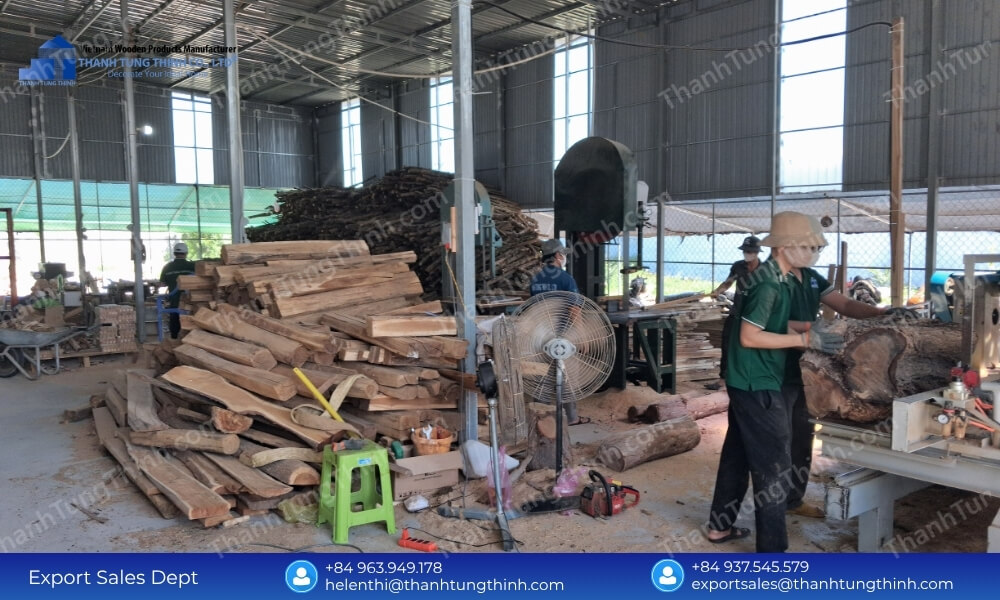
To permanently neutralize this microclimate risk, the raw lumber planks must undergo a slow, scientifically regulated thermal treatment program that drives the internal moisture content down to an optimal equilibrium range of 8% to 12%. Bringing the timber within this strict mathematical window ensures that the finished dinnerware remains completely stable, structurally sound, and perfectly flat, whether it is stored in a heavily air-conditioned commercial restaurant environment or exposed to dry, freezing winter air in European homes.
Mass Production Tolerance Discrepancies and Lack of Stackability
In mass retail distribution and commercial hospitality supply chains, precise physical consistency is an absolute operational necessity. If a shipment of wooden plates exhibits random dimensional variances in lip curvature, rim thickness, or base depth, it causes a logistical failure known as poor stackability. Plates that do not stack flat and uniform take up excessive volume inside shipping boxes, skyrocketing ocean freight costs, and frequently collapse when stacked on commercial restaurant shelves, resulting in severe operational hazards.
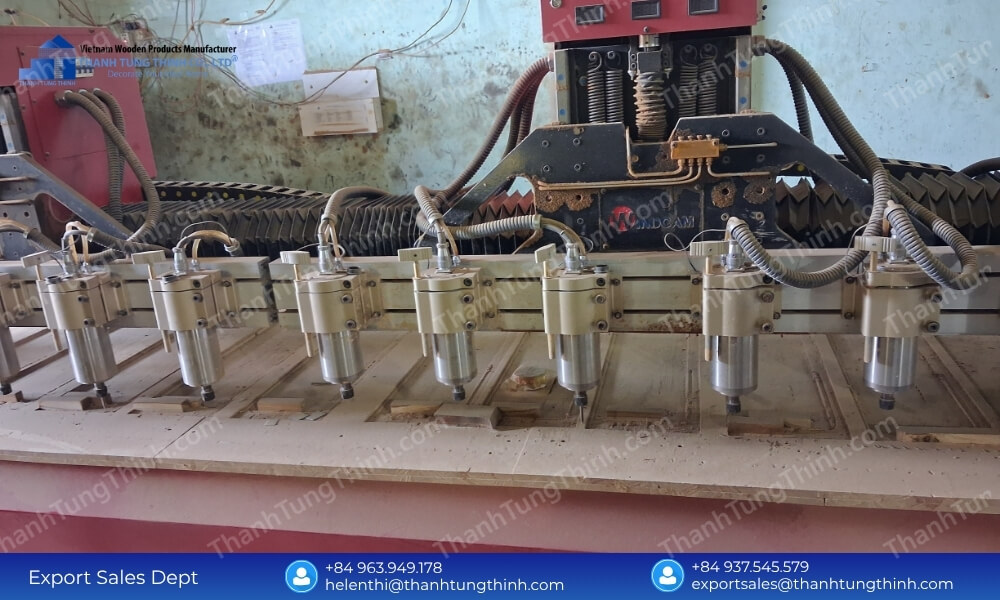
Avoiding this costly pitfall requires brands to bypass small-scale artisan workshops that execute large orders using manual, hand-held lathe tools. High-volume wooden plates contract manufacturing demands a partner that has heavily invested in synchronized, automated Computer Numerical Control (CNC) milling and multi-axis turning technology.
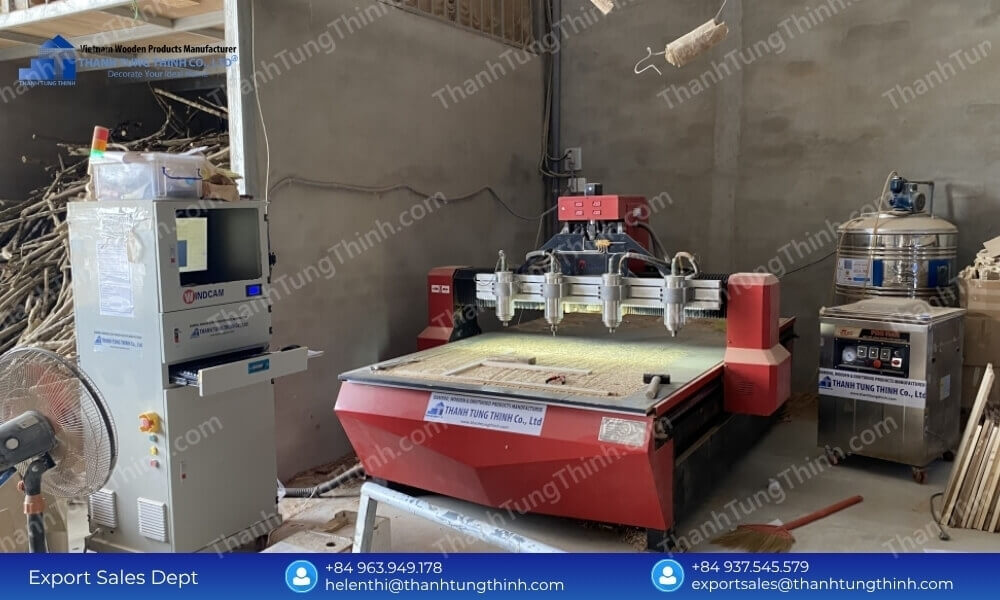
By programming digital schematics directly into automated CNC machinery, the factory can guarantee a mechanical tolerance threshold of under 1mm across tens of thousands of mass-produced items. This industrial precision ensures that every single plate coming off the automated production line possesses identical contours, lip geometries, and structural weights, allowing for dense, perfectly stable stacking and highly optimized export packaging configurations.
Hidden Cost Pitfalls and Unforeseen Freight Surcharges
A major financial mistake committed by inexperienced purchasing managers is evaluating a wooden plates contract manufacturing agreement solely on the surface-level Free on Board (FOB) or Ex Works (EXW) unit cost. Unscrupulous or amateur factories frequently quote an impossibly low initial base price to secure the initial deposit, only to later introduce a wave of unannounced surcharges, administrative fees, and unexpected manufacturing expenses that completely erase the importer’s projected profit margins.
These hidden costs can rapidly inflate the final Landed Cost of the goods, turning an ostensibly profitable product line into a massive financial liability.
- Bespoke Mold and Tooling Charges: Unvetted suppliers often obscure the high engineering costs required to configure automated CNC machinery, design custom profiling knives, or build specific industrial jigs for customized structural plate shapes.
- Non-Compliant Shipping Pallets: Failing to establish strict packaging parameters can result in factories using non-certified wood pallets, forcing brands to pay massive unexpected cross-border fees for emergency maritime fumigation or costly customs repackaging.
- Phytosanitary Certification Overhead: Exporting natural wood products requires strict governmental agricultural inspections, and ambiguous contracts often leave the buyer responsible for paying high international phytosanitary and biosecurity paperwork fees.
- Unacceptable Manufacturing Defect Rates: Low-cost factories rarely operate a dedicated internal QA/QC department, meaning a high percentage of arriving items contain structural knots, rough edges, or surface blemishes that must be discarded at the buyer’s expense.
To safeguard your financial margins, global procurement teams must implement a transparent, comprehensive Service Level Agreement (SLA) before authorizing any financial deposit. The contract must explicitly outline a zero-tolerance policy for hidden surcharges, establish a legally binding Maximum Defect Rate (typically under 1.5%), and mandate that all outbound shipments utilize certified, heat-treated wood pallets that comply entirely with the International Standards for Phytosanitary Measures No. 15 (ISPM 15) guidelines.
Establishing a Secure B2B Supply Chain with Thanh Tung Thinh
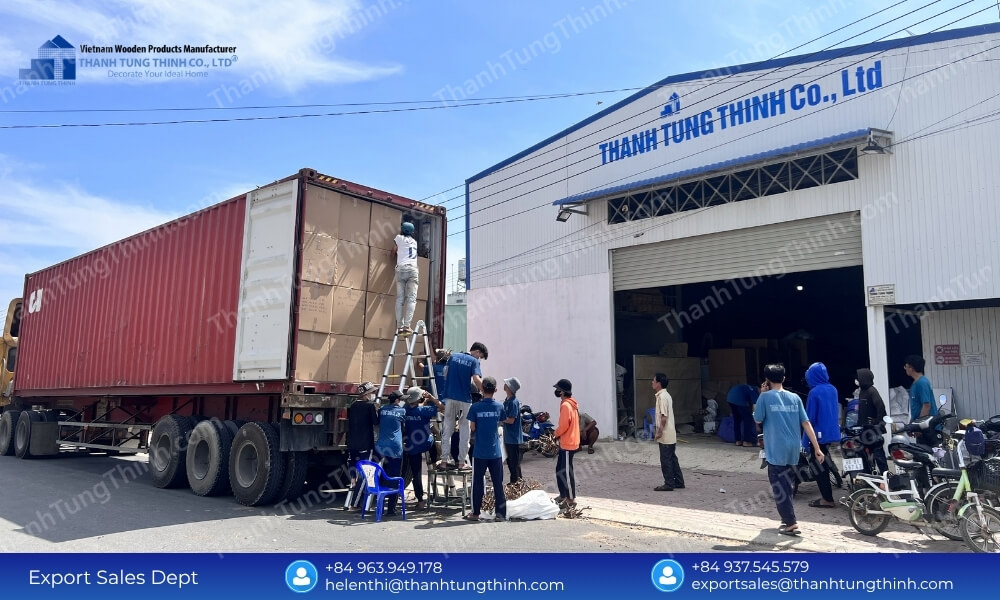
Mitigating the multi-layered risks of international wood procurement requires partnering with an established, industrially integrated manufacturing partner. The prominent Vietnamese manufacturer Thanh Tung Thinh has positioned itself as an industry leader in international wooden plates contract manufacturing, serving as a trusted production partner for prominent global eco-brands, wholesale distributors, and commercial restaurant supply networks.
By combining sustainable timber sourcing with advanced industrial technology, Thanh Tung Thinh effectively eliminates the technical defects and hidden financial risks that commonly disrupt traditional artisanal sourcing models.
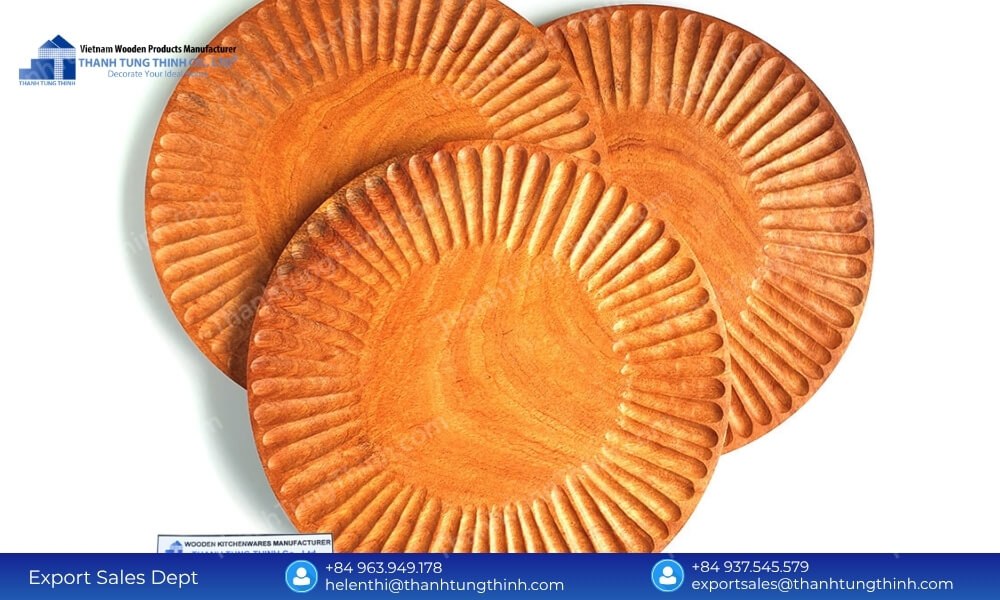
Operating a massive, state-of-the-art production complex equipped with automated CNC machinery lines, computer-regulated kiln-drying facilities, and clean-room finishing zones, Thanh Tung Thinh guarantees precise structural consistency and flawless stackability for every high-volume batch. Their deep commitment to global regulatory safety ensures that every single wooden plates shipment is finished with independently certified, 100% non-toxic, food-grade natural coatings that easily pass rigorous FDA, LFGB, and EU compliance screenings.
🌐 Website: https://thanhtungthinh.com/
📌 Pinterest: https://www.pinterest.com/THATUWOOD/
📌 Youtube: https://www.youtube.com/@thanhtungthinhmanufacturer
📌 Facebook: https://www.facebook.com/thanhtungthinh
📌 Linkedin: https://www.linkedin.com/company/thanh-tung-thinh-co-ltd
Read more:
- Solid Wood Plate Supplier Direct Wholesale Manufacturer Budget Efficiency
- Wholesale Wood Plates MOQ Factory Assembly Line Capacity
Questions & Answers
What are the primary food safety regulations that a wooden plates contract manufacturing supplier must meet?
Any reputable contract manufacturing facility producing wooden dinnerware for international markets must provide verifiable independent laboratory certifications showing full compliance with the US Food and Drug Administration (FDA) regulations, the European Union Food Contact Framework Regulation (EC) No 1935/2004, and the German LFGB standards. These rigorous certifications guarantee that no toxic heavy metals, synthetic chemicals, or volatile organic compounds can leach from the timber or the outer finish into the consumer’s food supply.
Why do freshly imported wooden plates sometimes warp or crack within weeks of arriving at a northern hemisphere warehouse?
This severe structural failure is a direct result of the Moisture Content Trap, which occurs when a factory fails to properly dry the raw timber before mass production. Natural wood is highly hygroscopic; if it is manufactured in a humid tropical climate with an internal moisture content above 15% and then shipped to a cold, dry temperate region, the sudden loss of water molecules causes uneven structural contraction, resulting in severe warping, surface splitting, or deep structural cracking.
What specific moisture content percentage should a brand demand from their manufacturing partner?
International procurement managers should explicitly mandate that all raw lumber planks undergo a rigorous, monitored kiln-drying process to bring the internal moisture content down to a stable equilibrium range of 8% to 12%. This optimal moisture range minimizes the natural expansion and contraction of the wood fibers, ensuring the final tableware remains perfectly flat, stable, and structurally sound across diverse global climates.
How does automated CNC technology improve the stackability and logistics of mass-produced wooden plates?
Automated Computer Numerical Control (CNC) machinery eliminates human error by milling every single piece of wood according to exact digital blueprints, maintaining an ultra-strict physical tolerance of under 1mm. This exceptional level of industrial precision ensures that tens of thousands of items possess identical dimensions, depths, and lip curvatures, enabling them to stack perfectly flat, which minimizes packaging volume and significantly reduces ocean freight costs.
What are the hidden cost traps that wholesale buyers face when signing vague sourcing contracts?
The most common hidden cost pitfalls include unannounced machine tooling and custom mold setup fees, expensive international phytosanitary inspection surcharges, and high export palletization expenses. Additionally, if the contract does not specify a strict quality standard, the buyer may face a high defect rate, meaning they must absorb the financial loss of receiving thousands of unsellable, blemished, or deformed plates.

