


Table of Contents
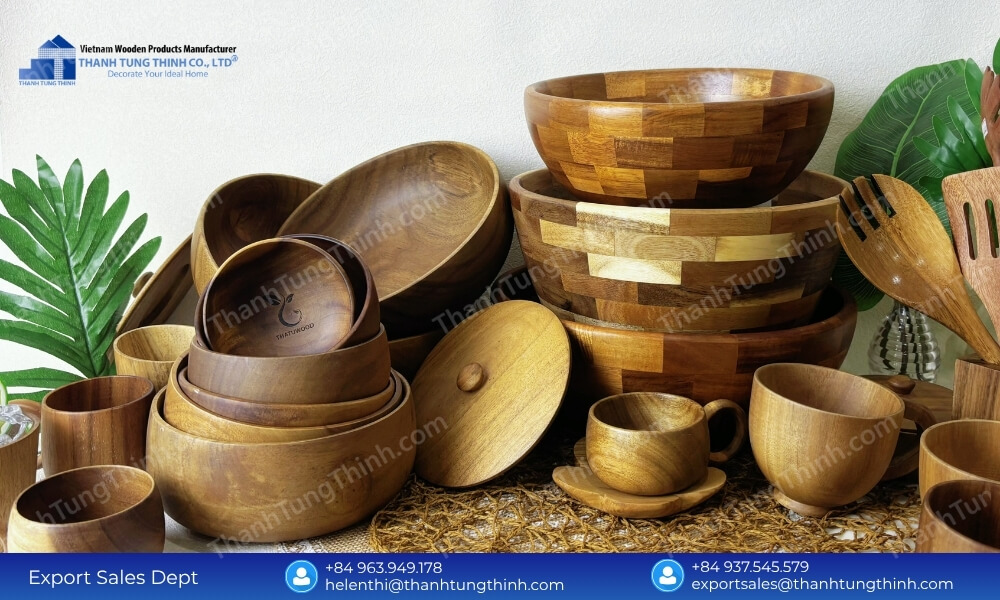
In the fast-paced global homeware and kitchenware markets, a shattered supply chain is the fastest route to lost revenue and irreparably damaged retail relationships. When international B2B distributors and enterprise-level retail chains launch massive seasonal promotional campaigns, running out of stock is simply not an option. Navigating the deep complexities of sourcing natural timber products requires partnering with an elite solid wood bowl supplier capable of executing massive, continuous production runs without faltering under pressure.
The rustic elegance, tactile warmth, and enduring durability of a premium wooden bowl make it a perpetual best-seller across diverse consumer demographics, but the logistics of manufacturing them at an enterprise scale are intensely complex. This comprehensive guide details exactly how integrating your procurement strategy with a highly synchronized solid wood bowl supplier guarantees continuous supply chain capacity, significantly shielding your wholesale enterprise from global market volatility and ensuring your lucrative retail channels remain perpetually stocked.
The Strategic Imperative of an Unbroken Supply Chain
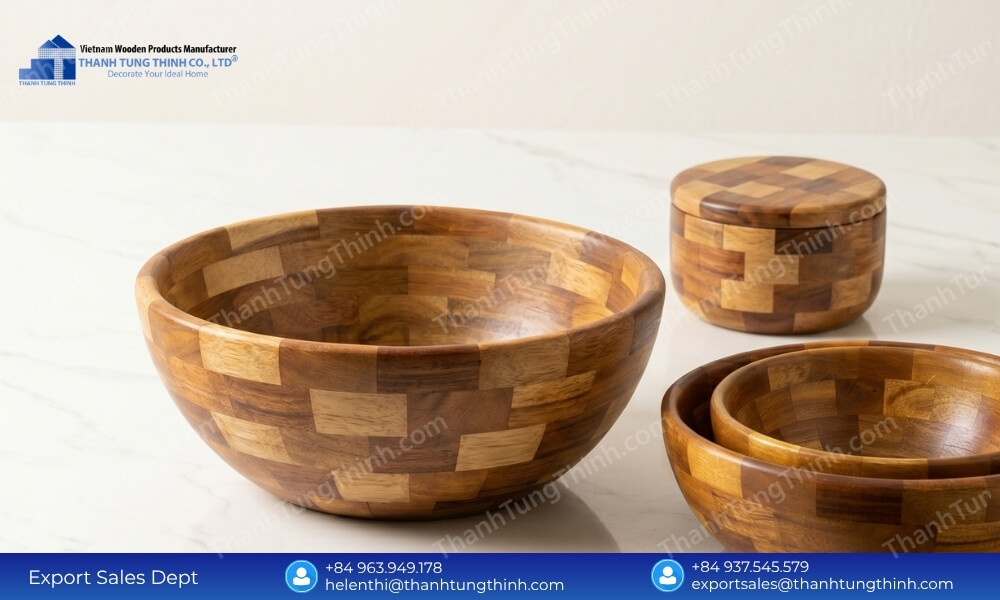
For major B2B distributors, the supply chain is a central nervous system operating on tight margins and strict timelines, especially as retailers push inventory burdens upward via Just-In-Time models. Consequently, choosing a solid wood bowl supplier based solely on initial price quotes is a flawed strategy; enterprise buyers must prioritize continuous operational capacity.
To prevent supply chain collapse from raw material shortages or machinery failures, a true industrial partner mitigates the “Bullwhip Effect” by maintaining immense buffer stocks of raw timber and redundant manufacturing lines. This infrastructure provides the elasticity needed to rapidly scale production during peak holiday seasons while adhering to rigorous international quality control standards, ensuring a reliable segment of a global industrial pipeline.
Deep Integration: Securing the Raw Material Pipeline
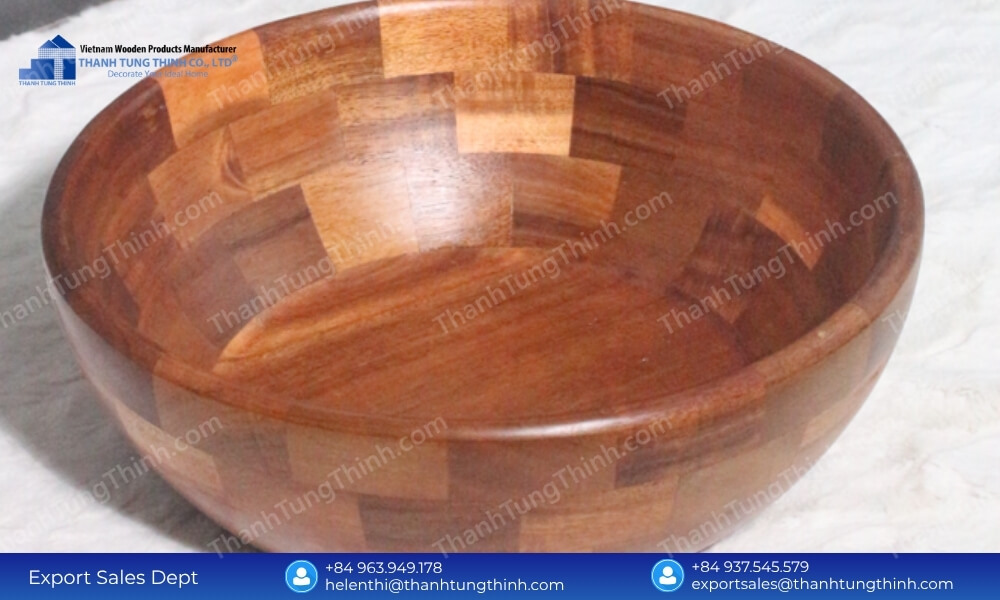
The primary bottleneck in manufacturing natural products is raw material acquisition, which is vulnerable to seasonal monsoons or sudden export bans. To eliminate this risk and maintain continuous supply chain capacity, a dedicated solid wood bowl supplier establishes multi-year procurement contracts with sustainable forestry concessions and agricultural plantations rather than relying on piecemeal spot markets.
By purchasing vast tracts of sustainable timber such as acacia, rubberwood, mango, or teak well in advance, the manufacturer creates a massive, physical buffer in its own holding yards. This localized stockpile insulates production from global supply chain disruptions or logging halts, ensuring raw material security that allows the factory to run continuous production shifts for months and uphold reliable B2B wholesale commitments.
Overcoming the Kiln-Drying Bottleneck
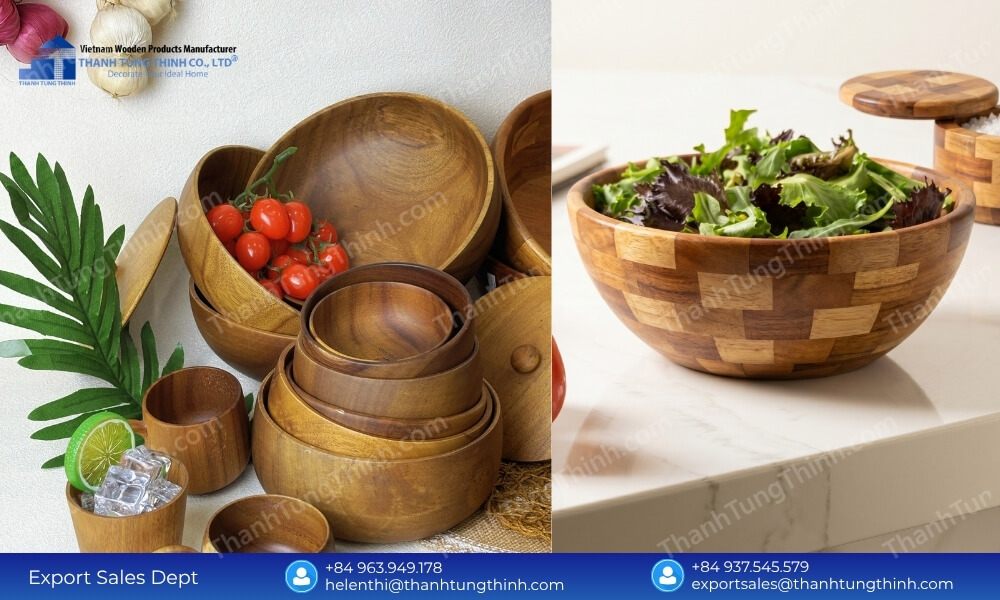
In the woodworking industry, the most time-consuming phase of production is not cutting or carving; it is drying. Raw timber possesses a high moisture content (MC) that must be meticulously extracted to prevent the finished product from warping, cracking, or splitting as it moves through different global climate zones.
For a small-scale workshop, kiln drying is a massive bottleneck that severely limits output. For an industrial solid wood bowl supplier, it is a highly calibrated, continuous process. Large-scale factories operate expansive, computer-controlled commercial kilns that run 24 hours a day, 7 days a week.
- Continuous Feed Systems: Timber is constantly rotated through the kilns on a strict, mathematical schedule, ensuring a never-ending flow of perfectly stabilized wood to the factory floor.
- Automated Moisture Tracking: Digital sensors inside the kilns monitor the internal moisture of the wood down to the decimal, automatically adjusting airflow and heat to achieve the exact 8% to 12% export standard.
- Sterilization Protocols: The intense heat of the industrial drying cycle naturally exterminates any wood-boring insects or fungal spores, guaranteeing the timber passes stringent international phytosanitary customs inspections without delays.
By conquering the kiln-drying bottleneck, the manufacturer ensures that their heavy machinery and skilled workforce are never left idle waiting for dry materials.
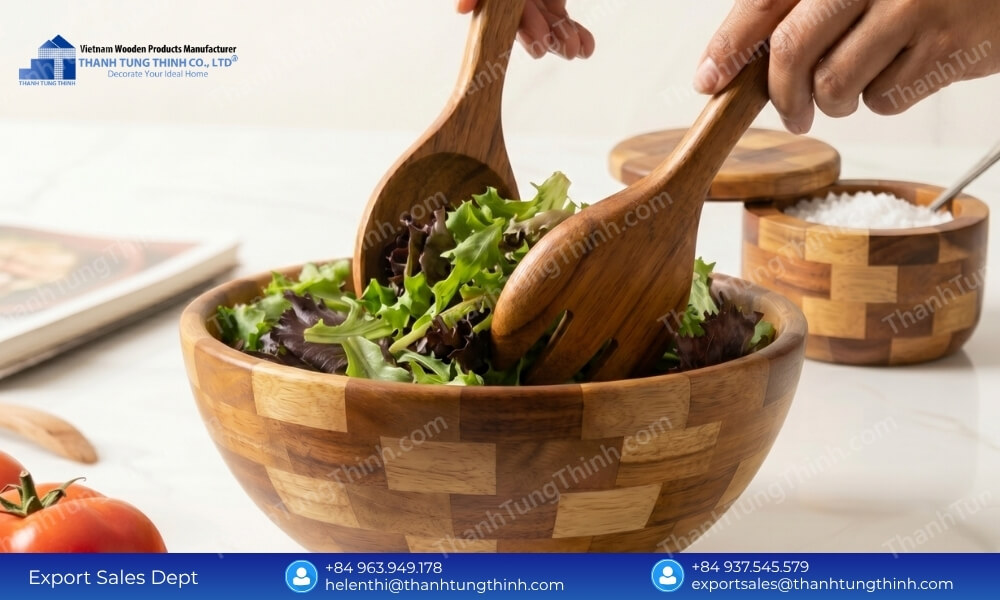
Advanced Manufacturing Protocols for High-Volume Orders
Transforming stabilized timber into thousands of identical culinary vessels requires an intricate blend of heavy industrial automation and precision tooling. When a B2B buyer places a wholesale order for 50,000 units, the solid wood bowl supplier activates a highly synchronized assembly line designed to maximize throughput while minimizing raw material waste.
The process begins with automated band saws that cut the massive timber logs into uniform, manageable blocks called “blanks.” From here, the blanks are fed into multi-axis CNC (Computer Numerical Control) wood-turning lathes. These sophisticated machines spin the timber at incredibly high speeds while robotic carbide cutting tools carve out the interior and shape the exterior of the wooden bowl simultaneously.
The utilization of CNC technology is critical for continuous supply chain capacity because it guarantees absolute dimensional consistency. Whether it is unit number one or unit number ten thousand, every single bowl will stack perfectly, nest efficiently in retail packaging, and meet exact cubic volume specifications for shipping. Furthermore, the automated nature of these machines allows a single technician to operate multiple lathes simultaneously, drastically lowering the per-unit labor cost and allowing the factory to offer hyper-competitive pricing to bulk B2B purchasers.
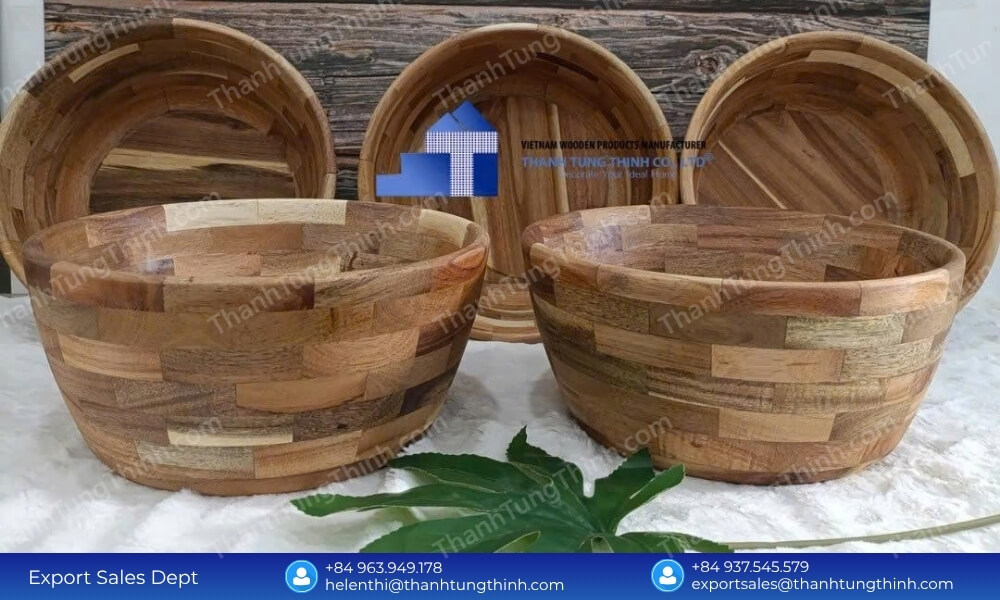
Fostering Resilience: The Thanh Tung Thinh Production Model
In a volatile global market, enterprise buyers actively seek manufacturing partners that demonstrate profound operational resilience. As an industry-leading solid wood bowl supplier, Thanh Tung Thinh has engineered a manufacturing ecosystem designed specifically to absorb external shocks and maintain an unbreakable supply line for our global B2B partners.
Our facility does not operate on a reactive model; we operate on a proactive forecasting model. By integrating deeply with our clients’ inventory management systems, Thanh Tung Thinh anticipates seasonal demand spikes long before the Purchase Order (PO) is officially issued. We preemptively increase our raw timber intake, optimize our kiln schedules, and allocate dedicated shifts on our CNC turning lines.
This forward-looking operational philosophy means that when a massive retail chain suddenly doubles its order volume, Thanh Tung Thinh absorbs the surge seamlessly, ensuring your distribution network remains perfectly intact. Our continuous production capacity is not merely a factory feature; it is a vital competitive advantage for your wholesale business.
Quality Assurance in High-Speed Production Lines
Maintaining rigorous quality standards during continuous, high-speed manufacturing is a complex engineering challenge. A beautiful wooden bowl is a functional piece of kitchenware; therefore, it must be entirely food-safe, structurally sound, and resistant to daily washing and handling.
A premier solid wood bowl supplier implements strict Acceptable Quality Limit (AQL) frameworks directly on the factory floor, preventing defective units from ever reaching the final packaging stage.
- Inline Dimensional Audits: As bowls come off the CNC lathes, quality control technicians use digital calipers to measure wall thickness. A bowl that is turned too thin will crack under pressure, while one that is too thick wastes valuable raw material.
- Surface Refinement: The bowls are mechanically sanded through progressive grits, moving from rough shaping to glass-smooth finishing. High-capacity lines use automated rotary sanders to handle the bulk, followed by meticulous hand-sanding on the delicate rims.
- Food-Safe Finishing: Because these vessels will hold food, the finish must be strictly non-toxic and compliant with FDA or equivalent European regulations. Continuous spray lines apply natural, food-grade mineral oils, beeswax, or specialized heat-resistant lacquers. The items then pass through infrared curing tunnels to dry rapidly, preventing the finishing stage from becoming a production bottleneck.
By embedding these stringent QA checkpoints seamlessly into the fast-paced assembly line, the manufacturer ensures that high volume never equates to low quality.
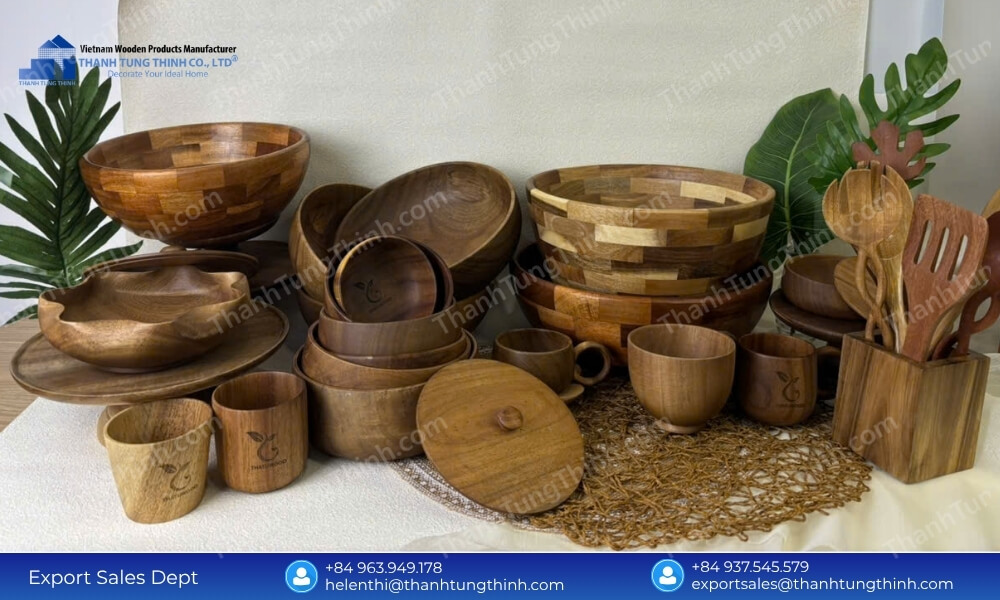
Logistics: Mastering FCL Global Export Strategies
The final, and often most complex, segment of the continuous supply chain is international logistics. Manufacturing a massive volume of goods is only half the battle; efficiently transporting them across the globe is what solidifies a profitable B2B operation.
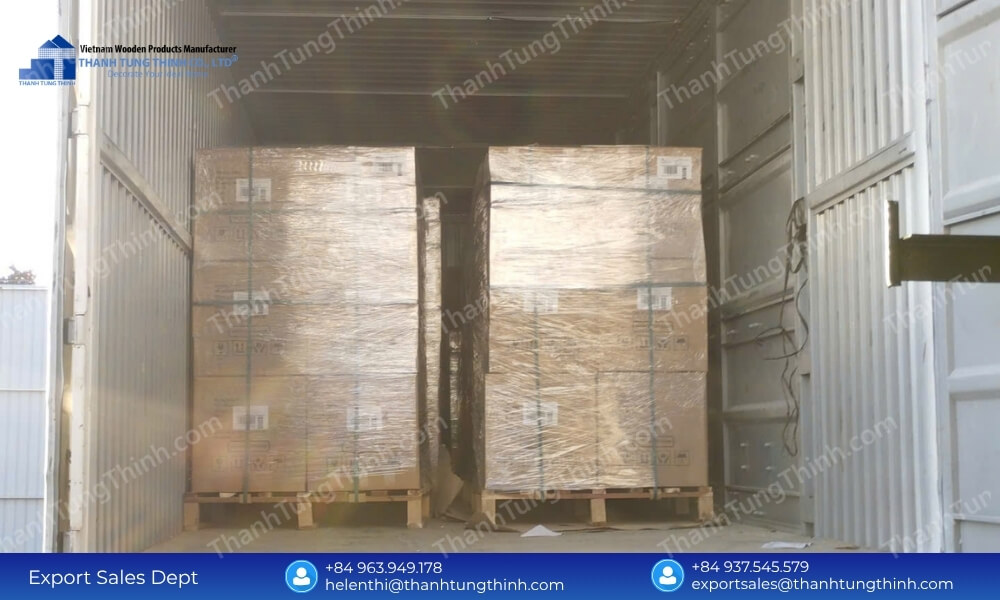
An industrial solid wood bowl supplier houses a dedicated export logistics department that specializes in optimizing Full Container Load (FCL) shipments. Because wooden products are inherently bulky, maximizing the cubic meter (CBM) utilization inside a shipping container is paramount to reducing the landed freight cost per unit.
The factory’s logistics engineers utilize 3D load-planning software to dictate exactly how the master export cartons should be stacked and palletized to eliminate “dead air” within the container. Furthermore, they handle all the complex documentation—including commercial invoices, packing lists, Bills of Lading, and the critical Phytosanitary Certificates proving the wood has been properly treated. This total logistical mastery ensures that the physical supply chain remains frictionless from the factory loading dock to your global distribution centers.
Dominate Your Market with Thanh Tung Thinh’s Manufacturing Power
In an era of supply chain fragility, securing a reliable solid wood bowl supplier with unbreakable infrastructure separates market leaders from those facing out-of-stock scenarios. Thanh Tung Thinh offers continuous production capacity by engineering an uninterrupted operational flow—spanning deep-rooted raw timber procurement, massive automated kiln-drying facilities, and high-speed CNC turning lines.
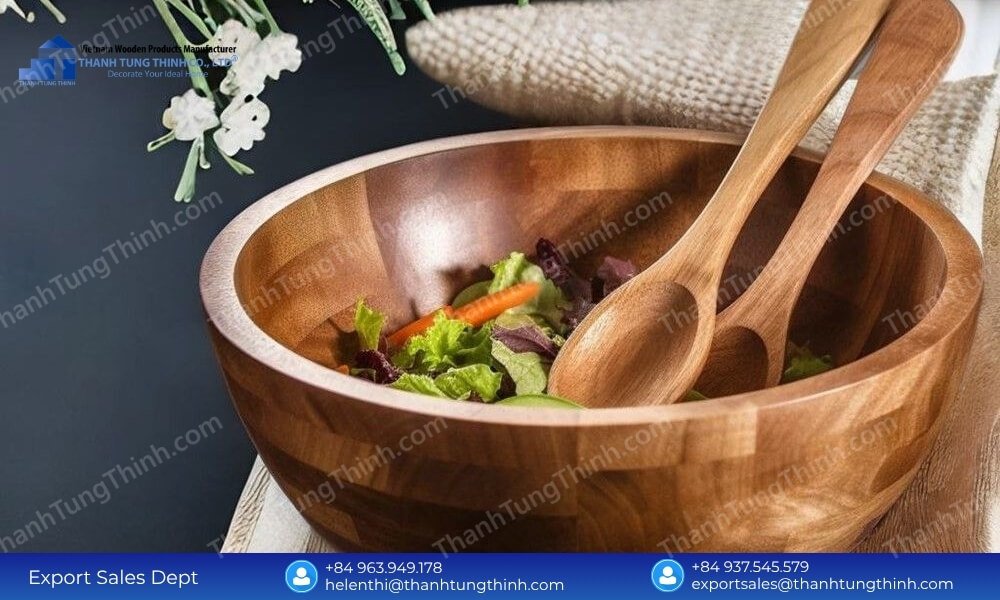
Partnering with Thanh Tung Thinh integrates B2B enterprises with an industrial powerhouse capable of scaling effortlessly to meet aggressive global distribution goals. By eliminating broker bottlenecks, the factory provides total transparency and delivers food-safe wooden homeware with unyielding consistency. Large-scale buyers can optimize wholesale profit margins and protect retail supply lines by contacting Thanh Tung Thinh’s enterprise wholesale division to establish a high-volume manufacturing partnership.
📩 Email: [email protected]
🌐 Website: https://thanhtungthinh.com/
📌 Pinterest: https://www.pinterest.com/THATUWOOD/
📌 Youtube: https://www.youtube.com/@thanhtungthinhmanufacturer
📌 Facebook: https://www.facebook.com/thanhtungthinh
📌 Linkedin: https://www.linkedin.com/company/thanh-tung-thinh-co-ltd
Read more:
Frequently Asked Questions (Q&A)
1. How does your factory ensure a continuous supply of raw materials for massive bulk orders?
We secure long-term agricultural contracts and maintain immense, on-site raw timber holding yards. This proactive buffering ensures our production lines run continuously, completely insulated from seasonal logging restrictions or regional supply shortages.
2. Why is kiln-drying capacity a major indicator of a reliable solid wood bowl supplier?
Kiln drying is the longest phase of wood manufacturing. Without massive, continuous-feed industrial kilns, a factory will bottleneck quickly. Our high-capacity kilns operate 24/7, ensuring a never-ending flow of perfectly dried, export-ready timber.
3. What technologies do you use to ensure exact consistency across thousands of a wooden bowl?
We utilize advanced multi-axis CNC (Computer Numerical Control) wood-turning lathes. These automated machines carve each bowl to exact digital specifications, ensuring absolute dimensional uniformity across massive wholesale production runs.
4. How does your factory manage Quality Control (QC) on such a fast-paced assembly line?
We implement rigorous inline Acceptable Quality Limit (AQL) checks. Our technicians continuously monitor moisture levels, perform digital wall-thickness audits, and inspect the food-safe finish of the products before they ever reach the packaging department.
5. Are the finishes used on your bulk wholesale products completely food-safe?
Yes, entirely. We strictly use premium, non-toxic, food-grade mineral oils, natural beeswax, or specialized compliant lacquers that meet rigorous international FDA and European food safety standards.
6. Can your logistics department optimize Full Container Load (FCL) shipments for our brand?
Absolutely. Our dedicated export engineers use specialized 3D load-planning software to tessellate and palletize the master cartons perfectly, maximizing the cubic volume of 40-foot High Cube containers to drastically reduce your landed freight costs.
7. Does Thanh Tung Thinh offer Vendor Managed Inventory (VMI) or safety stock agreements?
Yes, for our committed enterprise B2B partners, we can negotiate buffer stock agreements. We manufacture and hold a reserve inventory in our climate-controlled warehouses, ready for immediate dispatch to absorb your sudden retail demand spikes.
8. Why is dealing directly with a solid wood bowl supplier better than using a trading company?
Direct integration eliminates costly broker markups, provides transparent lead times, and allows you to communicate directly with the engineers controlling your production. It guarantees supply chain elasticity that trading companies simply cannot provide.

