


Table of Contents
When selecting a signature wooden kitchenware line, commercial distributors and culinary brand owners prioritize product performance over pure aesthetics. As acacia timber dominates kitchens worldwide, serious buyers raise one high-stakes technical question: Does acacia wood cutting board dull knives during intensive daily prep?
Understanding the mechanical interaction between a steel blade and a hardwood surface is critical before making a financial commitment. Evaluating this relationship requires analyzing the Janka hardness scale. If a surface is too soft, it scores deeply and harbors bacteria; if excessively hard, it rolls a delicate knife edge.
A high-grade acacia wood cutting board strikes the perfect structural balance. When manufactured correctly, it offers a commercially viable solution that provides maximum durability while actively protecting fine cutlery, delivering the objective technical insights that B2B importers and corporate retailers need to source inventory with absolute peace of mind.
The Janka Hardness Scale: Analyzing the Hardness of Acacia Wood
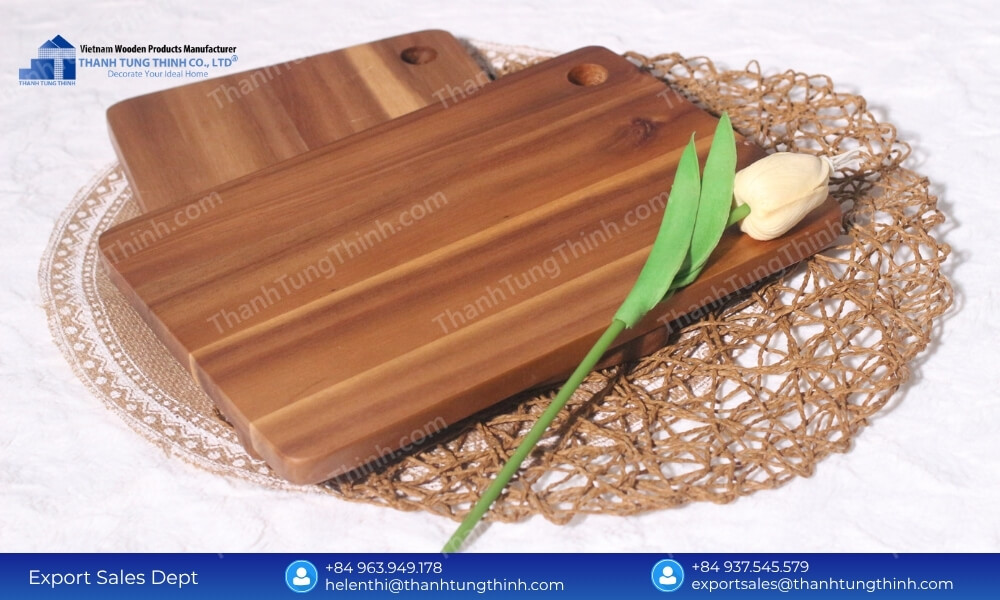
To objectively evaluate if an acacia wood cutting board impacts knife sharpness, we must study the standardized metrics used by wood scientists and global manufacturers: the Janka Hardness Test. This industry-standard test measures the exact force in pounds-force (lbf) required to embed a 0.444-inch steel ball halfway into a plank of timber.
Acacia wood occupies a unique position on this scale, offering a balanced middle ground that hard maple and black walnut cannot duplicate. Let’s look at the scientific data regarding common culinary cutting surfaces:
| Material Type | Janka Hardness Rating (lbf) | Impact on Knife Sharpness | Commercial Surface Longevity |
| Premium Acacia Wood | 1,750 lbf | Minimal Edge Roll | Exceptional (Decades) |
| Hard Maple | 1,450 lbf | Minimal Edge Roll | High (Standard) |
| Black Walnut | 1,010 lbf | Gentle on Blades | Moderate (Scores Easily) |
| Teak Wood | 1,150 lbf | High Blunting (Silica) | High (Oily) |
| Traditional Bamboo | 1,380 lbf | Moderate-High (Silica/Glue) | High (Prone to Splitting) |
| Engineering Plastics | Variable | Rapid Micro-Dulling | Poor (Microplastics) |
With a Janka rating of approximately 1,750 lbf, acacia sits comfortably within the commercial “equilibrium zone.” It is dense enough to resist deep pitting and structural gouging, which prevents food particles from building up. At the same time, it remains soft enough to cushion high-grade stainless steel cutlery.
So, does acacia wood cutting board dull knives instantly? The direct answer is no. Its natural cellular structure flexes slightly under pressure, absorbing impact forces without rolling or cracking the fine cutting edges of standard kitchen knives.
Does Acacia Wood Cutting Board Dull Knives? The Role of Silica Content
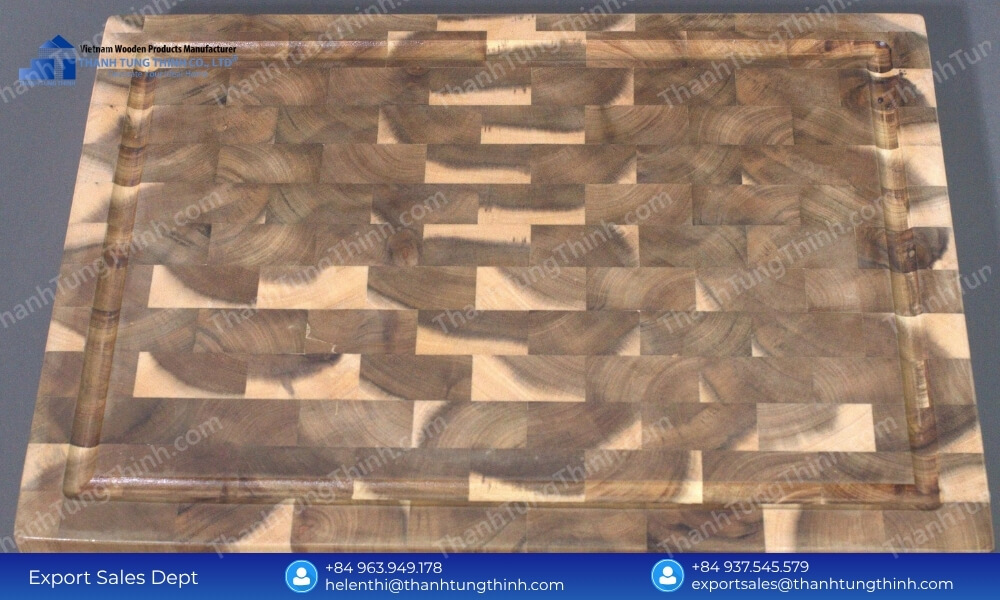
When evaluating wood surfaces for high-volume commercial use, internal mineral composition determines tool wear. Alternative hardwoods like teak and bamboo contain high concentrations of microscopic silica crystals that act like sandpaper, grinding against steel and dulling an edge.
Fortunately, a high-quality acacia wood cutting board features an exceptionally low silica content profile. Its wood cells are primarily composed of flexible cellulose fibers and natural protective oils rather than abrasive, quartz-like mineral deposits, ensuring the blade meets organic fiber instead of abrasive structures.
This distinct mineral purity explains why health-conscious chefs and commercial procurement teams select acacia for high-volume environments. Sourcing from an experienced acacia wood cutting board manufacturer allows global distributors to guarantee that end consumers enjoy an incredibly durable surface that maintains knife sharpness over thousands of meal prep cycles.
Edge-Grain vs. End-Grain: How Construction Impacts Blade Edge Retention
For B2B buyers designing a product catalog or sourcing for a hospitality chain, understanding the differences between edge-grain and end-grain construction is vital. How an acacia wood cutting board is assembled by a factory plays a major role in how it interacts with professional cutlery.
Edge-Grain Acacia Boards: Sleek, Lightweight, and Commercial-Ready
Edge-grain cutting boards are built by laying premium strips of seasoned acacia wood horizontally, parallel to one another, and bonding them together under intense hydraulic pressure.
- Blade Interaction: The flat, horizontal side of the wood grain faces upward to form the cutting surface. Because the steel blade cuts across the wood fibers, it encounters a bit more resistance.
- The B2B Verdict: Does an edge-grain acacia wood cutting board dull knives? Over extended periods of high-volume dicing, it will cause very mild, standard edge wear that requires normal honing. However, these boards are highly popular for retail and wholesale markets because they are thinner, lighter, and very cost-effective to manufacture at scale.
End-Grain Acacia Boards: The Self-Healing Chef Grade Option
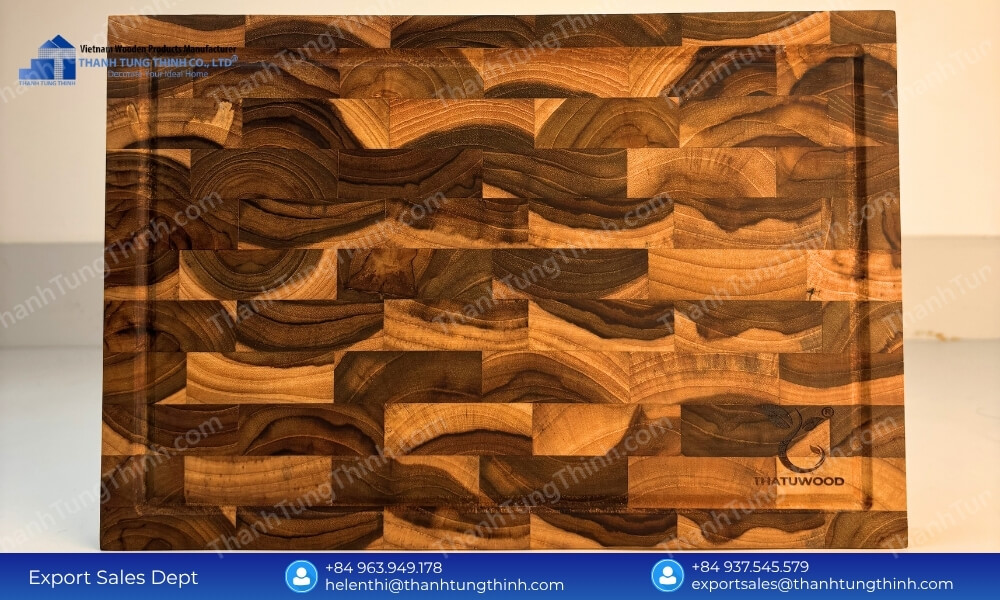
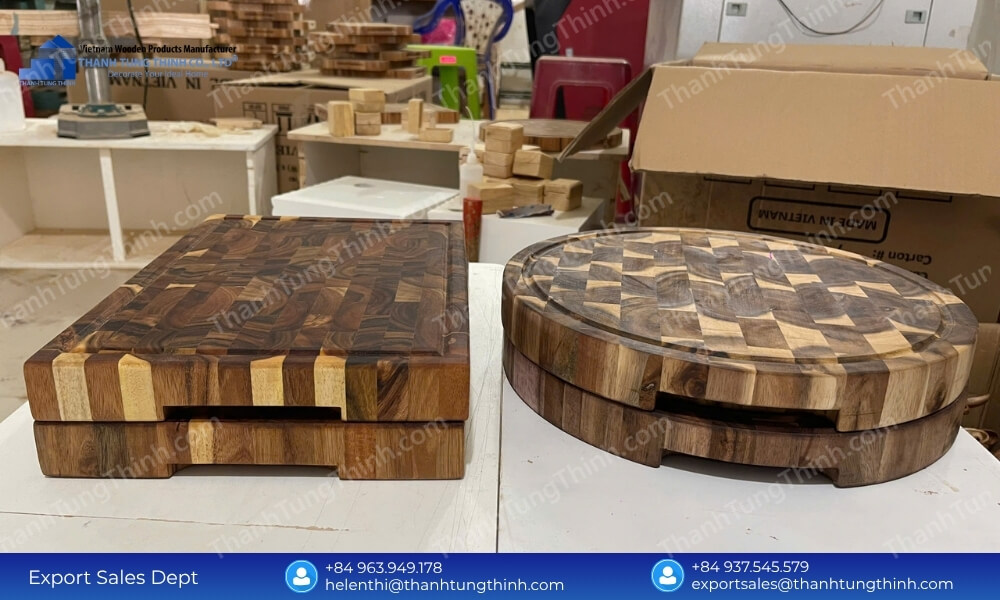
End-grain cutting boards are meticulously engineered by assembling short blocks of acacia vertically, so that the open cut ends of the grain face upward, forming a beautiful checkerboard pattern.
- Blade Interaction: This configuration represents the pinnacle of knife protection. When a sharp chef knife strikes an end-grain board, the blade slips directly between the vertical wood fibers, much like pushing a pin into the bristles of a brush. When the blade lifts, the resilient fibers spring back together—a process known as “self-healing.”
- The B2B Verdict: This specialized layout virtually eliminates premature blade dulling. End-grain surfaces are the premier choice for luxury retail brands and professional test kitchens where chefs use expensive, delicate carbon steel knives that require maximum edge retention.
Balancing Hardness and Flexibility: Why Acacia is an Elite Choice for B2B Sourcing
For global kitchenware importers, wholesale distributors, and e-commerce brands, choosing a core product line involves managing several competing factors. The perfect commercial board must offer three core performance traits:
- High Structural Stability: The product must remain perfectly flat and warp-free during oceanic shipping and long periods in regional warehouses.
- Scratch and Dent Resistance: The surface must withstand heavy retail handling and intense kitchen preparation without looking worn.
- Blade-Friendly Density: The material must provide excellent edge protection to ensure strong consumer reviews and low return rates.
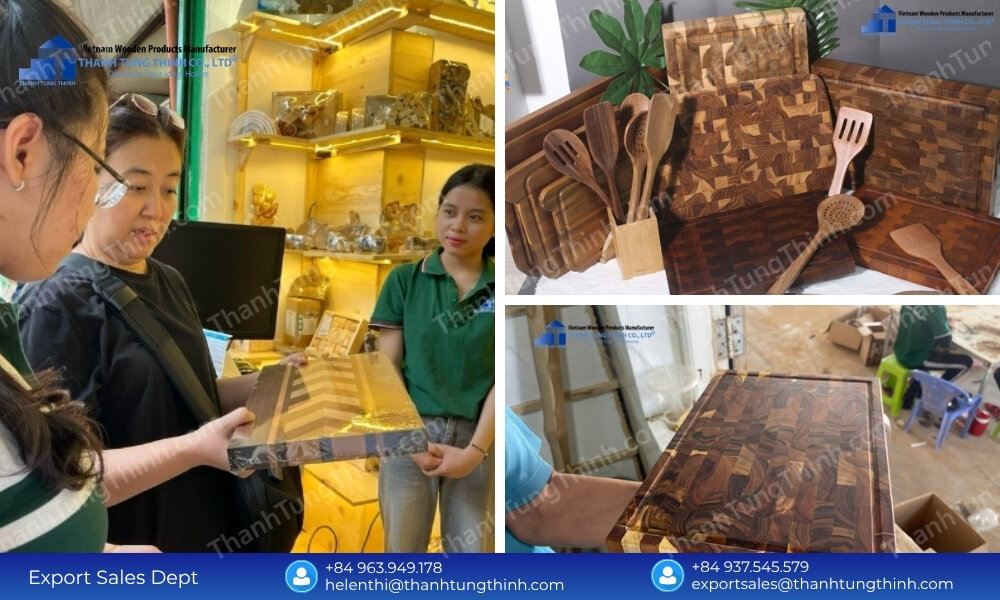
An acacia wood cutting board satisfies all three requirements beautifully. Its interlocking grain structure gives it excellent dimensional stability, helping it resist warping or cracking during seasonal humidity shifts. Meanwhile, its 1,750 lbf Janka hardness ensures it can handle heavy cleavers without scratching, while remaining gentle on professional cutlery.
By choosing acacia, bulk buyers can offer a high-performance alternative to soft woods that scratch too easily, or synthetic plastics that generate microplastics and ruin knife edges.
How Improper Factory Processing Can Turn a Good Wood into a Knife-Dulling Surface
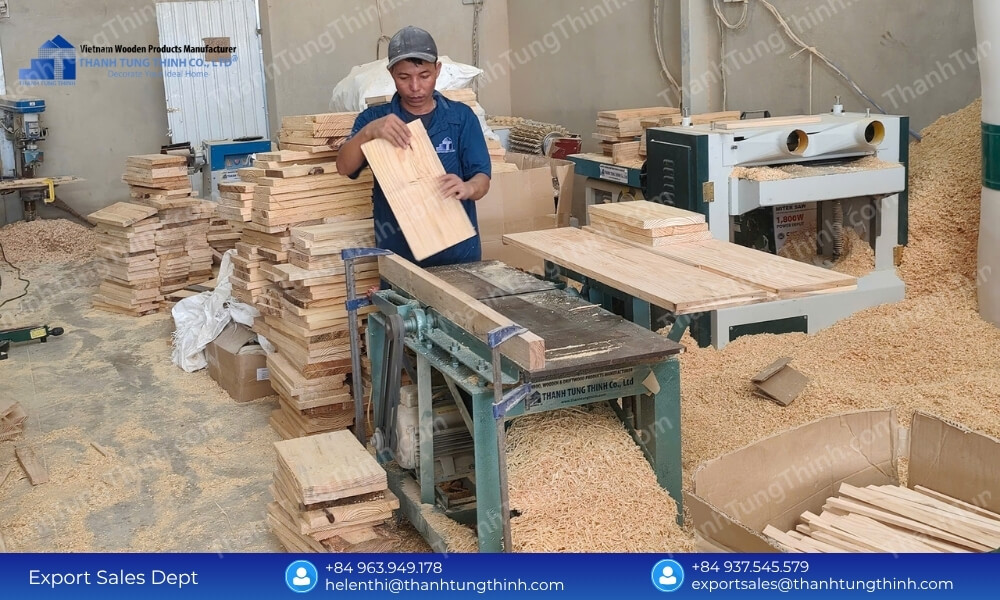
When B2B procurement professionals ask, does acacia wood cutting board dull knives, they must look beyond the raw material and examine the manufacturing process. Even the finest acacia timber can become a knife’s worst enemy if processed in an unvetted or low-cost factory.
The Danger of Rushed Kiln Drying
Raw timber contains high levels of ambient moisture. To make a stable cutting board, the wood must undergo slow, precise kiln drying to reduce internal moisture to a uniform 8% to 12%.
If a factory rushes this process to cut costs, the wood cells collapse and harden unevenly. This creates dense, brittle pockets across the board’s surface that can dull or chip a chef’s knife. Professional manufacturing requires advanced, computerized kiln facilities to ensure the final product maintains a balanced density across its entire surface.
The Risk of Cheap Adhesives and Chemical Lacquers
The choice of assembly materials also plays a key role in knife protection. Low-end factories often use low-grade industrial glues or apply cheap, high-gloss polyurethane lacquers to make the wood look more appealing.
When a knife hits these synthetic chemical barriers, it encounters rigid polymers that dull the blade far faster than natural wood fibers. A world-class manufacturer uses exclusively non-toxic, FDA-approved food glues and finishes the board with pure, deeply absorbing plant-based oils. This ensures the blade interacts only with flexible, natural wood cells.
Best Practices to Keep Acacia Boards and Cutlery in Top Condition
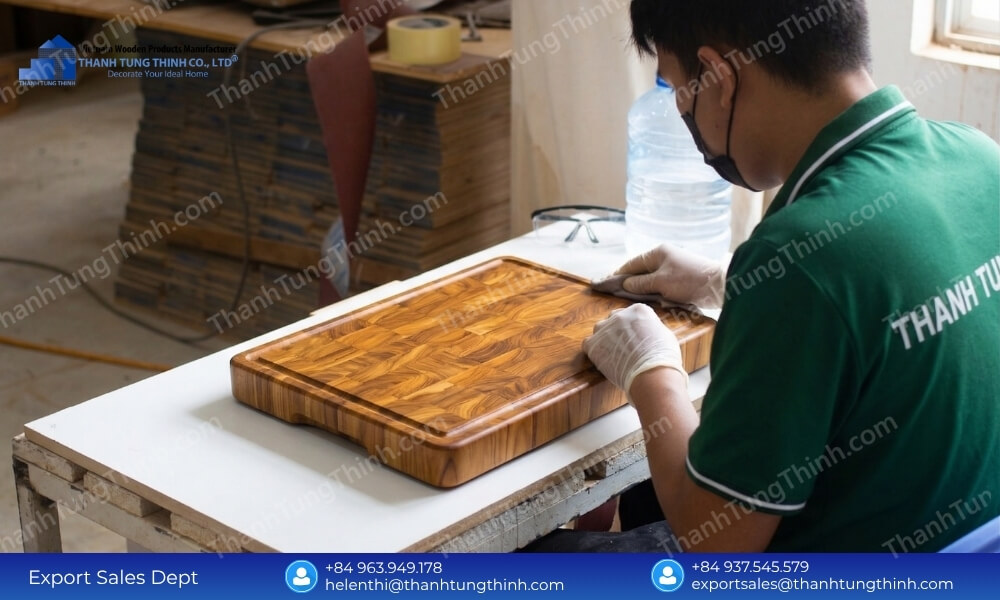
To maximize the performance of a premium wholesale or retail acacia wood cutting board, educating end users on simple, proper care routines can help extend product lifespans and keep blades sharp for years.
- Always Hand Wash: Clean the board immediately after use with lukewarm water and a mild, plant-based soap. Never place a wooden board in a commercial dishwasher, as the extreme heat and harsh detergents will warp the timber and damage knife-friendly fibers.
- Routine Oil Seasoning: Wipe the dry board down with food-grade mineral oil or natural beeswax once a month. This preserves the wood’s moisture barrier and keeps the surface supple and gentle on knife edges.
- Keep Knives Honed: Pair a premium acacia surface with a regular knife maintenance routine. Using a standard ceramic honing rod ensures blades glide smoothly across the dense grain structure.
Partner with a Premier Global Acacia Wood Cutting Board Manufacturer
Answering the technical question—does acacia wood cutting board dull knives—ultimately depends on choosing a manufacturing partner who understands wood science, precision engineering, and food safety. For global kitchenware brands and high-volume distributors, working with an experienced factory is essential to delivering top-tier performance to clients.
This is why international B2B buyers trust Thanh Tung Thinh as their primary manufacturing partner in Vietnam. Specializing in high-quality wooden kitchenware, Thanh Tung Thinh produces premium acacia wood cutting board collections utilizing advanced computerized kiln-drying technology to ensure every board achieves a stable, knife-friendly density.
Furthermore, they use exclusively 100% FDA-approved, non-toxic glues and pure organic mineral oils. Contact Thanh Tung Thinh today to request factory samples, discuss custom OEM/ODM specifications, and partner with a reliable manufacturer dedicated to quality, sustainability, and commercial success.

📩 Email: [email protected]
🌐 Website: https://thanhtungthinh.com/
📌 Pinterest: https://www.pinterest.com/THATUWOOD/
📌 Youtube: https://www.youtube.com/@thanhtungthinhmanufacturer
📌 Facebook: https://www.facebook.com/thanhtungthinh
📌 Linkedin: https://www.linkedin.com/company/thanh-tung-thinh-co-ltd

