


Table of Contents
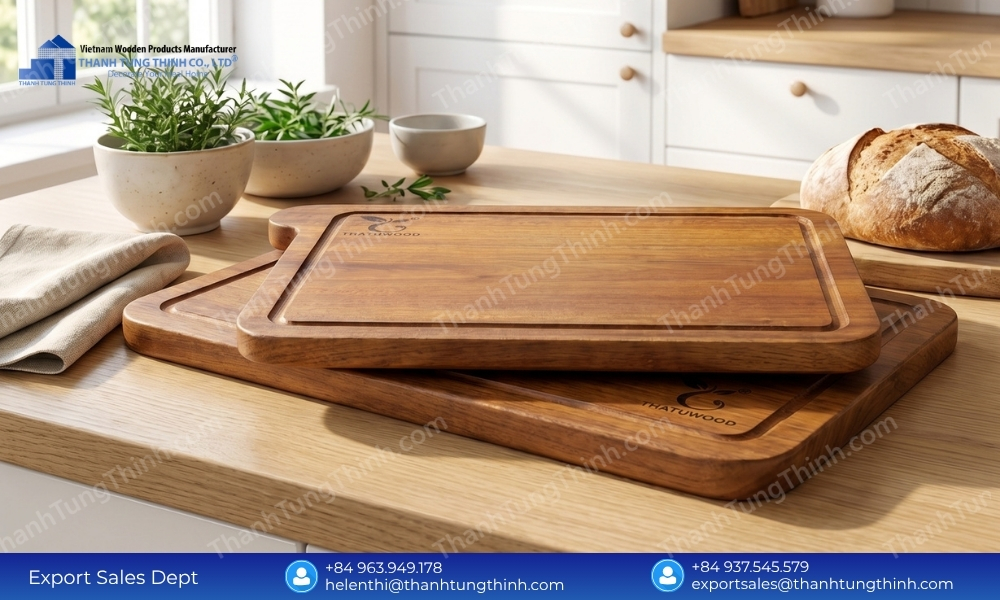
In the competitive commercial kitchenware market, sourcing food preparation surfaces involves navigating strict safety compliance, toxic chemical leaching, and cross-contamination risks.
As acacia rapidly emerges as a dominant global trend for high-end restaurants and large-scale distribution, commercial procurement managers frequently raise a high-stakes question: Are acacia wood cutting boards safe for rigorous food contact, or do they pose hidden health risks?
For professional importers, understanding material safety is vital before placing bulk manufacturing orders to protect brand reputation. Fortunately, premium acacia wood offers an exceptionally secure, non-toxic, and naturally hygienic solution that meets strict international food safety guidelines.
This comprehensive B2B analysis dives into the botanical mechanics, density, and chemical safety profiles of this tropical hardwood, answering once and for all if are acacia wood cutting boards safe for long-term commercial use.
The Botanical Safety Profile of Acacia Wood
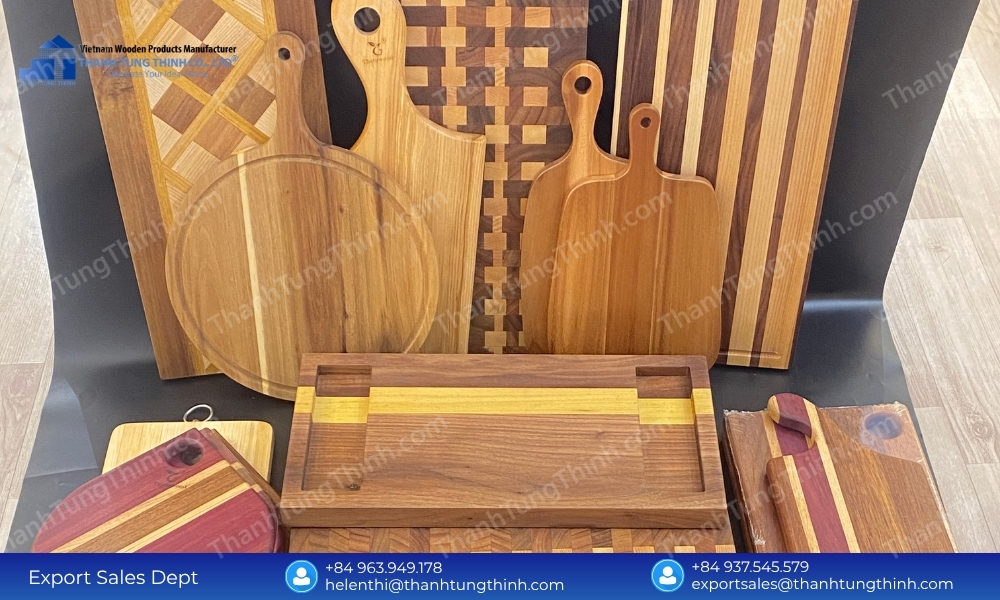
To evaluate if a material is genuinely food-safe, we must look at its chemical composition and botanical traits. Acacia is a dense, fast-growing hardwood heavily cultivated in sustainably managed plantations across Vietnam. Unlike certain exotic woods that contain toxic sap or volatile organic compounds (VOCs), the acacia tree is fundamentally non-toxic, biocompatible, and completely safe for food contact.
For centuries, its clean profile has made it ideal for crafting domestic eating utensils. The wood is naturally rich in tannins, which act as a defense mechanism against pests. In a commercial culinary setting, these organic compounds ensure that an acacia wood cutting board provides an inhospitable environment for harmful microscopic fungi and surface mold, even in high-humidity professional kitchens.
This innate botanical purity is exactly why international health inspectors and safety-conscious hospitality buyers view high-quality acacia as an elite material.
Why Health-Conscious Chefs Choose It: The Science of Natural Hygiene
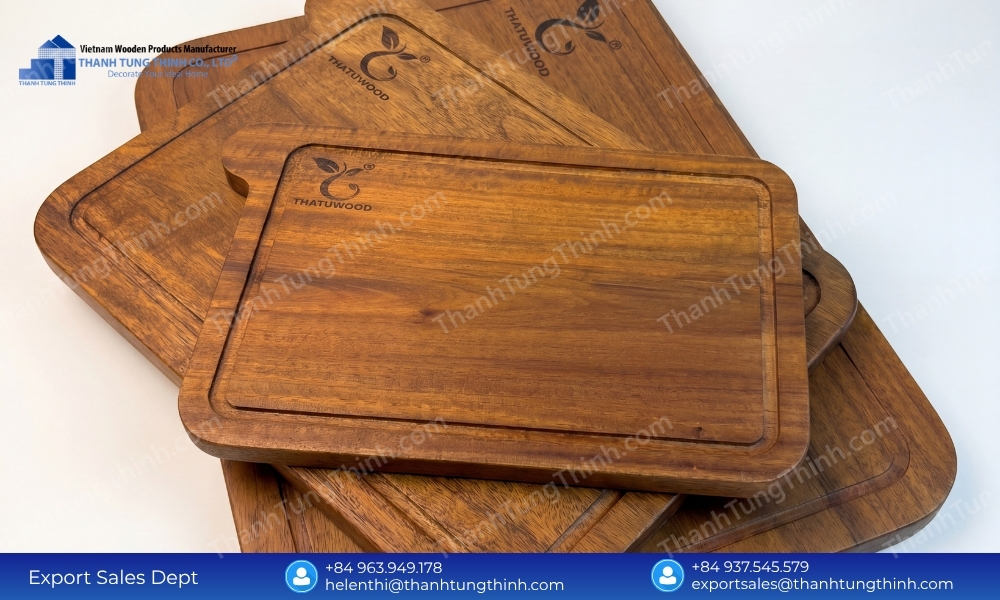
Modern microbiological research has disproven the myth that plastic is more sanitary than wood, proving a high-density acacia wood cutting board is significantly more hygienic. Sharp knives score plastic easily, creating deep grooves that trap hazardous pathogens like Salmonella and E. coli, while releasing microscopic plastic debris into meals.
Conversely, acacia’s unique capillary cell structure actively draws bacteria down into its inner matrix, where the pathogens naturally suffocate and die from a lack of air and moisture.
Boasting an impressive Janka hardness rating of 1,750 lbf, acacia outperforms Hard Maple (1,450 lbf) and Black Walnut (1,010 lbf). It strikes the perfect balance—providing an extremely low moisture absorption rate and a resilient cutting plane that resists deep, jagged gouges, explaining why health-conscious chefs choose it to guarantee absolute food safety and protect their kitchen environments.
Adhesives and Manufacturing: The Real Deciding Factor in Material Safety
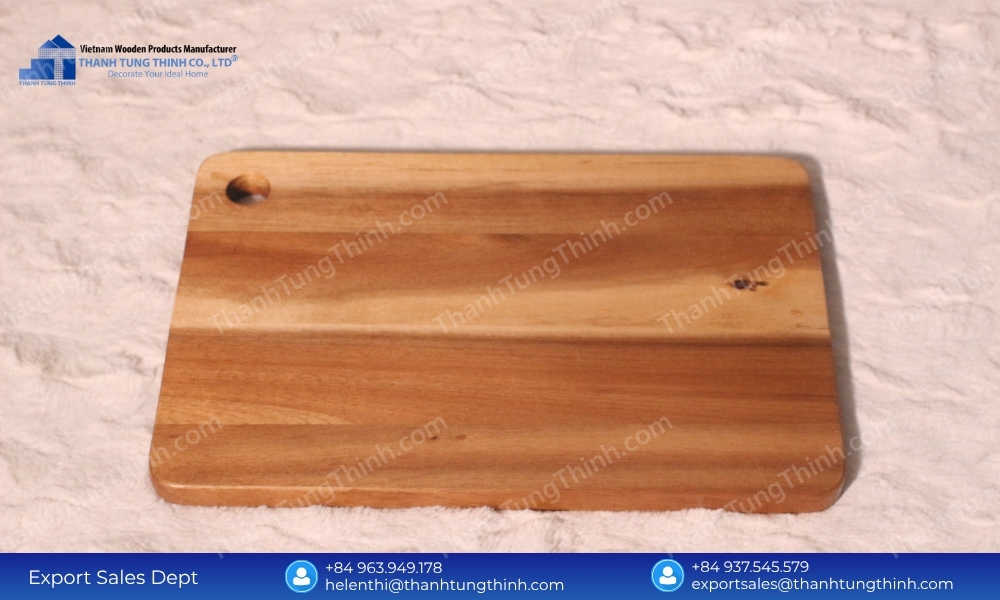
When B2B importers ask, are acacia wood cutting boards safe, the answer does not depend solely on the raw wood itself. The real determining factor for safety lies within the manufacturing process. Because commercial cutting boards are constructed by assembling multiple blocks or strips of seasoned wood together, the choices made regarding industrial adhesives and surface coatings dictate whether the final product is genuinely non-toxic.
Eliminating Toxic Industrial Glues
Low-cost, unverified factories frequently cut production corners by utilizing cheap industrial wood glues that contain urea-formaldehyde or toxic chemical solvents. These dangerous chemical compounds gas-off into the air during storage and can slowly leach into hot, acidic, or fatty foods during meal preparation.
To ensure maximum safety, a world-class manufacturing partner must exclusively utilize premium, FDA-approved, non-toxic, and water-resistant adhesives, such as Titebond III or specialized food-grade cross-linking emulsions. These advanced glues cure into a completely inert, food-safe bond that will never leach chemicals, even when exposed to hot juices or frequent warm-water wash cycles.
The Role of Non-Toxic, Plant-Based Surface Finishes
A raw, unfinished wooden board will absorb moisture too quickly, leading to premature cracking. Therefore, the surface must be properly sealed. Safe manufacturing dictates that the wood should only be conditioned with pure, food-grade mineral oil, fractionated coconut oil, or natural organic beeswax blends.
Some low-end decorative boards are finished with synthetic polyurethane lacquers or chemical varnishes to create an artificially glossy look. These chemical coatings will quickly chip off under sharp knife strikes, contaminating the fresh ingredients underneath. True culinary-grade acacia boards rely strictly on deep oil saturation to create an organic, hydrophobic barrier that forces water to bead up and roll away naturally.
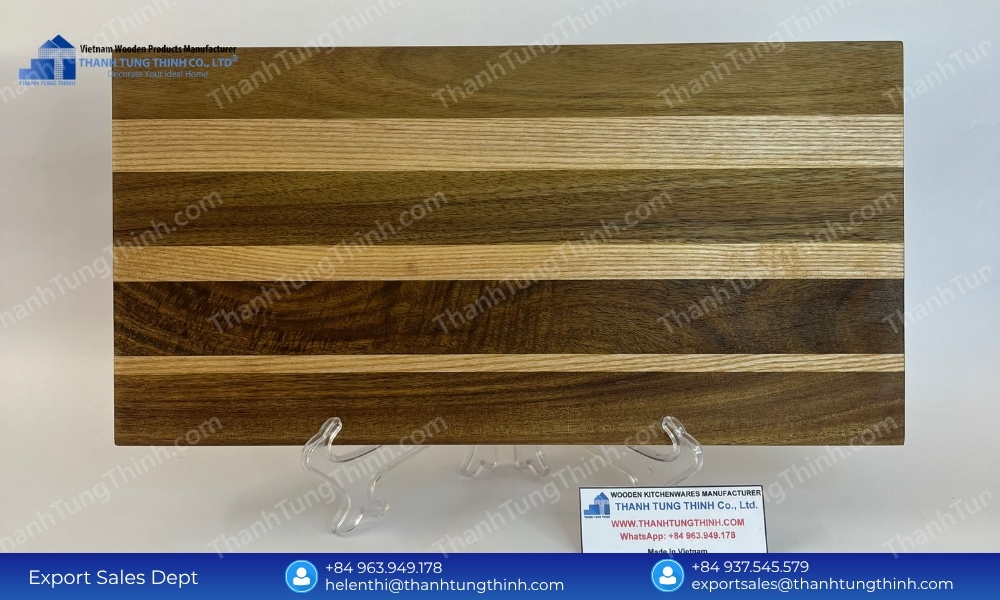
Key Commercial Advantages of Edge-Grain vs. End-Grain Acacia Boards
For commercial distributors, wholesale brands, and restaurant chains planning a product lineup, understanding the structural differences between edge-grain and end-grain construction is vital for aligning with specific client expectations and safety requirements.
Edge-Grain Acacia Boards: Sleek, Lightweight, and Cost-Effective
Edge-grain boards are manufactured by placing long, selected strips of acacia wood side-by-side horizontally and bonding them firmly under extreme pressure.
- Structural Profile: The flat, horizontal sides of the wood grain form the main cutting surface, displaying long, sweeping, and beautiful grain aesthetics.
- Safety & Utility: These boards are lighter, thinner, and highly cost-effective, making them exceptional retail products for home cooks or luxury charcuterie serving boards.
- Maintenance Note: Because the knife cuts across the horizontal grain profile, surface scratches will become visible over time, requiring routine light sanding to maintain a perfectly smooth, sanitary finish.
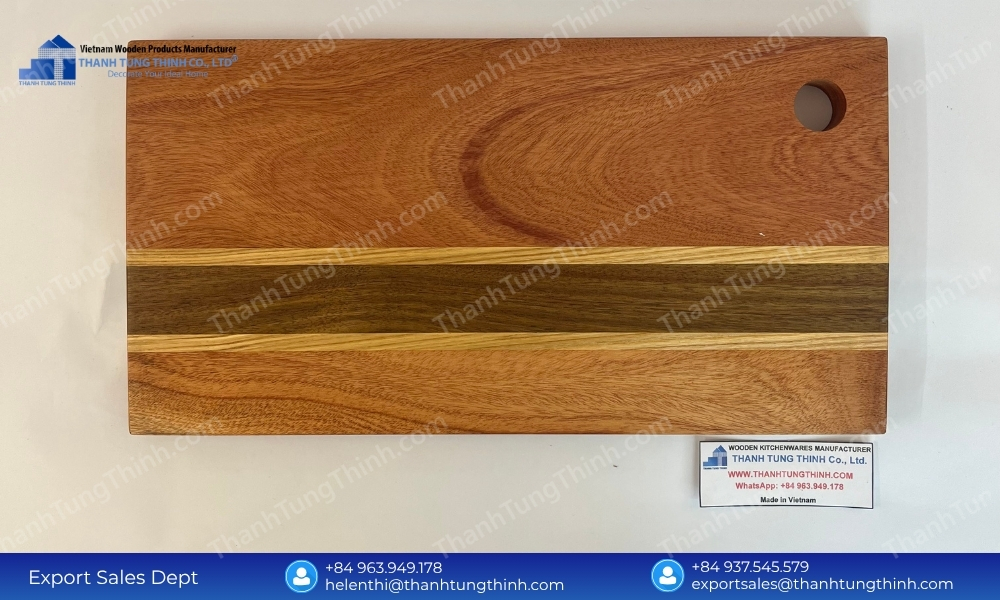
End-Grain Acacia Boards: The Elite, Self-Healing Masterpiece
End-grain boards are meticulously engineered by arranging short blocks of acacia wood vertically, so that the open, cut end of the wood fibers faces upward, creating a stunning mosaic or checkerboard appearance.
- Structural Profile: This configuration is highly favored by high-volume professional kitchens and health-conscious chefs worldwide due to its unique “self-healing” properties.
- Safety & Utility: When a heavy kitchen knife strikes an end-grain board, the sharp blade glides easily between the vertical wood fibers rather than slicing across them. When the knife is lifted, these resilient fibers naturally spring back together. This minimizes surface scarring and prevents deep gouges from forming.
- Maintenance Note: End-grain boards absorb conditioning oils deeply through the open pores, creating an exceptionally strong moisture barrier. They are thicker, heavier, and carry a premium wholesale price point, reflecting their elite durability.
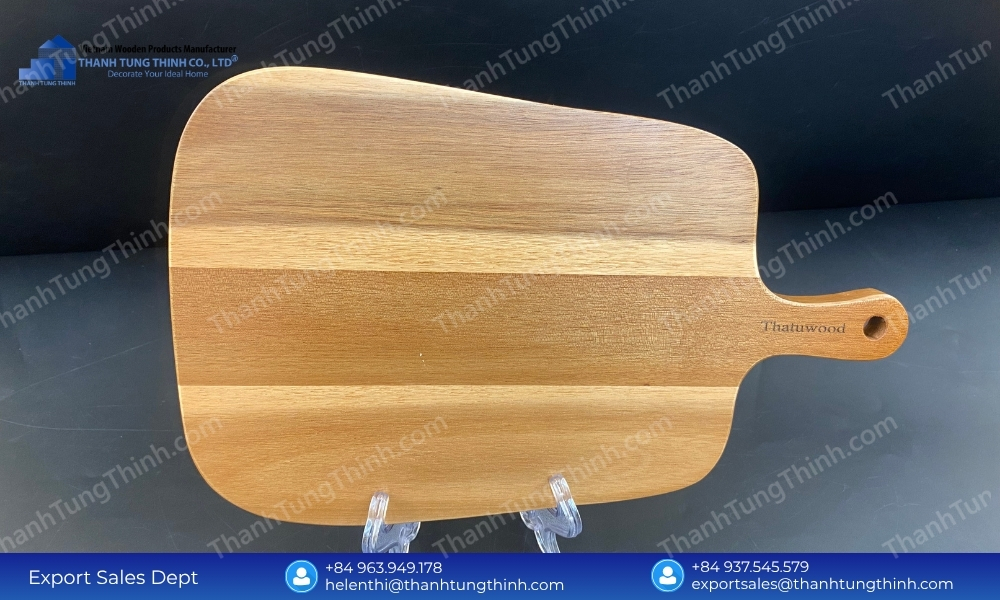
Maintaining Commercial Safety: Best Practices for High-Volume Kitchens
Even a certified acacia wood cutting board requires disciplined care to maintain its natural hygienic properties in high-volume environments. Implementing standard operational procedures (SOPs) ensures long-term sanitation compliance and protects your commercial investment.
First, wash the board immediately after use with lukewarm water and a mild, eco-friendly detergent. For deep deodorization when handling fragrant ingredients like garlic or seafood, sprinkle coarse sea salt and scrub with a fresh lemon half to extract stains naturally.
Crucially, observe an absolute dishwasher prohibition; extreme heat and prolonged water saturation dissolve safe food glues, causing immediate warping or splitting. Finally, always utilize vertical air-drying on an open wire rack. Storing boards upright ensures equal airflow, allowing the timber to dry evenly and preventing base moisture pooling, which is the primary cause of commercial mold growth.
Secure Your Supply Chain with a Certified, Safe Acacia Manufacturing Partner
Answering the pivotal question—are acacia wood cutting boards safe—ultimately leads back to choosing a manufacturing partner that refuses to compromise on quality or environmental ethics. For global kitchenware brands, partnering with a fully compliant factory is the single most important step to delivering products that modern consumers trust.
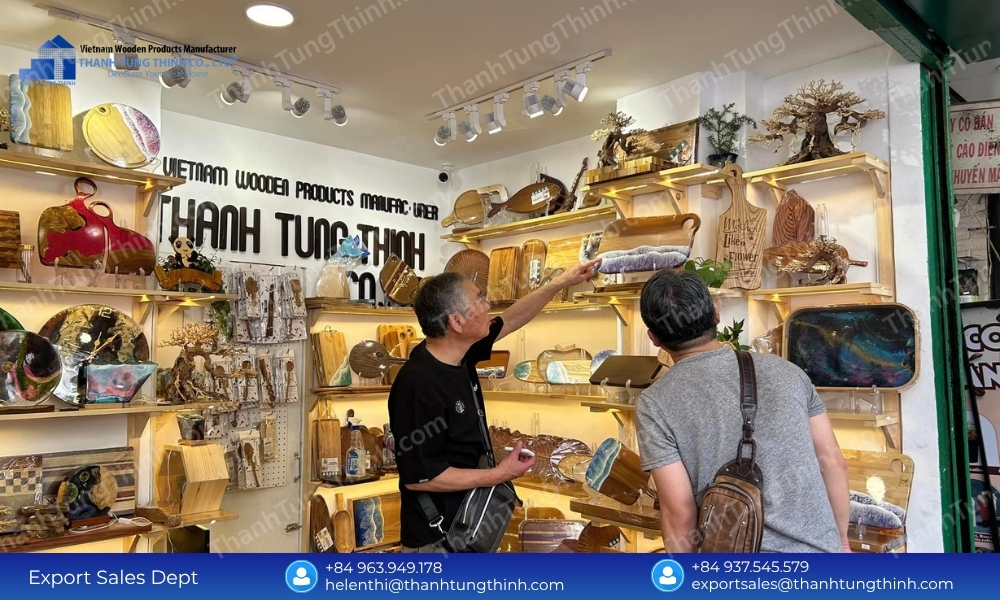
This is precisely why international B2B procurement professionals choose Thanh Tung Thinh as their trusted manufacturing partner in Vietnam. Specializing in sustainable wooden kitchenware, Thanh Tung Thinh produces safe, certified acacia wood cutting board collections utilizing exclusively 100% FDA-approved, non-toxic, formaldehyde-free glues and pure, plant-based food-grade oils.
Operating under strict FDA and LFGB compliance, they ensure every product meets the highest regulatory benchmarks. Contact Thanh Tung Thinh today to request factory samples, discuss custom OEM/ODM dimensions, and partner with a manufacturer that puts safety, sustainability, and commercial excellence first.
📩 Email: [email protected]
🌐 Website: https://thanhtungthinh.com/
📌 Pinterest: https://www.pinterest.com/THATUWOOD/
📌 Youtube: https://www.youtube.com/@thanhtungthinhmanufacturer
📌 Facebook: https://www.facebook.com/thanhtungthinh
📌 Linkedin: https://www.linkedin.com/company/thanh-tung-thinh-co-ltd
Frequently Asked Questions Regarding Acacia Food Safety
- Are acacia wood cutting boards safe to use with raw poultry and meats?
Yes. Because of acacia’s high structural density and natural capillary action, it is completely safe for raw meats. Bacteria are pulled inside the wood matrix where they naturally die. However, to prevent cross-contamination, commercial kitchens should always maintain separate, dedicated boards for raw meats and ready-to-eat produce.
- Do acacia wood cutting boards contain toxic chemicals or allergens?
Naturally grown acacia timber is 100% hypoallergenic and free of toxic compounds. It is completely safe for individuals with sensitive skin or food allergies. The only potential risk stems from factories using unverified, non-food-safe glues or chemical lacquers during assembly, which highlights the critical importance of vetting your manufacturer.
- How can a business tell if an acacia board is finished with food-safe materials?
A food-safe oil finish will feel completely smooth but slightly matte, and water dropped onto the surface will bead up instantly. If a board has a thick, plastic-like, high-gloss shine or emits a strong chemical paint smell upon unboxing, it has likely been coated with unsafe chemical lacquers and should be rejected for food use.
- What international food safety certifications should a commercial buyer look for?
B2B procurement managers should ensure their manufacturing partner can provide official documentation demonstrating compliance with global safety bodies. Look for factories with FDA food-contact compliance, LFGB (European Food Safety) certifications, and strict ISO 9001 quality management systems.

