


Table of Contents
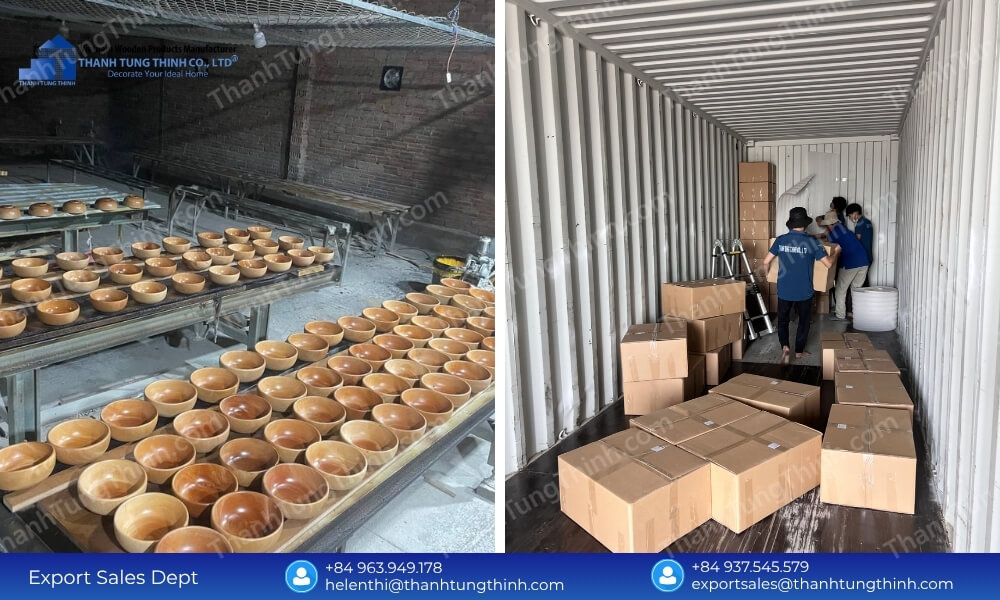
In the highly competitive global B2B marketplace, implementing a flawless wooden bowl export packaging framework is paramount to safeguarding premium craftsmanship during long-distance maritime transits. Wholesalers and bulk purchasers frequently express immense concern regarding transit damages, knowing that an inadequate packaging system can lead to deformed structures or ruined surfaces for any premium wooden bowl.
By implementing a standardized workflow focused on a comprehensive wooden bowl export packaging method, top-tier global manufacturers ensure their delicate wooden products arrive in perfect merchantable condition, maximizing supply chain cost-efficiency and building bulletproof cross-border trust.
The Paradigm of High-Volume Wooden Bowl Export Logistics
For international buyers securing bulk shipments of artisanal homeware, the structural integrity of the shipping containment represents the thin line between profitability and severe financial loss. When hundreds of heavy items are stacked together, the gravitational force exerted on the lower strata of containers escalates exponentially.
Without engineered solutions specifically designed around wooden bowl export packaging protocols, standard retail packaging quickly collapses under extreme stack pressures. This comprehensive technical guide analyzes how advanced heavy-duty carton technology, meticulous structural optimization, and professional palletization processes mitigate operational risks for global importers.
Every commercial wooden bowl possesses unique organic properties, making it highly susceptible to surrounding environmental variables. Changes in atmospheric pressure, rapid shifts in ambient humidity, and prolonged exposure to salt-laden sea breezes can cause natural timber to crack, warp, or develop devastating mold growths.
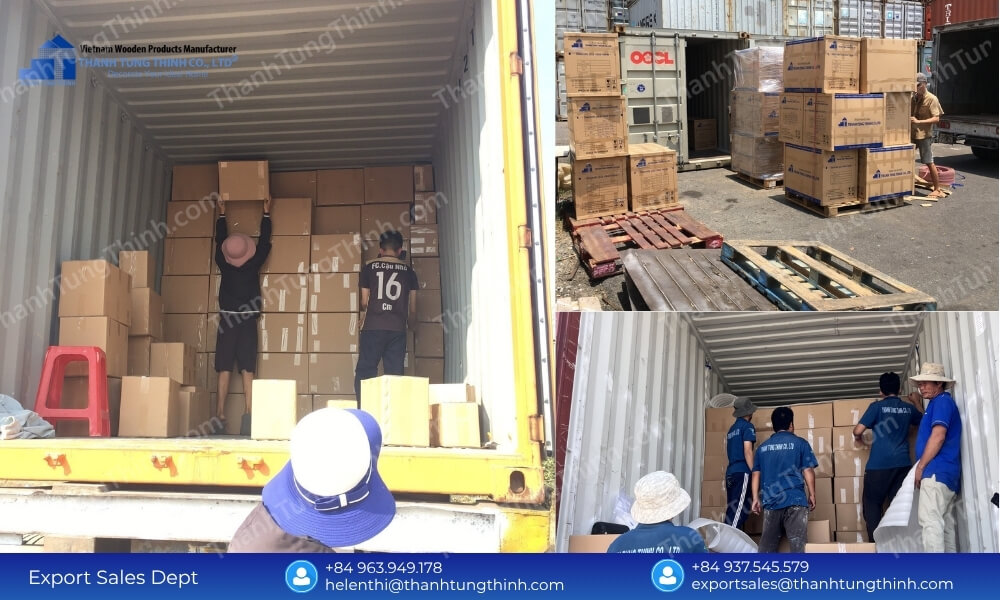
Therefore, modern B2B distribution demands that wooden bowl export packaging serves not only as a physical shield against mechanical impacts but also as a highly regulated microclimate barrier that stabilizes the internal atmosphere throughout multi-week maritime freight schedules.
Engineering the Heavy Duty Corrugated Carton for Maximum Compression Resistance
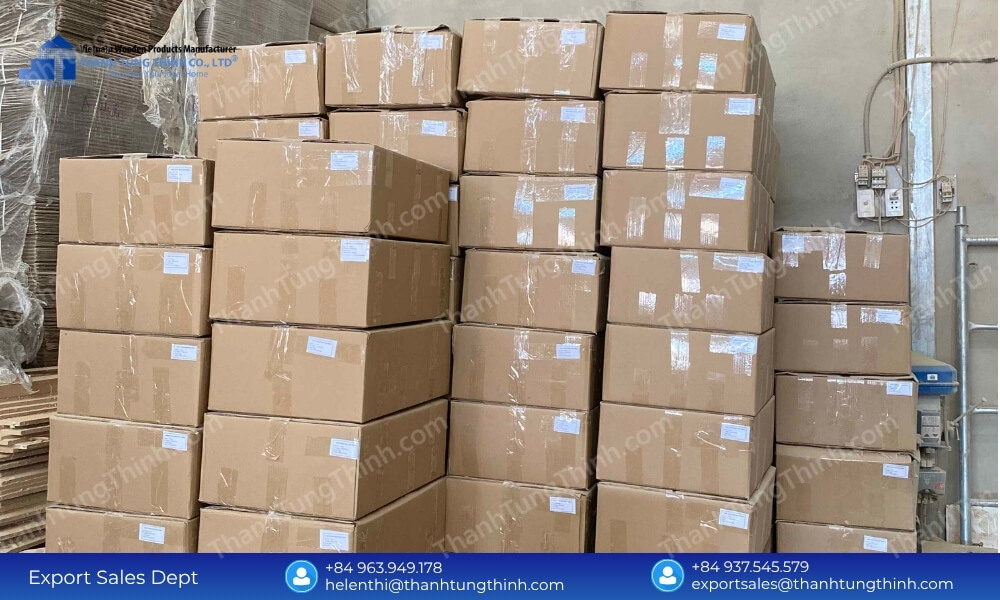
To eliminate the nightmare of crumpled, ruptured, or collapsed boxes at destination ports, professional manufacturers utilize premium heavy-duty corrugated cartons engineered for extreme structural endurance. Standard single-wall cardboard completely fails to support the structural weight of dense timber products.
Consequently, a rugged wooden bowl export packaging system specifies either 5-ply (Double Wall) or 7-ply (Triple Wall) heavy-duty corrugated configurations. These multi-layered industrial paperboards combine alternating flutes and structural liners to optimize the Box Compression Test (BCT) values, ensuring the lower boxes easily withstand multi-ton loads in high-density container layouts.
The internal engineering of these boxes utilizes strategic flute combinations, such as a BC or AA flute matrix, which dramatically improves puncture resistance and vertical load-bearing capacity. Additionally, the outer surfaces are treated with advanced moisture-resistant compounds.
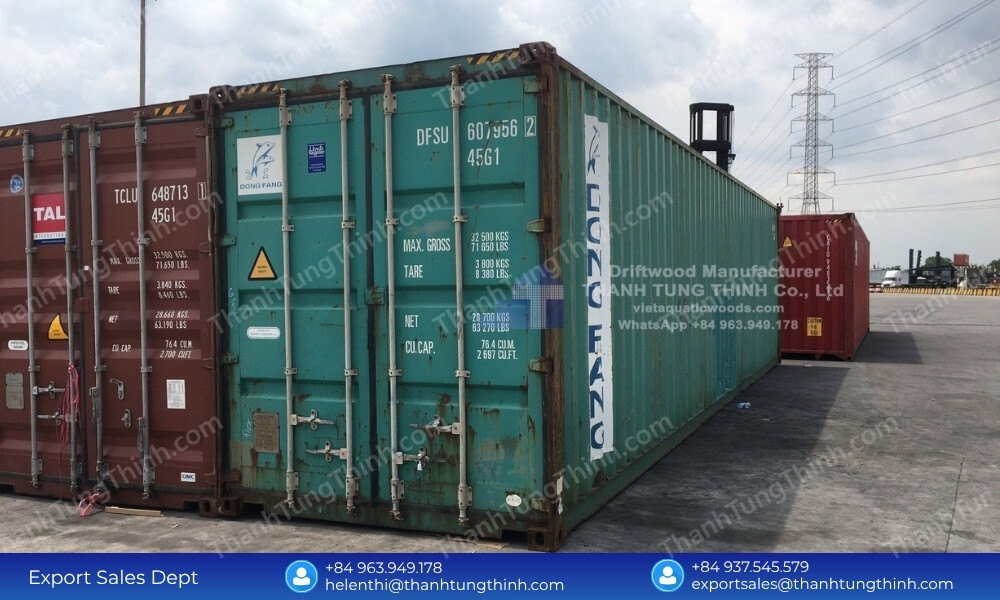
This specialized coating ensures that the wooden bowl export packaging remains rigid and functionally intact even when transitioning through highly humid tropical waters or cold maritime channels, preventing the primary structural board from absorbing ambient moisture and turning soft or structurally compromised.
Advanced Palletization Frameworks and Secure Unitization
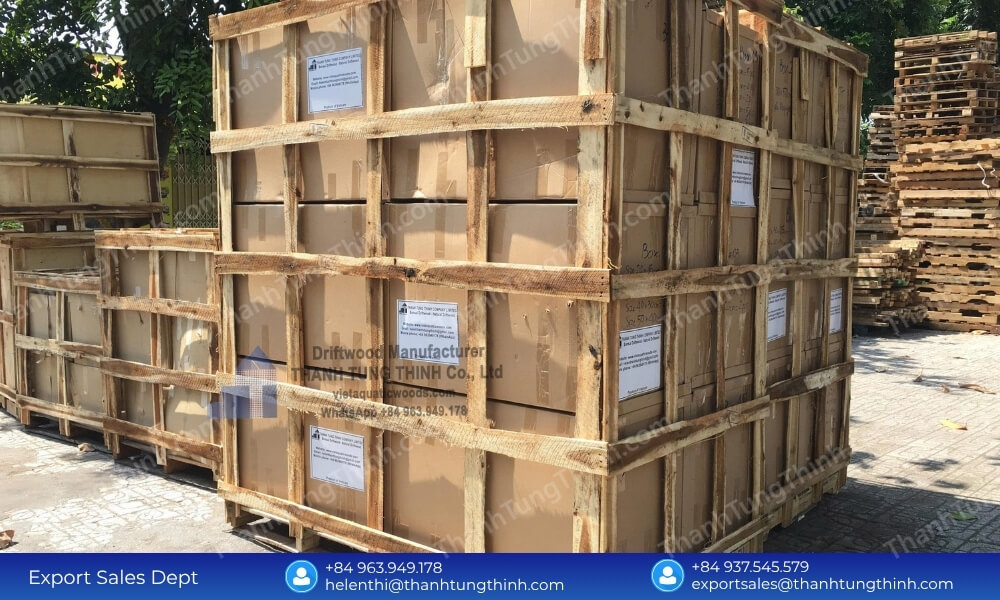
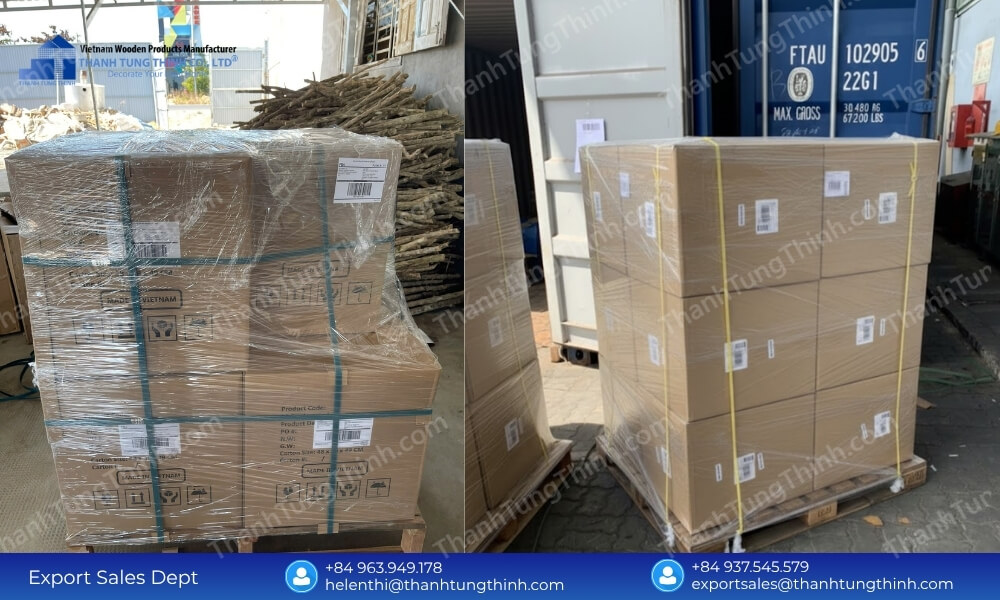
Efficient ocean freight relies on seamless palletization mechanics to enable swift mechanical handling via heavy forklifts and automated pallet jacks. A professional wooden bowl export packaging blueprint dictates that individual heavy-duty cartons must be arranged in perfectly squared, interlocking column configurations on certified international shipping pallets. This uniform distribution ensures that vertical forces are perfectly aligned with the strongest vertical corners of the corrugated boxes, minimizing structural stress on the product cores.
To prevent dangerous shifting, leaning, or catastrophic toppling during heavy sea swells, the entire palletized unit is heavily reinforced with high-density components. Heavy-duty paperboard corner protectors are applied to all four vertical edges to distribute structural strap tension evenly. The entire block is then wrapped with multi-layered industrial stretch film and bound tightly using high-tensile polypropylene (PP) or polyester (PET) straps, ensuring the pallet forms a singular, rigid mass that remains completely stable under extreme lateral forces.
- Certified ISPM 15 Compliance: All solid timber pallets undergo strict heat treatment or chemical fumigation to eliminate biosecurity risks, ensuring hassle-free customs clearance at strict global ports.
- High-Strength Corner Protectors: Rigid structural paperboard edges shield the outer corrugated boxes from strap damage while boosting overall vertical stack strength.
- Multi-Layer Engineered Stretch Wrap: High-gauge elastic polymer film shields the inner boxes from environmental moisture, dust contamination, and structural shifting.
- High-Tensile Structural Strapping: Industrial PP/PET bands securely anchor the entire load block directly to the pallet base, preventing lateral sliding.
Internal Product Cushioning and Environmental Microclimate Engineering
While the external corrugated carton handles heavy structural loads, the internal ecosystem of the wooden bowl export packaging must focus entirely on protecting individual product finishes. When multiple items are nested to optimize container space, direct wood-on-wood contact can easily ruin delicate lacquer coats or natural oil finishes. To prevent abrasive friction, each individual wooden bowl must be meticulously wrapped in soft polyethylene (PE) foam sheets or thick, non-abrasive unbleached kraft paper before being nested together.
Furthermore, managing internal moisture is absolutely vital for organic timber preservation. To combat the phenomenon known as “container rain,” where temperature swings cause condensation inside the corrugated container, the internal packaging includes a heavy-duty moisture barrier bag lining the entire interior of the box. High-capacity, industrial-grade silica gel packets or specialized desiccant clay bags are placed inside to actively absorb ambient moisture, ensuring the wood remains perfectly dry and free from mold or structural warping throughout the journey.
| Layer Component | Material Used | Primary Protective Function |
| Individual Wrap | Low-Density PE Foam / Soft Kraft Paper | Eliminates wood-on-wood friction, preventing surface scratches on the finished wooden bowl. |
| Internal Carton Lining | Heavy-Duty Polyethylene Bag Barrier | Blocks external humid air and maritime moisture from penetrating the primary product zone. |
| Active Desiccant Matrix | Industrial Silica Gel / Bentonite Clay Bags | Actively extracts residual humidity from inside the sealed box to prevent mold growth. |
Optimizing the Global B2B Supply Chain with Thanh Tung Thinh
For international brands, global homeware distributors, and large-scale retail sourcing managers, selecting a manufacturing partner who excels in both production quality and logistics packaging is essential. The renowned Vietnamese manufacturer Thanh Tung Thinh has established itself as an industry leader by combining exceptional woodworking craftsmanship with world-class, engineered wooden bowl export packaging standards.
Recognizing that a premium wooden bowl requires professional-grade protection, their dedicated logistics engineers customize every single shipment configuration based on the precise climate demands and mechanical strains of the target destination port.
By partnering with Thanh Tung Thinh, wholesale buyers gain access to a streamlined, secure supply chain. From the sourcing of sustainable legal timbers to the final application of heat-treated ISPM 15 pallets and heavy-duty 7-ply corrugated containment boxes, every step is executed with precision. Their total commitment to rigorous wooden bowl export packaging standards guarantees that your high-volume wholesale shipments arrive on schedule, completely free from transit damage, and ready for immediate retail display.
Contact the expert export team at Thanh Tung Thinh today to elevate your sustainable product portfolio with guaranteed shipping safety.
📩 Email: [email protected]
🌐 Website: https://thanhtungthinh.com/
📌 Pinterest: https://www.pinterest.com/THATUWOOD/
📌 Youtube: https://www.youtube.com/@thanhtungthinhmanufacturer
📌 Facebook: https://www.facebook.com/thanhtungthinh
📌 Linkedin: https://www.linkedin.com/company/thanh-tung-thinh-co-ltd
Read more:
- From factory floor finishing to final container stuffing using secure wooden bowl export packaging methods
- Bulk buy wooden bowls with certified antimicrobial timber treatment processing and secure crated cargo loading
Questions & Answers
What are the precise technical specifications of the corrugated cartons used in your wooden bowl export packaging framework?
Our standard export setup utilizes premium 5-ply (Double Wall) or 7-ply (Triple Wall) industrial-grade corrugated cartons, engineered specifically to handle high-density wood products. These cartons are constructed with high-performance BC or AAA flute combinations, achieving an exceptional Box Compression Test (BCT) rating of 5,500 to over 12,000 Newtons, which completely prevents collapsing or crushing when stacked multiple layers high inside overseas shipping containers.
How does the outer carton material protect a wholesale wooden bowl shipment from high maritime humidity and moisture?
The outer kraft liners of our heavy-duty corrugated boxes undergo specialized treatment with water-resistant coatings or protective moisture barriers. This advanced surface engineering prevents the structural paper fibers from absorbing ambient sea humidity or mist, ensuring the box retains its shape, rigidity, and compression strength even during long journeys through tropical trade routes.
What specific pallet materials are utilized, and do they comply with international customs regulations like ISPM 15?
We use premium solid wood pallets that are fully heat-treated and certified according to the International Standards for Phytosanitary Measures No. 15 (ISPM 15), complete with official heat-treatment stamps. For specific buyer requests, we also offer high-density recycled plastic or compressed paper pallets, ensuring smooth customs clearance at strict international ports such as the US, EU, and Australia.
What detailed methods are implemented to secure the heavy cartons on the pallet and prevent shifting during transit?
Every single pallet undergoes a multi-step stabilization process: cartons are arranged in interlocking columns, reinforced with ultra-rigid vertical paperboard corner protectors on all four sides, wrapped in multiple layers of high-gauge industrial stretch film, and bound tightly to the pallet base using high-tensile polypropylene (PP) or polyester (PET) strapping to create a rigid, shift-proof unit.
How does your internal cushioning system prevent surface damage and scratches when shipping a nested wooden bowl collection?
To prevent abrasive friction during transit, each individual wooden bowl is meticulously wrapped in a protective layer of low-density polyethylene (PE) foam or non-abrasive unbleached kraft paper before being nested. This completely eliminates direct wood-on-wood contact, preserving delicate lacquer coats, painted details, or natural food-safe oil finishes from scuffs and scratches.

